
Daily Updates
Stockscores.com Perspectives for the week ending June 27, 2010
Why Not to Take a Trade
In this week’s issue:
Weekly Commentary
Strategy of the Week
Stocks That Meet The Featured Strategy

The market has changed a tremendous amount over the past few years as technology has taken a greater role in how stocks are priced and traded. The market today moves faster than it did even three years ago and computers are doing most of the work. This means it is important for traders to adapt to the new realities of the stock market.
Despite the major role that computers take in completing market analysis and trades, the factors that drive the market remain the same. Human emotion in the form of fear and greed still determine where prices will go. Fundamentals matter over the long term but in the short term, very tradable gyrations of the market are based on how people feel about stocks.
What has changed is how quickly things move. It is becoming increasingly important to use intraday charts to make trading decisions and manage risk. A few years ago, my position and swing trading decisions were made off of the daily chart. Now, I check intraday 5, 15 and 60 minute charts for entry and exit signals. I also use these charts to identify price floors and ceilings to use for stop loss points and potential limits on the reward potential of my trades. (continued below)
- Get the StockSchool Pro Free

Open and Fund a brokerage account with DisnatDirect and receive the StockSchool Pro home study course free, including special Pro level access through the DisnatDirect client website. Offer only available to Canadian residents. For information, click HERE
This time frame shortening means that traders have to more closely watch the market for opportunities. Fortunately, technology is there to help us. Cellular products like the iPhone give the trader the ability to check prices and charts while they are away from their full functioning computer. There are a number of applications available to make this easy.
You can even make trades from your phone now as brokerages launch mobile trading applications. However, don’t do it while you drive as you may give new meaning to the term market crash.
What I look for in stocks has not changed in 20 years. I want to see evidence that the market is excited or worried about something. Every company has a group of investors that follow the company very closely. These people will know when something important is changing and will act aggressively immediately if there is significant fundamental change. I don’t need to know anything; I just follow what they are doing by reading the chart.
Since information moves so fast and markets can react to new information so quickly, I now have to look for the evidence of abnormal action in a stock in a shorter time frame. Computers can do most of the work to give me a list of stocks behaving abnormally, I then check their intraday charts to see if the patterns leading in to the abnormal behavior are predictive.
On Friday, we saw a good example of how quickly information moves in the US Financial stocks. These companies have been moving lower on fears of how new financial regulation would impact the earnings of US financial companies. The US Congress released the details of their bill and, at a little after 1:00 ET, these stocks started to move higher, breaking the downward trend line that had been in place over the previous four days. The new rules are not as restrictive to financial companies as had been expected. The market told that story before the information was discussed in the media.
Intellectually, trading today is no harder than it was 3, 5 or 10 years ago. Like so many things in our world today, the markets move faster and we have to be able to think and act quickly to take advantage of trading opportunities. It is important to keep it simple when doing your analysis but act quickly when making your trades.

A late day rally in US Financials helped the S&P 500 break its recent downward trend that began June 21st. This means there is a good chance that the markets will bounce back to the upside next week, although a rally will likely only be short as the market is locked in a trading range.
With this in mind, I ran the Stockscores Simple Market Scan to identify some stocks that have good daily charts and could move higher next week if the market does the same. Here are a couple of names to consider:

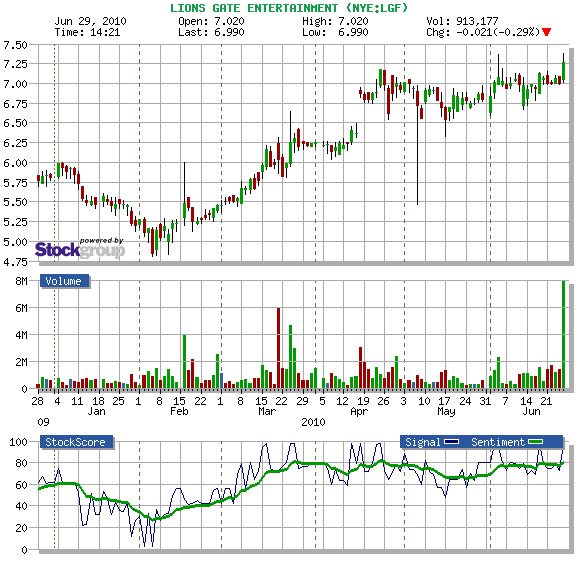
1. LGF
Late day rally on LGF with strong volume support takes the stock through resistance on the daily chart. The pattern in to the breakout is an optimistic ascending triangle, a good indication that the breakout is a valid signal of an upward trend building. Support at $6.95.
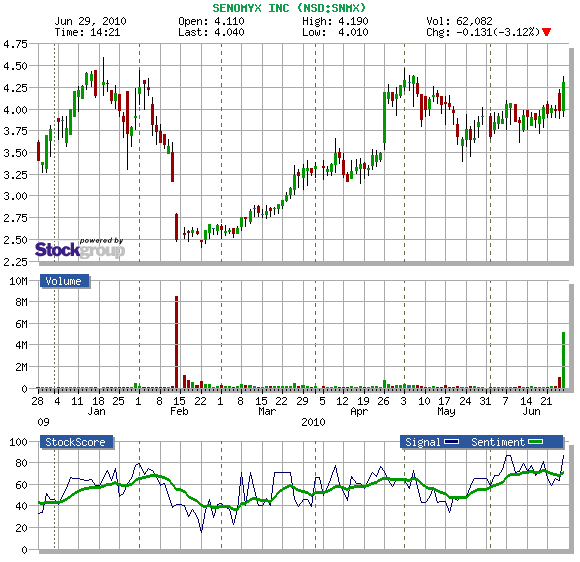
2. SNMX
SNMX has been trading abnormal volume for two days and that has taken the stock up to test resistance. I am a little bit concerned about whether the stock can get through $4.35 which has held up as a price ceiling for some time, but the volume that has been building over the past couple of days is encouraging. Support at $3.90.
References
Get the Stockscore on any of over 20,000 North American stocks.
Background on the theories used by Stockscores.
Strategies that can help you find new opportunities.
Scan the market using extensive filter criteria.
Build a portfolio of stocks and view a slide show of their charts.
See which sectors are leading the market, and their components.
Click HERE for the Speaker Lineup and to Purchase the video if you want to learn from some of the worlds best traders including Tyler Bollhorn.

Tyler Bollhorn started trading the stock market with $3,000 in capital, some borrowed from his credit card, when he was just 19 years old. As he worked through the Business program at the University of Calgary, he constantly followed the market and traded stocks. Upon graduation, he could not shake his addiction to the market, and so he continued to trade and study the market by day, while working as a DJ at night. From his 600 square foot basement suite that he shared with his brother, Mr. Bollhorn pursued his dream of making his living buying and selling stocks.
Slowly, he began to learn how the market works, and more importantly, how to consistently make money from it. He realized that the stock market is not fair, and that a small group of people make most of the money while the general public suffers. Eventually, he found some of the key ingredients to success, and turned $30,000 in to half a million dollars in only 3 months. His career as a stock trader had finally flourished.
Much of Mr Bollhorn’s work was pioneering, so he had to create his own tools to identify opportunities. With a vision of making the research process simpler and more effective, he created the Stockscores Approach to trading, and partnered with Stockgroup in the creation of the Stockscores.com web site. He found that he enjoyed teaching others how the market works almost as much as trading it, and he has since taught hundreds of traders how to apply the Stockscores Approach to the market.
Disclaimer
This is not an investment advisory, and should not be used to make investment decisions. Information in Stockscores Perspectives is often opinionated and should be considered for information purposes only. No stock exchange anywhere has approved or disapproved of the information contained herein. There is no express or implied solicitation to buy or sell securities. The writers and editors of Perspectives may have positions in the stocks discussed above and may trade in the stocks mentioned. Don’t consider buying or selling any stock without conducting your own due diligence.
Quotable
“In every particular state of the world, those nations which are strongest tend to prevail over the others; and in certain marked peculiarities the strongest tend to be the best.” –
Walter Bagehot
FX Trading –Goldilocks sees her shadow.
Typically when Goldilocks emerges from her bunker, sees her shadow, and returns to the bunker, we can expect six more weeks of recession. But I’d suggest she re-stock her canned foods supply – she could be in there a while.
….read more HERE

Americans love great stories. In fact, they are downright infatuated with them.
THE DOW INDUSTRIALS: Cast any trend line you wish to cast, but it is either broken already or in the act of being broken. Today shall not be pretty; indeed we fear that today will be uncommonly… even frightenly….ugly. We’ll not be surprised to see the Dow down 250 or more today. – Dennis Gartman For a Trial Subscription go to The Gartman Letter
Are We Approaching An Epic Failure?
This shouldn’t come as a surprise to anyone since the art of storytelling has been embedded into the DNA of this country from day one of the American Revolution when our Founding Fathers decided that being governed without representation was no longer tolerable. Over the last 235 years, this country has had the blessing of being able to add to its repository of remarkable stories with the influx of immigrants from around the
world that brought along with them their knowledge and cultures to this melting pot, creating an eclectic amalgamation that adopted the best attributes of each culture, while slowly discarding anything superfluous. In flowed new ideas, technological breakthroughs and resilience and out went ignorance, racism and lack of respect for the fellow man. The stories that we wrote in this country were so inspiring, that we even exported them to the rest of the world with the advent of Hollywood, but now it looks like a different type of story is being written. It has become a horror film that has us on a journey toward a metaphorical, abject town named Epic Fail.
Hollywood wishes that they could write a script as frightening as the one for Epic Fail.Art often imitates life, but why any artist would want to imitate this story is beyond me. This is a story of the next chapter of the United States. It is filled with politicians that are reliably-unreliable in the face of a gigantic tsunami of global sovereign debt (and BP oil), financial crony capitalism (“We don’t break laws because we pay our lobbyists to make them!”), baby boomers retiring en masse to encounter a Social Security-Medicare- Medicaid-ponzi scheme, geopolitical strife with Iran and North Korea, a China real estate bubble, global food and energy shortages and much more. Heck, there’s even an Icelandic volcano to boot!
While our good buddy Helicopter Ben1 needs to find out that there’s more to life than printing really, really, really ridiculous amounts of money, at least he’s providing us with the parchment on which the citizens of the United States (and the world) can finish writing this story. I’m not sure how this collective story is going to end, but let’s take a look at the obstacles we’ll be facing and how we can prepare for them so we don’t end up in a situation where we get caught between a rock and a hard place . . . or in this case a Mayan calendar and 2012.
Items on Our Radar
Regrettably, the typical investment path cannot be mapped out in Google Maps. We can’t ever know all of the total events that lay between you and your financial goal(s), but we do know that a contrarian, value investment philosophy that focuses on capital appreciation while garnering additional income can be a compass toward achieving respectable returns. While the number of outstanding risks are too numerous to be counted, listed below is a sample of what we believe are material areas that pose risks to your sanity, health and financial portfolio.
1.Sovereign Debt Crisis – European PIIGS, UK, Japan and the USA
2.USA Crony Capitalism and a Political Re-Awakening
3.States and Municipal Budget Shortfalls:Swimming in Oceans of Debt
4.Baby Boomers:Will Golden Years Be Golden?
5.Elephant in the Room:The Commercial Real Estate Debt Bubble
6.Peak Oil:Even the Rappers Get It
7.China:The Great Imbalance
8.Other Blips On Our Radar
9.What We’re About
While at first glance, it appears that these situations are all mutually exclusive of each other, we want to remind our investors and readers that life cannot be simplified into grocery lists. These situations are inter-related within one large connected system and the outcome of one will undoubtedly have consequences on others.
1.Sovereign Debt Crisis – European PIIGS, UK, Japan and the USA
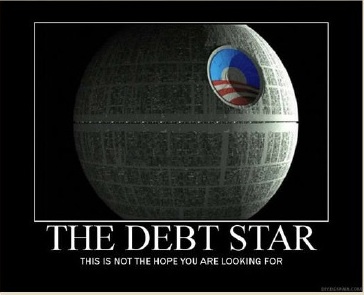
……..read more Are we approaching an Epic Failure (starting at page 3)
06/28/10 Gaithersburg, Maryland – There must be more communists in Berkeley than in Beijing. That thought crossed my mind as we swept through Beijing’s wide streets, crowded with cars and lined with tall modern buildings. A more bustling capitalistic city would be hard to imagine.
I think most Americans would be shocked to see Beijing today. A friend of mine, well traveled and well-read, told me he thought he would find a city to compare to Mumbai or Managua. Instead, he found a city to compare to New York or Chicago.
….read more How to Invest in What China Really Needs
Chris Mayer studied finance at the University of Maryland, graduating magna cum laude. He went on to earn his MBA while embarking on a decade-long career in corporate banking. Chris has been quoted over a dozen times by MarketWatch, and has spoken on Forbes on Fox. He has also spoken on CNN Radio, and has made multiple CNBC appearances. Chris is the editor of Capital and Crisis and Mayer’s Special Situations, a monthly report that unearths unique and unconventional opportunities in smaller-cap stocks. In 2008, Chris authored Invest Like a Dealmaker: Secrets From a Former Banking Insider.
Brief Excerpt from Richard Russell’s Dow Theory Letters. One of the best values anywhere in the financial world at only a $300 subscription to get his DAILY report for a year. HERE to subscribe. Amongst his achievements Richard was in cash before the 2008/2009 Crash and he has been Bullish Gold since below $300 Ed Note: Richard Russell is bullish Silver and holds one of the largest single positions he has held since the 1950’s in the precious metals.
My investment strategy is now being voiced or followed by too many major hedge funds. The thinking is that as vanishing stimuli and de-leveraging takes over, the economies of the world pressured by central bank conservatism will force the US and western nations into a double-dip deflationary recession. The response will be to keep rates at zero and open the money spigots wide, wide, wide. This is where ownership of gold “was supposed to” come in.
Then, I ask myself, is this scenario too pat? Is it too popular? There’s always a fooler. Where’s the fooler this time? I think the fooler will be the stock market. The stock market will be considerably worse than the smart boys are figuring on. Deflationary pressures will be severe and the need to re-inflate will be more pressing than ever.
Gold will be needed – not as a safe haven against inflation, but as a safe haven against crushing deflation. Deflation will flatten everything in sight including base metals, commodities, housing, job creation. The single island of preserving wealth will be gold. Unlike junk fiat currencies, gold cannot be devalued.
As I look ahead, the area that the experts do not understand is the stock market. Almost all the current opinions revolve around stocks remaining in a high-level trading range. This will prove to be an horrendous miscalculation.
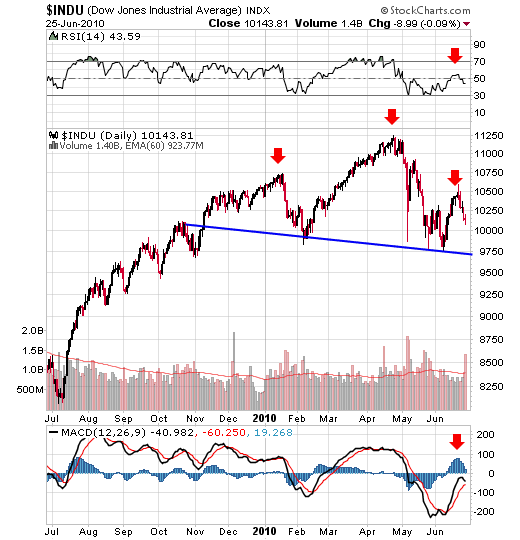
Why do I think the stock market will be so rotten? Here’s why. Look at the chart of the Dow in the current issue of Barron’s. Or study the chart of the Dow below. If this isn’t the mother of all head-and-shoulder top-formations, I’ve never seen one. If this formation falls apart, I expect the break to signal a the start of a brutal decline in stocks. The first area of support is Dow 10,000. The base of the entire formation comes in at Dow 9800. If the formation breaks down, I think all previous plans, scenarios and strategies will hit a stone wall. Wall Street and public sentiment will turn black-bearish. Consumers will head for the storm cellars and once in, they’ll shut the door above them and lock it.
Ed Note: Richard Russell is bullish Silver and holds one of the largest single positions he has held since the 1950’s in the precious metals.
-
I know Mike is a very solid investor and respect his opinions very much. So if he says pay attention to this or that - I will.
~ Dale G.
-
I've started managing my own investments so view Michael's site as a one-stop shop from which to get information and perspectives.
~ Dave E.
-
Michael offers easy reading, honest, common sense information that anyone can use in a practical manner.
~ der_al.
-
A sane voice in a scrambled investment world.
~ Ed R.
Inside Edge Pro Contributors

Greg Weldon

Josef Schachter

Tyler Bollhorn

Ryan Irvine

Paul Beattie

Martin Straith

Patrick Ceresna

Mark Leibovit

James Thorne

Victor Adair