
Daily Updates
Market Buzz – Cautious Stock Pickers Market – Sino-Forest’s Q2 Beats
The S&P TSX Composite index closed this Friday marginally higher in a week that was largely negative and saw the exchange take a 2.3 per cent haircut. The drop was the biggest five-day decline since the week ended July 2.
The battle in the market continues to be where the broader economy is headed. There are those that believe a double dip recession may rear its ugly head, others who believe the recovery should continue, and everything in between.
So, who is winning so far? Well, with Toronto’s main index declining 1.9 per cent this year, the bears have a slight lead, but it has really been a bit of a stalemate – with U.S. unemployment above 9 per cent offsetting optimism about stronger-than-forecast corporate earnings.
We continue to be cautious on the broader economy and believe that the de-leveraging process remains in its initial stages. It is a process which is painful and leads to low to minimal growth, but it is necessary for the long-term health of the economy. It remains a stock pickers market.
Fortunately, not all the news was negative. Sino-Forest Corp. (TRE:TSX), the largest commercial forestry plantation operator located in the People’s Republic of China and a long-time favourite of KeyStone’s, reported better-than-expected Q2 earnings and saw its shares gain as a result.
Q2 2010 revenue increased 36.2 per cent to $305.8 million from $224.42 million in the same period of the prior year, with the largest contribution coming from an increase in the trading of wood logs; specifically, revenue from trading of imported/domestic wood products and logs increased 76.9 per cent to $100.4 million compared to $56.8 million in the same period in 2009.
Net income for the period increased 41.4 per cent to $63.7 million, or $0.26 per share, in Q2 2010 compared to $45.0 million, or $0.23 per share, in the same period in 2009.Slowing Growth Trend Continues, North and South
Looniversity – Top Down vs. Bottom Up Investing
Let’s see, “top down,” “bottom up,” kinda sounds like terms you’d hear at a frat party. But, in the investment world, both refer to specific styles of fundamental analysis. A “bottom up” approach de-emphasizes the significance of economic and market cycles and instead focuses on the analysis of individual companies (stocks). This approach assumes that individual companies can perform well despite being in an industry that is not performing well. Proponents of this strategy might try to identify undervalued stocks by focusing on companies with low price-earnings and/or market-to-book ratios.
“Top down” investing involves careful analysis of a region’s economic health before considering a sector to invest in. Proponents of this approach determine what industries or sectors will return well based on overall economic conditions, then buy stocks that are attractive within that industry.
While both hold merit, you are probably better off using a combination of each approach. Often, the most compelling investment opportunities possess both positive external (macro and industry) and internal fundamentals. So relax, keep your “top down” and we say “bottoms up” to your investment future.
Put it to Us?
A friend of mine recently told me that securities (stocks, bonds) are held “in street name.” What does this mean and why are securities held this way?
– Steve Hamilton; Halifax, Nova Scotia
A. In almost every instance, when you buy or sell securities with a broker, your name is not actually represented on the stock or bond certificate. The name that is represented on the certificate is that of your broker. Typically, the broker doesn’t even hold the physical certificates, they hold them in electronic form, in a large series of computers. This occurs for many different reasons; however, here are the two main ones: convenience and safety.
Convenience – It is much more practical for a broker to carry securities in their name as they can be easily and readily transferred between parties. If they were held in your own name, every time you needed to sell, the broker would have to find the exact stocks you own and deliver them to the buying party, who would then have to send the stocks back to the company to have the name changed on the certificates into their own names.
Safety – If brokers were to hold the physical securities, there would be a possibility of physical damage, loss, and theft of the certificates.
KeyStone’s Latest Reports Section
- China-based Forestry Company Beats Q2 2010 EPS Estimates – Rating Maintained (Flash Update)
- Specialty Paper Manufacturer Shares Hit New All Time High, Up 158% in Seven Months, Solid Q2 Results – Rating Maintained (Flash Update)
- Wireless Phone Retailer Posted Unexpectedly Strong Q2 Growth & Holds Solid Cash Position – Maintain Long-Term BUY Rating (Flash Update)
- Micro-Cap Environmental Company Announces Expansion into Chinese Environmental Remediation Market – Company Remains Attractive with Cash Balance of $4.8 Million, No Debt, and Shares Trading at Less than 4 Times Earnings (Flash Update)
- Alternative Financial Services Provider Posts Record Q4 and Fiscal 2010 Revenue & EPS, Aggressive Growth Plan Intact – Stock Rating Upgraded (Flash Update)
Ed Note: The U.S. Geological Survey called it the Largest Continuous Oil accumulation it has ever assessed. It spreads into Saskatchewan too. The Bakken Basin, located in Montana, North Dakota and Saskatchewan,
What the EIA Won’t Tell You About U.S. Oil Production
In 1956, the U.S. oil industry was on top of the world.
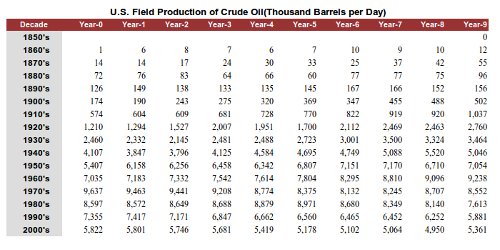
With 30.4 billion barrels of proven reserves and a daily production of 7.15 million barrels on the table, things were better than ever before. The 551 oil wells across the U.S. were pumping out an average of 13,000 barrels per well per day.
All it took was a small speech in San Antonio to bring everything to a crashing halt.
On March 8, 1956, a Shell geologist named Marion King Hubbert was standing on the side of the stage at the Plaza Hotel, ready to deliver his now-famous peak oil speech.
Moments away from taking his turn at the podium, he was called offstage for a phone call. It was from a worried assistant at Shell, pleading with him to “tone down” the speech. He was told that the U.S. reaching peak oil production within the next fifteen years was an absurd idea.
The phone call, however, fell on deaf ears, and Hubbert went on to speak. If you happen to be a history nut like myself, you can read his entire paper here.
We know how the story turns out. U.S. oil production peaked in 1970. You can see the peak for yourself, straight from the Energy Information Administration (EIA):
And yet, it’s a crisis that too many have ignored…
Ignoring the U.S. Oil Crisis
I’m willing to bet my cat’s ninth life that most investors have no clue about what’s going on. And the reason I’m not worried about PETA breaking my door down is because those investors aren’t looking at the entire picture.
“Domestic production is great, isn’t it?” they say to themselves without a hint of confidence.
“After all,” they continue, “the EIA’s Short-Term Energy Outlook was brimming with good news.”
Here’s a brief rundown on their latest outlook:
- Domestic crude oil production increased 370,000 barrels per day in 2009 and expected to rise by 110,000 barrels per day in 2010.
- U.S. crude oil production is projected to rise to 5.4 million barrels per day in 2011.
- Non-OPEC oil supply forecast was raised to grow 720,000 barrels per day in 2010, primarily from the United States, Brazil and Azerbaijan.
If you prefer to join them with blind enthusiasm, prepare to lose a lot of money.
We’re smarter than that.
Let’s take a closer look at those EIA numbers, shall we?
In 2009, only eight states managed to increase their crude oil production over the previous year. In case you were wondering, California and Alaska – two of our three biggest oil-producing states – were not on the list. Don’t even get me started on those two.
As expected, North Dakota led the pack. Actually, if you take Texas’ 19,000 bbl/d increase out of the equation, the combined increases from the six remaining states was lower than North Dakota… it’s difficult to believe that some investors have never heard of the Bakken oil play.
As of March, 2010, only four of those seven states are producing more oil than their 2009 levels. In fact, three of those states are producing less than 2,000 barrels per day more than they were at the end of last year.
This is where North Dakota is in a league of its own. In May, North Dakota’s oil production was approximately 300,000 barrels per day. That’s more than twice what the state was producing in 2007.
But it’s not just production that’s caught our attention.
OPEC Envy
It’s too bad the U.S. oil industry can’t cook the books like OPEC.
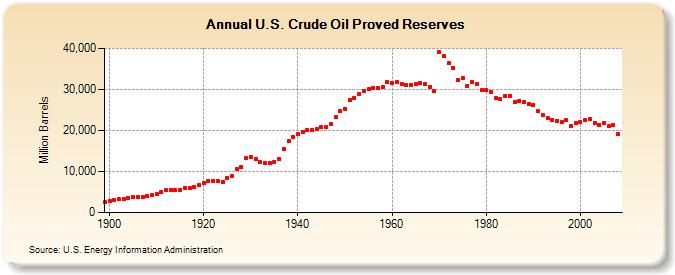
OPEC members, despite pumping more than a third of the world’s oil supply, haven’t seen a single decline in reserves over the last thirty years. It’s sad that their suspicious oil reserves have become a global joke.
You can believe them if you want. While you’re at it, you might as well wish for world peace.
Unlike OPEC, proved reserves in the United States have fallen alongside production, dropping to levels we haven’t seen since 1941. According to the EIA, the U.S. has approximately 19.1 billion barrels in proved reserves.
Still holding on to those optimistic feelings?
The Fate of Offshore Oil
Before I get any further, I wanted to quickly bring offshore drilling into the mix.
As you know, the U.S. has placed another drilling ban into effect. You can catch up on the details here.
For now, forget about the offshore drilling ban. Even if a U.S. judge doesn’t strike the moratorium down, we all know that offshore oil production is too important to the U.S. to simply abandon. More restrictions will be placed on the offshore industry. More safety protocols will be implemented.
At the end of the day, drilling will resume.
It’s either that or cozy up with Saudi Arabia again. We know how that turned out last time.
While I’m on the offshore subject, let me show you why going all-in on offshore production isn’t the best choice to make.
Although offshore oil in both Federal and State waters make up one-third of our domestic oil production, our offshore proved reserves only amount to 3.9 billion barrels. Also, that oil isn’t going to be produced cheaply, a point you should be well aware of by now.
However, there are much better opportunities out there right now…
Investing in U.S. Oil Stocks
“If you hate U.S. oil so much, why do you invest in it?” one reader recently asked me. I’ll spare you the rest of his comments, which were sent despite the gentleman having a broken caps-lock button – no surprise there.
I’ll be the first to admit that the doom and gloom tends to get the better of us when it comes to U.S. oil.
What he failed to realize, as my readers have proven to me time and again, is that the backside of the peak oil curve will be much more profitable than the ascent.
As you’ve probably guessed by now, these three oil stocks are in the thick of North Dakota’s oil patch.
- Oasis Petroleum (NYSE: OAS): Oasis holds about 292,000 net acres in the Williston Basin. It also recently announced a 240% production increase over the second quarter of 2009, as well as a 25% jump over last quarter. 98% of its production comes from its Williston Basin properties.
- Hess Corp. (NYSE: HES): Hess’ latest grab for American Oil and Gas has caught our attention. When the news was announced, analysts were putting the value at $450 million, and if Hess can seal the deal, they’ll be walking away with a huge steal.
- Voyager Oil and Gas (OTCBB: VYOG): Voyager is a smaller play that could be making headlines. It has approximately 24,000 core net acres in the Bakken/Three Forks formations in North Dakota and Montana; and I have a strong feeling that a Montana oil boom is right around the corner.
Now, these are just three companies with a Bakken upside. If you do your homework, you would find dozens more oil and gas gems worth a closer look. In fact, these Bakken-weighted stocks have delivered winner after winner to my readers, with one stock alone pulling gains over 400%.
Until next time,
Keith Kohl
Editor, Energy & Capital
P.S. Just as BP’s disaster is finally taking a turn for the better, you can bet our legislators are going to make a grand mess of things. The U.S. House of Representatives recently passed a vote to completely overhaul the offshore drilling system. Although the government’s knee-jerk reaction was to ban offshore drilling, there’s a silver lining to this whole mess that presents us with a very profitable opportunity – and I’ve included all the details for you in this special report.
Just click here to learn more.
U.S. Stock Market – Starting to see some serious long-term technical damage. Not surprised since my cyclical high for June/July has now passed. While I continue to not look for a melt-down, we finally have conditions set that can allow a very significant retreat. The economy is tanking again and with fall elections now becoming a daily topic, the “Don’t Worry, Be Happy” crowd appear out of bullets.
U.S. Bonds – While I wouldn’t touch any maturity over two years, I also wouldn’t go short any time soon.
Gold – What can I say that I haven’t said already? The belief we’re in the “mother” of all bull markets should be enough to know where I stand. The fact that I beg listeners when it comes to gold not to listen to people like “Tokyo Rose”. always wrong Kaplan, king flip-flopper Gartman, and one day I’ll be right Prechter, should be enough evidence that I remain a screaming bull on gold.
We’ll soon have seasonal weakness behind us and enjoying the two most favorable months for gold.
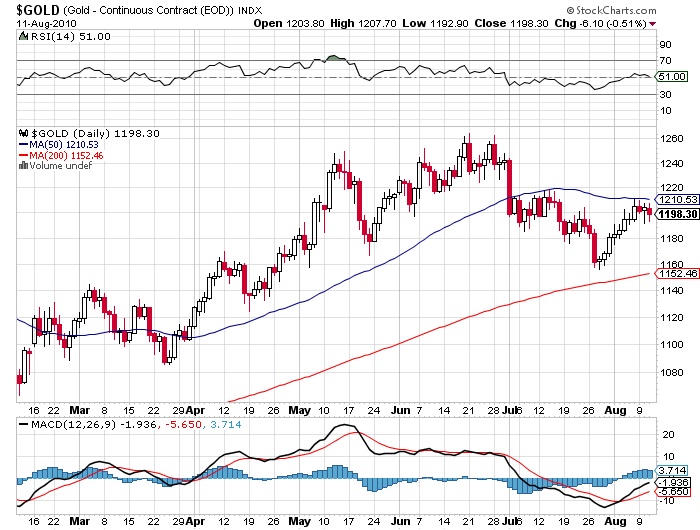
A close above $1,210 and then above $1,220 should remove all lingering technical concerns and set us up for a nice run-up this fall. Again, I remind you we’re in the “best ever” gold bull market in history.
U.S. Dollar – As noted last week, a countertrend rally from a very oversold condition has indeed occurred. But don’t blink as this is not some renewed dollar rally but just a blip up in a secular bear market.
I continue to have no interest long or short for oil and natural gas.
Ed Note: Peter talks about the “two most favorable Months for Gold”. You might also want to read this article on that subject – Gold: Best Months JUST Ahead!
Check out Peter’s new postings:
Things:
On Major Moves, Peter Grandich has been very right and not only saved many investors fortunes, but expanded them dramatically. On November 3, 2007 at the MoneyTalks Survival Conference, Peter Grandich of the Grandich Letter warned that “an unprecedented economic tsunami will hit American beginning in 2008”. Peter advised publicly to short the US market two days from the top in October, 2007 and stayed short until the last week of October, 2008. He began to buy stocks in March 7th, 2009. He also bought oil and oil related investments near the lows after the dive from $147.
….go to visit Peter’s Website
To HERE Peter speak and others speak on Trading go HERE:

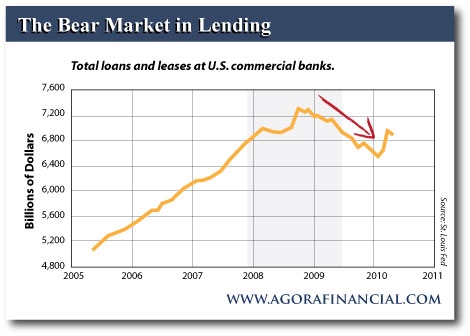
Now that almost every Wall Street economist is looking for the arrival of a Great Deflation, we think investors should begin looking the other way. Keep an eye out for inflation, we say.
You will recall that during the bottom of the previous bear-market, most of the pundits were shunning ‘risky assets’ (stocks and commodities) and they were advocating a heavy exposure to cash and fixed income assets. Back then, the vast majority of strategists and their devotees were erroneously fretting about deflation. According to these folks, deflation was a done deal due to the following reasons:
….read more HERE
Nuclear Power: The King of All Energies
Nuclear will give you, by far, the most energy for your money right now.
The best way to view this issue is in terms of what physicists call ‘energy density.’ That is, let’s measure the amount of energy stored in a given volume or mass of a certain substance or material.
Below is a table that I put together expressing the energy density of an array of materials in terms of megajoules of energy per kilogram. A megajoule – MJ – is 1 million joules, or approximately the kinetic energy of a 1-ton vehicle moving at 160 km/h (100 mph). The point is to show that if something has a high energy density, then less physical material will release the same amount of energy:
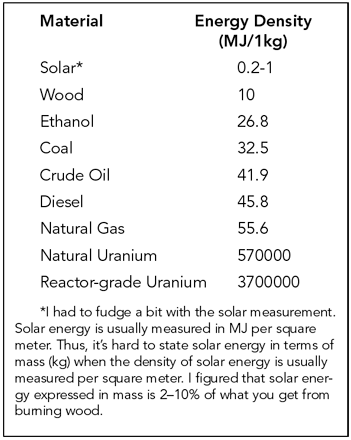
You can see the difference in energy density ranging over a variety of commonly available substances. Indeed, you can see why, for example, old wood-burning locomotives and steam engines gave way to coal-burning equipment. And the coal burners eventually yielded to diesel engines. You just get more energy from the same volume of material, which matters when you’re in the confined spaces of a moving piece of equipment.
It’s obvious, based on the raw numbers, that uranium – and by extension nuclear power – can supply energy with a density that’s orders of magnitude more than what you get from carbon-based fuels. With numbers so utterly lopsided like these, the world is going to find it impossible to support massive populations and deal with resource and energy demand without a global nuclear power industry.
Byron King
for The Daily Reckoning
Byron received his Juris Doctor from the University of Pittsburgh School of Law, was a cum laude graduate of Harvard University, served on the staff of the Chief of Naval Operations and as a field historian with the Navy. Our resident energy and oil expert, Byron is the editor of Outstanding Investments and Energy and Scarcity Investor. Byron has made frequent appearances in mainstream media such as The Washington Post, MSN Money, Marketwatch.com, Fox Business News, CNBC’s Squawk Box, Larry Kudlow, Glenn Beck and PBS Newshour. He also had a feature article written in the Financial Times, and has appeared on both CNN and Marketplace radio broadcasts. Byron has also been quoted in various international publications such as The Guardian and De Volkskrant, and has been a guest on Canada’s CBC television broadcast.
Special Report: From Hulbert’s No 1-Ranked Advisory Letter Over 5 Years, GOLD $2000 REPORT : Five entirely new ways to play the gold trend and a hidden way to snap up gold- for less than one penny per ounce!
View articles by Byron King
-
I know Mike is a very solid investor and respect his opinions very much. So if he says pay attention to this or that - I will.
~ Dale G.
-
I've started managing my own investments so view Michael's site as a one-stop shop from which to get information and perspectives.
~ Dave E.
-
Michael offers easy reading, honest, common sense information that anyone can use in a practical manner.
~ der_al.
-
A sane voice in a scrambled investment world.
~ Ed R.
Inside Edge Pro Contributors

Greg Weldon

Josef Schachter

Tyler Bollhorn

Ryan Irvine

Paul Beattie

Martin Straith

Patrick Ceresna

Mark Leibovit

James Thorne

Victor Adair