
Timing & trends

The US: Good Economic News Coming

Three major trends became apparent in the Global Competitiveness Report over the past 12 years – one obvious, two perhaps surprising.

1. Asia Rising

2. Europe’s debt crisis and economic decline

3. Brazil, Russia, India and China overrated

Screen Shot 2013-09-24 at 3.37.17 PMThe good news is that the United States’ long period of Worldwide competitive decline to the #7 position has suddenly turned around in 2013. Perhaps its like any Market, the time to capture a significant reversal is, as James Dines told Michael Campbell this weekend “You need to go opposite to the crowd to make money. It’s not easy to do because we are programmed to listen to the people around us, or be influenced by it.”

 Certainly it would be hard to argue that the mass opinion of radio, television newspapers and the average man on the street isn’t that the US is a Debt ridden cripple with economic cancer compared to its glory days of past. Meanwhile some technological marvel with the Worldwide impact of the printing press, or steam engine could be setting up a huge future US economic Boom. 

I don’t think the author is arguing for a massive new economic upside explosion, but he does make some interesting points in this article Is the United States the Global Economy’s Comeback Kid? 


No question lower gold prices are making production and exploration more difficult for the miners. When you see stories regarding large scale producers cutting costs, it is safe to assume there is widespread struggling throughout the industry.

Click here to read more.

Robert Levy – Border Gold Corp.

www.bordergold.com 

rlevy@bordergold.com

888.312.2288

Guys Like This Can Make You Rich

Most investors haven’t heard of the man you’re about to meet. But they’ll certainly wish they had…

He’s an executive with the storied Fairchild Semiconductor Int. Inc.(NYSE: FCS) – one of the original Silicon Valley chip makers that played an integral role in the computer revolution.

But don’t expect to hear him extolling the virtues of semiconductors.

He’s working on something bigger now.

Much bigger.

In fact, now that I’ve seen his research firsthand, demand for this rapidly growing technology could be twice as big as I predicted a month ago here in Money Morning.

So take notes…

When the history of the high-impact sensor revolution is written, you can bet there will be plenty of ink devoted to Janusz Bryzek.

There will be plenty of grateful investors, too…

Developing a $1 Trillion Industry

To be sure, the more than $300 billion semiconductor market is nothing to sneeze at. It’s critical to our high-tech society, and Fairchild has remained a key player in this sector for decades.

But Janusz Bryzek – a high-tech pioneer for nearly 30 years – sees sensors as a far more pervasive technology. And he sees how quickly (and quietly) it’s becoming a $1 trillion market.

I recently had the chance to meet with Bryzek at a conference on advanced sensors held here in the heart of Silicon Valley.

Indeed, our chat occurred shortly after I wrote to you here in Money Morning, predicting that the world will see the use of up to 4 trillion sensors. [See Some People Will Get Stinking Rich on These Devices.”]

Turns out, Bryzek’s research and analysis makes me believe that I underestimated potential unit sales by nearly half.

Bryzek cites a study by German giant Bosch that says we’re looking at a potential 20-fold increase in unit sales to 7 trillion sensors – or roughly 1,000 each for every person on Earth today.

So we’re talking about a market that one day could be worth trillions. And this skyrocketing growth means big bucks for savvy investors who get in now while there is still so much upside…

Sensors Are Already All Around Us

See, sensors are on the verge of becoming completely ubiquitous. And the reason is really very simple. These solid-stated devices literally “sense” aspects of the world around us – temperature, humidity, pressure, sound, impact, tilt, angle, speed, and much more.

Bryzek even cites a new breakthrough in which sensors can be “printed” on the skin. Rather than made of ink, these “tattoos” are flexible electronics that will be used for medical monitoring.

They are the perfect components for our data-driven world. They work great for things like smartphones, medical devices, wearable technology, and deployment of airbags in auto crashes.

As a result, though most of us don’t know it, sensors are all around us…
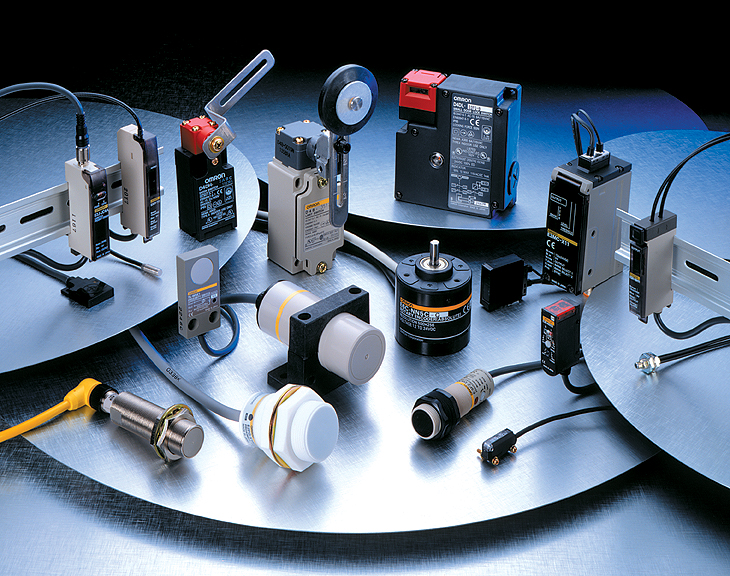
sensorsIn fact, while writing this report I took the dog for a walk to clear my head. I got halfway around the block when I ran into a utility worker who had just hooked up a handheld device to a small water-monitoring station. She told me her device had four sensors designed to measure overall water quality.

Bryzek points out that sensors have been around for decades but have only recently entered the mainstream. If anyone would understand why that’s true and the impact sensors will have on our lives and portfolios, it’s Bryzek.

See, he’s a leading authority on advanced sensors known as MEMS, which stands for microelectromechanical systems. MEMS are devices like accelerometers that measure gravity, tilt angle, incline, rotation, and vibration in things like smartphones and tablet computers.

Considered a pioneer in the field, he has roughly 30 years of experience, including stints as a CEO and chief technology officer at other firms. Bryzek has authored a number of papers and is frequently cited as a leading expert in the field. He chairs the group Tsensors (Trillion Sensors) Summit that will be held next month at Stanford University.

At Fairchild, Bryzek serves as vice president in charge of development for the MEMS and Sensors group. Fairchild is a storied firm that was one of the original Silicon Valley chip makers that played an integral role in the computer revolution.

Ironically, MEMS were around at the dawn of the semiconductor industry in the 1950s but were much slower to take off. They were difficult to make and integrate into other components.

But, driven by consumer needs, they recently entered the mainstream in a big way. Bryzek told me that two recent milestones really helped push mass adoption of this technology.

Games & Smartphones

In 2006, the Nintendo Wii broke new ground with motion sensors embedded inside the game’s innovative wireless remote. Then in 2007, Steve Jobs gave this field a huge stamp of approval by including MEMS in the iPhone.

Since that time, the use of sensors has exploded.

For instance, mobile sensors alone grew at a rate of 200% a year from 2007 to 2012, the last full year for which statistics are available.

Some of the big growth drivers Bryzek sees for the immediate future are:

  • Mobile health, in which medical sensors communicate with smartphones and can extend quality healthcare to billions around the world.
  • The Internet of Everything, in which devices as disparate as forklifts and diapers communicate through a giant Web for objects running in the background.
  • Smart systems, like utility meters, the power grid, and autos. They combine computing, communication, and sensing.
  • The Central Nervous System for the Earth that will alone require 1 trillion sensors for things like energy exploration, climate monitoring, supply chain management, and earthquake warnings.

As I spoke with Bryzek, I couldn’t help but think of all the great investments that lie ahead. Literally, MEMS and other sensors will touch every aspect of the global economy – from shipping to manufacturing to healthcare to utilities.

And that’s just for starters…

These devices will find ever greater use by the world’s militaries, mining and energy firms, agriculture, and biotech. You’ll find them in robots, robotic cars, smart homes, artificial limbs and synthetic skin, light-filtering windows, security systems, and more.

[Editor’s Note: The biggest role sensors will play also happens to be the most importantone, as you’ll see in Michael’s presentation: “One Device to End All Disease… and It Costs Less Than $50.”]


 

Almost everyone agrees that too much borrowing (also known as “leverage”) was at the core of the financial crisis and Great Recession. Too many risky loans were made. Where do we stand five years after Lehman Brothers?

CLICK HERE

Brent Woyat, Portfolio Manager
brent.woyat@raymondjames.ca
www.ofip.ca


  1. Is sizable QE tapering really going to happen? Perhaps, but the Fed has based the implementation of tapering on a consistent drop in the employment rate, and a steady increase in the housing market.
  2. Horrifically, one of the two drivers of the “taper caper” may be close to incinerating. “The Mortgage Bankers Association projects a decline in mortgage refinancing volume from $1.247 trillion in 2012 to $973 billion this year, and to plunge to $388 billion in 2014. The MBA expects total mortgage loan origination to decline from $1.750 trillion in 2012 to $1.592 trillion in 2013 and $1.091 trillion in 2014.” – CNBC News, September 24, 2013.
  3. The numbers being projected by the Mortgage Bankers Association are ghastly. If the mortgage origination and “REFI” markets suffer a collapse going into 2014, any tapering that occurs during that collapse could arguably be called the work of a madman.
  4. Fed presidents Dennis Lockhart and Bill Dudley made public statements on Monday. They expressed serious concerns about the health of the US economy. I doubt that Ben Bernanke wants to go down in history as the madman who caused a new global markets crash.
  5. Having said that, the gold price continues to decline, albeit modestly. Many gold investors are rightfully frustrated, after watching gold stocks give up all their “no taper” rally gains.
  6. I think the key issue causing this situation is comex gold options. Please click here now. The next key expiry day is September 25.
  7. Gold often tends to decline as options expiry approaches, and I think that is the main short term price driver of gold right now.
  8. In the big picture, Chinese & Indian demand is probably the most powerful driver of higher gold prices. It’s important not to make decisions that affect your long term core positions, using events like “options expiry day”.
  9. On that note, the just-announced clarification of the 80-20 gold import rule, by the central bank of India, is a critical victory for the bulls, in my professional opinion.    
  10. Please click here now. You are viewing the daily gold chart. From a technical standpoint, I don’t see anything to be concerned about. From the lows in the $1180 area, gold surged about $250.
  11. As it arrived in the $1410 – $1430 area, sentiment became overly-bullish. I labelled $1425 as key sell-side HSR (horizontal support & resistance).
  12. It’s true that the black uptrend line “broke”, but by the time that happened, gold had already declined to about $1360. That trend line probably isn’t as important as the bears think it is.
  13. Tactically, gold enthusiasts should now be light sellers at $1350 and $1425, and decent buyers at $1266 and $1200.
  14. Note the position of my gold stokeillator at the bottom of that chart. It is heavily oversold, and flashing a crossover buy signal. Once options expiry day is over, I think a nice gold rally is very likely.
  15. Please click here now. That’s the daily silver chart. After completing a small head & shoulders top, silver declined slightly.
  16.  It’s now approaching key buy-side HSR in the $20.75 area. Note the action of my stokeillator, at the bottom of the chart. Silver enthusiasts should have buy orders in that general $20.75 area.
  17. If gold surges out of an “options expiry day hole”, silver could perform even better.
  18. What about gold and silver stocks? Please click here now. You are looking at the six month chart for GDX, and the gold bears are afraid there’s a head and shoulders top formation.
  19. I think it’s just a shape, rather than a real chart pattern. The gold stock bears may be overly-focused on the price action that is likely due to options expiry.
  20. The bears are also probably under-focused on the rising demand coming out of India, as the Diwali festival approaches. Barring government restrictions imposed on buyers, gold demand in China and India is relativelyinelastic.
  21. Can consistent and growing “Chindian” gold demand be met with ETF and euro government sales?
  22. I think the answer is: No. It can only be met with gold that is mined out of the ground, and that means the long term outlook for gold stocks is superb. Should gold stock investors carry some short positions, to manage their emotional state, even if the long term fundamentals are excellent? I believe the answer is: Yes. They should not be added now, because of fear of lower prices. They should be added professionally into price strength, in the GDX $28 – $32 area.
  23. Please click here now. This six month chart for GDXJ is a little concerning, because of the broadening action of the trend lines. Also, it’s unknown whether there is a buy signal in play on the stokeillator, or a “flat line” event (oscillator signal failure). Keep in mind that junior gold stocks can fluctuate wildly around events like options expiry day.
  24. More importantly, when the price of gold enters the “COP” (cost of production) zone, the risk/reward ratio of gold stocks to gold bullion can soar dramatically. If gold declines to $1266 or $1200, I’d like to see the gold community step up to the junior gold stock “buy plate”, via GDXJ and their favourite individual issues, rather than drawing arrows on charts to lower prices. I’m not so sure that’s going to happen. After the options expiry traders have their short term day in the limelight, I’m laying odds at 60%, that junior gold stocks begin a sizable rally!  


Special Offer For WebsiteReaders:   Please send me an Email to freereports4@gracelandupdates.com and I’ll send you my free “Glow In The Dark” report. Which uranium stocks are poised to “glow”, in 2014, while others may fail to recover at all? I’ll show you the ones I’m focused on, and why!

Thanks!  

Cheers

         St

Stewart Thomson

Graceland Updates

Note: We are privacy oriented.  We accept cheques.  And credit cards thru PayPal only on our website.  For your protection.  We don’t see your credit card information.  Only PayPal does.  They pay us.  Minus their fee.  PayPal is a highly reputable company.  Owned by Ebay.  With about 160 million accounts worldwide.   

Written between 4am-7am.  5-6 issues per week.  Emailed at aprox 9am daily.

www.gracelandupdates.com

www.gracelandjuniors.com

www.gutrader.com

Email: stewart@gracelandupdates.com

Orstewart@gutrader.com

Rate Sheet (us funds):

Lifetime: $799

2yr: $269 (over 500 issues)

1yr: $169   (over 250 issues)

6 mths: $99 (over 125 issues)


To pay by cheque, make cheque payable to “Stewart Thomson”  

Mail to:

Stewart Thomson / 1276 Lakeview Drive / Oakville, Ontario L6H 2M8 Canada

Stewart Thomson is a retired Merrill Lynch broker. Stewart writes the Graceland Updates daily between 4am-7am. They are sent out around 8am-9am. The newsletter is attractively priced and the format is a unique numbered point form. Giving clarity of each point and saving valuable reading time.

Risks, Disclaimers, Legal
Stewart Thomson is no longer an investment advisor. The information provided by Stewart and Graceland Updates is for general information purposes only. Before taking any action on any investment, it is imperative that you consult with multiple properly licensed, experienced and qualifed investment advisors and get numerous opinions before taking any action. Your minimum risk on any investment in the world is: 100% loss of all your money. You may be taking or preparing to take leveraged positions in investments and not know it, exposing yourself to unlimited risks. This is highly concerning if you are an investor in any derivatives products. There is an approx $700 trillion OTC Derivatives Iceberg with a tiny portion written off officially. The bottom line:  

Are You Prepared?

test-php-789