
Personal Finance
Can we finally start learning and changing from Remembrance Day?
Remembrance Day is always highly emotional for me, increasingly so as I mature, reflect back
on my youth and gain new perspective from these memories. So here is my question for
readers: Can we finally start learning and changing from Remembrance Day? Yes.
Before anyone tunes out because they think this article is unsupportive of our Canadian Armed
Forces, let me first share with you exactly where I’m coming from.
My parents were born in 1927 and 1934 in small‐town Holland, each part of large Catholic
families whose fathers were skilled craftsmen. My grandparents had dignity, made enough to
support their families, and wanted exactly what most parents want today: to help their children
grow up healthy, strong and responsible with the best of what each parent and their
community had to offer.
World War 2 changed their lives, along with millions around the globe. Everyone and everything
went into survival mode, there was fear everywhere…all the time. The Nazi German occupation
brought Holland to its knees through a deliberate process of starvation. My mom’s family had
to eat its own cat when there was nothing else; a potato that fell from a farmer’s sack added
substantially to that day’s nutrition. Millions of families on both sides of the conflict
experienced this to one degree or another, and it scarred them for life. Everyone loses in war,
except the bankers and the military‐industrial complex.
New generations were instilled with the fear of scarcity, prejudice, divisiveness and violence.
Hope for the future was nearly extinguished, but the human spirit in its purest and most loving
form is quite literally invincible. This invincible spark holds the key to the change that my title
seeks.
In a recent conversation with a 34 year‐old construction worker who showed up to play pick‐up
basketball alongside his brother at the Eau Claire YMCA, I was taken back to my childhood. This
young fellow told me the story of how he and his brother and their wives immigrated to Canada
four years ago from Latvia, leaving the rest of their families behind. He had a slight smile on his
face the whole time, because he feels so fortunate to live here, but his face burst into an ear‐toear
grin when he mentioned that they recently welcomed a new daughter. He could not
contain his joy when he said two simple words: “She’s Canadian.” I teared up with him.
In an instant I was transported back in time to my humble upbringing in the Village of Oliver in
the South Okanagan. We used to travel across the border to Prince’s in Oroville, Washington
just to save a few dollars on groceries – especially eggs and dairy products. Occasionally the U.S.
border guard would ask if we were Canadian citizens, and my mom could hardly wait for this
question. She would proudly reach into her wallet and pull out her Canadian Citizenship card,
grinning from ear to ear; she even made the stoic border guards smile. Both my parents told me
repeatedly that the day they were sworn in as Canadian citizens was the proudest day of their
lives.
In the summer of 1953, a newlywed Dutch couple named Henry and Cornelia Ruhland boarded
a crude passenger ship headed for Canada. They spoke only their native language; they had
little money in their pockets and had no idea what they were in for. They came to Canada only
for a fresh start and opportunity, not for hand‐outs. They had learned that Pier 21 in Halifax,
Canada was their destination only a few weeks before. In their social circles, everyone agreed
to that they had literally won the lottery. They got to start a new life in the land of heroes, with
space and peace.
Many people from many nations sacrificed their lives and health to stop the genocidal insanity
of the Nazi’s, but it was the Canadian soldiers who did the dirty work on the Dutch coast in the
winter of 1944‐45. They were ill‐equipped but toughened by life north of the 49th Parallel.
Many had volunteered because they believed in the cause of freedom, humanity and the evils
of racial prejudice. They were all wily, courageous and relentless in their determination to fulfill
their mission and return home to their own families, and get back to living.
When Holland was finally liberated in May of 1945, the liberators were Canadians. In Holland,
Canadians are still viewed as heroes. They still call it “The Canadian Summer.”
http://www.thecanadianencyclopedia.com/articles/liberation‐of‐holland
Canadians enjoy a unique reputation globally even today. The men and women and families of
the Canadian Armed Forces have earned that reputation quite literally with their blood, sweat
and tears. On November 11th, show your respect for their sacrifice, but don’t let it stop there,
please. Yes, donate generously and wear the red poppy, but let that be the beginning of the
change, not the end.
At this point, you might doubt that you as an individual can make a meaningful difference, but
that is simply not true. That’s what the war‐mongers want you to believe, but the truth is that
we can all make a difference. Stay with me, because this is important: it starts with all of us
individually, with our own relationship with ourselves.
Before healing can begin, wounds must first stop bleeding. This begins with compassion for and
forgiveness of yourself and it spreads outward from each of us. Next, we must take coordinated
and meaningful actions toward the goal, and this is where big ideas start small and get big very
fast. Scientific studies have proven that it only takes the square root of 1% of a given population
to change any situation. Here in the Calgary area with our population of about 1 million that
means that it only takes about 100 people who focus on changing something to get the ball
rolling. Each of you is literally the seed of positive change – you are powerful!
Gandhi said “Be the change you want to see in the world,” so let’s get off our assets and initiate
some change in respect of global violence, whose worst form is war. Perhaps this is through
your church, a community group, your business or a circle of friends.
Don’t over‐think this, just get started. It doesn’t have to be perfect. It could be meditation,
prayer, posting articles like this on social media, starting the conversation with your inner circle
and letting the great idea of peace spread like a bad idea. Why not open your heart to that
estranged family member or friend?
If you are truly serious about honouring the sacrifice of the men, women and children who died
or have been physically and emotionally scarred by the horrors of war, then DO SOMETHING at
a personal level to reduce conflict and violence in your own circle. When you reduce your own
appetite for conflict and violence of any description you reduce the nation’s appetite for war.
The learning and change that I hope for from this Remembrance Day is that a handful of
ordinary Canadians start exercising more enthusiastically the important virtues of compassion,
forgiveness and collaboration. Amongst other things, the essence of this amazing country called
Canada is compassion and collaboration, innovation and creativity, and tenacity and
unrelenting determination in the face of adversity. Are you up for the challenge? I thought so!
“Be the change you want to see in the world.”
‐ Andrew Henry Ruhland

The bear market I’ve been tracking for you isn’t confined only to gold.
I warned you quite some time ago that the price of crude oil would fall substantially, to below $70 a barrel and quite possibly lower, before it bottoms.
Since Oct. 16, oil has plunged from $102.49 a barrel to $94.11, an 8.2 percent hit.
More losses are coming for oil. This monthly chart confirms it.
 As you can clearly see, oil’s rally since its 2009 crash-era low has been choppy, with overlapping waves. This is not the kind of action that is conducive to a bottom.
Instead, it’s typical of a bear market that has not ended, and that has another leg to the downside coming.
That leg down is beginning now. Major technical support lies at $60-$62, and should that give way, oil will not bottom until it falls to as low as $40.
Hard to believe, when there are so many die-hard oil bulls out there? When there are so many political hotspots around the world that could cause oil to rally?
Well, that’s what they said about gold back in September 2011 when the Fed announced QEIII. No way, they said, could gold go down. But it did, and it fell hard.
From a fundamental point of view, oil is not bullish. Oil inventories have been rising for seven straight weeks. Last week, they rose 5.2 million barrels. Over the past four weeks, inventories have risen by 22 million barrels, the second largest increase since February 2009.
What’s especially difficult for oil right now is Europe. The euro region is in a freefall. Almost every country in Europe is contracting, severely. Unemployment continues to soar. Disinflation has tightened its grip, with the latest inflation data so bad — at 0.7 percent year-over-year, that the European Central Bank cut rates to 0.25 percent, a record low.
In addition, the U.S. is well on its way to 100 percent energy independence. OPEC is losing control over the energy markets, and right now, that’s hugely bearish for crude oil.
But mark my words, once oil bottoms, a new bull market will be hatched.
How so, when there are do many dynamic changes occurring in the oil market, with the U.S. set to become energy independent?
There are three reasons oil will soar again, after it bottoms.
First, there’s China. While China is home to oodles of natural gas, its economy is still oil thirsty and will be for a very long time.
In September, China surpassed the U.S. as the largest buyer of oil in international markets. China’s net oil imports reached 6.3 million barrels a day, passing the U.S. at 6.2 million barrels per day, according to U.S. government reports.
Total Chinese demand for oil could reach about 10 million barrels per day and rise to a staggering 18 million barrels per day by 2035, according to data compiled by the World Bank.
In terms of dependence on oil, the U.S. and China are moving in opposite directions. While the U.S. will soon be energy independent, China will soon be the No. 1 consumer of oil and almost entirely dependent upon foreign supplies.
Second, there’s incipient global inflation and a coming end to the dollar reserve system. Europe won’t be stuck in disinflation for long. Nor will anyone else. At some point in the not-too-distant future, central bank money printing will result in much higher inflation and that will be bullish for oil prices.
In addition, the U.S. dollar will eventually lose its reserve currency role, and be supplanted by a new global reserve currency, in electronic form. The dollar’s diminished role and the uncertainty of a new monetary system and reserve currency is bound to be very bullish for oil prices.
Third, there’s the war cycles. As I’ve discussed and showed you before, the cycles of war point consistently higher into the year 2020. Rising geo-political tension around the globe is going to accelerate in the months and years ahead, putting a firm bid under oil prices.
How can you play the downside in oil over the next few months, as oil heads toward a major bottom?
Simple. Consider buying shares in an inverse ETF. My favorite oil ETF is the ProShares UltraShort DJ-UBS Crude Oil (SCO).
What about energy shares? With very few exceptions, most should trade lower along with oil over the next few months. Then, energy shares will become a fantastic buy.
Lastly, as noted in my previous columns, keep a close eye on gold right now. The action in the yellow metal is critical; it’s in the middle of a timeframe for a major low. And while new lows in gold are still possible, gold is inching its way closer to that point in time where it blasts off again.
Best wishes,
Larry

INSIDE THIS ISSUE
- Signs Of A Market Top
- Valuation & Deviation
- Technicals
Sector Analysis
- Major Markets
- S&P 500 Strong Sectors
- S&P 500 Weak Sectors
- Interest Rates, Gold, Oil
Suggested Reading
- 5+1 Things To Ponder
- GDP-A Restocking Story
- LEI-Fed Skewing Data
- Fed Won’t Taper Soon
- Economy In Pictures
- Bond Strategies
The Market In Pictures
This past week I wrote an article entitled “The Economy In Pictures”which was a pictorial tour of various aspects of the economy to let you decide for yourself about the real strength, or weakness, of the economy.
This past week we got two economic reports, GDP and Employment, which blew past consensus expectations at the headline number. The problem, however, is that the internal details of the reports told a very different story. For example, the bulk of the surge in the GDP report came from unwanted inventory builds as consumption has slowed. Much of the same was evident in the October jobs report that showed a headline increase of 204,000 jobs even as over 900,000 individuals left the workforce entirely.
This is very representative of the problem that has existed for much of the past 4 years. While there has been a sluggish “statistical”economic recovery because of the way things are counted; the“actual” recovery on “Main Street” has been starkly different.
Yet, even as I write these words, the stock market has been pushing all-time highs as the Federal Reserve remains committed to its current liquidity programs. There are relatively few headwinds ahead of the market currently and even the upcoming return of the debt ceiling debate in January is likely to be a fairly quiet and non-market moving event.
Therefore, the bias of the market at the moment remains to the upside as technical trends remain in place. The control is currently in the grasp of the bulls and we remain allocated to the markets currently. However, that does not mean that it can’t, and won’t, change in the future. It will. What goes up will come down and the farther from the earth the market has traveled the greater the fall will be.
This week’s missive will have minimal commentary. However, I present to you the market in pictures so that you can judge for yourself.
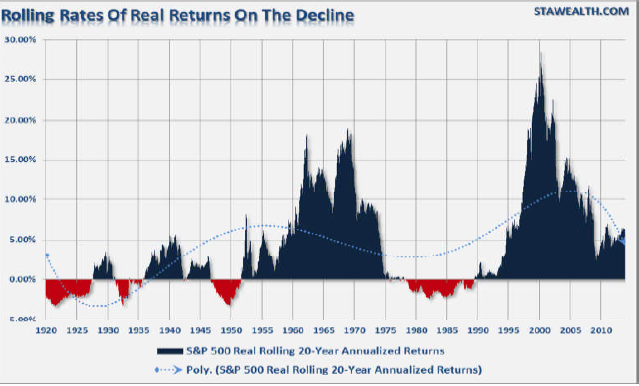
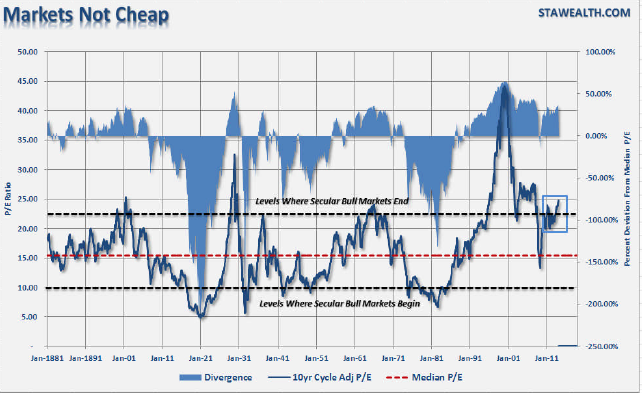
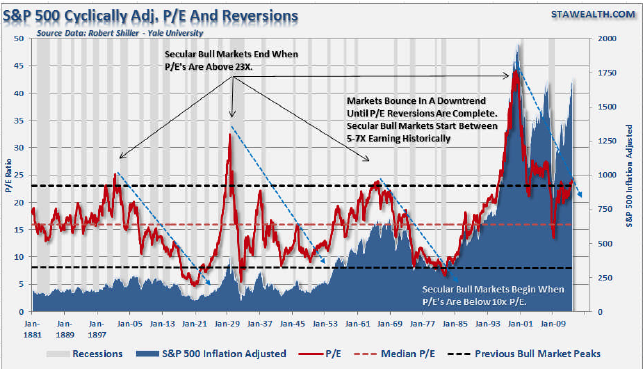
.….read more and view 26 more pictures HERE
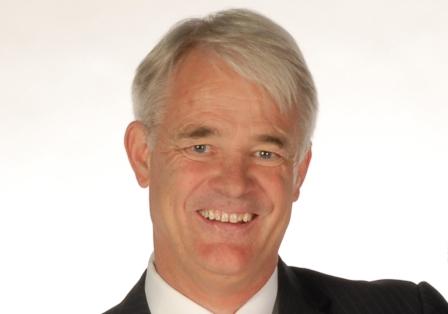
Lance Roberts is the General Partner & CEO of STA Wealth Management, Host of the “Streettalk Live” Daily Radio Show (streamed live at www.streettalklive.com), and Chief Editor of the X-Report and the Daily X-Change Blog.
Follow me on Twitter: @streettalklive

 The 1st 1/2 hour begins with Michael’s Terrific Commentary that if nothing else, will stop and make you think!
{mp3}mtnov913leadfp{/mp3}
The second hour of Money Talks begins with Michael interviewing Michael interviews Danielle Park Portfolio Manager, attorney, finance author, a regular guest on North American media. Danielle Park is the author of the best selling myth-busting book “Juggling Dynamite: An insider’s wisdom on money management, markets and wealth that lasts,” as well as a popular daily financial blog:www.jugglingdynamite.com
{mp3}mtnov913hourfp{/mp3}

“The Stamp Act was a direct tax imposed on the colonies by King George III. This act inevitably led to the American Revolution. Just as the Stamp Act did in 1765, Obamacare should act as a wake-up call” – Rand Paul
The Future Fiscal Drain of Obamacare
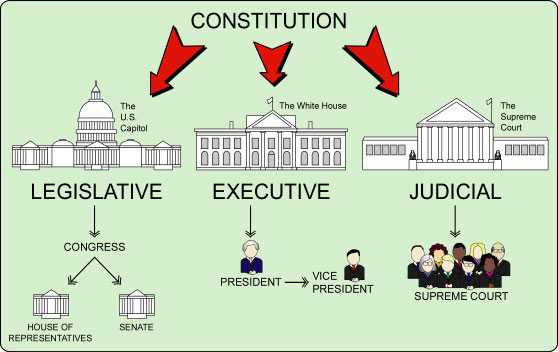 The current debate on Obamacare is not over whether the US needs a system of universal healthcare. That debate has passed, successfully. There was the act in congress, a 2012 Presidential Election centred on the topic, and it was upheld in the Supreme Court. It is instead on whether the Affordable Care Act (Obamacare’s official title) is satisfactory in providing this service of healthcare, or whether it will end up like other failing federal fiscal programs that create a long term burden on their economy. It has the potential to do that because of the individual mandate.
The individual mandate requires Americans to purchase health insurance or pay a tax penalty, and it is showing to be Obamacare’s Achilles heel. One simple reason is that on average, males between the age of 21 and 35 see a doctor six times over that time horizon. To that subgroup, there is no value in buying insurance. It’s not to say males 21 to 35 have no reason to purchase health insurance; moreover, the financially burdening decision to sign up for a plan becomes irrational when compared to paying a penalty tax.
The system relies on the premiums paid by the young generation. From a business perspective, the widest margins are in the instances of the young and healthy adults, whom are exactly the ones not eager to sign up for Obamacare. So as the President of the free world touts about individuals who were formerly denied healthcare due to prior or existing health conditions (because of a requirement in the law that prevents insurers from denying coverage), the fact of the matter is currently the majority of Obamacare enrollees are either Medicaid recipients or individuals with health conditions. These people would represent customers for insurers with quite narrow or even negative profit margins.
Simply put, it’s a law of averages. Everybody buys into the system to pay for the costs of those who will unknowingly require its services. But when the law, from the outskirts, allows individuals who with the highest probability of not requiring health insurance to simply opt out and pay a tax, its longevity becomes questionable.
This leads to another shortcoming with Obamacare. The way the law is structured, excess costs incurred by the private insurance companies in some instances may be recovered from funds by the federal government. For example, according to an article in the Wall Street Journal this week, if insurers underestimate costs, they can be recovered from the Federal Government. That is one way to minimize the risk to insurers; however, back to the original problem, should Obamacare inevitably fail to attract sufficient healthy individuals to subsidize the cost of the more demanding ones in terms of health benefits, premiums will go up in future years as the costs of the program increases.
The individual mandate was the biggest political stalemate when passing the act because conservatives did not believe the government had the authority to force someone to buy a good or service, but the law passed. Inevitably, it is a tax. It costs Americans more via their insurance premiums, or smaller wages as insurance is provided by their employer. The service in return for their tax dollars is healthcare.
Add this to the list of other underfunded American entitlement program.
All investments contain risks and may lose value. This material is the opinion of its author(s) and is not the opinion of Border Gold Corp. This material is shared for informational purposes only. Information contained herein has been obtained from sources believed to be reliable, but not guaranteed. No part of this article may be reproduced in any form, or referred to in any other publication, without express written permission. Border Gold Corp. (BGC) is a privately owned company located near Vancouver, BC. ©2012, BGC.

-
I know Mike is a very solid investor and respect his opinions very much. So if he says pay attention to this or that - I will.
~ Dale G.
-
I've started managing my own investments so view Michael's site as a one-stop shop from which to get information and perspectives.
~ Dave E.
-
Michael offers easy reading, honest, common sense information that anyone can use in a practical manner.
~ der_al.
-
A sane voice in a scrambled investment world.
~ Ed R.
Inside Edge Pro Contributors

Greg Weldon

Josef Schachter

Tyler Bollhorn

Ryan Irvine

Paul Beattie

Martin Straith

Patrick Ceresna

Mark Leibovit

James Thorne

Victor Adair