The Energy Report: Elliott, you recently wrote inCapitalist Times that “unless last winter marked the onset of a new ice age, the underlying supply-and-demand trends that prevailed before the polar vortex are always going to win out.” Based on the charts that accompany that article, what are those trends?
Elliott Gue: Last winter was really cold and, as a result, natural gas demand was very high. Natural gas stores in the U.S. were drawn down much more rapidly than normal. At the same time, there were production disruptions. It was so cold in the Rocky Mountains that producers were not able to service their wells. Natural gas production plummeted and gas prices shot up.
 The underlying trend remains very bearish for gas prices, however. The demand for gas did ease after the winter heating season, lowering prices, but there has been resurgence in production, and storage levels are back up. The electric power utilities thrive on cheap gas, and production is growing even faster than rising demand. There are simply oceans of gas out there that we have not yet tapped, like the Haynesville Shale in Louisiana. I expect that gas prices in the U.S. will remain low, and, consequently, electricity prices will continue to hug the bottom relative to the rest of the world.
TER: Given the situation, who will be the winners?
EG: The biggest winners are going to be companies that consume gas, rather than companies that produce gas. A lot of energy companies are moving away from gas toward producing more oil and natural gas liquids. Electricity prices in China are twice what they are in the U.S. Reversing a long trend, Chinese companies are building out manufacturing capacity in the U.S. The aluminum smelting industry stands to benefit tremendously, because its manufacturing process is linked to the price of electricity.
TER: Who do you like in aluminum?
EG: We like Century Aluminum Co. (CENX:NASDAQ), which is an aluminum smelter. Century takes aluminum oxide and, using a process that requires a lot of power, turns the oxide into aluminum, which is then used in thousands of products. Century is buying power in the U.S. on the spot, which means that it pays prevailing market prices. As a result, it is buying power at a steep discount to what its European competitors are paying.
Demand for aluminum by the automobile industry is expanding, because the federal government’s Corporate Average Fuel Economy (CAFE) standards require automakers to boost the fuel efficiency of entire lines of cars and trucks. Ford is meeting the standard by increasing the amount of aluminum used in its vehicles. The 2015 Ford F-150 pickup truck is 750–1,000 pounds lighter than the 2014 model. It is expected to sport a fuel efficiency of 30 miles per gallon (30 mpg). No standard-size pickup truck in the U.S. has ever achieved 30 mpg in terms of fuel efficiency. The low natural gas prices in the U.S. will continue to be a big boost for companies like Century Aluminum, which require an awful lot of power in their factories.
TER: Are energy investors today looking for short-term profits in the hurly-burly of the stock market, or are they looking for steady income vehicles?
EG: Steady income investments are in demand. Back in 1999–2000, you could put money into a certificate of deposit, a money-market account, or even a savings account and still get interest rates of 5–6%/year. Now, you can’t even get 1%. Income-producing stock sectors, like utilities and real estate investment trusts (REITs), are yielding at near historic lows, under 3%. Investors are starved for steady-stream income vehicles. This highlights the attractiveness of master limited partnerships (MLPs), which are typically used by midstream energy companies. The MLPs own assets like pipelines and natural gas storage vehicles. They offer higher-than-average yields, which permits investors to earn better than average returns.
TER: Are the best opportunities for steady income flow emerging from the established MLPs, or from those MLPs making initial public offerings (IPOs)?
EG: We focus on MLP IPOs because the yields on many of the large, traditional MLPs have fallen—not because they have cut dividends or distributions, but because the MPL industry has rallied so much. I see a lot of value in new MLP listings—companies that have just gone public as MLPs. Exchange-traded funds (ETFs) and institutional money is strongly attracted to the largest and longest-standing MLPs, such asEnterprise Products Partners L.P. (EPD:NYSE). Buying MLPs en masse inevitably drives down the yield. Still, investors are so hungry for yield that they are piling into the traditional MLPs, which can increase the valuation of the larger, more established names.
Oftentimes, if you search for a symbol for a new MLP, it will show that there is no yield. The reason is that the MLP has not yet paid its first quarterly distribution. It is a good strategy to jump in early on new MLPs, before they become too popular. Investors can get a good price until the MLP starts paying out distributions, and displays its income potential for all to see and grab.
TER: What IPOs do you like in the MLP space?
EG: One new IPO that we are looking at is Cypress Energy Partners LP (CELP:NYSE). It went public in January 2014. Cypress is in the wastewater business. Oil and gas fields produce large volumes of water that contains all kinds of contaminants, and that water must be disposed of in a regulated fashion. Cypress injects wastewater into disposal wells underneath the drinking water table.
 There is also a need for recycling fracking wastewater, so it can be used in another round of fracking. The technology to do that already exists, but it is more expensive than disposing of wastewater in an injection well. The future holds more recycling opportunities because reusing expensive water can cut costs. For instance, in Southern California, water prices are very high because there is a drought, so using recycled water makes sense. Cypress may enter that space as well.
The second part of Cypress’ business is pipeline integrity, monitoring pipelines for signs of weakness that might cause a spill. Obviously, with high-profile pipeline spills and reputation-damaging ruptures over the last five to 10 years, focus has shifted to this business. Companies are spending cash to make sure their pipelines are safe.
Cypress yields about 6.5%. The average MLP yields about 5.5%, so Cypress delivers an above-average yield. It has a lot of growth potential because both of its businesses are necessary. I expect its distributions to grow at an annualized pace of 10–15%, plus the 6.5% yield.
TER: Which other MLPs do you particularly like?
EG: One of our favorites is Memorial Production Partners LP (MEMP:NASDAQ). It owns mature oil and gas fields in Texas and the Rockies, and an offshore field in California that went into production 70 years ago. Predictable rates of production from these fields back the company’s strong, 9.6% yield. Of course, if oil and gas prices fall, Memorial would have to cut its distribution. To prevent that scenario, it hedges most of its production five years into the future—meaning that Memorial does not have any real exposure to the volatility of commodity prices.
TER: Are there any MLP spinoffs in the works?
EG: One of the biggest MLP spin-offs is going to be called Shell Midstream Partners LP. As that name implies, it is being spun out from Royal Dutch Shell Plc (RDS.A:NYSE; RDS.B:NYSE), which is, of course, one of the largest oil companies in the world. It is an integrated producer. It has upstream oil and gas production. It has downstream refining, and owns a large number of midstream assets in North America, like pipelines and storage facilities. Shell Midstream will own the Ho-Ho pipeline, which stretches from Houston to Houma, Louisiana. The spin-off’s long-term contracts will be with producers like Shell, which is also its general partner. Those solid contracts will guarantee a minimum cash flow. I suspect that this new MLP will go public in Q4/14, and it will be a hot name.
TER: Have you spotted any undervalued oil and gas production majors?
EG: The problem with Exxon Mobil Corp. (XOM:NYSE) and Chevron Corp. (CVX:NYSE) is their slow production growth in recent years. These companies are overvalued by any metric—price:book value, price:cash flow, price:earnings. We look for smaller integrated names. These are still massive companies, but not as gargantuan as Exxon and Chevron.
For instance, Eni S.p.A. (E:NYSE) is an integrated oil company that is partly owned by the Italian government. It trades at a discount to the big U.S. and northern European energy firms because it is based in Rome. The financial crisis in southern Europe has hit the Italian economy hard, and investors tend to shun firms listed in Rome. The reality is that most of Eni’s assets are in Africa, where Italy had a longstanding colonial relationship. Eni’s main products are natural gas and crude oil—priced in dollars, not euros. So Eni has had very little exposure to the risky Italian situation, yet it trades at about half the valuation of Exxon.
TER: If the majors are experiencing a slowdown in production growth, how can the smaller firms do better?
EG: Exxon has trouble growing because, for a field to move the company’s stock needle, it has to be massive. Eni can exploit smaller projects in Africa and generate relatively greater production growth. It has a number of major finds in Mozambique that are due to come on-stream over the next few years. An additional benefit is that Eni yields about 5%, whereas Exxon yields around 2–3%. Eni is offering a much higher yield alongside production growth in the outlier regions.
TER: Are there other large companies in that smaller space that you like?
EG: Total S.A. (TOT:NYSE) is a French company. It trades at a discount because it is based in Europe. It offers a yield of about 5%. It is not quite as strong a production growth story as Eni, but it does have a number of interesting projects coming online in the Arctic, near Norway.
TER: What junior explorers and producers do you have your eye on?
EG: Noble Energy Inc. (NBL:NYSE) centers its production on the Niobrara Shale region in Colorado and Wyoming. The Niobrara is not as fully developed as the Bakken Shale, but the Niobrara’s wells are among the most spectacular plays in the U.S., ranking only behind the Bakken in terms of profitability. Noble is one of the largest acreage holders in the Niobrara. It has set up a very aggressive drilling program for the next three to five years. As people become more aware of what is going on in the Niobrara, and as production expands, entrenched names like Noble will attract lots of attention and capital.
TER: Is Noble international?
EG: Three years ago, Noble discovered a massive gas field off the coast of Israel called the Leviathan. While natural gas prices in the U.S. are very low, that is certainly not the case in Europe and Israel. The massive Leviathan gas field is strategically important to Israel. Noble will be able to produce natural gas from this field, sell it domestically, and bring down the cost of natural gas in Israel. It will also be able to export liquefied natural gas (LNG) to Europe. Currently, Europe imports the majority of its natural gas from Russia. With the ongoing political turmoil in the Ukraine, the Europeans are keen to diversify their supply sources.
TER: When will the Leviathan start producing?
EG: Noble is drilling a number of delineation wells. These wells will evaluate the size and productivity of the play. The flow of news is good. I suspect the Leviathan will go into production in the next two to three years. It will ramp up in 2019, as the company’s LNG plant goes live.
TER: With the differential in natural gas prices, what’s happening in the refining space? Where are the best buys?
EG: The refining space is the biggest beneficiary of the surge in U.S. oil production. At the end of 2013, the U.S. overtook Saudi Arabia to become the world’s largest oil producer. That is an amazing statistic when you consider that just 10 years ago, we were talking about how much more oil the U.S. was going to have to import from Saudi Arabia to meet domestic demands. And oil production in the U.S. continues to grow.
 But one of the side effects of that growth is that U.S. oil prices are far lower than in other parts of the world. The key international global oil benchmark is Brent crude. It is trading around $100–105/barrel ($100–105/bbl). The key U.S. oil benchmark is West Texas Intermediate (WTI), and that is trading in the low-to-mid-$90s.
In other parts of the U.S., oil prices are even lower. In Midland, Texas, in the heart of the Permian Basin play, oil prices are trading around $74/bbl, which is a massive discount to international oil prices. Due to the lack of pipeline capacity, there is a glut of crude oil in certain parts of the U.S., and that fact is depressing prices. Obviously, that is not good news for producers, but it is great news for refiners.
TER: Why?
EG: Refiners are manufacturers. A refiner’s largest cost is the price of crude oil. If a refiner can buy oil at a deeply discounted price, that will enhance its profit margins. Refiners located near Midland purchase crude at a steep discount and sell gasoline and diesel fuel at high prices. Plus, the U.S. government does not allow the export of crude oil, but it does allow the export of refined products. And international prices for refined products are sky-high.
TER: What refiners do you like?
EG: Valero Energy Corp. (VLO:NYSE) is the largest independent refiner in the U.S., with refinery assets primarily located around the Gulf Coast area. A lot of production flows toward that region because pipelines in the U.S. are set up to transport oil to the Houston area, where the refining industry is strong.
Looking at smaller refiners, we keep tabs on Alon USA Partners LP (ALDW:NYSE). This MLP has a refinery in Big Spring, Texas, near Midland. It benefits from the low Midland crude oil prices and selling its refined products at very high markups. It currently yields about 16%, and that is super.
TER: Of the Big Four firms in the service sector, which ones are the best positioned in today’s economic climate?
EG: Four of the largest oil services firms in the world are Baker Hughes Inc. (BHI:NYSE), Halliburton Co. (HAL:NYSE), Schlumberger Ltd. (SLB:NYSE) and Weatherford International Ltd. (WFT:NYSE).
Schlumberger is the largest. It is also the most respected and, technologically, the most advanced. People sometimes make the mistake of thinking that the energy business is not high tech. The energy business is one of the most high-tech industries. It is producing oil from deepwater plays, drilling in water that’s 10,000 feet (10,000 ft) deep, with wells that can be 35,000 ft long. Bidding on big deepwater developments, and big onshore projects in the Middle East, is a very competitive business. These projects are so heavily bid that the pricing is not great, because companies are competing on price to win business.
Schlumberger has developed certain unique technologies that the rest of the Big Four services firms don’t have. These are typically techniques that allow companies to drill a well using less water, drill a well quicker than its competitors, and locate oil in underground rock formations with seismic waves that map the rock formations. As a result, Schlumberger is able to charge high prices for its unique services, and its margins are much higher than those of its competitors.
Weatherford has been the worst of breed over the last five years. It had an accounting scandal—an irregularity in its international accounting for taxes. That matter has been settled, which means Weatherford’s management team can return to focusing on operations. The company is spinning off noncore businesses that were not returning high margins. The $1 billion ($1B) from these spinoffs can be used to pay down Weatherford’s debt load, which is a big positive.
Operationally, Weatherford has artificial lift, a technology that can produce more oil from mature fields. That lifting ability is very much in demand, because there are a lot of mature fields around the world, and oil prices are high enough to make it profitable. Once Weatherford gets rid of the small businesses that have been acting as a headwind on profits over the last five years, its managers will be able to focus on the firm’s competitive strengths, such as artificial lift.
TER: What advice are you giving readers about adjusting portfolios for the fall?
EG: Stocks have been steadily on the rise, and we have not seen very many corrections. The correction we saw this summer was on the order of 5% on the S&P. Be prepared for a 5–10% pullback in the broader market. We regard a pullback as a buying opportunity for a lot of the names that I have mentioned.
Longer term, the economy is in good shape. Growth is accelerating after too many years of weak growth. Growth generates a big tailwind for stocks. We have been selling out of the names that have done very well for us, taking our profits off the table or reducing our exposure. It is all about having cash in reserve to take advantage of the lower prices when they come around, as they always do.
TER: Thanks for talking to us, Elliott.
Since earning his bachelor’s and master’s degrees from the University of London, Elliott Gue has dedicated himself to investment in the energy sector, and was been referred to in the official program of the 2008 G-8 Summit in Tokyo as “the world’s leading energy strategist.” He has also appeared on CNBC and Bloomberg TV and has been quoted in a number of major publications, including Barrons, Forbes and The Washington Post. Gue’s expertise and track record of success have also made him a sought-after speaker at MoneyShows and events hosted by the Association of Individual Investors. Gue has contributed chapters on developments in global energy markets to two books published by the FT Press, “The Silk Road to Riches: How You Can Profit by Investing in Asia’s Newfound Prosperity” and “Rise of the State: Profitable Investing and Geopolitics in the 21st Century.” Prior to founding the Capitalist Times, Gue shared his expertise and stock-picking abilities with individual investors in two highly regarded research publications, MLP Profits and The Energy Strategist, as well as the long-running financial advisoryPersonal Finance. In October 2012, Gue launched the Energy & Income Advisor, a semimonthly online newsletter dedicated to uncovering the most profitable opportunities in the energy sector, from growth stocks to high-yielding utilities, royalty trusts and master limited partnerships.
Read what other experts are saying about:
Want to read more Energy Report interviews like this? Sign up for our free e-newsletter, and you’ll learn when new articles have been published. To see recent interviews with industry analysts and commentators, visit our Streetwise Interviews page.
Related Articles
- What the Narrowing WTI/Brent Price Gap Means for Investors: Elliott Gue
- Malcolm Gissen and Marshall Berol: Welcome to the Golden Era of Oil & Gas
- Filipe Martins: African Miners that Can Generate Cash Flow and Dividends
DISCLOSURE:
1) Peter Byrne conducted this interview for Streetwise Reports LLC, publisher of The Gold Report, The Energy Report, The Life Sciences Report and The Mining Report, and provides services to Streetwise Reports as an independent contractor. He owns, or his family owns, shares of the following companies mentioned in this interview: None.
2) The following companies mentioned in the interview are sponsors of Streetwise Reports: Royal Dutch Shell Plc. Streetwise Reports does not accept stock in exchange for its services.
3) Elliott Gue: I own, or my family owns, shares of the following companies mentioned in this interview: Enterprise Products Partners L.P., Cypress Energy Partners L.P., Memorial Production Partners L.P., Royal Dutch Shell Plc, Exxon Mobil Corp., Chevron Corp., Eni S.p.A., Total S.A., Noble Energy Inc., Valero Energy Corp., Alon USA Partners L.P., Baker Hughes Inc., Halliburton Co., Schlumberger Ltd., Weatherford International Ltd. I personally am, or my family is, paid by the following companies mentioned in this interview: None. My company has a financial relationship with the following companies mentioned in this interview: None. I was not paid by Streetwise Reports for participating in this interview. Comments and opinions expressed are my own comments and opinions. I had the opportunity to review the interview for accuracy as of the date of the interview and am responsible for the content of the interview.
4) Interviews are edited for clarity. Streetwise Reports does not make editorial comments or change experts’ statements without their consent.
5) The interview does not constitute investment advice. Each reader is encouraged to consult with his or her individual financial professional and any action a reader takes as a result of information presented here is his or her own responsibility. By opening this page, each reader accepts and agrees to Streetwise Reports’ terms of use and full legal disclaimer.
6) From time to time, Streetwise Reports LLC and its directors, officers, employees or members of their families, as well as persons interviewed for articles and interviews on the site, may have a long or short position in securities mentioned. Directors, officers, employees or members of their families are prohibited from making purchases and/or sales of those securities in the open market or otherwise during the up-to-four-week interval from the time of the interview until after it publishes.



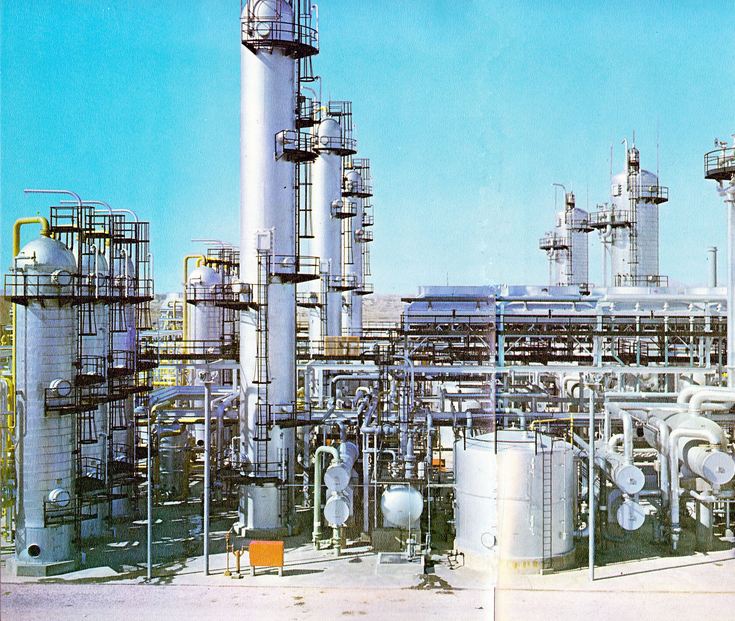 The Mexican government announced a fundamental overhaul of its energy industry on August 7th, 2014, which will allow for private investment in Mexico’s oil and gas reserves. The new legislation follows changes made to Mexico’s constitution in December 2013 that eliminated exclusive state ownership of petrochemical assets.