
Uncategorized
archived articles links
Lorem Ipsum is simply dummy text of the printing and typesetting industry. Lorem Ipsum has been the industry’s standard dummy text ever since the 1500s
Lorem Ipsum is simply dummy text of the printing and typesetting industry. Lorem Ipsum has been the industry’s standard dummy text ever since the 1500s
df dsf sd
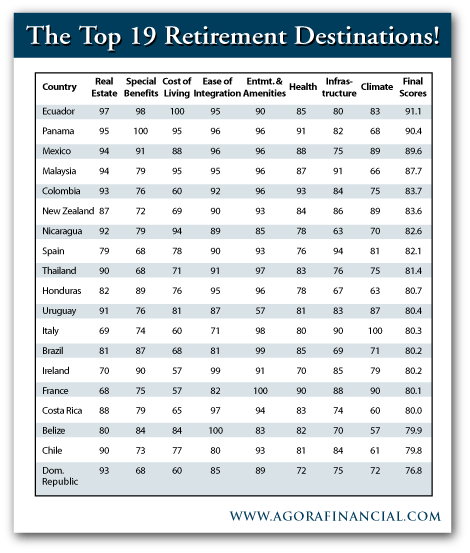
If you had $20,000 a month to retire on — you could live lavishly pretty much anywhere on the planet. But we’re interested in the places where you can live that lifestyle on one-tenth the budget…
Places where you can have a maid clean for you…hire a gardener… wake up to a view…have great health care, eat well, enjoy the finer things in life — for less than $2,000 a month. You may be surprised how many there are…
Months ago, our far-flung editors and in-country advisers began collecting all the data and details that inform our annual Retirement Index.
To compile it, we evaluate and rank countries around the world according to eight crucial categories: real estate, special retirement benefits, cost of living, ease of integration, entertainment and amenities, health care, retirement infrastructure and climate.
This is a qualitative assessment, based on real-world data gathered on the ground. For each category in our Index, we looked closely at what matters most to you when you’re considering an overseas retirement spot — everything from the price of bread to how easy it is to make friends or stay in touch with family.
We considered a vast range of data points, from the average humidity to the cost of a taxi. And with costs in mind, we examined prices for real estate, rentals, and utilities like water, electricity, and cable TV. We looked at costs for groceries, eating out, even specific medical procedures. We took into account what kind of discounts retirees can get on travel, taxes and entertainment. And we considered whether there were direct flights back home…how many and how long they are, too.
And we asked: What is the Internet like? Do you need a car? Can you catch a movie in English? Are the people friendly? Does it rain? In effect, we asked all the questions you should ask when you’re considering a retirement overseas. This year’s Top 19 foreign locations are listed below:
Numbers and rankings don’t tell the whole story, of course. When it comes to relocating overseas, there is no such thing as “one size fits all.” So the staff and global correspondents of International Living also recorded a wide range of boots-on-the-ground testimonials from folks who have retired to these various foreign locales.
Take Daphne Newman, who lives in Caribbean Honduras. She’s spending just $1,400 a month to live yards from a white-sand beach on the island of Roatan. Only a three-hour flight from the US, English-speaking Roatan with its world-class reef just offshore, is an easy place to make friends and fit in. It lands mid-table in this year’s Index.
Jack Griffin and his wife Margaret have opted, by contrast, for city life in Nicaragua. When the stock market crashed and the value of their home in the States plummeted by 30%, they began to worry about how to fund their retirement. The final straw came with a 37% hike in their annual health-insurance premium. At age 60, they felt they deserved the retirement they had worked for all their lives, so they found a new home in Managua, the country’s capital.
Today their international medical insurance costs them 62% less than their policy did back home (yet their local hospital is internationally accredited and the doctors speak English). Retired now without money worries, they spend their days exploring, horseback riding, going to the beach or gym, and doing yoga. They have a full-time maid and a gardener and, says Jack, “We do it all for less than half the cost of a moderate lifestyle back home in Atlanta, Georgia.”
Chuck and Jamie Bilbe, ready to retire in Florida, found themselves in a situation similar to the Griffins’. “We were concerned that our retirement savings wouldn’t see us through, so we began looking overseas for a place where our ever-shrinking nest egg might last longer,” says Chuck. Now they live in Corozal, Belize, their cost of living is much lower than it was in the States, but that’s not the greatest appeal. What they say they like most is the Old-World lifestyle. “Like Florida in the 1950’s,” they say. “We’re eating better, sleeping better and enjoying social activity much more now than we did before.”
It’s not just destinations south of the States that appeal. Pam Griner Leavy and her husband Jim are just two of the more than 100,000 American expats living in France. They’re retired in Paris on a reasonable $3,149 a month. “There are so many things for free here, or reasonably priced…big-city life is good,” says Pam.
In Asia you can live comfortably for less than $1,000 a month on a powder-sand beach in Thailand. Up the budget just a bit and you can afford First-World comforts and conveniences in colonial Penang Island, Malaysia. Keith Hockton and his wife Lisa live there, where they rent a sea-view apartment for $1,000 a month — it comes with a shared pool and gym — and they eat out five nights a week, keep a small sailboat, enjoy cycling through the botanic gardens. Their total budget is $1,719 a month.
In Brazil, expats with $2,150 a month can live a block from the country’s best beaches in Fortaleza. In Boquete, Panama, Karl and Liz Parker need just $2,000 a month to fund their life in a place that provides lavish highland views in a near-perfect climate. Panama’s retiree-benefit program provides them discounts on nearly everything, too, which helps keep their costs down.
In Cuenca, Ecuador, Douglas Willis, his wife and two children live on just $1,000 a month. In Costa Rica’s Central Valley, Sharon and Lee Harris bought a townhouse in Heredia for $75,000, and pay only $40 a month for healthcare coverage as members of the Caja, the country’s excellent national healthcare system.
Wherever the locale they’ve chosen — beach, city, highland, valley — these expats all have one thing in common: They’re living the lives they’ve always wanted for much less than they ever dreamt they could.
This 2012 Retirement Index covers all the bases, revealing a wealth of choices when it comes to comfortable retirement living abroad. Choices you don’t have to be wealthy to take advantage of.
Regards,
The International Living Team
for The Daily Reckoning
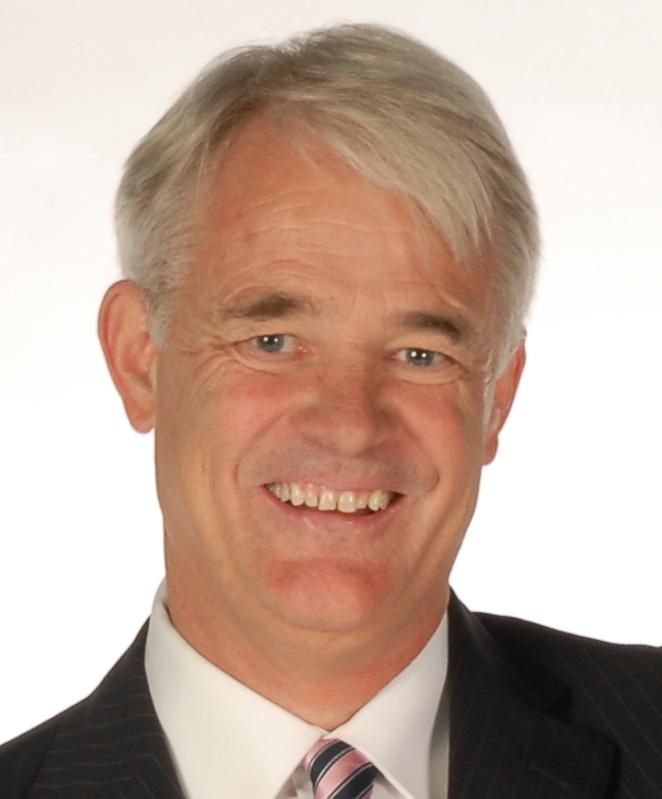 I have just read this letter over and while I hope it helps to clear up some of the confusion a lot of investors and analysts are experiencing, it may also be the lamest promotion piece ever written.
I’m getting a ton of questions about the investment markets these days. In a nutshell, much of the confusion can be distilled down to the disconnect between the up move in the market and the major economic stories of the day.
On the wall of the New York Stock Exchange there is a plaque with the statement: “Now is always the most difficult time to invest.” To borrow from Bart Simpson – “Well Duh.”
- In February Italy needs to come up with 53 billion euros to finance maturing debt.
- France needs to come up with 36 billion euros.
- Greece is currently negotiating with its bondholders in order to get them to take a 65% to 70% loss on their holdings and not get repaid the remainder for another 30 years.
- $8 trillion in government debt must be refinanced in 2012
All of this creates uncertainty and is deflationary, but that’s not all.
- In the last six months Europe experienced zero growth with many analysts calling for recession in 2012.
- China’s economy is growing at its slowest rate in 2 ½ years while the Shanghai index is down 31% since April.
- The World Bank has slashed global growth estimates by 30%.
- US oil demand fell last year by 1.2% – the second largest drop in 10 years
Now contrast that to the action in the markets: The Canadian dollar has rallied back to a critical juncture above 99 cents, gold and silver have both rebounded after holding their September lows, which sets up a bullish double bottom formation. Copper has broken its downtrend line, palladium has also reversed and the TSX has broken its 100 day exponential downtrend line in place since last spring.
Is the market signalling that we are about to enter the next wave of the commodity boom? Is the major correction in the commodity sector behind us?
While the market is starting to hint that may be the case, the underlying macro economic problems in Europe are not even close to being solved which would reduce demand for commodities. Japan is in deep trouble because of its aging population and China’s economy is slowing, which would lower their demand for many commodities. And let’s not even get started with the US financial problems.
I can’t think of a good analyst I know that doesn’t think that the next couple of months are pivotal. Any bullish scenario could be derailed by banking problems in Europe and China or sovereign debt problems in Japan. Or propelled by massive central bank, IMF and government monetary intervention.
Over hanging the short to mid term is the fundamental problem of excess government debt and unfunded liabilities, which are exacerbated by the demographic shift and slow economic growth. The last half of 2011 was only the opening act in what I think will be a long running drama centered on the profound restructuring of the welfare state. In other words there are many more shoes to drop.
In the meantime we can experience many bull and bear markets as central banks intervene aggressively to stave off deflation. The US Federal Reserve’s quantitative easing (printing of money) starting in August, 2010 was directly correlated with the ensuing commodity boom that lasted until early May, 2011. There was a ton of money to be made riding that wave. Clearly the central bank action in Europe has for at least the short term staved off a panic liquidation and helped put a bottom to the fourth quarter decline in the markets.
So Where to Now?
Clearly we are in a high risk environment but just like the last couple of years, it is one that will yield many significant money making opportunities. On MoneyTalks we did very well riding the market highs into the first week in May and took significant money off the table in gold in the August run-up. While we also did very well buying the banks in mid November, for the most we stayed out of the market in the fall. Probably the easiest trade, which Jack Crooks and Victor Adair both outlined was to short the Euro and buy the US dollar against it. I’m interested to hear what they think now.
Personally, my key will be to consult with the best analysts I know to help determine the best opportunities to make money in the coming year, which brings me to the promotional part of this letter.
I am gathering together some of the top analysts in North America for the World Outlook Conference on February 10th and 11th and I think you should make plans to come. I appreciate for many it is not one of those things that tops the “to do” list but at some point every one of us will have to take a far more active role in our personal finances. That’s the unequivocal lesson of the last four years.
Personally I am really looking forward to the return of Martin Armstrong, THE most interesting analyst I have ever known. He will be joined by stock market timer and gold market timer of the year, Mark Leibovit and legendary analyst, Jim Dines will join us by satellite.
But that’s not all. Martin Murenbeeld, one of the top economists in the English speaking world and the analyst of choice for gold companies is coming to share his take on what coming next. With so much money to be made in the currency markets I have once again asked one of North America’s top traders, Black Swan Capital’s Jack Crooks to share his favourite trade for the coming year.
Personally I know that oil and gas is going to be an essential part of my portfolio going forward so I have asked Josef Schachter, Canada’s leading oil and gas analyst to share his latest research and picks. If real estate is your thing then you’ll enjoy Ozzie Jurock’s top buys in the US and Canada.
Last year the audience loved Don Vialoux so I have asked him back again. Don can dramatically improve your ability to buy and sell at the right time through his understanding of seasonality, cycles and other technical tools. Last year he told the audience that his favourite short term trade was wholesale gasoline and six weeks later it had gone up over 20%.
And of course Ryan Irvine of Keystocks Financial will be there with his 2012 World Outlook Small Cap portfolio. The portfolio’s consistent double digit returns since its introduction in 2009 has literally made back the price of a ticket back many times over.
Plus
Last year we introduced a series of personal finance workshops and other opportunities to get your personal questions answered. The workshops were a great success so we will be doing it again this year with emphasis building a bullet proof portfolio, reorganizing your mortgage to your best advantage, the top ETFs for 2012 and investing in private companies.
A Final Word
There are a ton of analysts out there – but some are definitely better than others. I want to get you access to professionals with proven track records. People who can help you not only survive but thrive over the next year. Our goal is to make a very positive difference in your financial life at this pivotal time in history and I have brought the people together to do it.
Sincerely,
Mike
I am hugely interested in educating our younger generation and to that end we have a special offer for students. If you buy a ticket – you can bring a student for only $20 more.
CLICK HERE to get your tickets



-
I know Mike is a very solid investor and respect his opinions very much. So if he says pay attention to this or that - I will.
~ Dale G.
-
I've started managing my own investments so view Michael's site as a one-stop shop from which to get information and perspectives.
~ Dave E.
-
Michael offers easy reading, honest, common sense information that anyone can use in a practical manner.
~ der_al.
-
A sane voice in a scrambled investment world.
~ Ed R.
Inside Edge Pro Contributors

Greg Weldon

Josef Schachter

Tyler Bollhorn

Ryan Irvine

Paul Beattie

Martin Straith

Patrick Ceresna

Mark Leibovit

James Thorne

Victor Adair