 The Life Sciences Report: Steve, last year there were 15 new molecular entities approved by the U.S. Food and Drug Administration (FDA) through Aug. 12, 2013. So far this year, up through Aug. 19, 2014, there have been 26 new molecular entities approved. What could be contributing to this stepped-up pace of approvals?
Steve Brozak: The reason is two-pronged. First, the FDA has a direct and specific mandate to increase the throughput of drug approvals. Second, the pharmaceutical industry of yesterday had large, high-powered, blockbuster products, and there was no impetus for companies to make a case for new drugs. Nobody wants to fix something that’s working. But now, with the disappearance of the intellectual property exclusivity of some huge-revenue drugs, companies have no choice. The revenue that was previously safeguarded by the blockbuster model is disappearing more quickly than it has in the history of the industry. As a result, we are seeing new drug application (NDA) submission packages that are much more robust, and that are crafted to allow for easier deliberation within the agency. The FDA hasn’t “lowered” its standards, but rather the pharmaceutical companies have increased their submission-package strength. I think it’s an interesting landscape.
TLSR: Do you think this pace can continue?
SB: Actually, I think we will see an increase in submissions from the pipelines, because we are not seeing a tapering-off effect in the need for new drug approvals. We are facing a sicker demographic because of an aging population, and we are facing a sicker revenue and earnings stream from the pharmaceutical industry.
TLSR: You and I have previously discussed the problems in the healthcare system in the U.S. Could you just briefly hit on some of these again?
SB: There is a perception that if clinicians, drug-discovery teams and the principals around the input of new technology all had an “Aha! moment,” and if that moment were reproducible, then that would be enough to allow for the acceptance and adoption of that new technology—that new drug or new treatment protocol. This is simply not the case. Regrettably, the more important parts of the equation are those who will vouchsafe for that new technology or drug once it’s been approved. It is far more important that an industry-established figure gains the credit for it.
The perfect example is Barry Marshall, who systematically proved that Helicobacter pylori (H. pylori) was the causative agent for ulcers. The man had been laughed off the stage when he initially asserted his discovery. He infected himself to prove it. Even then, it took more than a decade for people to accept his conclusions. Then, in 2005, he and his collaborator Robin Warren won the Nobel Prize in physiology or medicine for that discovery.
Frankly, there is no difference in that attitude today, and that is a problem. We think we have real-time, seamless dissemination of technology via the Internet. The reality is that it is now 10 times worse because clinicians are more likely to spend time reading the materials presented to them by the drug companies or listening to what their patients are telling them after having watched advertisements on 60 Minutes. That’s a terribly telling sign that they are not reading peer-reviewed scientific work.
TLSR: Let’s talk about companies. When you are looking at a company and performing your due diligence, what factors are you looking at?
SB: We look at what the rate-limiting steps might be for a company. We look at what the sine qua non is and the verifiable, statistical evidence. It has to be something that I can quantify and check. A statistical analysis never works exactly the way it was designed. When I do see something like that occur, it scares the hell out of me, because I know something is not right. When something goes wrong, and then someone figures out what went wrong and understands what the difficulties were, that’s how we make progress.
TLSR: In light of what you’ve just said, let me throw out a name that you follow—Athersys Inc. (ATHX:NASDAQ). Back on April 28, the company put out a press release saying that in a 128-patient, Phase 2 trial with MultiStem (multipotent adult progenitor cells), the study failed to show efficacy over eight weeks in patients with chronic advanced ulcerative colitis. This study was being conducted by Athersys’ partner Pfizer Inc. (PFE:NYSE), and it was randomized and double-blind. What did we learn from that failure?
SB: The reinforcement was that the safety profile was there. What I care about is the ability to data mine. I care about the accretive information, the use of the data, and the furthering of the understanding. Regenerative medicine is something that, to date, very few people have understood. MultiStem is not a small molecule, and it’s not something that people have significant familiarity with.
I don’t know where MultiStem will change the potential of clinical practice. What do I know is that the pass-through of the cells that we’ve detected going through the pulmonary system tells me the therapy has a highly efficacious system of distribution. That gives me a better understanding of future potential. It may not work in one area, but it may well work at something else.
I draw back to almost a generation ago, when we started to see monoclonal antibodies that had been developed by a company acquired by Johnson & Johnson (JNJ:NYSE)— Centocor (now Janssen Biotech Inc.) and its anti-tumor necrosis factor (TNF) antibody, infliximab (Remicade). People said, “Well, it doesn’t work for anything, right?” That product basically was the initial generation of all of the anti-TNF products, which are now are a $20 billion a year market, addressing rheumatoid arthritis and the anti-inflammatory cascade disorders—drugs like Humira (adalimumab), Cimzia (certolizumab pegol) and Enbrel (etanercept).
TLSR: This MultiStem trial in ulcerative colitis was designed five or six years ago to include a single infusion of cells, which were expected to demonstrate efficacy in a condition that patients had been developing and suffering with for a decade—and many cases, two decades or more. You wouldn’t design a single-dose-administration trial to demonstrate efficacy for a corticosteroid or any other anti-inflammatory agent—or almost anything you might use in an autoimmune disease, would you?
SB: No, you wouldn’t. Frankly, that does not represent the real-world model, but it does represent the pharmaceutical model of a clinical trial, which, in the case of the Athersys trial case, was done by Pfizer. The real world model is that you take the information, you learn from the study, and you alter factors for the next study based on the data as they present themselves. Unfortunately, the pharmaceutical industry is not good at that, which demonstrates the demand for small, innovative biotechs that do understand the need for it.
TLSR: What is your impression of Athersys and its technology platform today?
SB: There are only a handful of companies that understand the regenerative medicine space, and Athersys is one of them. The company has developed a significant understanding of the potential for applications of MultiStem. It understands the technology. That “Aha! moment” came for me a few years ago, when it was demonstrated that the cells go into the circulation and home in on areas of inflammation. The importance of that struck home right then and there.
TLSR: You believe that the death warrant for Athersys has been signed a bit prematurely?
SB: I believe, to paraphrase Mark Twain, the negative information that we have seen has been greatly exaggerated.
TLSR: You also follow other stem-cell technology companies, right?
SB: Yes, I do. NeoStem Inc. (NBS:NASDAQ) is another that we follow, and it has found some very interesting data from its initial cardiac results. It has taken on the sickest patients, and has seen some positive results on cardiac repair. The company’s cell therapy, NBS10 (autologous bone marrow-derived CD34+/CXCR4+ enriched cells; also known as AMR-001) was able to regenerate and repair damaged tissues and tissues that would be expected to have continued to decay. It provided greater statistical improvement than you would have expected.
TLSR: I believe the study you are referencing is the company’s Phase 2b PreSERVE-AMI trial in ST segment elevation acute myocardial infarction (STEMI), a proof-of-concept trial. Is that right?
SB: Yes. The trial has 160 patients and is randomized and double-blind. Unlike Athersys’ MultiStem cells, which are allogeneic (from same species), NeoStem’s NBS10 is an autologous (taken from and readministered to the same patient) therapy. Also, STEMI is an acute condition, unlike the chronic disease that Athersys is treating. I believe, according to the company, that within the next 60 days, we’re looking for a release of significant information. I would expect to hear the data sometime in Q4/14.
TLSR: Could you speak to another company, please?
SB: We have a very high price target on Omeros Corp. (OMER:NASDAQ), as people have commented and called me up on. Our price target is $60/share, and the stock has been trading in the $14/share range recently.
The company’s recently approved product is Omidria (phenylephrine + ketorolac), a mydriatic (pupil-dilation) agent combined with an anti-inflammatory drug. These are very well-known drugs that we’ve seen put together by compounding pharmacies for ophthalmologists performing surgical procedures. Omeros has standardized the agents as a manufactured and, of course, sterile product. The company has proven it can provide a product that will replace agents that have been compounded, or those that are split among patients in the office setting. The FDA basically didn’t even require review.
TLSR: Omeros has a rather extensive pipeline. When I look at the company’s market cap, which is under $500M, I have to wonder if the Street is giving any value to anything aside from Omidria.
SB: One issue here is that large-cap portfolio managers can’t own small-cap stocks. How are they going to buy enough Omeros to make a difference in their portfolios? They have to buy Pfizer, Merck & Co. Inc. (MRK:NYSE) or Johnson & Johnson, because a representative position in a $500 million ($500M) stock would basically mean that you have to buy the whole company. These funds need to own shares in companies that have $5 billion ($5B) or $10B market caps.
TLSR: Could you pick another name?
SB: Let’s go into one of the critical areas that we look at—the antibiotics companies. I’ll talk about two of these—Cempra Inc. (CEMP:NASDAQ) and Tetraphase Pharmaceuticals Inc. (TTPH:NASDAQ).
The different agencies within the Department of Health and Human Services have stated that they do not want to see bacteria emerge that are not manageable via antibiotics that are currently approved. They simply do not want to return to an era where we see people succumb to basic bacterial infections.
I look at Cempra, and I think of it as one of the most important companies in our investment repertoire. Bacteria are absolutely nondiscriminatory in their patterns of attack. They affect populations across the spectrum. If we don’t have a next-generation antibiotic, there will be a fundamental shift in healthcare. Not enough people understand that.
TLSR: Are you implying that Cempra’s lead product, solithromycin, or its fusidic acid product, are less likely to allow resistant strains of bacteria emerge?
SB: The antibiotics out there now have been overused to the point where bacteria exist for which there are no antibiotic answers. Ebola virus disease is all over the news, and it’s a horrific viral problem. However, because of its difficulty in transmission its spread is limited to a great degree, whereas bacteria can really sweep through a population. We like Cempra because it has a platform strategy.
TLSR: Steve, regulators have a global view, and may want to limit use of new antibiotics to prevent resistant strains of bacteria from emerging and entering the ecosystem. Is there a risk to investors that the FDA or other regulators would label solithromycin or fusidic acid for second- or third-line use to keep them in reserve for more resistant infections?
SB: It would be counter to how our entire healthcare infrastructure system has been set up. These types of constraints have only been implemented when you had some kind of significant adverse potential outcome. Solithromycin has proven to be remarkably safe and remarkably well tolerated in every single patient population it’s been exposed to. I would say that if you were to see some kind of a regulatory control put into place like that, there would more than likely be an internal healthcare struggle the likes of which we have never seen before.
TLSR: Tell us about Tetraphase, please.
SB: Tetraphase released data on Sept. 2 demonstrating the efficacy and safety of eravacycline as an intravenous (IV)-to-oral treatment option in complicated urinary tract infections. Its effectiveness was tested alongside levofloxacin, the urologist’s standard-of-care drug, and the results were very encouraging. The medical community is looking for new and effective drugs against a broad spectrum of bacterial pathogens, including multidrug-resistant gram-negative bacteria. This is too significant an issue for people to play winner-take-all-investing; it’s just nonsense in the antibiotic space. You need more than one product out there. I believe that an astute investor would want to be looking at investments in baskets of antibiotic stocks, especially at their low capitalization prices right now.
TLSR: Steve, with regard to these low market caps—Cempra with its $350M valuation and Tetraphase with its $383M valuation—investors are concerned about antibiotic investments because these products are not chronic therapies. They are given for a limited period of time until the bacterial infection is cleared. Aren’t these lower valuations justified in some sense?
SB: Investors currently value antibiotic companies/products at reduced valuations by comparing them to “chronic” therapeutics. However, I believe this is a shortsighted metric, if you consider that we are only one bug away from returning to the days when simple infections could not be contained by a one-week antibiotic regimen.
There is a huge disconnect here. We now give great value to ultra-orphan medications with an almost captive patient pool because of the perceived cash stream. But we give an unrealistically low value to a potential acute-care drug, and that’s because we still have the ability to control most common bacteria. Remove the control from that last variable and you have a life-or-death product that can be needed by anyone, and you have a valuation model that has never been quantified by any Harvard Business Reviewcase study. The sad reality is that with each passing day we see a degradation of antibiotic effectiveness, which moves this discussion from a theoretical possibility to a realistically probable one.
TLSR: Could you hit on another name, please?
SB: You mentioned Pfizer earlier, with regard to its partnership with Athersys in ulcerative colitis. Well,Celldex Therapeutics Inc. (CLDX:NASDAQ) had a collaboration with Pfizer based on its glioblastoma approach. But after Pfizer’s acquisition of Wyeth, it decided not to go forward with the program because of bandwidth issues, which, in retrospect, seem less and less incisive. So Celldex discontinued the collaboration. To the great credit of Celldex’s managerial and development team, it went ahead and advanced the technology, which has proven to be robust.
Most of the oncology products out there attack cancer indiscriminately, attacking all cells. Celldex’s approach, with its oncology therapeutic rindopepimut, is to provide an immune response to the specific cancers. Again, it’s in the platform technology format. That is a critical difference from everything we’ve been doing for the last half-century and longer to fight cancers. The company is looking to harness the individual weaknesses of cancer and to use the body’s immune system to prompt the challenge.
TLSR: I’m noting that rindopepimut is being tested in a 440-patient, Phase 3 pivotal trial called ACT IV. It sounds like it’s powered well enough to show us something, doesn’t it?
SB: Right. “Rindo” is being given with standard-of-care therapy, temozolomide, in patients with newly diagnosed, surgically resected, EGFRvIII-positive glioblastoma. With a $1.4B market cap, Celldex is small enough to focus fully on this program, yet well resourced enough that it can get the program through and not be at the mercy of whatever vagaries or investor whims could derail it. This is different from what we might see with a micro-cap company, or at a large pharma. We’re looking for results from ACT IV sometime in 2015.
TLSR: Steve, it’s an interesting engineering problem that Celldex has solved here by getting this antibody, conjugated to a chemotherapeutic small molecule, through the blood-brain barrier. Don’t you think?
SB: Yes. Rindo isn’t an antibody or antibody-drug conjugate (ADC) specifically, but it does elicit an antibody-like response at very high titer. The data showing that rindo eliminates EGFRvIII from the tumor clearly supports that the immune response is readily able to cross the blood-brain barrier. Rindo directs the immune system against EGFRvIII through a broad range of humoral (antibody) responses, and likely also through pronounced cellular responses. The types of cellular responses may be similar to the chimeric antigen receptor (CAR-T) technologies, as the therapy generates tumor-targeted killer cells. This fits into Celldex’s broader ambition of manipulating the immune system as a platform, using precise, immune-targeted agents to generate broad and potent immunity against the tumor, slowing and hopefully eliminating the disease. This builds on the growing data that patients with evidence of immunity against their tumor have a better outcome. This is part of the reason that Celldex has targeted EGFRvIII. It’s tumor-specific, so by targeting EFGRvIII you spare healthy, normal cells. It’s highly immunogenic, meaning it elicits a very strong immune response. It also is what drives the tumor to grow more aggressively, so shutting EFGRvIII down should result in shutting down or limiting substantially tumor growth and spread.
“An astute investor would want to be looking at investments in baskets of antibiotic stocks, especially at their low capitalization prices right now.”
In terms of data, the company has seen patients who have been on this product for significant periods of time, and the data are very strong and seemingly clinically relevant. Of course, we have to wait to see what the final data from the Phase 3 trial reports out, but the data from the Phase 2 trial is significant in that it confirms survival benefit and is in line with what we’ve seen previously. A question remains about the durability of the response, which only further data will show. Keep in mind that the patients enrolled in the Phase 2were very sick, and even Avastin (bevacizumab)-resistant. This means that they had gone through a great deal of therapy, and had degraded immune systems. Despite this, we see very meaningful data from the Phase 2. If the data hold up, it means this therapy could be significantly superior to available modalities for earlier-stage patients.
TLSR: You recently initiated coverage on another biopharmaceutical company. Did you want to talk about it?
SB: It’s called Alcobra Ltd. (ADHD:NASDAQ), and it’s an Israeli company. It has a very strong management team, and I am interested in seeing the current clinical trial outcomes. Its lead indication is attention deficit hyperactivity disorder (ADHD).
TLSR: What is special about Alcobra’s drug, metadoxine (MG01C1)?
SB: I believe what the company has stated is that there are fewer side effects. However, I do want to see what happens in terms of uptake within the medical communities. When you think ADHD, you don’t think adult, you think pediatric, right? We are continuously reviewing what will happen next as far as informational release because Alcobra has an adult trial going, and it will also have a pediatric trial. We want to see the results of both before we weigh in on valuation potential.
TLSR: I know you have one more name, an oncology-related company.
SB: Navidea Biopharmaceuticals Inc. (NAVB:NYSE) is a company we’ve been fostering, and that we have ownership in. Back in mid-March 2013, the company got FDA approval for its intraoperative lymphatic mapping agent, Lymphoseek (technetium Tc99m tilmanocept), a first-in-class mannose receptor (CD206)-binding radiopharmaceutical. It’s used to detect diseased lymph vessels in cancers. It was approved first for breast and melanoma surgeries, but in mid-June of this year it was approved by the FDA for mapping lymphatics in squamous cell carcinoma of the head and neck, making it the first and only FDA-approved sentinel node mapping agent in this group of patients. Lymphoseek was launched in early May 2013 by Navidea’s marketing partner, Cardinal Health Inc. (CAH:NYSE).
TLSR: Steve, this stock has been weak, having lost more than a third of its market value over the past 12 months. How has uptake been? Are the surgical oncologists using Lymphoseek?
SB: The uptake is there and has been good, but there are clinicians who are saying what they’ve been using over the years is good enough. Well, it’s good enough for them if they’re not being exposed to the pain and discomfort of spreading cancer, and the earlier mortality that might be prevented. Lymphoseek is clearly superior. It allows for better outcomes for women having breast cancer surgery. The surgeon is able to see whether or not the cancer has spread and entered the lymphatic system.
The difficulty for Cardinal Health is that Lymphoseek represents the twentieth product it has in the technetium-99 space. As such, Cardinal is obviously the partner that can distribute Lymphoseek, but the contract between Navidea and Cardinal has a time limit on it. I would tell Cardinal that it needs to understand that, yes, this product ultimately will dominate and control the entirety of the intraoperative lymphatic mapping market, but it may control the entirety of the market at the very time when Cardinal will lose exclusivity to sell it. That may be the leverage that Navidea has, ultimately, and Lymphoseek should become Cardinal Health’s top priority.
TLSR: Thank you, Steve. Always a pleasure speaking with you.
SB: Thank you.
Steve Brozak is a top-ranked analyst in biotechnology, pharmaceuticals and medical devices according to the Starmine ranking system and The Wall Street Journal. He has worked in the securities industry for more than 25 years, where he held positions in sales, management, investment banking and research analysis. He is now the managing partner and president of WBB Securities, an independent broker/dealer and full-service investment bank. Brozak holds a bachelor’s degree and a master’s degree in business administration from Columbia University. He is a retired lieutenant colonel in the United States Marine Corps and currently is a member of the Secretary of Navy’s Retiree Council, advising on healthcare issues.
Read what other experts are saying about:
Want to read more Life Sciences Report interviews like this? Sign up for our free e-newsletter, and you’ll learn when new articles have been published. To see recent interviews with industry analysts and commentators, visit our Streetwise Interviews page.
Related Articles
- Do Away with the Pill-A-Day Biotech Model: Steve Brozak
- Laidlaw’s Yale Jen: Biotech 101 for Buyers and Sellers
- Six Innovative Australian Opportunities from Canaccord’s Matthijs Smith
DISCLOSURE:
1) George S. Mack conducted this interview for Streetwise Reports LLC, publisher of The Gold Report, The Energy Report, The Life Sciences Report and The Mining Report, and provides services to Streetwise Reports as an independent contractor. He owns, or his family owns, shares of the following companies mentioned in this interview: None.
2) The following companies mentioned in the interview are sponsors of Streetwise Reports: NeoStem Inc., Omeros Corp., Athersys Inc. Streetwise Reports does not accept stock in exchange for its services.
3) Steve Brozak: I own, or my family owns, shares of the following companies mentioned in this interview: Navidea Biopharmaceuticals Inc. In the last six months, WBB has acted in a financial advisory capacity with the following companies mentioned in this interview: Athersys Inc. and Cempra Inc. I was not paid by Streetwise Reports for participating in this interview. Comments and opinions expressed are my own comments and opinions. I had the opportunity to review the interview for accuracy as of the date of the interview and am responsible for the content of the interview.
4) Interviews are edited for clarity. Streetwise Reports does not make editorial comments or change experts’ statements without their consent.
5) The interview does not constitute investment advice. Each reader is encouraged to consult with his or her individual financial professional and any action a reader takes as a result of information presented here is his or her own responsibility. By opening this page, each reader accepts and agrees to Streetwise Reports’ terms of use and full legal disclaimer.
6) From time to time, Streetwise Reports LLC and its directors, officers, employees or members of their families, as well as persons interviewed for articles and interviews on the site, may have a long or short position in securities mentioned. Directors, officers, employees or members of their families are prohibited from making purchases and/or sales of those securities in the open market or otherwise during the up-to-four-week interval from the time of the interview until after it publishes.

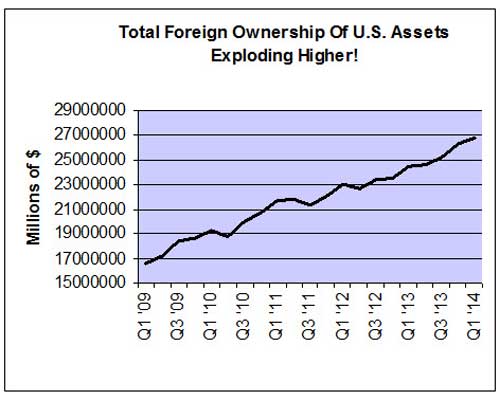

 The current stock market is earning a deserved reputation as being coated in Teflon. Bad or disappointing news just doesn’t appear to stick, and has done nothing to slow the market’s upward trajectory. Bad news is good and good news is good news. But where does this all end? A minority of investors have begun to wonder whether negative geo-political risks, embodied in the steely-eyed stare of Vladimir Putin, are exerting more influence on the market than the sunny smiles of Janet Yellen. Just going by the market numbers, Yellen remains firmly in the driver’s seat. Thus far this year, the S&P 500 is up more than 8% and there has been little evidence that investors fear a pull back.