
Currency
 As countries try to weaken their currencies to boost exports, the risk of a currency war similar to events seen in the 1930s has heightened and policymakers are making sure they are on the winning side, according to Morgan Stanley.
The balance of power now rests with Japan, according to the bank, as Japan’s policy-makers’ more dovish approach looks set to bring the world a step closer to a currency war.
The Bank of Japan doubled its inflation target to 2 percent in January and made an open-ended commitment to continue buying assets from next year. This follows a leadership change, with new Prime Minister Shinzo Abe openly calling for aggressive monetary stimulus from the country’s central bank.
(Read More: Land of the Falling Yen: Japan Cheers Sliding Currency)
This move, Morgan Stanley said, is a “game changer” as Japan tries to invigorate its stagnating economy .
“If a weaker yen (Exchange:JPY=) is an important pillar of the strategy to make this export-oriented economy more competitive again, it brings into the picture something that was missing from earlier interactions among central banks of the advanced economies – competitive depreciation,” it said in a research note.
“This, in turn, takes us one step closer to a currency war.”
Manoj Pradhan, an economist at the bank details the 1930s war and highlights the lessons that we can learn from the past.
The U.K. was the first to leave the gold standard on September 19, 1931 due to painfully high unemployment. Sterling depreciated, setting off a volatile chain of events with the U.S., Norway, Sweden, France and Germany all following suit.
Those countries that moved early benefited at the expense of others on the gold bloc, a “beggar-thy-neighbor” outcome, according to Pradhan.
“Similarly, it is the domestic agenda that could drive competitive depreciation today,” he said.
“Since global demand is likely to remain sluggish, a revival of Japan’s export sector on the back of yen weakness is likely to eat into the market share of other exporters – something that could well invite measures to curb significant weakening of the yen.”
(Read More: What Could Really Spark a Currency War)
In a detailed scenario of what could follow, Pradhan highlights that the European Central Bank and theFederal Reserve would ease further, using quantitative easing to dampen euro strength and debt ceiling fears.
Capital controls could be brought in by Latin American and other Asian economies, he said, which could be transaction taxes or even some sort of verbal interaction.
“In the particularly interesting cases of Korea and Taiwan, our economist Sharon Lam believes that verbal intervention (already under way to some extent), intervention in the foreign exchange markets and capital controls represent the most likely policy reactions,” he said, adding that the emerging markets of Colombia, Mexico, Peru and Chile have even u-turned towards a more dovish stance.
(Read More: Why Currency Wars Might Be Coming)
“While a currency war is not our base case, the new-found commitment of Japan’s policy-makers does raise the risk of retaliatory action to keep the yen weak,” he said.
“The experience of the 1930s suggests to us that such large currency crises are likely triggered by domestic issues, and that they do create distinct winners and losers. EM (emerging market) policy-makers are already gearing up to make sure they remain on the winning side, but the balance of power for now rests with Japan.”
–By CNBC.com’s Matt Clinch

If there’s one single, indispensable key to successful investing, it’s to go with the flow.
That’s my distillation of well-worn market mantras that you’re probably familiar with.
Trade the market you are given, not the one you want;
You can do all the homework and analysis you want – and be right – and yet still lose money. That happens when you own stocks you love, but the market isn’t loving any stocks. It can happen when you try to pick bottoms, and you get in before the market heads a lot lower.
And while you won’t lose any money by not being in the market, you’re not going to make any money in it either.
That brings us to today. We’ve had a furious up-move in the market since March 2009. We’re scratching at new all-time highs, and global markets are dancing to the same tune.
But the world hasn’t changed since last May – or the May before, when markets swooned on fears about Europe, America’s fiscal fiasco, a slowing China, or any of the other dark clouds that, at any time, can rain on the markets.
So, are we going higher? Are we going to get a wicked correction? Is the sun rising or setting?
We don’t know if the market is going higher from here or if it’s headed down. But, we do know that the sun rises and the sun sets… every day.
That’s why, even if you could distill all of the unknowns that you don’t know into a plan of action, the only sensible plan is to not guess, but simply to go with the flow.
Going with the flow means following the trend – and not fighting the tape or the Fed. But it’s not just a different way of saying those things.
For me, it’s about looking underneath what’s being talked about. It’s looking at investor psychology by looking at the flow of capital into or out of the market.
I go with the flow of capital. I don’t complicate my money-making endeavors in the market by overanalyzing or hoping. The most important thingfor me is simply being on the right side of which direction capital is flowing.
Capital has been flowing into the market. It doesn’t matter that a lot of that flow is coming from the Fed’s stimulus efforts, it’s still capital flowing in. Don’t complicate things.
If capital starts flowing out of the market, I’m not going to fight that trend – once I recognize that it’s the force of the prevailing psychology. I’ll go with the flow.
And you should, too. Don’t sit on the sidelines if there’s a party going on. Join it.
That’s what’s happening now. That’s what has been happening.
Don’t worry about what you don’t know. Just have an exit plan in place. It’s as simple as having stops – and raising them as your positions become more profitable.
So what if you get stopped out – especially with a profit – and the party gets going again. Get back in, even if that means higher prices than where you got out. Simply tighten up your new stops by placing them just below where the latest good support level is.
And, because it’s widely available, always have downside protection in place. It’s easy enough with ETFs that offer inverse positioning and with instruments like VXX.
I look at the market like the old lotto saying, “You’ve got to be in it to win it.”
Up or down, it doesn’t matter to me… as long as I go with the flow.
 [Editor’s Note: Shah Gilani has been “inside” the market for more than 30 years as a Wall Street broker/dealer, a hedge fund manager, a currency manager, and a bond trader. As Shah explains, you can buy a stock and wait. Or you can bank on a transaction and stand to get paid. That’s what Wall Street’s dealmakers do. In this brief video Shah reveals six white-hot deal opportunities you need to know about now. This won’t be around long. Go here now.]

Legendary 88 yr Old Dow theorist Richard Russell says investors should approach the latest dow theory buy signal with trepidation.
In brief, Dow theory says that when the Dow Jones Industrial Average and the Dow Jones Transportation Average move in tandem, up or down, the rest of the market will move with it. If one is making a new high, while the other is not doing well, you should be skeptical of the durability of the rally.
We told you about a developing Dow theory buy signal a couple weeks ago — the Dow Transports hit a high, catching up with Dow Industrials, which had also hit a high.
But Russell warns that Dow theory doesn’t operate in a bubble. There’s another element to consider: the Relative Strength Index, or RSI. From King World News:
It seems so easy — all the Dow has to do is climb another 174 points, and eureka, it’s at a new record high, and at the same time it has confirmed the new record highs in the Transportation Average.
Wait, note that RSI is at its severe overbought zone for the first time in almost two years. In the last five years, RSI has signaled overbought five times. At the bottom of the chart we see the 89-day rate-of-change (this is momentum).
Russell’s chart from his recent daily letter:

Ed Note: a couple of great timeless articles from Russell:
“Rich Man, Poor Man (The Power of Compounding)“
….. more from Business Insider HERE : The Stupidest Reason To Sell Stocks
Russell began publishing Dow Theory Letters in 1958, and he has been writing the Letters ever since (never once having skipped a Letter). Dow Theory Letters is the oldest service continuously written by one person in the business.
Russell gained wide recognition via a series of over 30 Dow Theory and technical articles that he wrote for Barron’s during the late-’50s through the ’90s. Through Barron’s and via word of mouth, he gained a wide following. Russell was the first (in 1960) to recommend gold stocks. He called the top of the 1949-’66 bull market. And almost to the day he called the bottom of the great 1972-’74 bear market, and the beginning of the great bull market which started in December 1974.
The Letters, published every three weeks, cover the US stock market, foreign markets, bonds, precious metals, commodities, economics –plus Russell’s widely-followed comments and observations and stock market philosophy.
In 1989 Russell took over Julian Snyder’s well-known advisory service, “International Moneyline”, a service which Mr. Synder ran from Switzerland. Then, in 1998 Russell took over the Zweig Forecast from famed market analyst, Martin Zweig. Russell has written articles and been quoted in such publications as Bloomberg magazine, Barron’s, Time, Newsweek, Money Magazine, the Wall Street Journal, the New York Times, Reuters, and others. Subscribers to Dow Theory Letters number over 12,000, hailing from all 50 states and dozens of overseas counties.
A native New Yorker (born in 1924) Russell has lived through depressions and booms, through good times and bad, through war and peace. He was educated at Rutgers and received his BA at NYU. Russell flew as a combat bombardier on B-25 Mitchell Bombers with the 12th Air Force during World War II.
One of the favorite features of the Letter is Russell’s daily Primary Trend Index (PTI), which is a proprietary index which has been included in the Letters since 1971. The PTI has been an amazingly accurate and useful guide to the trend of the market, and it often actually differs with Russell’s opinions. But Russell always defers to his PTI. Says Russell, “The PTI is a lot smarter than I am. It’s a great ego-deflator, as far as I’m concerned, and I’ve learned never to fight it.”
Letters are published and mailed every three weeks. We offer a TRIAL (two consecutive up-to-date issues) for $1.00 (same price that was originally charged in 1958). Trials, please one time only. Mail your $1.00 check to: Dow Theory Letters, PO Box 1759, La Jolla, CA 92038 (annual cost of a subscription is $300, tax deductible if ordered through your business).
IMPORTANT: As an added plus for subscribers, the latest Primary Trend Index (PTI) figure for the day will be posted on our web site — posting will take place a few hours after the close of the market. Also included will be Russell’s comments and observations on the day’s action along with critical market data. Each subscriber will be issued a private user name and password for entrance to the members area of the website.
Investors Intelligence is the organization that monitors almost ALL market letters and then releases their widely-followed “percentage of bullish or bearish advisory services.” This is what Investors Intelligence says about Richard Russell’s Dow Theory Letters: “Richard Russell is by far the most interesting writer of all the services we get.” Feb. 19, 1999.
Below are two of the most widely read articles published by Dow Theory Letters over the past 40 years. Request for these pieces have been received from dozens of organizations. Click on the titles to read the articles.
“Rich Man, Poor Man (The Power of Compounding)“

The gold and silver stocks as a group have certainly been a disaster over the past two years. Both GDX and GDXJ are down with GDXJ leading the spiral. Yet, the metals are actually higher. Gold is up quite a bit while Silver is up marginally. Because of the volatility in this sector we can certainly choose any period to emphasize a point. However, it is becoming clear that the mining equities are struggling to outperform the metals. In studying the history of this sector (both the stocks and the metals) I’ve learned two things that I will share with you today. First, the large-cap miners have no track record of consistently outperforming Gold and second, it is possible to routinely find companies which can outperform the metals.
I credit the first point to Steve Saville, who was one of the first to note that the miners do not consistently outperform the metals. In fact, in secular bull markets the stocks consistently underperform Gold. Steve’s chart below shows how the miners underperformed badly from 1974 to 1980. Recall that the Gold price was fixed until 1971. Thus, both the uptrend from 1964-1968 and the downtrend from 1968-1971 are exaggerated.

It is simply a function of geology and numbers. Large companies have an extremely difficult time finding enough deposits and big enough deposits to not only replace reserves but to grow production. It’s much easier for a company to grow from 50K oz Au production to 100K oz Au production than it is for a company to go from 2M oz Au production to 4M oz Au production. Throw in political risk, permitting delays, financing issues and execution issues and its understandable why the large companies underperform the metal. This being said, it’s important to take all those XAU vs. Gold charts with a grain of salt. Over the long-term, Gold will continue to outperform and that chart will continue to make new lows.
Moving along, it is important to examine the relative strength of various gold stocks in particular market cycles. Below we graph the HUI versus Gold. We highlighted the performance during cyclical bull markets. In all three examples we notice that the biggest gains came at the start of the cyclical bull market. In the last two, the bull market ended as the HUI/Gold ratio peaked slightly below its high for the cycle. This tells us that the stocks will strongly outperform at the start of the next cyclical bull but that outperformance will ultimately peak or fade.

Next we move down the food chain. For subscribers I created a 20-stock index which contains roughly the 20 biggest producers outside of the HUI. As you can see the price action during this cyclical bear looks somewhat similar to the HUI. However, focus your attention on the next chart.

This chart is the ratio between the above 20-stock index and Gold. The ratio bottomed in late October 2008 and peaked in early December 2010. The increase in this ratio coincided with the exact period of the cyclical bull market (if you count December 2010 as the end which I do). One could claim that the next problem is the above index underperformed even as Gold was rising. That is true. Nothing is perfect.

However, we took things a step further. I thought of 10 of my favorite growth-oriented producers (royalty companies included). Seven of the ten have been part of our model portfolio at one time or another. Below is the chart of an equal weighted index of the 10 stocks. It was up 4% in 2011 and 42% in 2012!

Here are my conclusions on this small study. The large cap miners will continue to underperform Gold through the end of the bull market. However, they will outperform when the next cyclical bull begins and probably soon. However, they ultimately will underperform over the next five years. During a cyclical bull market a large group of junior producers can outperform Gold strongly. You only need to be able to pick the right large group. The better a stock picker one is, the more one can outperform. Clearly, if you are stock picking this sector you should never dabble in the large cap miners. If you want safety than go with bullion and try to find a mutual fund that has a track record of picking the right stocks. If you want to speculate than you need to train yourself to be an excellent stock picker or find someone who can help you learn.
Interestingly, I believe the near-term outlook is pretty good and most stocks have a chance to outperform the metals into the spring. The caveat is we need to see a final breakdown first. GDX, the HUI and my junior index above are all consolidating which could precede a breakdown and the final low. Over the past 10 sessions, GDX has been locked into a range of $41.50 to $43.00. A downside break, in your humble author’s opinion could lead to the final bottom which we wrote about last week. Continue to be patient and continue to have your favorite stocks in mind. If you’d be interested in professional guidance in uncovering the producers and explorers poised for big gains then we invite you to learn more about our service.
Good Luck!
Jordan Roy-Byrne, CMT
Jordan@TheDailyGold.com
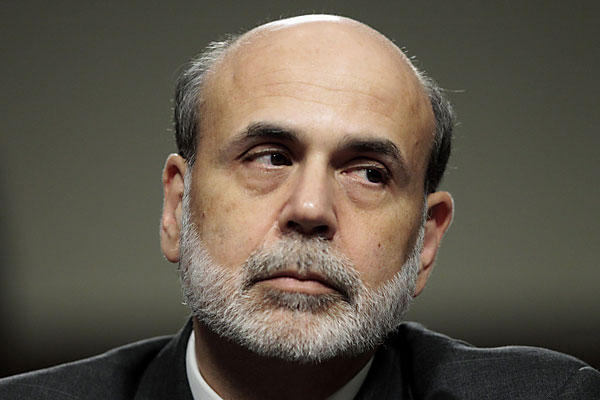 The financial world was shocked this month by a demand from Germany’s Bundesbank to repatriate a large portion of its gold reserves held abroad. By 2020, Germany wants 50% of its total gold reserves back in Frankfurt — including 300 tons from the Federal Reserve. The Bundesbank’s announcement comes just three months after the Fed refused to submit to an audit of its holdings on Germany’s behalf. One cannot help but wonder if the refusal triggered the demand.
Either way, Germany appears to be waking up to a reality for which central banks around the world have been preparing: the dollar is no longer the world’s safe-haven asset and the US government is no longer a trustworthy banker for foreign nations. It looks like their fears are well-grounded, given the Fed’s seeming inability to return what is legally Germany’s gold in a timely manner. Germany is a developed and powerful nation with the second largest gold reserves in the world. If they can’t rely on Washington to keep its promises, who can?
Ed Note: Fed Has Bought More U.S. Gov’t Debt This Year Than Treasury Has Issued
Where is Germany’s Gold?
The impact of Germany’s repatriation on the dollar revolves around an unanswered question: why will it take seven years to complete the transfer?
The popular explanation is that the Fed has already rehypothecated all of its gold holdings in the name of other countries. That is, the same mound of bullion is earmarked as collateral for a host of different lenders. Since the Fed depends on a fractional-reserve banking system for its very existence, it would not come as a surprise that it has become a fractional-reserve bank itself. If so, then perhaps Germany politely asked for a seven-year timeline in order to allow the Fed to save face, and to prevent other depositors from clamoring for their own gold back — a ‘run’ on the Fed.
Now, the Fed can always print more dollars and buy gold on the open market to make up for any shortfall, but such a move could substantially increase the price of gold. The last thing the Fed needs is another gold price spike reminding the world of the dollar’s decline.
Speculation Aside
None of these theories are substantiated, but no matter how you slice it, Germany’s request for its gold does not bode well for the future of the dollar. In fact, the Bundesbank’s official statements are all you need to confirm the Germans’ waning faith in the US.
Last October, after the Bundesbank had requested an audit of its Fed holdings, Executive Board Member Carl-Ludwig Thiele was asked in an interview why the bank kept so much of Germany’s gold overseas. His response emphasized the importance of the dollar as the world’s reserve currency:
“Gold stored in your home safe is not immediately available as collateral in case you need foreign currency. Take, for instance, the key role that the US dollar plays as a reserve currency in the global financial system. The gold held with the New York Fed can, in a crisis, be pledged with the Federal Reserve Bank as collateral against US dollar-denominated liquidity.”
Thiele’s statement can lead us to only one conclusion: by keeping fewer reserves in the US, Germany foresees less future need for “US dollar-denominated liquidity.”
History Repeats
The whole situation mirrors the late 1960s, during a period that led up to the “Nixon Shock.” Back then, the world was on the Bretton Woods System — an attempt on the part of Western central bankers to pin the dollar to gold at a fixed rate, while still allowing the metal to trade privately as a commodity. This led to a gap between the market price of gold as a commodity and the official price available from the Treasury.
As the true value of gold separated further and further from its official rate, the world began to realize the system was unsustainable, and many suspected the US was not serious about maintaining a strong dollar. West Germany moved first on these fears by redeeming its dollar reserves for gold, followed by France, Switzerland, and others. This eventually culminated in Nixon “closing the gold window” in 1971 by ending any link between the dollar and gold. This “Nixon Shock” spurred chronic inflation throughout the ’70s and a concurrent rally in gold.
Perhaps the entire international community is thinking back to the ’60s, because Germany isn’t the only country maneuvering away from the dollar today. The Netherlands and Azerbaijan are also discussing repatriating their foreign gold holdings. And every month, we hear about central banks increasing gold reserves. The latest are Russia and Kazakhstan, but in the last year, countries from Brazil to Turkey have been adding to their gold holdings in order to diversify away from fiat currency reserves.
And don’t forget China. Once the biggest purchaser of US bonds, it is now a net seller of Treasuries, while simultaneously gobbling up gold. Some sources even claim that China has unofficially surpassed Germany as the second largest holder of gold in the world.
Unlike the ’60s, today there is no official gold window to close. There will be no reported “shock” indicator of a dollar flight. This demand by Germany may be the closest indicator we’re going to get. Placing blame where it’s due, let’s call it the “Bernanke Shock.”
It Takes One to Know One
In last month’s Gold Letter, I wrote about the three pillars supporting the US Treasury’s persistently low interest rates: the Fed, domestic investors, and foreign central banks — led by Japan. I examined how Japan’s plans to radically devalue the yen may undermine that country’s ability to continue buying Treasuries, which could cause the other pillars to become unstable as well.
While private investors and even the Fed might be deluding themselves into believing US bonds are still a viable investment, Germany’s repatriation news makes it clear that foreign governments are no longer buying the propaganda. And why should they? If anyone should appreciate the real constraints the US government is facing, it is other governments.
Our sovereign creditors know that Ben Bernanke and Barack Obama are just regular men in fancy suits. They know the Fed isn’t harboring some ingenious plan for raising interest rates while successfully selling back its worthless mortgage and government securities. Instead, the Fed is like a drug addict making any excuse to get its next fix. [See Bernanke’s tell-all interview with Oprah where he confesses to economic doping!]
US investors should be as shocked as the Bundesbank about the Fed’s deception. While we cannot redeem our dollars for gold with the Fed, we can still buy gold with them in the open market. As more investors and governments choose to save in precious metals, the dollar’s value will go into steeper and steeper decline — thereby driving more investors into metals. That’s when the virtuous circle upon which the dollar has coasted for a generation will quickly turn vicious.
Regards,
Peter Schiff
for The Daily Reckoning
Peter Schiff is CEO of Euro Pacific Precious Metals, a gold and silver dealer selling reputable, well-known bullion coins and bars at competitive prices.
Click here for a free subscription to Peter Schiff’s Gold Letter, a monthly newsletter featuring the latest gold and silver market analysis from Peter Schiff, Casey Research, and other leading experts.
And now, investors can stay up-to-the-minute on precious metals news and Peter’s latest thoughts by visiting Peter Schiff’s Official Gold Blog.
For further reading, please check out Peter’s excellent book How an Economy Grows and Why it Crashes, available now from Laissez-Faire Books.

-
I know Mike is a very solid investor and respect his opinions very much. So if he says pay attention to this or that - I will.
~ Dale G.
-
I've started managing my own investments so view Michael's site as a one-stop shop from which to get information and perspectives.
~ Dave E.
-
Michael offers easy reading, honest, common sense information that anyone can use in a practical manner.
~ der_al.
-
A sane voice in a scrambled investment world.
~ Ed R.
Inside Edge Pro Contributors

Greg Weldon

Josef Schachter

Tyler Bollhorn

Ryan Irvine

Paul Beattie

Martin Straith

Patrick Ceresna

Mark Leibovit

James Thorne

Victor Adair