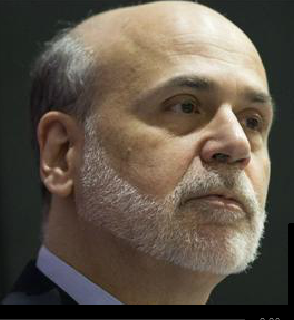
Bonds & Interest Rates

More Free Money

2 Fed Officials suggest the central bank is not even close to tapering its bond-buying program.

St. Louis Fed President James Bullard said Tuesday that the central bank should continue with its present bond-buying program and adjust the rate of purchases in view of incoming data on growth and inflation. He said the program is the best policy option and has been effective.

New York Fed President William Dudley, who is also vice chairman of the Federal Open Market Committee, said that the Fed may adjust the pace of asset purchases up or down depending on the economic outlook.

The Fed’s $85-billion-a-month asset-purchase program aims to boost economic growth and lower the jobless rate. The program has buoyed the stock market and its end — if not properly managed — may hurt sentiment among equity investors, potentially triggering a correction in the market.

Screen shot 2013-05-21 at 4.50.13 PM“Broadly speaking, investors are really waiting to see what Mr. Bernanke is going to say in front of Congress,” said Andrew Wilkinson, chief economic strategist for Miller Tabak. “The next 20 points in the S&P 500 are probably predicated on what he has to say.”

On Wednesday, Federal Reserve Chairman Ben Bernanke will testify before Congress about the economic outlook, and the Federal Open Market Committee will release minutes from its latest meeting.

Bottom line: “It’s a consistent message from the [Federal Open Market Committee] that they will reduce the pace of QE [quantitative easing] purchases, but only when the economy is clearly ready for a reduction,” said Tom Graff, fixed-income portfolio manager at Brown Advisory


Additional Note: More evidence the Fed thinks it is doing the right thing came when Chicago Federal Reserve President Charles Evans said the Fed’s policy stance remains appropriate.

Oil & Gas: “Robust ricing scenario ahead”

The worst may be over for companies and investors who have weathered the depressed gas prices of the past few years, but that doesn’t mean it’s clear sailing from here. In this interview with The Energy Report, Robert Cooper, senior energy analyst with Haywood Securities, talks about the need for selectivity and patience for catalysts that can crystallize underlying stock values. It’s a battle of long-term investors versus short-term traders.

COMPANIES MENTIONED : CHEVRON CORP. : CONDOR PETROLEUM INC. : CROCOTTA ENERGY INC. : ENCANA CORP. : EXXON MOBIL CORP. : NOVUS ENERGY INC. : PETROCHINA CO. LTD. :ROYAL DUTCH SHELL PLC : TALISMAN ENERGY INC. : TAMARACK VALLEY ENERGY LTD. : YOHO RESOURCES INC.

The Energy Report: Looking back to your last interview with The Energy Report in November, you seem to have called the bottom in gas prices correctly. What’s your view of where things are headed now?

Robert Cooper: We expect a reasonably robust pricing scenario ahead. Here’s why: In 2013, we will likely see flat natural gas supply growth; this will be the first year in the last several that this will be the case. The natural gas rig count is at 350, the lowest since 1995. The declining rig count has taken its toll on almost every U.S. shale basin; the only basin that’s growing is the Marcellus, and it is growing partly because infrastructure constraints are being alleviated. Unless productivity undergoes another massive step higher, or drilling time is cut in half again, rig count matters as a predictor of natural gas production levels. Natural gas liquids (NGL) prices are weak, and this impacts the ability of explorers and producers (E&Ps) to reinvest at the same level as even a year ago. This further reduces the probability that capital will be redeployed to dry gas plays.

TER: Your May 9 report shows gas storage 28% lower year over year and 5% below the five-year average. What are the implications of that?

RC: It means the gas market is in deficit. If I were an end user who was short gas, I’d be worried—the conditions are in place for a gas price rally that could catch me unaware.

TER: What do you think the chances are of that happening?

RC: I wrote in March that we’re looking at CA$4 per thousand cubic feet (CA$4/Mcf) gas in Canada. We got to around CA$3.89 on the spot market, and the strip in the winter was very close to CA$4. If it’s a normal summer, I think there’s a better than 50% chance of hitting that CA$4 level in Q4/13 or Q1/14. I also said in our last interview that if you give me normal weather, I can give you CA$4/Mcf gas, which was the case.

sc-1

TER: How low do you think gas could go again, in the next year or so?

RC: I never say “never,” but I wouldn’t bet on a return to last year’s $1.90 price low or anything close to that. Right now, we have a favorable storage situation and we have long-term beneficial factors working in the gas market bull’s favor.

TER: What do you see on the horizon for oil? Do you expect oil to be range-bound up to $105 per barrel ($105/bbl)?

RC: The economy isn’t strong enough to support $100+/bbl oil for very long, nor will supply costs support prices below $80/bbl for very long. Unless there’s a big change in the economy toward much stronger or much weaker growth, that range is probably what you can look for in oil prices.

TER: Storage and distribution capacities are key factors in determining North American oil prices. How are you reading those indicators?

RC: In Canada, the bulk of our oil supply growth is slated to come from the oil sands. We need pipelines to transport that. But in the short term, midcontinent refineries are scheduled to complete turnarounds this summer, and that should firm up heavy oil prices relative to West Texas Intermediate (WTI). Infrastructure, or lack thereof, has certainly been a dominant theme in the Canadian oil market, certainly for the past year or so. Oil by rail has been an important bridge, as it has allowed product to move from where it’s produced to where there’s demand while bypassing infrastructure constraints. The development of oil by rail has been a textbook case of the invisible hand of the market at work.

sc

TER: What’s your view on the Keystone Pipeline? Will it be built?

RC: That’s the million-dollar question. President Obama is under considerable pressure from environmentalists who believe oil sands development is the main bogeyman contributing to global warming. But the U.S. has had a goal of achieving energy security since Nixon, and Keystone would move the U.S. a lot closer to this goal—that would be an important legacy for any president. In addition, Keystone is important for the U.S./Canada relationship. Rejection of the pipeline could be problematic for bilateral relations and would likely push Canada to increase its energy involvement with the U.S.’ strategic competitors in Asia. If I had to guess, I’d say Keystone will ultimately be approved, but likely with some quid pro quo that will be an attempt to pacify the president’s environmentalist support base.

TER: How has price action for oil and gas impacted the companies you cover?

RC: The volatility has, at times, removed the incremental and marginal buyer from the equation. In particular, foreign investors have looked at Canada and said, “I’m just going to buy Brent exposure or pure WTI exposure and avoid all of this price differential and pipeline risk.” And they have. So access to capital for Canadian producers has been limited, especially for the small- and mid-cap companies, thereby limiting their strategic options. Ultimately, if this volatility continues, it will result in further culling of the investable universe.

TER: So it’s going to be survival of the fittest?

RC: More or less, yes.

TER: What companies have been your best performers over the past six months?

RC: Because the market has been so bleak, the best performers have been ones we’re trying not to lose money on, unfortunately. In my last interview, we talked about Crocotta Energy Inc. (CTA:TSX),Tamarack Valley Energy Ltd. (TVE:TSX.V) and Novus Energy Inc. (NVS:TSX.V). Crocotta and Tamarack are in roughly the same spot as when we last talked. Both have executed well on their business plans, and both have advanced the ball in developing new plays and properties. Each has performed quite well in a miserable market. Consequently, we still recommend both. They both have very strong management teams that are heavily invested and are motivated to do the right thing for shareholders.

Novus is a little bit of a different story. The consolidation we discussed in west central Saskatchewan’s Viking area was fast coming and, indeed, has accelerated as expected. Novus has decided to participate in that. In late November and early December, it announced that it was considering methods for optimizing shareholder value, including a corporate sale. That process has been ongoing, admittedly at a slower pace than anticipated. But investors will see an answer one way or another. The Board of Directors is expected to decide which direction the company will be heading, potentially as soon as the end of the month.

TER: Another company you talked about is Yoho Resources Inc. (YO:TSX.V). Can you give us an update?

RC: Yes. Yoho’s stock price has basically remained flat since the last time we talked. However, all of the underlying fundamentals continue to improve. Its core position is in the Duvernay play, in the Kaybob region of Alberta. The Duvernay, in our view, is fast becoming a world-class shale play as it continues to mature. Exxon Mobil Corp. (XOM:NYSE) recently purchased Yoho’s partner. Since we last talked,PetroChina Co. Ltd. (PTR:NYSE; 857:HKSE) bought a 50% interest in Encana’s Duvernay acreage, the best part of which is proximal to Yoho. This was a multibillion-dollar transaction. Yoho has continued to drill good wells that have been on cost and at expected rates. It’s taken a little bit of time to gestate, but ultimately the Duvernay is going to become the domain of much larger companies. Immediately proximal to Yoho is Chevron, Exxon, Encana Corp. (ECA:TSX; ECA:NYSE)Talisman Energy Inc. (TLM:TSX)and Royal Dutch Shell Plc (RDS.A:NYSE; RDS.B:NYSE). Yoho is a prime takeout candidate. It has a sustainable business plan with well over $1 billion ($1B) of future capex to drill in the Duvernay alone, so this company could be around for a long time. But in our view, it will ultimately be purchased by a larger player. We expect Yoho will be a winner for investors who have a slightly longer time horizon than tomorrow.

TER: How about some new names that you’re covering that look interesting?

RC: We’re very big fans of a new company called Condor Petroleum Inc. (CPI:TSX) run by a very experienced group of managers who came out of the supermajors, Chevron Corp. (CVX:NYSE) in particular. The President and CEO, Don Streu, is a serious individual who managed very large projects for Chevron in Angola, Indonesia and Nigeria. Condor has taken a very different approach to exploration in Kazakhstan by gathering an immense amount of three-dimensional (3D) seismic data to derisk drilling. This is something that hadn’t been done there before and it has paid off. Condor recently announced a large discovery well and is appraising it as we speak.

Condor represents one of the best risk-reward tradeoffs we can find. Well costs are very low—appropriate for a company its size, and yet the targeted prospect size is very large. So there is a whole lot of torque for shareholders. Condor has a fully funded balance sheet. It sold a noncore gas property for $88 million ($88M), has an active exploration program and is pursuing joint ventures with much larger companies for its largest and most expensive prospects. The main caution is that in Kazakhstan, business proceeds at a slower pace than in North America because of the large government bureaucracy and lack of developed infrastructure, especially in the rural parts of the country where Condor operates. So this is a true investment rather than just a trade.

TER: Where is the stock trading now, and where do you think it’s going?

RC: It’s a $0.50 stock today. We have a $1.10 target on it.

TER: What’s the level of political risk in Kazakhstan?

RC: Any place outside of North America is not going to have the same sort of risk profile as we do at home. What I can say about Kazakhstan is that there is a very large and onerous bureaucracy in place because it is a deliberate attempt to stymie corruption. Kazakhstan is rapidly growing and has broader ambitions than to just be a regional player, such as joining the World Trade Organization. It’s certainly not for the faint of heart, but on the other hand, we think that the risk-reward tradeoff for Condor is well in your favor right now. Condor’s management team is full of individuals who have operated in the country’s oil and gas sector before, which is an essential consideration. Kazakhstan has immense potential for oil and gas development and Condor knows how to operate effectively in that environment. So we recommend the stock.

TER: What’s your general advice at this time for investors looking for potential profits in the oil and gas sectors?

RC: I’d recommend that you do your homework and that when you buy, ensure you have a margin of error with respect to valuation. And have patience, because this is a very jittery market. Ultimately, good companies with good assets—purchased at good prices—tend to pay off over time. But if you have a very short time horizon, you might not get that opportunity to see the value creation. There is some very good value in the oil and gas sector in Canada right now, but it also takes time for catalysts to emerge to crystallize that value. That takes an investor as opposed to a pure trader.

TER: Good advice, Rob. We appreciate the opportunity to talk with you again.

RC: Thank you for having me.

Robert Cooper, CFA, is a senior energy analyst based in Calgary with a focus on Canadian oil and gas exploration and production companies with domestic and international operations. Robert has more than 10 years experience in the investment industry and has been covering the Canadian oil and gas sector since 2006. Robert is a past president of the Calgary CFA Society.

Want to read more Energy Report interviews like this? Sign up for our free e-newsletter, and you’ll learn when new articles have been published. To see a list of recent interviews with industry analysts and commentators, visit our Interviews page.

DISCLOSURE: 
1) Zig Lambo conducted this interview for The Energy Report and provides services to The Energy Report as an independent contractor. He or his family own shares of the following companies mentioned in this interview: None.
2) The following companies mentioned in the interview are sponsors of The Energy Report: Royal Dutch Shell Plc. Streetwise Reports does not accept stock in exchange for its services or as sponsorship payment.
3) Robert Cooper: I or my family own shares of the following companies mentioned in this interview: Crocotta Energy Inc. I personally am or my family is paid by the following companies mentioned in this interview: None. My company has a financial relationship with the following companies mentioned in this interview: Crocotta Energy Ltd., Yoho Resources Inc. and Condor Petroleum Inc. I was not paid by Streetwise Reports for participating in this interview. Comments and opinions expressed are my own comments and opinions. I had the opportunity to review the interview for accuracy as of the date of the interview and am responsible for the content of the interview.
4) Interviews are edited for clarity. Streetwise Reports does not make editorial comments or change experts’ statements without their consent.
5) The interview does not constitute investment advice. Each reader is encouraged to consult with his or her individual financial professional and any action a reader takes as a result of information presented here is his or her own responsibility. By opening this page, each reader accepts and agrees to Streetwise Reports’ terms of use and full legal disclaimer.
6) From time to time, Streetwise Reports LLC and its directors, officers, employees or members of their families, as well as persons interviewed for articles and interviews on the site, may have a long or short position in securities mentioned and may make purchases and/or sales of those securities in the open market or otherwise.

 

Faber: The impact of declining Asset Prices…..

logo gbd main ex1

….on the Economy will be interesting to see.

“Maybe the US market will continue to go up. But obviously one day the­ markets will come down again and then the impact of declining asset prices on the economy will be interesting to see’’ – in The Australian Financial Review.

Faber has sold US stocks over the past few months as the rally on Wall Street reached record highs. But……

In Vietnam I think you will make some Money in Shares

“In Vietnam we also have some involvement in real estate – in hotels and land developments in the Danang area. Danang is midway between the north Hanoi and the south Saigon on the coast, and during the war used to be the largest American airport outside the US. That whole coast is called China beach. . . the development is really mind boggling,” “I don’t think the market will run away right away but if you take a long-term horizon, five to 10 years, I think you will make some money in Vietnamese shares.’’ – in The Australian Financial Review.

…..read the entire article in the Australian Financial Review HERE where he talks of Investing in Asia, his activities on the board of mining companies, corporate bonds & other issues.


Important Breakout in the Dow to Gold Ratio and Its Implications for Gold

There are several indications that the currency war is heating up, the gloves are coming off and new players are piling into the barroom brawl. First, Australia unexpectedly cut interest rates, then both the Swedish and New Zealand central bank governors were making their moves. Way down under, New Zealand’s central bank last week acknowledging that it had intervened in foreign exchange markets to try to fight any further appreciation of the country’s currency, known as the kiwi. The New Zealanders are worried about a runaway property market driven by global money rushing into the country

Wait a minute… that’s exactly the same scenario in Israel

This week the Bank of Israel stepped up its efforts to curb the appreciation of the shekel surprising the markets by unexpectedly cutting its interest rate and announcing a program to purchase foreign currency. A weaker currency boosts exports, driven by cheaper prices. The smaller economies are reacting to all the quantitative easing by the world’s large economies.

Israel’s central bank, headed by Stanley Fischer, one of the most accomplished central bankers in the world, cut the key interest rate by a quarter of a percentage point to 1.5% to a three-year low.  

Fischer told Bloomberg that the move came “in light of the continued appreciation of the shekel, taking into account the start of natural gas production from the Tamar gas field, interest rate reductions by many central banks – notably the European Central Bank, the quantitative easing in major economies worldwide and the downward revision in global growth forecasts.”

Despite the global financial threats, the Israeli economy is still in the black and healthier than the economies of many European countries. The shekel has risen by nearly 9% over the past six months, making it one of the best-performing currencies in the world, after the Mexican peso. Israel’s central bank also plans to buy around $2.1 billion in foreign currencies.

Israel’s economy is heavily dependent on exports, and a strong shekel weakens the competitiveness of Israel’s products abroad.

It was Japan this year that shot off the latest round in the currency war after announcing monetary stimulus of historic proportions. Recent steps by the world’s third-largest economy have become a central concern. The impact of the country’s aggressive new monetary policy has been making central bankers around the world lose sleep. Is the Bank of Japan trying to influence exchange rates to give its exporters an advantage? Other countries might react in kind, which is exactly what happens in currency wars.

Actually, this is not surprising to us. The global increase in the money supply and lowering of interest rates is not surprising because countries will have to keep doing that in order to keep their exports competitive. It is a currency war and those who inflate first, get the most benefits. They are short-lived because other countries will follow and the ultimate result will eventually be huge inflation on a global scale, but, again, on a short-term basis, the monetary authorities are pressed not to stay behind others. The comments about the lack of currency war are not surprising either. Speaking publicly about it would simply encourage other countries to join it sooner, and those that are already printing more money don’t want that to happen as it means that the above-mentioned advantage that they gained would disappear.

Implications for gold? Bullish in the long run, nonexistent in the short run. 

As we can see, the great fundamental outlook for precious metals is intact. Let’s move on to the chart section of today’s essay to see how gold’s current technical situation looks like and therefore how gold can trade in the following weeks. Before we proceed to the yellow metal itself, let us begin with the Euro Index long-term chart (charts courtesy by http://stockcharts.com.)

radomski may212013 1

The index has declined for the past two weeks and it seems now that we should consider the possibility that the head-and-shoulders pattern will be completed here. Such a completion would take the Euro Index much lower.

The size of the projected decline after the breakdown and completion of the pattern is roughly the same size as the height of the head in the pattern. If this decline is attached to where the breakdown occurred, the projected downside target level will be about equal to the 2012 low (in the 121 – 122 area). Such a move would likely contribute to a USD Index rally. All of this could also be bearish for gold in the medium term if it all does indeed materialize.

Let’s move on to gold’s very long-term chart now. (Click HERE or on the chart for larger version)

radomski may212013 2

In this chart, we see a situation quite similar to the declines to 2008, where a sharp pullback was followed by a continuation of the severe decline. The most bearish factor here is the shape of the decline, which is a reverse parabola. This formation results in accelerated declines and makes it difficult to tell how low prices will go. Although the declines will likely end shortly, the increased volatility could result in prices moving very low quickly while still being in tune with the trading pattern. This reverse parabola has been in place since last October.

The very long-term cyclical turning point suggests that a local bottom will be seen soon – within the next month, probably about 2 weeks from now. Keeping both of these factors in mind, we should prepare for even bigger declines. 

Let us have a look at the Dow to gold ratio chart, as an important technical development took place there.

radomski may212013 3

Here, we saw an important breakout above the declining long-term resistance line. This has bearish implications for gold. Please note that the breakout above the previous – much less significant – resistance line (the red declining line on the above chart) was followed by major declines in gold.

The next resistance level for this ratio is at 12.5 and with it currently at 11, declines in gold will surely be needed in addition to higher stock prices in order for the ratio to move this much higher (it seems that a move higher in the general stock market will not be enough for the ratio to move that high soon). The implications are, of course, bearish.

Summing up, the situation remains bullish for the USD Index. The recent declines in the Euro Index along with the breakout in the USD Index will likely keep the current bullish outlook in place for the coming weeks. The implications of the bullish situation here, especially for the medium term, are bearish for the precious metals. Gold prices declined last week and pulled back on Thursday but it still does not seem that this period of decline is completely over.

To make sure that you are notified once the new features are implemented, and get immediate access to our free thoughts on the market, including information not available publicly, we urge you to sign up for our free gold newsletter. Sign up today and you’ll also get free, 7-day access to the Premium Sections on our website, including valuable tools and charts dedicated to serious Precious Metals Investors and Traders along with our 14 best gold investment practices. It’s free and you may unsubscribe at any time.

Thank you for reading. Have a great and profitable week!


Przemyslaw Radomski, CFA

Founder, Editor-in-chief

Silver Investment & Gold Investment Website – SunshineProfits.com


IMPORTANT: THE ONGOING GOLD AND SILVER CRASH

I hope you’ve been following my forecasts for the precious metals. If not, here’s a brief summary of some of the major opportunities you’ve missed …

Gold was trading at the $255 to $265 level. That’s when I turned bullish on gold as the co-editor of Safe Money Report. My recommendation to subscribers: Load up on gold bullion and mining shares. Gold began an 11-year bull market.

– September 2008: Gold plunges in the middle of the real estate crisis. Most analysts were convinced it was the end of gold’s bull market. Not me. I stood pat and told my subscribers to buy into the selling panic and increase their allocation to gold from 15 percent of their portfolios to a full 25 percent. Gold explodes higher, soaring to well over $1,000 an ounce.

–  September 7, 2011: Gold hits a record high of $1,920 an ounce. Less than two weeks later …

–  September 18, 2011: In Real Wealth Report issue #89 and in my columns inUncommon Wisdom, I proclaim the high in gold is in and that the yellow metal is entering an interim bear market.

11 days after gold’s record high, I give Real Wealth Report subscribers specific recommendations to hedge their gold holdings. Gold plunges almost $200 an ounce.

Screen shot 2013-05-21 at 7.54.03 AM–  October and December 2011: I instructReal Wealth Report subscribers to add to their gold hedges and exit ALL mining shares. Gold plunges anew.

– February 2013: George Soros DUMPS half his gold holdings. Unlike Real Wealth Reportsubscribers, who already knew gold was in an interim bear market and who hedged their gold, measured from gold’s record high — Soros’ gold holdings lose roughly 29 percent of their value.

–  April 12, 2013: Goldman Sachs turns bearish gold. Gold has already lost more than $350 from its record high, or 18 percent.

Goldman turns bullish again after mid-April’s devastating gold rout. I say no: Gold is set to fall more.

–  April 15, 2013: While clinging desperately to their gold, giant gold investors John Paulson and David Einhorn are hit with $640 million in losses.

You can see the dates and all of the twists and turns in gold as well as my forecasts in this chart below. Since I initially forecast gold’s interim bear market way back on September 18, 2011, gold has plunged more than 28 percent while the average mining share has lost more than twice that, a whopping 59.8 percent.

Chart1

Click for larger version

Gold’s Bear Market Is Not Over!

Just look at last week’s action. After a failed rally attempt, gold plunged anew. As I pen this issue, gold is sitting on the next level of support at $1,368. Once that gives way — and it will — gold is going to take another nosedive.

Silver too is getting crushed again. Since its April 26 high of $24.35, silver has lost another 9.2 percent as I pen this issue. All told, silver has plunged an incredible 55.7 percent since its high on April 21, 2011.

Why Are These Oh-So Precious Metals

Collapsing When All Is Not Well with the World?

There are several reasons. And I’ve written about them numerous times. But here are the two chief …

First, from a cyclical and technical perspective, it’s just not time yet for their interim bear markets to come to an end. Nor is it time for the next phase of their long-term bull markets to reemerge.

I cannot give you the precise timing. That will depend upon my trading models and what they show. The models are fluid, and they take into consideration a host of variables and factors.

Second, just as I’ve also been forecasting, deflation has the upper hand right now. Wholesale prices are plunging, as are nearly all measures of inflation.

Most importantly, however, is the severe rot that is infecting Europe. France is now back in recession. Spain is still in trouble. So is Italy. Even Germany is starting to wallow now.

On top of it all are the insane politicians in Europe who insist on raising taxes and implementing austerity measures. Even worse, there’s now increasing talk that the “bail-in” that occurred in Cyprus — the confiscation of uninsured depositors’ money — will be used as a solution when banks in other European countries fail.

All this, and more, is sending European money into hiding. But not much of it is finding its way into gold and silver.

Instead, most of that money is going largely into cash, which is boosting the value of the U.S. dollar quite dramatically, putting additional downside pressure on the precious metals.

For now, if you’re hedged up in gold and silver or speculating on their downside potential, per my suggestions in the March 4 and April 3 Money and Marketscolumns to buy the ProShares UltraShort Gold (GLL) and the ProShares UltraShort Silver (ZSL) — then simply hold those positions. As I pen this column, they are up 25.4 percent and 46.8 percent, respectively.

Also hold the PowerShares DB US Dollar Index Bullish Fund (UUP), which I also suggested you consider buying in the aforementioned columns. The dollar is about to explode higher again as the euro is on the verge of collapsing.

Best wishes,

Larry

P.S. If you missed any of the above opportunities, then you also missed many more in other markets that I also cover in detail in my Real Wealth Report. So why not become a member now? It’s the best $89 you’ll ever spend on your investments. I guarantee it.Join now by clicking here.

test-php-789






