It’s one thing for a silver producer to make a profit at $28/oz and quite another to do the same at $20/oz, declares Chris Lichtenheldt, senior mining analyst at Dundee Capital Markets. In this interview with
 The Gold Report: Silver seems to have stabilized at about $20/ounce ($20/oz). Is this significant? If this support holds, can we expect upward movement? [Editor’s note: Silver was trading above $21/oz at the time of publication.]
Chris Lichtenheldt: I think $20/oz is a psychological level. Once we’ve stabilized above that, it’s somewhat reaffirming that the drop could be over. But it is hard to say if it’s all over and we’re now back to upward moving prices because the price drop was rather unexpected and dramatic to begin with, so comfort will be slow to return.
It’s too early to say definitively on the upward movement of prices. Some of the indicators we look at are futures positions and exchange-traded fund (ETF) positions. In futures, there has been a significant drop throughout the year in net long positions on the Comex. That has stabilized, indicating that the desire to short silver seems to be subsiding. On the ETF side, positions have been relatively stable. Taken together, those indicators suggest that perhaps the worst is behind us.
It’s too early, however, to call for another bull run. The best we can hope for now is that volatility subsides and prices remain stable so that investors and companies alike can begin planning for this new environment.
TGR: We’ve seen many stories about shortages of physical silver, coins being sold out, etc. Do you think it surprising that the paper price of silver has fallen so substantially, notwithstanding this apparent hunger for the physical?
CL: It’s a bit of a disconnect, no doubt, and it’s difficult to reconcile. A lot of the information we get on the physical side is anecdotal, but it suggests physical silver supply is tight and in the long run, you would think that the physical silver market should determine price movement. That’s why we tend to think that, over the long run, we will have higher prices; there is only so much silver to go around.
TGR: The silver-gold price ratio remains at a historic high of 65:1. Eric Sprott has said that the ratio should be closer to 16:1. Why does it remain so high? Do you think it’s going to change, and, if so, in which direction?
CL: Over the past decade, the ratio has ranged from the low 30s to over 80. The average since the beginning of 2000 is around 60:1, so we’re a little bit above that now. But silver tends to underperform relative to gold during times when both metals are moving down. Underperformance means an increase in that ratio. While anything is possible, I don’t see a catalyst to take us back to 16:1 in the foreseeable future.
TGR: If the ratio has been 60–65:1 since 2000, as you mentioned, doesn’t this suggest that silver has been moving and will continue to move in lockstep with the price of gold?
CL: While the average ratio has been around 60:1, it rarely spends any time there. Silver is usually either outperforming or underperforming. The crash in 2008 is a good example. Initially, silver dramatically underperformed gold, and that ratio reached into the 80s. Then over the subsequent couple of years, silver dramatically outperformed gold, and the ratio fell into the low 30s. So I don’t think silver will move in lockstep with gold, but for a significant move outside the recent ratio range, I’ll say again that we’d need some sort of catalyst.
TGR: From February to June, silver lost about 40% of its value. Were all the silver producers caught napping?
CL: The drop in price was many standard deviations beyond silver’s normal behavior, so I don’t think anyone could have fully expected it. Companies try to plan based on a range of possible metal prices, but the drop below $20/oz would have been outside any company’s conceivable range. Significant changes aren’t necessarily required by the very low-cost producers. But for a company with all-in cash costs in the low 20s and all of a sudden the silver price falls as it did, then a lot of changes are required.
TGR: How would you compare what has happened this year with the Hunt brothers’ attempt to corner the market in 1980, when silver hit $50/oz and then fell to $11/oz two months later?
CL: It’s a difficult comparison to make. The 1980 spike was much more short-lived and the drop was steeper and quicker, so I don’t think any companies then would have been operating on the assumption of $50/oz silver. For the past several years, however, we’ve had very strong prices, which allowed for a lot of silver-dominant mines that likely would not have come into production otherwise.
TGR: Is there a “doomsday price” at which the possibility of silver production becomes tenuous? What if silver were to fall below $15/oz?
CL: Silver is a unique commodity in that nearly three-quarters of it comes from non-primary silver mines: mines that get their silver as a byproduct. This means they would likely produce this silver no matter the price. So the 40% drop in the silver price really impacts the 25% of production that comes from primary silver mines.
At $15/oz you would no doubt begin to experience a noticeable number of mine closures within the primary silver sector. We estimate that the all-in operating costs required to run an already-producing silver mine are somewhere in the high teens. So at $15/oz a lot of companies would be underwater.
TGR: Is the falling price of silver likely to result in political jurisdictions becoming more mining friendly? Have you noticed any changes in the attitudes of specific Central and South American countries since the price collapse began?
CL: It would certainly make sense for countries that have silver mines in their jurisdictions to help make those companies more profitable. Governments should help sustain struggling mines to maintain employment and tax revenue, but it’s a bit early to say that I’ve seen any significant changes.
TGR: A lower silver price forces companies to cut costs to maintain profits. What are the easy ways to cut costs, and what are the more difficult ways?
CL: The easiest ways involve discretionary capital expenditures (capex). A company may hold off on buying that new truck and postpone additional development. It can lower general and administrative (G&A) expenses by laying off employees at site and at the head office.
The more difficult ways involve significant changes to mine plans, such as abandoning lower-grade areas in favor of higher-grade areas to improve near-term margins. A multi-asset company may be forced to consider putting some of its higher-cost mines on care and maintenance or even closing them. But if a company starts abandoning areas of the mine that made sense at $28/oz silver, it may not necessarily be able to go back to them later.
TGR: So if a company proceeds on the basis of projected silver prices that turn out to be lower than the actual prices, it can make decisions that will cut into its profits for years to come?
CL: Absolutely. A company doesn’t want to hastily and drastically change its approach to how it is going to mine. It’s a balance between the long-term profitability and the short-term needs. No company wants to base its future on $20/oz silver, but it must make plans. It will probably spend three to six months making that assessment, and, hopefully, by the time it is done, prices will be higher, and the company won’t actually need to make the difficult changes. No company wants to abandon ounces, but at the end of the day, it is in the business of making money, and sometimes tough choices need to be made.
TGR: Doesn’t a lower silver price mean an even greater premium for higher-grade ore?
CL: The funny thing about valuation is if you look at all the assets out there under spot metal prices, some of those that aren’t generating any cash are still carrying a value. That’s reflective of the market’s willingness to ascribe some option value to these assets in the hopes that someday they’ll generate meaningful cash again.
There is no question that investors will tend to flock to the higher grade assets now because they are probably better off owning the mine that has to make few or no changes to survive $20/oz (or even lower) silver.
TGR: Looking at the companies that you cover, which ones will benefit from higher grade?
CL: Tahoe Resources Inc. (THO:TSX; TAHO:NYSE) is one. The company is uniquely positioned in that its grade is significantly higher than most of the other primary silver producers. At a silver-equivalent grade of over 450 grams per tonne, Tahoe’s Escobal project in Guatemala has about twice the average in the space. So the company has to make few or no changes to its mine plans to survive $20/oz or below. It is a company that is clearly well positioned despite the lower price environment. It has to be mentioned that Escobal is not in production yet, so Tahoe still has to execute what has been planned. But grade goes a long way to achieve the plan.
TGR: You have estimated Tahoe’s all-in cash costs at $12–14/oz through 2024 and you have suggested that this figure could be lowered by targeting only higher-grade areas. Is targeting higher grade something that could be done short term?
CL: Tahoe could do that, but I don’t think it has to. Most deposits have higher-grade and lower-grade areas, so if prices dropped even further, Tahoe could lower that all-in cash cost even further, at least on a short-term basis. But I wouldn’t expect a company with such low costs to make changes to its mine plan.
TGR: What is your target price for Tahoe?
CL: Right now it is CA$21.50.
TGR: Tahoe is a single-asset company. Is this an advantage, a disadvantage or is it irrelevant?
CL: It’s an advantage for Tahoe because its entire asset is high-grade ore. Multi-asset companies typically will not have this good fortune. Generally speaking, however, a single asset is a disadvantage because a diversified portfolio of assets means that if you have a significant issue at one of your mines, your entire company’s cash flow stream is not at risk.
TGR: What other companies could continue to thrive in a low-price environment?
CL: Silver Wheaton Corp. (SLW:TSX; SLW:NYSE) is worth mentioning. The all-in cost to run it, including payment for its silver streams and its G&A costs, is around $6/oz, which, most importantly, is relatively fixed. It is in very good shape as well. Silver Wheaton is not always included in the conversation because it’s a streaming company that doesn’t actually produce silver, but it offers similar exposure to the silver price when compared to the producers, but at a very low, fixed cost.
TGR: What is your target price for Silver Wheaton?
CL: It is CA$30.
TGR: You have written that some silver companies will require “more significant alterations to their current business plan.” Which companies did you mean?
CL: This is largely a function of where the price settles. For instance, if silver settles below $20/oz, bothPan American Silver Corp. (PAA:TSX; PAAS:NASDAQ) and Endeavour Silver Corp. (EDR:TSX; EXK:NYSE; EJD:FSE) would have to seriously consider putting at least one mine on care and maintenance. At around $20/oz, Endeavour Silver, Pan American Silver, Coeur Mining Inc. (CDM:TSX; CDE:NYSE) and potentially Fortuna Silver Mines Inc. (FSM:NYSE; FVI:TSX; FVI:BVL; F4S:FSE) would have to consider changes to mine plans at their higher cost mines: targeting higher grade areas or finding ways to lower cost/tonne and cost/ounce.
TGR: Among the companies we just discussed, Coeur is your only Sell recommendation. Why?
CL: It comes down to valuation. We tend to look at these both from a perspective of price/net asset value (NAV), as well as price/cash flow. When using our approach, our target price for Coeur comes out at $11, noticeably below today’s share price. So it’s just a function of valuation. As you pointed out, many companies are facing the same challenges as Coeur, and I have no doubt it will do the best it can to preserve cash flow. However, that could ultimately mean a slightly lower share price.
TGR: What are your target prices for Endeavour and Pan American?
CL: Our target price for Endeavour is CA$3.75; Pan American is CA$12.
TGR: What are the companies that you have Buy recommendations on?
CL: We have Buys on Tahoe, Silver Wheaton, First Majestic Silver Corp. (FR:TSX; AG:NYSE; FMV:FSE), Fortuna Silver and SilverCrest Mines Inc. (SVL:TSX.V; SVLC:NYSE.MKT).
TGR: How do you rate the prospects of the last three?
CL: First Majestic has earned the reputation of being a very solid operator in Mexico. I’d say none of its assets there are exceptionally high grade, but the company does a very good job maximizing cash flow from its portfolio of mines. It, too, is in the process of making changes, lowering G&A costs, etc., to improve its outlook. We like First Majestic because it has one of the best growth profiles within the silver sector, it has a strong operating track record and it has overall cash costs that are slightly better than average.
Fortuna Silver is a company with two assets. Its Caylloma mine in Peru is probably around the break-even point at today’s lower prices. San Jose in Mexico is a pure silver-gold mine with good margins and very exciting exploration potential. We recommend Fortuna based largely on its Mexican potential.
SilverCrest is a single-asset company. Its Santa Elena silver-gold mine in Mexico will increase production as it moves underground next year. The main reason we like it is because it is trading at a valuation discount of more than 25% relative to the rest of the group both on a price/NAV, as well as a price/cash-flow basis. We believe that SilverCrest will either rerate higher as it executes on its growth plans, or it will become a takeover target, given its discounted valuation and relatively low market cap.
TGR: What are your target prices for First Majestic, Fortuna and SilverCrest?
CL: First Majestic is CA$14, Fortuna is CA$5 and SilverCrest is CA$2.50.
TGR: You remain optimistic about silver and silver producers. What are the fundamentals that have led you to this optimism?
CL: More than anything else, what happened in 2008. The global financial crisis and the subsequent strength of silver and gold served as a reminder that both these metals should play an important role in anyone’s investment portfolio. We continue to believe that both metals will appreciate over time. Silver, however, is very volatile and best suited for long-term investment. We can’t predict the price this quarter or necessarily even this year, but over the course of many years, we think precious metals will continue to do what they’ve done in the past, which is appreciate steadily but for these corrections. So we’re optimistic over the long term, but part of the reason we tend to favor companies with higher-grade mines or low-cost structures is so that they can weather these periods of lower prices.
TGR: In recent years, many people have bought physical silver to protect themselves against a deteriorating economy. Do you see silver becoming an alternative currency?
CL: Silver being treated as a store of value or quasi-currency is a realistic scenario over the medium and long term. I don’t think silver will be an actual currency again, but nonetheless I think silver and gold will remain a hedge against inflation and currency devaluation.
TGR: Chris, thanks for your time and your insights.
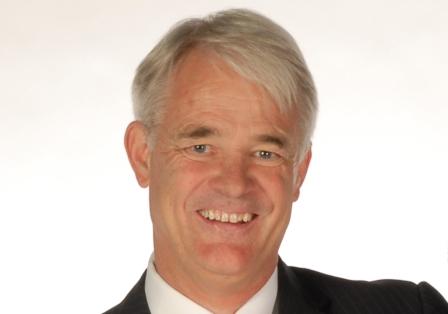
Chris Lichtenheldt is a vice president and senior mining analyst with Dundee Capital Markets in Toronto. He has 10 years of capital markets experience and has been covering mining stocks since 2006, with a focus on silver and silver equities. Lichtenheldt has been ranked a Top 3 Stock Picker in Canadian Metals/mining by the Globe and Mail and Starmine. He holds an honors business degree and is a CFA charterholder.
Want to read more Gold Report interviews like this? Sign up for our free e-newsletter, and you’ll learn when new articles have been published. To see a list of recent interviews with industry analysts and commentators, visit our Streetwise Interviews page.
DISCLOSURE:
1) Kevin Michael Grace conducted this interview for The Gold Report and provides services to The Gold Report as an independent contractor. He or his family own shares of the following companies mentioned in this interview: None.
2) The following companies mentioned in the interview are sponsors of The Gold Report: Tahoe Resources Inc., Fortuna Silver Mines Inc. and SilverCrest Mines Inc. Streetwise Reports does not accept stock in exchange for its services or as sponsorship payment.
3) Chris Lichtenheldt beneficially owns, has a financial interest in or exercises investment discretion or control over companies mentioned in this interview: None.
Dundee Capital Markets and its affiliates, in the aggregate, beneficially own 1% or more of a class of equity securities mentioned in this interview: None.
Dundee Capital Markets has provided investment banking services to companies mentioned in this interview in the past 12 months: First Majestic Silver Corp. and SilverCrest Mines Inc.
All disclosures and disclaimers are available on the Internet at www.dundeecapitalmarkets.com. Please refer to formal published research reports for all disclosures and disclaimers pertaining to companies under coverage and Dundee Capital Markets. The policy of Dundee Capital Markets with respect to Research reports is available on the Internet at www.dundeecapitalmarkets.com.
4) Chris Lichtenheldt: I was not paid by Streetwise Reports for participating in this interview. Comments and opinions expressed are my own comments and opinions. I had the opportunity to review the interview for accuracy as of the date of the interview and am responsible for the content of the interview.
5) Interviews are edited for clarity. Streetwise Reports does not make editorial comments or change experts’ statements without their consent.
6) The interview does not constitute investment advice. Each reader is encouraged to consult with his or her individual financial professional and any action a reader takes as a result of information presented here is his or her own responsibility. By opening this page, each reader accepts and agrees to Streetwise Reports’ terms of use and full legal disclaimer.
7) From time to time, Streetwise Reports LLC and its directors, officers, employees or members of their families, as well as persons interviewed for articles and interviews on the site, may have a long or short position in securities mentioned and may make purchases and/or sales of those securities in the open market or otherwise.


 Wars tend to drive markets. If the war goes well (Gulf Wars 1 and 2, Kosovo), the markets tend to rally. If war is unexpected or appears to be going badly, markets tend to fall (start of WW1, Pearl Harbour). The 20th century has been called “a century of wars”. That could apply to almost any century in history but the 20th century is estimated to have seen 160 million die in wars. That was the most ever. The global population was also at its highest and firepower at its most deadly, including the first (and so far only) use of an atomic bomb.