The Gold Report: In a July research report, you wrote that the ongoing decline from the all-time high in the gold price may represent a correction of the last large up leg, which some say began in 2009 or mid-2008. Or it may represent a correction of the entire 1999–2011 advance in the gold price. Which is it? And has that correction run its course?
Tom Szabo: We are in a correction of the 2008–2011 rally and it is ongoing. Big picture, the gold price needs to drop below $1,155/ounce ($1,155/oz) and then subsequently below $1,067/oz before this would represent a correction of the entire gold cycle that goes back to 1999. We haven’t seen such a decline at this point so we can’t conclude that it’s a larger correction.
TGR: We’ve seen modest upward momentum in the gold price since the lows of April. Is there enough momentum to invest in gold equities?
TS: There are smaller cycles within a correction. So long as investors select the right gold equities they can do well. A lot of projects are viable at this gold price. A lot of discoveries are going to become mines at this gold price.
TGR: What’s your near- and midterm forecast for gold and silver?
TS: I suspect we will see a secondary low for gold, perhaps near the low that we reached this past summer, before this entire corrective wave is over. Potential lows are $1,155/oz and $1,067/oz. Longer term, about three years or less, I suspect that gold will again challenge its 2011 high.
TGR: Is silver going to follow suit?
TS: Silver will follow gold, especially during the initial phase of a rally. As a rally progresses, silver has the distinct ability to overshoot expectations. I easily see it exceeding $50/oz and spiking to a $70–80/oz level before settling to a low in the $30–40/oz range.
TGR: What is the sweet spot right now: explorers, developers or producers?
TS: In this market, it has to be about growth, which is a concept that can be applied to all of those categories. Explorers make discoveries and grow the resource. Developers grow by taking a project into operation. Producers grow by adding capacity, upgrading or bringing additional projects into development.
TGR: MetalAugmentor.com uses the Peerless system to rank the quality of companies. How does that system work?
TS: The Peerless system is a subjective determination that is based on quality. We consider the factors that point to the success of an enterprise. Success can be measured in different ways and means different things depending on the development stage of a company and its projects. We use different criteria for an explorer versus a producer versus a developer.
It is also a binary rating where a company is either peerless or not. We don’t rank a level of peerlessness, although we do keep track of potential peerless candidates that don’t quite have all of the pieces together yet.
TGR: What companies are considered peerless by MetalAugmentor.com?
TS: A company like Cayden Resources Inc. (CYD:TSX.V; CDKNF:NASDAQ). The company’s strategy worked out really well in acquiring its two main projects in Mexico.
TGR: Cayden was approached by some companies seeking a stake in the Las Calles project. Could you tell us more about that?
TS: I don’t think it’s a secret that there is interest from other companies about potentially monetizing that opportunity.
The Morelos Sur project is next to Goldcorp Inc.’s (G:TSX; GG:NYSE) Los Filos project, one of the more profitable gold mines. Cayden sold a portion of that land position, which Goldcorp needs for infrastructure, heap leach, roads and other things, for about $16 million. Cayden still holds a very strategic piece of land called Las Calles, which separates the Los Filos and El Bermejal pits. Expansion plans are essentially going to join them together. The problem for Goldcorp is that there’s a strip of land that Cayden owns in between—Las Calles. It will have to acquire rights to that.
Companies have latched on to this and I’m presuming they now may want to offer Cayden an early monetization in exchange for any upside from the eventual conclusion of the negotiations with Goldcorp. From Cayden’s perspective, it could be attractive if it needs money for exploration or to build a mine at El Barqueño.
TGR: What other companies are considered peerless?
TS: One is SilverCrest Mines Inc. (SVL:TSX.V; SVLC:NYSE.MKT) in Mexico. The company has a project that is expanding and going underground, as well as a project going into the development stage. Its capital constraints and size should allow SilverCrest to develop such a project into a producing asset.
TGR: You’ve called SilverCrest a growth story. Can you explain that further?
TS: SilverCrest is interesting because it started with a project that was not an existing mine. Many current operations in Mexico are old silver mines that have been revived during this latest mining cycle. SilverCrest’s Santa Elena was a new project. Now it’s going underground.
While other companies went dormant after the 2008 crisis because money wasn’t available, SilverCrest pushed ahead. It sold a portion of its gold as a stream to Sandstorm Gold Ltd. (SSL:TSX), which allowed it to get into production and get ahead of the curve for being a producer. Meanwhile, the operations have been profitable almost from the very beginning and that has now allowed SilverCrest to use internal cash flow to expand production as well as to develop its second project.
But just to show that it’s not just one kind of company we’re looking for, take Eastmain Resources Inc. (ER:TSX), a small, gold explorer in Québec. It has been exploring the Eau Claire project for years. Every time it steps out from the initial discovery, it is finding more gold. Eastmain’s strategy is to attract a midtier or a major to take that project out. It is not quite there, but all the elements are moving in that direction.
TGR: What’s the next catalyst for Eastmain?
TS: It needs to get the resource size and confidence to a level where potential suitors would start looking at acquiring the project—say 200,000 oz annual gold production over a 10-year mine life.
TGR: Is there a reason to believe that the size is there and it just hasn’t been delineated yet?
TS: Yes, that is why we consider Eastmain peerless. It keeps expanding. I would probably target 5 million ounces as its eventual size with most of that resource being at depth, but it is spread out and will take a while longer to fully delineate.
TGR: Any other peerless companies?
TS: Colorado Resources Ltd. (CXO:TSX.V)—this one is pure exploration with more risk. It recently discovered a copper-gold porphyry system in northern British Columbia near the Red Chris project of Imperial Metals Corp. (III:TSX). We like its relatively simple strategy of looking for obvious targets that no one has bothered to properly explore. In the case of copper-gold porphyry systems, this could mean something as simple as looking for rust-colored hills that haven’t been adequately tested.
TGR: The geology in British Columbia is conducive to hosting copper-gold porphyries and many have been discovered, but very few have been developed because critical mass is needed for that to happen. What makes this different?
TS: I would own Colorado Resources because it has made a copper-gold porphyry discovery. The grades in the first drill hole line up with world-class potential. It remains to be seen if that is just anomalous and it has one high-grade core and everything else is too low grade. That’s certainly a risk. The potential is there for multiple higher grade core zones or for the original core zone having dimensionality to support the type of large tonnage operation that could be successful in northern British Columbia.
It’s a peerless explorer. If it gets to the development stage we’ll have to use other factors to determine if it’s a peerless developer.
TGR: What are some prospective peerless companies?
TS: We keep our eyes on prospective peerless companies as they develop because we think they could have it in them to be successful. These are generally more risky, have some blemish or perhaps a past history that doesn’t scream quality or the highest level of investor confidence. Nonetheless, we think they could be on a path to becoming peerless.
An example would be Bear Creek Mining Corp. (BCM:TSX.V), a silver play in Peru. Its Santa Ana project wasn’t popular with the local population. It ended up getting taken back. It’s still trying to figure out the endgame on that one. But it has another project, Corani, a large, low-grade bulk silver project, that’s on the cusp of potential. The market hasn’t fully given Bear Creek credit for it. Of course, bulk low-grade silver projects don’t have a history of becoming fantastic profit-making machines. But the metallurgy, resource size, lead-zinc co-products and other factors seem to suggest that Corani can make it.
Endeavour Mining Corp. (EDV:TSX; EVR:ASX) is a project amalgamator focused on West Africa. It has some hardnosed, smart people behind it. A company like this will be judged on its operational success. Will it acquire projects where it can lower costs and generate outstanding profits? It seems to be on that path; we have to give it time.
Probe Mines Limited (PRB:TSX.V) in Ontario previously focused on chromite in the “Ring of Fire” area before switching its focus. I guess you could say that the company saw the writing on the wall, unlike some other unnamed parties.
Probe’s Borden Lake gold project is an example of potentially peerless. It is encountering higher grades and very distinct structures as it steps out drilling to the southeast. There’s an opportunity to look at this project as several different phases. It already has a several-million-ounce resource potentially open pittable that’s decent grade and now also has the potential for underground bulk mining that could make initial development easier because the project is next to a lake.
Projects near lakes have inherent risks. There’s a bigger focus on local stakeholders having a say, as witnessed by recent legislative developments in Québec. And of course across Canada over the last several decades, the First Nations have had increased input throughout the exploration and mine development process. It’s important to have a flexible strategy or options when a project is near something sensitive. However, the Borden Lake project is still in a stage where we don’t need to fully consider that.
I wouldn’t be buying Probe Mines because I think it’s going to be a great mine. I would buy it for the optionality and potential. It can still reach the next stage without having to solve issues that are important to local stakeholders. At the current stage, there’s just so much prospective upside from the discovery itself. As an explorer, I consider it a potentially peerless company.
TGR: Are there other interesting silver names?
TS: MAG Silver Corp. (MAG:TSX; MVG:NYSE) shares an excellent, high-grade polymetallic silver deposit in Mexico called Juanicipio with Fresnillo Plc (FRES:LSE). Unfortunately, the companies’ interests have not always been aligned historically. Fresnillo made a low-ball opportunistic offer to take out MAG Silver in 2008 that was rightfully rejected. This created some bad blood between the two companies.
Juanicipio is an attractive development prospect. But if each party has a different idea and they can’t somehow come to an agreement, then the project isn’t moving forward at a satisfactory pace for MAG Silver shareholders. If development progress suggests these issues are being left behind then MAG Silver would be on a path to being peerless.
And then there is Fortuna Silver Mines Inc. (FSM:NYSE; FVI:TSX; FVI:BVL; F4S:FSE), a gold-silver producer in Mexico that we already consider to be peerless. It’s a well-run operation, a growth story that continues to be pretty hungry, and is possibly on the cusp of acquiring its next project with the intent of turning it into Fortuna’s third profitable mine.
TGR: Fortuna recently completed the first stage of expansion at San Jose. Is that going to dramatically change its cash flow?
TS: It’s going to improve the cash flow. The persistence of the gold-silver ore shoots continues at depth and along strike. The company has only been able to take the resource so far given that San Jose is a new mine, but the edges keep expanding as the drilling progresses. This creates a confidence boost for management. So sure, the expansion improves cash flow, but it also says management is confident enough in the deposit to go forward with such an aggressive expansion. I would argue that when management is confident and competent, shareholders can be confident as well.
TGR: People are quite interested in Trinidad North. What’s happening there?
TS: This is really interesting. This zone is a northern extension of San Jose. It was not explored historically because it was owned by another company. The known mineralization backed up right against the property boundary. Not only is the mineralization continuing, but it seems to be strengthening. Fortuna picked up the additional land and the subsequent drilling has demonstrated that.
TGR: Some companies begin prospecting with a program of community engagement to let the locals know their intentions and potential outcomes. Other companies prefer to avoid this and just get down to business. Is there any evidence that suggests investors are better served by one approach versus the other?
TS: We’ve looked at why companies fail to develop or continue on to development and one of the things that comes up is local stakeholder resistance. There are some cases where a company simply will not be able to mine in a particular area. There’s so much resistance to mining that it’s not going to happen. But in most areas, if a company faces a lot of resistance or has really strong opponents, it’s often because the company has not properly addressed the opposition.
TGR: What do you make of companies that are “high-grading,” which is mining the highest grade zones early on to pay back debt or get early profits?
TS: High-grading is just a way to pick the low-hanging fruit. Historically, where mining was very labor intensive, it was usually the only way to mine profitably. In modern mining, to attempt to recover the initial cost of the mine or pay off the project loan quickly, it’s almost necessary. I don’t find it very controversial.
What’s controversial is high-grading based on the metal price, which I actually think has some merit. Companies should high-grade when prices are near historic lows and highs. When prices are stable, they should mine the design grade.
The reasoning is pretty obvious and simple. When prices are high, deliver as much metal through the plant as possible in order to build up your cash position. When prices are really low there’s usually no other option. If a company doesn’t go after the highest grades or the most prospective portion of the mine, it may have to shut down.
An extension to that, for example, would also be locking in a price spike via short-term hedging. When silver prices momentarily reached $50/oz, it would have served the silver producers very well to lock in the price on a quarter or two of production yet none of them did that. They could have generated millions in additional cash flow with minimal risk.
TGR: Could you leave our readers with a tidbit of insight that could serve them well this autumn?
TS: I would caution your readers to be aware of where we are in the market cycle and what type of companies they want to own and why. In a situation where not all boats are rising, only a select few are going to succeed. In this environment, investors need to have some growth stories. I don’t think investors are going to be well served for the time being by simply investing in companies that are sitting on huge low-grade deposits but aren’t doing anything to expand their potential, increase production or acquire projects to grow. There may be times when the companies with the biggest resource are the ones to own, but not now. Investors have to match strategy with the market reality.
Investors should also be aware of what stage the company is in. Unless investors are going to own an explorer from the first drill hole to production, there are factors investors probably don’t need to worry much about early on. An investor should care about the factors that the market cares about while the investor owns the stock. This is pretty controversial and I suspect many investment professionals would have a problem with such a cynical approach.
Conversely, I think most retail investors will probably say, “No, this is too hard to do. You should really just look at the big picture.” From my perspective, that shuts investors off from a lot of great opportunities (and exposes them to a few lousy ones). If investors are able to segment the holding period of their portfolios and match positions to a specific investment thesis, they can increase their odds of success.
TGR: Thanks for your time today, Tom.
TS: My pleasure.
Learn about Tom Szabo’s ideas for investing in base and critical metals in his interview in The Metals Report.
Tom Szabo is co-chief analyst of Metal Augmentor, an investment research service focused on metals and mining. Szabo has co-founded several precious metal related businesses and investment funds.
Want to read more Gold Report interviews like this? Sign up for our free e-newsletter, and you’ll learn when new articles have been published. To see a list of recent interviews with industry analysts and commentators, visit our Streetwise Interviews page.
Related Articles
- Maximizing Returns in an Uncertain Mining Market: Tom Szabo
- Busting the Myths That Could Wipe Out Your Investments: Louis James, Marin Katusa and Rick Rule
- Born Libertarian: Doug Casey on Ron Paul and the Price of Freedom
DISCLOSURE:
1) Brian Sylvester conducted this interview for The Gold Report and provides services to The Gold Reportas an independent contractor. He or his family own shares of the following companies mentioned in this interview: None.
2) The following companies mentioned in the interview are sponsors of The Gold Report: Cayden Resources Inc., SilverCrest Mines Inc., Colorado Resources Ltd., Probe Mines Limited, MAG Silver Corp. and Fortuna Silver Mines Inc. Goldcorp Inc. is not affiliated to Streetwise Reports. Streetwise Reports does not accept stock in exchange for its services or as sponsorship payment.
3) Tom Szabo: I or my family own shares of the following companies mentioned in this interview: None. I personally am or my family is paid by the following companies mentioned in this interview: None. My company has a financial relationship with the following companies mentioned in this interview: Cayden Resources Inc. and Eastmain Resources Inc. I was not paid by Streetwise Reports for participating in this interview. Comments and opinions expressed are my own comments and opinions. I had the opportunity to review the interview for accuracy as of the date of the interview and am responsible for the content of the interview.
4) Interviews are edited for clarity. Streetwise Reports does not make editorial comments or change experts’ statements without their consent.
5) The interview does not constitute investment advice. Each reader is encouraged to consult with his or her individual financial professional and any action a reader takes as a result of information presented here is his or her own responsibility. By opening this page, each reader accepts and agrees to Streetwise Reports’ terms of use and full legal disclaimer.
6) From time to time, Streetwise Reports LLC and its directors, officers, employees or members of their families, as well as persons interviewed for articles and interviews on the site, may have a long or short position in securities mentioned and may make purchases and/or sales of those securities in the open market or otherwise.
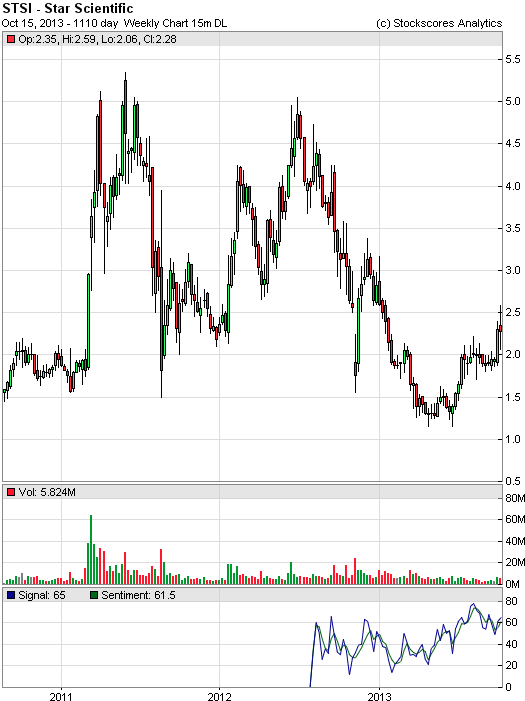
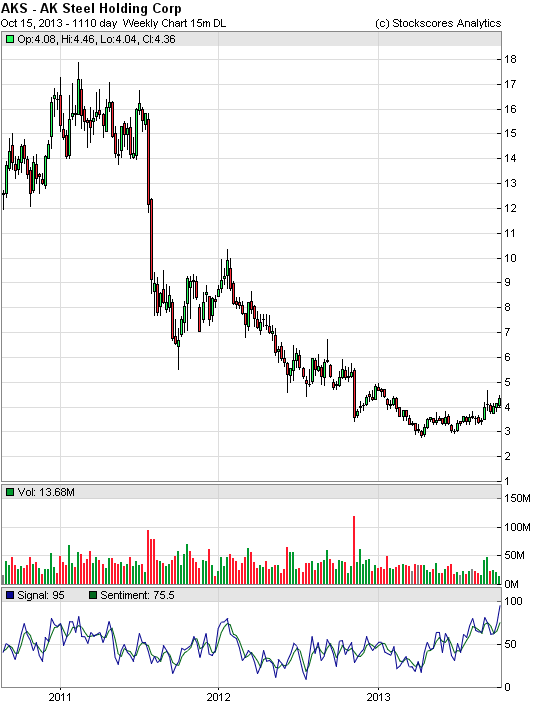

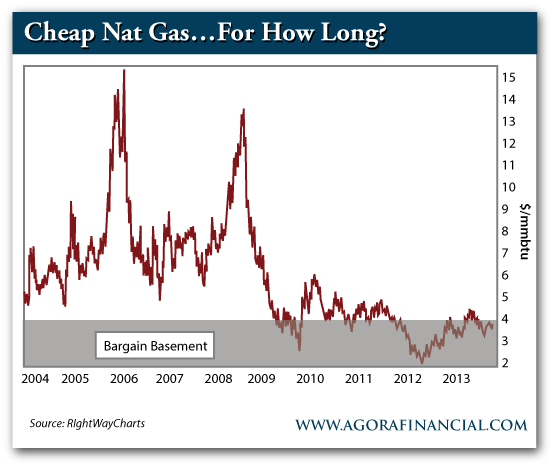

 I’ve read Nassim Taleb’s investment books. Over the years I have watched Taleb emerge into the public eye and share investment pronouncements. At a time, when he admittedly became “oversaturated” on TV, I had my doubts about him. [His call for almost “guaranteed hyperinflation” when the Fed started QE was quite amateurish given the powerful deflationary forces across the global economy-though the jury is still out.] My view of him wasn’t helped when he became synonymous with the phrase “