
Personal Finance
 Socialism builds and capitalism destroys – Hugo Chavez
or
The problem with socialism is that you eventually run out of other peoples’ money – Margaret Thatcher
Ed Note: Take 45 seconds to read the following and decide for yourself:
A Brilliant Example of Socialism’s Achievement
An economics professor at a local college made a statement that he had never failed a single student before, but had recently failed an entire class. That class had insisted that Obama’s socialism worked and that no one would be poor and no one would be rich, a great equalizer.
The professor then said, “OK, we will have an experiment in this class on Obama’s plan”.. All grades will be averaged and everyone will receive the same grade so no one will fail and no one will receive an A…. (substituting grades for dollars – something closer to home and more readily understood by all).
After the first test, the grades were averaged and everyone got a B. The students who studied hard were upset and the students who studied little were happy. As the second test rolled around, the students who studied little had studied even less and the ones who studied hard decided they wanted a free ride too so they studied little.
The second test average was a D! No one was happy. When the 3rd test rolled around, the average was an F.
As the tests proceeded, the scores never increased as bickering, blame and name-calling all resulted in hard feelings and no one would study for the benefit of anyone else.
To their great surprise, ALL FAILED and the professor told them that socialism would also ultimately fail because when the reward is great, the effort to succeed is great, but when government takes all the reward away, no one will try or want to succeed. Could not be any simpler than that.
Here are possibly the 5 key points about such an experiment:
1. You cannot legislate the poor into prosperity by legislating the wealthy out of prosperity.
2. What one person receives without working for, another person must work for without receiving.
3. The government cannot give to anybody anything that the government does not first take from somebody else.
4. You cannot multiply wealth by dividing it!
5. When half of the people get the idea that they do not have to work because the other half is going to take care of them, and when the other half gets the idea that it does no good to work because somebody else is going to get what they work for, that is the beginning of the end of any nation.
More from Martin Armstrong:
Million Mask March
Protesters gather around the world for the Million Mask March in more than 400 cities that were planned to coincide with Guy Fawkes Day in Britain. Just wait until they take 10% of everyone’s account to hand it to the banks. Will the masks come off then? What’s next? IMF proposes forced labor to reduce government deficits and manipulate the high unemployment stats? It would be nice if these people just for once REALLY understood what is going on behind the curtain.
Commodities Trade Differently & Always Have


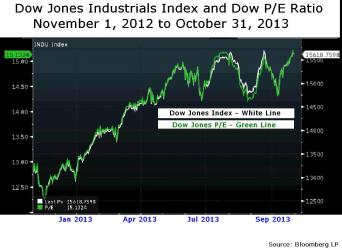
In June of 2012, we added Eagle Energy Trust to our High-Yield Pool that we manage and which is a part of the McIver/Jasayko Model Portfolios. It has been a bit of a roller- coaster ride in the units of the Trust. The most challenging period was a cut in distributions and some operational concerns which hit the news in the autumn of last year.
About a month and a half after we had invested in Eagle, another similar foreign income trust named Argent was launched. At least we now had the potential for some comparable metrics. The main difference was that the new Trust had less history and, as a result, it was a little more of an unknown quantity.
The attractiveness of the foreign income trust structure is that it reintroduced Canadian investors to the potential for relatively high flow-through income that was once a feature of the domestic income trusts, an enormous fad that met its demise when legislation was changed to nullify their advantages. The main stipulation of the new trusts is that the income had to be from a foreign source. And, there was no motivation for the Canada Revenue Agency to fight their formation since their existence represented a net increase in the amount of total taxation whereas the old domestic income trusts ended up cannibalizing much of the existing corporate and personal tax revenue.
Since Eagle’s challenges late last year, it has quietly recovered to draw even with Argent again in terms of price and yield (see the chart above). Again, the benefit of Eagle is a longer track record. More of its laundry has been revealed. However, Argent is still considered an attractive investment by many brokerage firm analysts.
The business plans of Eagle and Argent have the potential for pitfalls because of the lack of critical mass and the lack of operational diversification. Their businesses are focused because the overall size of both companies is relatively small compared to the larger energy producers. There is always a chance that either can get tripped up by one or two issues. Hence, they high current yields which serve to compensate for these risks (both are near 12.5%).
And, now that the two are in a relative dead heat again in terms of price and yield, it will be an interest race to follow going forward.
Eagle Energy Trust is held and Argent Energy Trust is not held in the McIver-Jasayko Model Portfolios as of November 6, 2013. Comments about these investments are not intended as advice and do not constitute a recommendation to buy, sell, or hold.
The opinions expressed in this report are the opinions of the author and readers should not assume they reflect the opinions or recommendations of Richardson GMP Limited or its affiliates. Assumptions, opinions and estimates constitute the author’s judgment as of the date of this material and are subject to change without notice. We do not warrant the completeness or accuracy of this material, and it should not be relied upon as such. Before acting on any recommendation, you should consider whether it is suitable for your particular circumstances and, if necessary, seek professional advice. Past performance is not indicative of future results.
Richardson GMP Limited, Member Canadian Investor Protection Fund.
Richardson is a trade-mark of James Richardson & Sons, Limited. GMP is a registered trade-mark of GMP Securities L.P. Both used under license by Richardson GMP Limited.

It is always wise to look ahead, but difficult to look further than you can see. – Winston Churchill
- One possible future: The dream that lies on that thin line between genius and madness
- How drone tech is exploding in at least one non-military, surefire market.
- The BP drone debut of 2010 and beyond
What if I told you that the modern-day smartphone was conceived by a man over a hundred years ago? No, this man was not a science-fiction writer. He was one of the world’s greatest inventors, who went a step beyond his contemporaries, and then another step.
One day, he said, people would watch the World Series from a device small enough to fit in your pocket… Remember: this was well before YouTube and iPhones. He went into further detail, after being interviewed byThe New York Times. The quote was published in a 1909 article of Popular Mechanics:
“It will be possible, for instance, for a businessman in New York to dictate instructions and have them appear in type at his office in London or elsewhere. He will be able to call up, from his desk, and talk to any telephone subscriber on the globe. It will only be necessary to carry an inexpensive instrument no bigger than a watch, which will enable its bearer to hear anywhere on sea or land for distances of thousands of miles.”
Can you guess who said that?
Now, don’t cheat. I’ll tell you the answer in a moment, as it applies to today’s investment angle. Here’s your second clue…
As a boy, living in Croatia, he dreamed of harnessing the rapids of Niagara Falls to generate electricity for thousands of homes. After he immigrated to the U.S. years later, he did just that — building the world’s first hydroelectric dam.
But that was only the beginning of what he did for the U.S., and would do for its military.
Have you figured out who this man is yet?
If you haven’t, you’re not alone. But let me throw you some softballs…
This inventor gave the world radar, X-ray, neon and fluorescent lighting. He gave us remote control and robotics… Yes. Robotics, over 100 years ago. And the concept of drones.
He also invented radio.
Your last clue: He held over 700 patents, most which stemmed from his early work with AC electricity. He is the father of the 20th century.
Most would guess the widely acclaimed historical favorite, Thomas Edison. But it was, in fact, Edison’s archrival who did these things: the forgotten genius, Nikola Tesla.
History has overlooked Tesla for many reasons. Among them: Edison launched a smear campaign during their war of the currents. J.P. Morgan (a founder of the Federal Reserve System, mind you) blackballed Tesla after learning his intent to construct a hub for free, worldwide, wireless electricity and communications. And after he passed away, penniless, FBI head J. Edgar Hoover and his G-men confiscated his scientific papers and inventions — rather than let them be passed down to his nephew — adding to the secret file on Tesla they’d amassed in order to use his mil-tech.
The U.S. government was neither interested nor ready to use Tesla’s mil-tech until decades later in WWI, where it was used in remotely piloted vehicles (RPVs) and later in unmanned underwater vehicles (UUVs). Now his ideas serve as components of modern weapons systems.
Could the Same Drone Tech Oil Company’s Use Save the Planet?
It is important to trace today’s tech back to the intention of the inventors who brought innovations into this world. In this case, Tesla’s idea for machine drones was that they would be a weapon that would end all warfare, taking humans out of the equation and eventually focusing on resource preservation. The same can be said of his anti-weapon laser system that kept skies free of missiles… although the press labeled it a “death beam” at the time.
The question remains: Could we still change the effects of tech by changing our intent behind it?
If you’ve been reading the past couple days, you know how the military is using drone tech. Oil companies are using it too. Today, we finish our series on drones, and then end on a different note — a vision more in line with the inventor’s original intent.
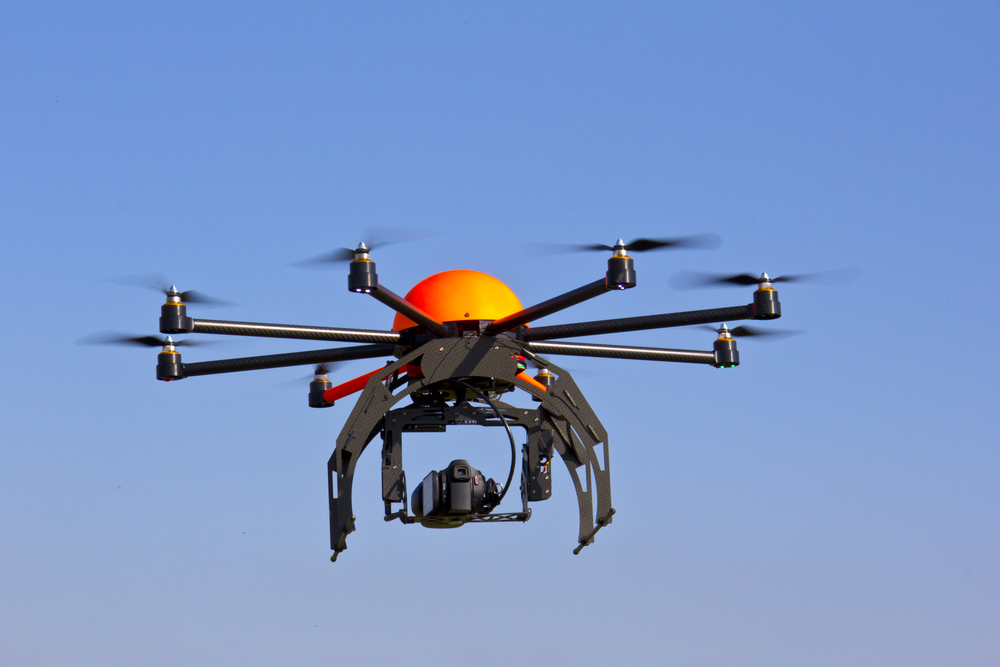
Read on as our ex-naval officer and Harvard-trained geologist Byron King shows you how drone tech is being used to help the planet, and make money doing it.
The Drone Debut of 2010
The recent uses for drones are not the first time they’ve been used to monitor oil spills.
In the spring and summer of 2010, during the BP oil well blowout in the Gulf of Mexico (GOM), the U.S. government approved several different kinds of military-operated drones to fly over the water — in very busy airspace — to perform imagery of oil slicks and such.
I know quite a bit about this because I covered the blowout, its effects and the aftermath in an extensive set of articles in my other newsletter Outstanding Investments.
Editor (Byron King) Note: From almost the first day of the BP blowout, Byron worked with Joel Achenbach of The Washington Post as the story evolved. He had many discussions with Joel, and explained the astonishing technology behind what was going on. Joel was kind enough to mention Byron in an introductory note in his book about the blowout, A Hole at the Bottom of the Sea: The Race to Kill the BP Oil Gusher. ]
At any rate… back during the BP blowout, I participated in a press conference with Coast Guard Adm. Mary Landry, who was in charge of the U.S. government response. I asked about the use of drones and the success in gathering data versus the risk of airspace management. Adm. Landry was very candid about how much effort went into airspace “deconfliction.” In other words, the U.S. military had Navy E-2C aircraft and Air Force AWACS aircraft flying high overhead to monitor the drone flight paths. The idea was to keep the drones far away from other air traffic flying over the GOM.
The BP Drone Effort
Having learned a few things from its near-death experience in the GOM, in late 2012, BP sponsored a drone flight for its own purposes. It was BP’s first foray into operating drones, and the flight lasted all of 20 minutes.
But that short BP flight proved a key point. The drone was an Aeryon Scout UAV guided by an engineer who was not even a licensed pilot. He controlled the drone from a hand-held tablet computer.
Looking ahead, this idea is going places. Drones are relatively inexpensive to purchase and operate compared with larger aircraft. And there’s no need for a human being to risk life and limb flying into extreme environments.
Or consider that if you’re an oil and gas company using drones, you don’t need a dedicated aviation branch on your payroll. You can utilize less-specialized engineering staff to operate drones when needed. Then when the flying is finished, everyone can return to other tasks. Plus, there are smaller ground crews and maintenance personnel required for drones as compared with those required for conventional aircraft. More savings.
Finally, even for jobs that don’t currently involve aircraft at all, like inspecting the outside of an offshore oil rig, drones could be one way to invest in the future. Drones can go to dangerous, hard-to-reach places where companies now assume liability for sending employees directly.
Consider an example such as inspecting hard-to-see nooks and crannies of an oil rig. Send a man topside in a harness to check for rust? Or instead, use a drone with a special camera precisely tuned to detect the wavelengths of light given off by rust or other corrosion? The human operator looks through a camera from a safe, dry location.
Oh, and did you know there are drones for underwater jobs, too? I’ll save that for another day.
Safe to say U.S. oil and gas companies and others have lots of reasons to incorporate former mil-tech UAV platforms into their business. It’ll take time, but we’ll live to see it sooner, rather than later.
The army has been using designs for a decade now, well before we began seeing photos of the Predator drone all around the media a couple of years ago. And while the platform is sound, optics and small electronics have advanced a lot in that time. So now they’ll upgrade.
Looking Ahead
From where we sit, looking at a year or 18 months or so before the FAA comes up with new rules for drones in U.S. civilian airspace, it’s a good time to think about ways to play this pending opportunity.
Put simply, oil companies look for oil, which doesn’t shoot back. It’s not like hunting terrorists in hostile lands. In most cases, oil companies could do the job just as well the old-fashioned way — with manned aircraft or ships sailing across the wine-dark sea. But then again, manned aircraft and ships are expense elements that drive up the finding cost. And deploying drones to do the work — at least, the routine work — saves money.
If you’re still cautious about investing in UAV technology, you could wait and see how fast the commercial drone market grows after the FAA ruling. There’s nothing wrong with that approach.
But even though we don’t know exactly how the FAA will allow drones to operate in the hands of American businesses, we know they will, and it’s safe to say we’ll be seeing more drones as the years go on. Maybe one day we’ll think no more of it than seeing a conventional airplane in the sky.
Best wishes,
Byron W. King
Josh’s Grasmick Note: “What we sell are personal drones,” Maker Movement icon Chris Anderson told us during our interview this past spring about him and his new company DIY Drones.
“We don’t sell to the military, we don’t sell to the government; we sell to regular people, and we hope they will find applications and, in a sense, recontextualize what drones are for and change the definition of drone, at least the public perception, from military weapon to useful tool that we see every day doing something nonthreatening.”
His firm’s products weigh 2 or 3 pounds and fly under 400 feet, so they don’t interfere with aviation. The applications are nearly endless:
“There’s some of the obvious stuff: search and rescue, a lot of sports, Hollywood stuff using a kind of extended camera boom.
“But then there’s stuff like agriculture, which is just sort of recognizing how little farmers know about their crops and how important it would be to get a kind of a daily aerial shot. You’d useless chemicals, adjust water, harvest at the right time, spot outbreaks, and reduce outbreaks more quickly.
“When the computer was first in the popular consciousness, there was this issue with Big Brother,” Anderson went on, “it was like, ‘The computers will be used to spy on us,’ and it was really scary. I mean it was very overwhelming.
“When the Internet was first deployed, again it was the information superhighway; there was a highway that was going to be used by big companies to, again, enslave us. 3-D printing is another example. Right now you say 3-D printing and invariably, people say, ‘What if people print guns?’
“This is just a phase. Drones started in the military, and they’re being used to kill people. So it’s very easy for people to project to that same terrifying vehicle over our own skies, and that’s almost certainly not going to happen. When we hear about a new technology, we tend to quickly jump to the worst, scariest applications. Only once we’re overwhelmed by this flood of nonscary applications do we start to see it as it really is.”
Click here to invest in this long awaited revolution Chris Anderson talks about now.
Thank you for reading Tomorrow in Review. We greatly value your questions and comments. Click here to send us feedback.

Solar company Suntech takes step towards final wind-down

Mining Stocks‘ and Euro‘s Implications for Precious Metals
In our essay on gold price in November we examined the long- and the-short-term outlook for gold to check whether it confirm the indications for silver and mining stocks or not. As we wrote in the summary:
(…) the medium-term outlook for gold remains bearish and, at this time, the short-term outlook is bearish as well. It seems that the precious metals sector reversed direction this week right after moving to the declining resistance lines. (…) From this point of view, it might be the case that the next major downleg has already begun and it seems likely that we will see at least a short-term downswing shortly.
Since that essay was published, gold dropped below $1,340 and almost reached an important support level at $1,300. The yellow metal has lost about 3% since Oct. 28 and has logged its longest losing run since mid-May when it dropped 8% in seven days. Additionally, we also saw drops in case of silver and mining stocks.
From today’s point of view we see that this decline was triggered (as it was likely to happen anyway, based on technical reasons) by doubts over when the U.S. Federal Reserve would begin scaling back its stimulus measures. Although the Fed left its $85-billion-a-month asset purchase program in place following its monthly policy meeting, it didn’t give clear indication whether it would start scaling back stimulus at the December meeting or continue it into the start of 2014.
Therefore, investors still look out for U.S. data reports to gauge if they will strengthen or weaken the case for the Fed to reduce its bond purchases. As is well known, if you want to be an effective and profitable investor, you should look at the situation from different angles and make sure that the actions that you are about to take are justified based on each of them, or at least based on a majority of them. That’s why in today’s essay we examine the Euro Index and the HUI Index (along with its performance relative to gold) to see if there’s anything on the horizon that could drive the precious metals market higher or lower. We’ll start with the Euro Index chart (charts courtesy byhttp://stockcharts.com).
Click on image or HERE for larger view:

Looking at the above chart we see that the long-term downtrend remains in place. Additionally, it seems that the short-term uptrend might already be over. In the previous week, the RSI bounced off the 70 level, which was a bearish sign. At the same time the Euro Index moved very close to the strong resistance created by the declining resistance line, but it didn’t break above it. This show of weakness in combination with the position of the RSI triggered a heavy decline and the European currency dropped below the 135 level. Earlier this week, the euro extended declines and it seems that the downward move is not limited at the moment.
At this point, we would like to emphasize one important fact: the previous tops (in 2008 and then in 2011) were followed by major declines in the precious metals sector. If history repeats itself we may see similar price action in this situation.
Having discussed the current situation in the European currency, let’s take a look at our Correlation Matrix – a tool designed to measure, present and provide interpretations of correlations between various parts of the precious metals sector and key markets that impact it – specifically, at the USD Index and the general stock market.
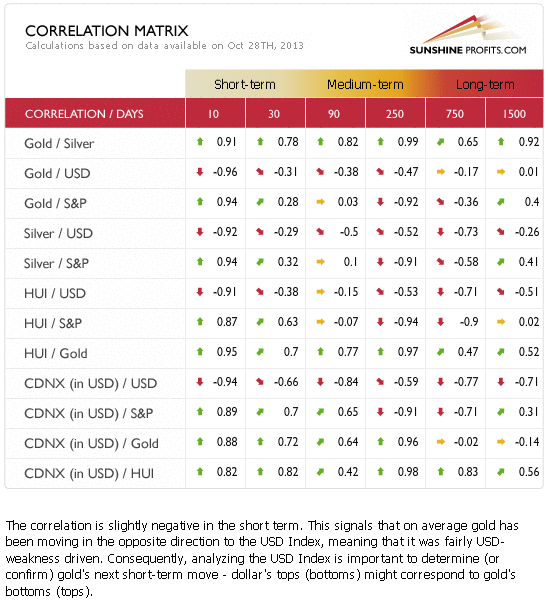
In the previous week we saw a return to normalcy in case of the short-term coefficients. The precious metals sector responded negatively to changes in the USD Index and positively to changes on the general stock market. However, taking into account the situation in the Euro Index, we clearly see that the long-term resistance triggered a medium-term downward move. Therefore, we will focus on the medium-term correlations.
The correlation coefficients between USD Index and precious metals are clearly negative when we take the last 250 and 750 trading days into account and it seems that a big decline in the Euro Index could trigger a decline in the precious metals, as it would very likely mean a major move up in the USD Index.
Once we know what the current situation in the Euro Index, let’s move on to the HUI Index and try to find out what kind of impact the mining stocks can have on gold’s future price.
Click HERE or on Chart for Larger Image:

On the above long-term chart we see that the HUI Index reached its medium-term declining resistance line in the previous week.
At this point it’s worth noting that we also saw similar price action in the case of gold and silver. Therefore, implications are bearish and the trend remains down. Please note that we still expect that the HUI Index will move to the 150 level or very close to it.
Before we summarize, let’s turn to our final chart – the gold stocks:gold ratio. After all, gold stocks used to lead gold both higher and lower for years (not in the very recent past, though).
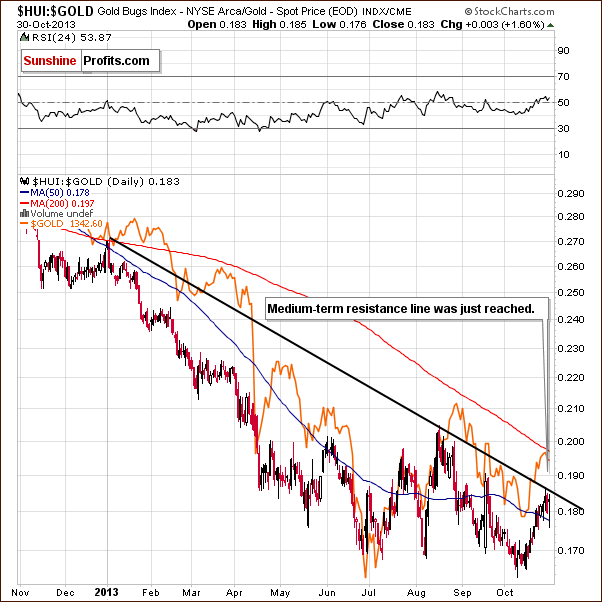
Looking at the above chart featuring gold stocks performance relative to the underlying metal – gold, we clearly see that the ratio reached its medium-term resistance line (similar to what we saw in case of gold, silver and the HUI index), but there was no breakout above this line, which is a medium- and short-term bearish factor.
Although we saw an invalidation of the breakdown below the previous 2013 low, the long-term trend remains unchanged – we have the ratio below the 2008 low and the breakdown below this low was already confirmed.
Summing up, looking at the current situation in the Euro index we see that the implications for the precious metal market are no longer bullish in the short term as currencies have already reversed and the USD Index has done so at the cyclical turning point. It might be the case that we are looking at the very early days of a major downswing in the Euro Index and a rally in the USD Index. Taking this into account and combining it with the medium-term outlook for the mining stocks, it seems that the medium term trend in the precious metals market remains down.
Thank you for reading. Have a great and profitable week!
Przemyslaw Radomski, CFA
Founder, Editor-in-chief
Gold Price Analysis Website – SunshineProfits.com
* * * * *
Disclaimer
All essays, research and information found above represent analyses and opinions of Przemyslaw Radomski, CFA and Sunshine Profits’ associates only. As such, it may prove wrong and be a subject to change without notice. Opinions and analyses were based on data available to authors of respective essays at the time of writing. Although the information provided above is based on careful research and sources that are believed to be accurate, Przemyslaw Radomski, CFA and his associates do not guarantee the accuracy or thoroughness of the data or information reported. The opinions published above are neither an offer nor a recommendation to purchase or sell any securities. Mr. Radomski is not a Registered Securities Advisor. By reading Przemyslaw Radomski’s, CFA reports you fully agree that he will not be held responsible or liable for any decisions you make regarding any information provided in these reports. Investing, trading and speculation in any financial markets may involve high risk of loss. Przemyslaw Radomski, CFA, Sunshine Profits’ employees and affiliates as well as members of their families may have a short or long position in any securities, including those mentioned in any of the reports or essays, and may make additional purchases and/or sales of those securities without notice.


-
I know Mike is a very solid investor and respect his opinions very much. So if he says pay attention to this or that - I will.
~ Dale G.
-
I've started managing my own investments so view Michael's site as a one-stop shop from which to get information and perspectives.
~ Dave E.
-
Michael offers easy reading, honest, common sense information that anyone can use in a practical manner.
~ der_al.
-
A sane voice in a scrambled investment world.
~ Ed R.
Inside Edge Pro Contributors

Greg Weldon

Josef Schachter

Tyler Bollhorn

Ryan Irvine

Paul Beattie

Martin Straith

Patrick Ceresna

Mark Leibovit

James Thorne

Victor Adair