
Gold & Precious Metals

 Switzerland has been a sanctuary for high-net-worth capital for the better part of the last century. Today, however, the rich are choosing a different destination to stash their wealth – Asia. Gold, silver and collectibles are pouring into Singapore, Hong Kong and Shanghai, jurisdictions that now offer some of the most exclusive gold and silver vault options in the world.
…read it all HERE

 Lance’s thorough Stock Market Analysis – Ed
To start this week’s missive I want to share with you an excerpt from Randall Forsythe’s “Up and Down Wallstreet” column this weekend:
“IN A NEW STUDY, McKinsey & Co. concluded the Fed had no role in boosting stock prices and hence there is no bubble. Truth to tell, the consultancy had slipped from my consciousness since it extolled Enron as “one of the world’s most innovative companies,” instead of a criminal enterprise. Of course, since then, former McKinsey managing director Rajat Gupta was convicted of insider trading. McKinsey advised AT&T there wasn’t much future in mobile phones (which Bell Labs invented); advised General Electric, which lost $1 billion by following its advice; recommended that U.K. rail company Railtrack cut infrastructure spending, leading to fatal accidents and Railtrack’s collapse, among other great calls.
In particular, McKinsey asserts there has not been a large-scale shift to equities in search of higher returns. To be fair, the consultancy’s paper preceded the report from colleague Brendan Conway on Barrons.comthat inflows into equity mutual funds and exchange-traded funds are on track to top $450 billion in 2013 — more than the previous four years combined. Anybody can overlook nearly a half-trillion bucks in concluding there’s been no big shift to stocks.
McKinsey based its conclusions on the observation that price/earnings ratios and price-to-book ratios aren’t out of line. Yellen pointed out the equity-risk premium — the expected extra return from stocks over risk-free government bonds — adequately compensates investors. On the latter score, the equity-risk premium is flattered by the low level of Treasury yields — QE’s explicit goal. As for P/Es being moderate, that’s helped by the numerator being boosted by the reduction of interest expense — some $319 billion since 2007, according to ever-invaluable analysis from MacroMavens’ Stephanie Pomboy.
Even with this detachment from reality, and fundamentals, the markets advanced higher this week as Janet Yellen promised MORE, and potentially MUCH MORE, accommodative policy in the future.
Not coincidentally, the Wall Street Journal reports investment-grade corporate-bond issuance is running at a $1 trillion annual rate as companies take advantage of historically low rates, with which the Fed has had something to do. Moreover, the release of banks’ loan-loss reserves has added $112 billion to financial companies’ profits in the past two years, Pomboy says, which just might have something to do with higher house prices.
At the same time, an analysis by a famous hedge fund (whose name I can’t reveal or they’d kill me or I’d have to kill you) finds profits at non financial companies have been flat since 2011. Thus, the rise in their stock prices implies higher P/Es — consistent with the effects of monetary stimulation.
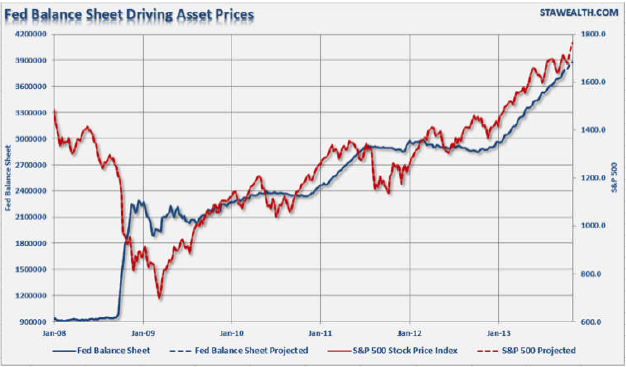
What is probably most disturbing though is that Janet Yellen does NOT
BELIEVE, despite mounting evidence to the contrary, that investment risk is
rising:
- Yellen Says Fed Doesn’t See Buildup Of Financial Risks
- Yellen Sees Limited Evidence Of ‘Reach For Yield’
- Yellen Says Fed Looks Out For Any Potential Asset Price Bubbles
- Yellen Doesn’t See `Misalignments’ In Asset Prices
….read more HERE
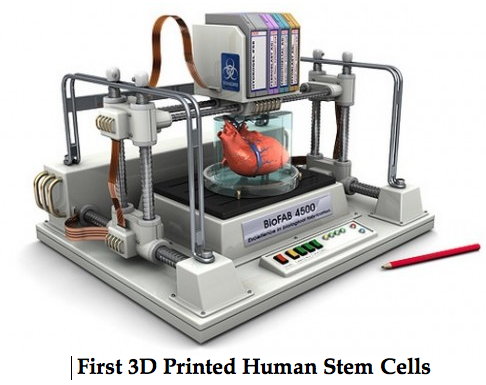 “Human tissues, metal guns, prosthetic limbs, tools, household articles, clothes, among thousands of other products. The major players include 3D Systems , voxeljet AG (VJET), Stratasys (SSYS), ExOne (XONE), ARCAM AB (OTC:AMAVF) and Organovo Holdings (ONVO), with Hewlett Packard (HPQ) and 3M (MMM) also preparing to enter the market.”
3D Revolution: The Future Is Now, Cash In
There was a time when every Star-Trek fan pined for the on-ship replicators that had the capability to produce anything ranging from food to hardware, and today we are close to that fantasy turning to a reality in the form of 3D Printing. This industry, touted as the next big revolution, has piqued the interest of technology lovers and investors alike. It has been heavily discussed in blogs, news and the like for its ability to grow and sustain the promise it has. There are those who believe that this is the future. On the contrary, there are those who believe that this is all a hype and gimmick and will die down as fast as it spread. I, for one, don’t believe that this is just hype; there is indeed a bright future in the industry, and it is already proving that by integrating itself into mainstream manufacturing.
The Industry
3D printing uses a 3D printer and digital technology to print anything digitally modeled. The process also known as additive manufacturing uses successive layering of materials to form any shape wanted. The first working printer was created in 1984 by the founder of 3D Systems Corporation (DDD), Chuck Hull. However, the sales of these printers have picked up heavily in the 21st century and have become more widespread. The materials used in printing include polymers, powders, metals and alloys, resins, ceramics, sand, living tissues, and others. Metal-based printing has the potential to revolutionize the market.
The industry consists of many private and publicly traded companies investing their efforts in taking this revolution to the next step. Some of the major players include 3D Systems , voxeljet AG (VJET), Stratasys (SSYS), ExOne (XONE), ARCAM AB (OTC:AMAVF) and Organovo Holdings (ONVO), with Hewlett Packard (HPQ) and 3M (MMM) also preparing to enter the market.
The 3D printers presently are highly priced, owing to the patents preventing competition in the industry. These patents related to laser sintering expire in February 2014, which will open the avenue for manufacturing low-priced 3D printers. This expiration is being viewed as a major game-changer in the 3D printing industry.
According to Wohler’s Report 2013, the worldwide market of 3D printing and services expanded from $1.3 billion in 2010 to $2.2 billion in 2012. The industry average annual growth [CAGR] over the past 25 years is a striking 25.4%, with a 27.4 percent for the years 2010 through 2012. Additionally, the low cost personal 3D printers market averaged almost 346%, from 2008 to 2011. The main buyers included do-it-yourselfers, engineering students, hobbyists, and educational institutions.
Application
3D printing has found its application in aerospace, automotive, healthcare, biotechnology, fashion, education, media, engineering, industrial design, defense, consumer, and defense among other uses. Products that have been manufactured or produced using 3D printing include human tissues, metal guns, prosthetic limbs, tools, household articles, clothes, among thousands of other products.
In the aerospace area, NASA plans to launch a 3D printer into space next year, which will allow the astronauts to print the tools instead of carrying the load from here. Rolls Royce also plans to manufacture parts of its engines using 3D printing, as it is much faster and easier to use. Similarly, GE Aviation also plans to use 3D printing for its jet engines.
Other major companies that have turned towards 3D printing include Audi, Siemens (SI), BMW, Staples (SPLS), UPS (UPS), Microsoft Stores (MSFT), ASDA, Victoria’s Secret, L’Oreal and Porsche, to name a few.
Major Players
Organovo Holdings is a biotechnology company focusing on 3D bioprinting technology to create functional human tissues for medical and research applications. The products of the company aim at reducing the expenditure on clinical trials for drug testing. It will be launching its 3D human tissue liver for toxicity testing next year. The company has the right collaborations, and at the moment, has no major competitor. The share price, as on November 14, was $11.90, with a market capitalization of $919.61 million.
voxeljet AG , a German company, provides 3D printers and on-demand parts services, in the areas of automotive, aerospace, engineering, architecture, science and medical, film and entertainment and art. The company went public last month, with an opening price of $20 and is now trading at $52.40, as of November 14, 2013. The company turned to profitability with the recent earnings announcement for the third quarter and reported an increase in its product sales, with a market capitalization of $817.44 million, as of November 14. The company has celebrated customers that include Ford (F), BMW, Porsche, 3M, Daimler, among others. They also created the Aston Martin DB5 plastic double for the James Bond movie Skyfall.
3D Systems, a 3D printing giant, develops, produces and markets 3D printers, materials, customer services and authoring solutions for consumers and professionals. It operates primarily in the automotive, computer, electronic, aerospace, energy, consumer, education, defense, and healthcare products. The company primarily operates in the U.S., Europe, and Asia Pacific. The company has a trading price of $78.90 as of November 14 with a market capitalization of $8.1 billion.
Stratasys Inc. is a worldwide leader in the manufacturing of 3D printers and high performance rapid prototyping [RP] systems for direct digital manufacturing [DDM] and office-based RP systems. It offers solutions in the apparel, aerospace, automotive, architecture, business machine products, dental, defense, electronics, consumer, educational institutions, jewelry, heavy equipment, toys and medical industries. The company is trading at $124.10 as on November 14, with a market capitalization of $6.04 billion.
Future
3D printing is without a doubt an exponentially lucrative industry and is sure to fill many pockets as it keeps growing. The stock prices of the companies in 3D printing have seen a sharp up rise with substantial gains. It is not only an attractive technology, but also has the potential to cut the costs that go into research and development, manufacturing, extensive labor-force and the like. It allows for customized products for every customer, targeting market niches without incurring major costs.
The 3D printing industry has further been supported by President Obama, as he mentioned in his State of Union Address at the start of the year, that the industry has the potential to revolutionize manufacturing. The industry is no doubt in its infancy, but has garnered a lot of attention, with increased investments and research, which could only help in accelerating the progress. And with the giants such as HP and 3M entering the market, it is heavily anticipated to grow and fast. Additionally, the expiration of patents relating to printing technology will not only witness a surge of printers, but also increased competition.
According to MarketsandMarket research, the 3D printing market from 2013-2020 is expected to grow at CAGR of 23% and reach $8.41 billion. My take on the stocks of the 3D printing companies is that they should be bought in truckloads, as when the industry takes off as expected, there would be a surge in the stock prices, and a gradual rise can already be seen. Of course, the financial conditions and products of the companies must be analyzed before investing. The best options are Organovo, Stratasys, voxeljet, and 3D Systems.
 ….versus the Bernanke “Put”
If the Janet Yellen testimony before the Senate Banking Committee this week illustrated anything, it is that the transition from Ben Bernanke to the incoming chair of the US Federal Reserve will be seamless. It is the typical story of the US Federal Reserve being dependent on the data driven recovery of the US economy that will affect their asset tapering decisions. Unfortunately though, it has become a distraction as to shift investor’s concentrations away from the perils of unproductive fiscal policy (at any level of government) and instead focus on the financial markets, which for the sixth consecutive week saw the S&P 500 and Dow Jones trade higher.
The unfortunate realization or perhaps lack of realization is that central banks, led by the US Federal Reserve, will continue to be the only game in town, and that was the message Janet Yellen implicitly provided last Thursday. US economic growth sits at that inflection point of around 2 percent where we will still wait to see whether the economy is ready to reach former Bank of Canada and current Bank of England Governor Mark Carney’s coined term “escape velocity.”
But the biggest reason that the credit easing policies will continue is because of the lackluster inflation levels seen all around the world. Until inflation actually becomes a credible threat to the worlds developed economies, there is no pressure on central banks to begin tightening their policies, or even talk about it. This is especially true given the average inflation rate in the OECD developed countries has fallen from 2.2 percent in 2012 to 1.5 percent so far this year. And reports out of the European Union last week highlight that deflation was more of threat than inflation with October’s inflation numbers registering at .7 percent. That creates a major threat to the nations of Europe, where the risk of seeing prices decline will create yet another impediment to their recovery from a triple dip recession.
The other issue, however, with forecasted paltry inflation levels is what countries with low inflation are associated with, and that is persisting levels of high jobless rates and mediocre growth. For this reason alone, the world’s central banks continue their aggressive policies, but it does truly illustrate their positions between a rock and a hard place as any opportunity to spur or revitalize economic growth is jeopardized by an unwavering price level. As Mohammad El-Erian argues, central bankers in today’s world are only destined to fail because our expectations for what they can deliver is far too inconceivable, given the “the much-sought-after trifecta of greater financial stability, faster economic growth, and more buoyant job creation.”
So it is not so much that there is a responsibility among the central bankers to instill the prior mentioned trifecta of economic goals, it is rather the shortfall of elected policy makers that force us to rely on the independent institution of a central bank. And just as it was the “Greenspan Put” beginning in the early 2000’s that saw the Federal Funds Rate drop every time the economy hit a speed bump to the “Bernanke Put,” which commenced the greatest era of manipulation of the Federal Reserve’s balance sheet in order to stimulate the economy, investors now eagerly await what will be the “Yellen Put.” Whether its offered forward guidance of low interest rates into the unknown future, or perhaps quantitative easing continuing longer than anticipated, one thing is certain, and that is for this economic recovery to continue central bankers are still needed more desperately than ever.
More Articles from Robert Levy HERE


-
I know Mike is a very solid investor and respect his opinions very much. So if he says pay attention to this or that - I will.
~ Dale G.
-
I've started managing my own investments so view Michael's site as a one-stop shop from which to get information and perspectives.
~ Dave E.
-
Michael offers easy reading, honest, common sense information that anyone can use in a practical manner.
~ der_al.
-
A sane voice in a scrambled investment world.
~ Ed R.
Inside Edge Pro Contributors

Greg Weldon

Josef Schachter

Tyler Bollhorn

Ryan Irvine

Paul Beattie

Martin Straith

Patrick Ceresna

Mark Leibovit

James Thorne

Victor Adair