
Bonds & Interest Rates
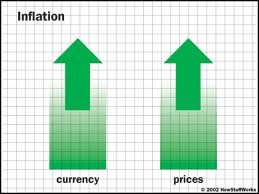 Less than a decade after a housing/derivatives bubble nearly wiped out the global financial system, a new and much bigger commodities/derivatives bubble is threatening to finish the job. Raw materials are tanking as capital pours out of the most heavily-impacted countries and into anything that looks like a reasonable hiding place. So the dollar is up, Swiss and German bond yields are negative, and fine art is through the roof.
Now emerging market turmoil is spreading to the developed world and the conventional wisdom is shifting from a future of gradual interest rate normalization amid a return to steady growth, to zero or negative rates as far as the eye can see. Here’s a representative take from Bloomberg:
Cheap Money Is Here to Stay
For decades, central banks lorded over markets. Traders quivered at the omnipotence of monetary authorities — their every move, utterance and wink a reason to scurry for safe havens or an opportunity to score huge profits. Now, though, markets are the ones doing the bullying.
The Fed’s Countdown
Take New Zealand and Australia. Yesterday, the Reserve Bank of New Zealand slashed borrowing costs for the second time in six weeks even as housing prices continue to skyrocket. A day earlier, its counterpart across the Tasman Sea (already wrestling with an even bigger property bubble of its own) said a third cut this year is “on the table.”Just one year ago, it seemed unthinkable that officials in Wellington and Sydney, more typically known for their hawkishness and stubborn independence, would join the global race toward zero. But with commodity prices sliding, China slowing and governments reluctant to adopt bold reforms, jittery markets are demanding ever-bigger gestures from central banks. Even those presiding over stable growth feel the need to placate hedge funds, lest asset markets falter. When this dynamic overtakes countries such as New Zealand (growing 2.6 percent) and Australia (2.3 percent), it’s hard not to conclude that ultralow rates will be the global norm for a long, long time.
Indeed, the major monetary powers that are easing — Europe, Japan, Australia and New Zealand — have all suggested rates may stay low almost indefinitely. Those angling to return to normalcy, meanwhile — the Federal Reserve and Bank of England — are pledging to move very slowly. Even nations with rising inflation problems, like India, are hinting at more stimulus.
“As interest rates continue to fall across most of the globe, central banks are also united in their main message: Once rates have come down, they’re likely to stay down,” says Simon Grose-Hodge of LGT Bank. “And when they finally do tighten, the ‘normal’ rate is going to be a lot lower than it used to be.”
Could the People’s Bank of China be next? “With underlying GDP growth still looking weak, more monetary policy moves are likely,” says Adam Slater of Oxford Economics. “And China may even face the prospect of short-term rates dropping towards the zero lower bound.”
This is not how the Fed, ECB or Bank of Japan envisioned the year playing out. They see ultra-low rates as an emergency measure, temporary in nature and to be dispensed with asap. From MarketWatch:
Here’s the real reason the Fed wants to raise rates
Federal Reserve policy makers are hoping, even praying, that no unexpected domestic development or international crisis intervenes to prevent them from taking the first baby step to normalize interest rates at the Sept.16-17 meeting.
Why? Fed officials point to a number of reasons: the unnatural state of a near-zero benchmark rate; the potential risk of financial instability; an improving labor market; diminishing headwinds; and yes, expectations of 3% growth just over the horizon.
Fed Chairman Janet Yellen, usually considered a member of the Fed’s dovish faction, sounded determined to act when she testified to Congress last week.
“We are close to where we want to be, and we now think that the economy cannot only tolerate but needs higher interest rates,” Yellen said during the Q&A. “Needs,” as in the patient needs his medicine.
What’s the urgency with an economy chugging along at 2-something percent and low inflation? I suspect Fed officials are terrified of being caught with their pants down, in a manner of speaking. Should some unforeseen event come along to upend the economy, the Fed’s arsenal would be dry. They’d like to put some space between their policy rate and zero.
That “unforeseen event” has arrived, leaving most central banks with a stark choice: Let the deflationary crash run its course at the risk of blowing up the quadrillion or so dollars of interest rate, credit, and currency derivatives hidden on bank and hedge fund balance sheets. Or push interest rates into negative territory pretty much across the developed world. Since option number one carries a statistically-significant chance of ending the modern financial era it is absolutely unacceptable to Goldman et al, and is thus a non-starter. Which leaves only option two: more of the same but bigger and badder.
So…the central banks will panic. Again. Countries that retain some control over their monetary systems will see their interest rates fall to zero and beyond, while those that don’t will be thrown into some kind of new age hyperinflationary depression. Not 2008 all over again; this is something much stranger.

The woes in Canada’s oil and gas sector continue. A shortage of pipelines is forcing some Canadian natural gas production to shut in. Traffic along the pipeline system in Canada, due in part to maintenance, is causing operators to throttle back on output. Perhaps more importantly is the ongoing boom in natural gas production in the United States, which is pushing out Canadian gas from the market. “We’re struggling to get our gas to market,” Darren Gee, CEO of Peyto Exploration and Development Corporation (TSE: PEY), said to the Financial Post. “This is the first time in our 17-year history that we’ve experienced this.” Peyto was forced to cut back on gas production by 10 percent in May. Canada’s gas exports declined by 21 percent in 2014 compared to four years ago.
On the plus side, Canada’s National Energy Board predicts that technological improvements in drilling should lead to continued improvements the initial production rates of natural gas fields in Western Canada.
 WTI fell below $50 per barrel this week, ushering in some of the most pessimistic sentiments in months. After a wave of bearish events – the Greek debt crisis, the Chinese stock market meltdown, and the all-important Iran nuclear deal – oil prices cratered and were looking for some direction. The latest bit of data from the EIA did nothing ease the fears of a bear market. The EIA reported on July 22 that crude oil inventories unexpectedly climbed for the week while analysts had expected a drawdown, jumping 2.5 million barrels. Weekly production figures, as suspect as they are, ticked downwards just slightly. On a more bullish note, refineries are running at record highs, taking advantage of cheap crude, processing 16.8 million barrels per day.
OPEC officials continue to assert that low oil prices will only be temporary and that there is no need for the group to make a policy change. Kuwait’s oil minister this week said that stronger global demand will lead to a price rebound. Even if prices decline significantly below $50 per barrel, “[p]rices will not stay down forever,” one OPEC official from an Arabian Gulf country told Reuters.
The low prices will likely lead to fresh rounds of layoffs across the oil industry, especially if they do not rebound soon. In a sign that such a development could be in the offing, Weatherford International (NYSE: WFT), an oil field services company, announced that it would be cutting an additional 1,000 jobs, bringing its total job casualty number to 11,000 so far in 2015 and 18,000 over the past year and a half. The latest eliminations will mostly take place in U.S. onshore support staff. FMC Technologies (NYSE: FTI) also said that more positions would be eliminated, although it did not specify how many. FMC has already slashed 15 percent of its workforce in its land services unit.
In a sign that the appetite for drilling is slowing, orders of rail cars fell by 29 percent in the second quarter from the first. Even more staggering is the fact that the 3,155 rail car orders in the second quarter were down 70 percent from the same period a year earlier. That mirrors the 46 percent decline in energy shipments by rail for Kansas City Southern (NYSE: KSU).
The U.S. government gave Royal Dutch Shell (NYSE: RDS.A) the final go-ahead for drilling in the Arctic thi week. Shell’s two drilling rigs departed from southern Alaska for the Chukchi Sea, where it plans on drilling two wells into the Burger Prospect. However, the Obama administration limited Shell’s drilling to the upper parts of the well, prohibiting the company from drilling into oil-bearing zones until its ice-breaker can be repaired. Shell saw its icebreaker, the Fennica, suffer damage that required it to head to Oregon for repairs. Until that ship can be repaired and moved to the Chukchi Sea, Shell isn’t allowed to drill into oil zones. The Fennica carries required oil spill response equipment. The big question is whether or not Shell will be able to send the icebreaker back to the Arctic with enough time to drill before the end of the drilling season in late September.
Although the Arctic raises serious questions over Shell’s financial position – having already spent several billion dollars on the venture – credit ratings agencies are more worried about the Anglo-Dutch company’s purchase of BG Group (LON: BG). Standard & Poor’s (S&P) downgraded Shell’s long-term credit rating this week to AA-, mostly on the back of low oil prices and high spending. The ratings agency maintained a “negative” outlook for Shell because of BG purchase and the large debt load that it will require.
Meanwhile, Shell has bid on two onshore blocks in Albania, along with its partner, Canada’s Petromanas (CVE: PMI).
A top Gazprom official met with European regulators this week to discuss the antitrust case the EU is bringing against the Russian gas giant. Gazprom’s Deputy Chairman Alexander Medvedev said on July 23 that the company wants to “settle this case amicably” with Europe, but still denies one specific allegation – that it charged countries in Eastern Europe exorbitant prices for natural gas. “Our prices are nearing a record low for our customers across Europe,” he said in a statement. The EU filed antitrust charges against Gazprom over a variety of issues, but mostly over pricing of natural gas. Medvedev said that he hopes his company and European regulators can come to a “mutually acceptable solution.” The deadline for such a deal is September.
The EU scrutiny could throw a wrench in Gazprom’s plans for market growth. A new report from the Russian Institute for Strategic Studies finds that Gazprom is running into an unfavorable political landscape as it tries to build greater pipeline connections to Europe. There are two key projects that Gazprom is pushing. First is the expansion of the Nord Stream Pipeline, which would allow the flow of Russian gas to reach Germany, bypassing the contentious transit country of Ukraine. The other is the Turkish Stream Pipeline, a project that would achieve similar objectives of cutting out Ukraine, only this one would travel south and west through Turkey and Greece. However, both projects are running into a wall of opposition that could block construction, Russian researchers say.
Thanks for reading and we’ll see you next week.
Best Regards,
Evan Kelly
Deputy Editor, Oilprice.com
In this week’s Inside Investor (below), Dan Dicker warns that the ‘double-dip’ recession in oil is part of an overall trend of commodity deflation. While preaching caution for investors, Dan has still identified one potential takeover target in the energy sector that investors should keep a very close eye on. Find out more below.
P.S. – With earnings season introducing yet another element of volatility into the markets, it can be tough to find good quality opportunities. But, once again, Martin Tillier has drawn on his decades of experience in the markets and done just that. He proposes a timely buy, with a prudent exit strategy and the likelihood of a minimum 10 percent gain. Gain some true market wisdom from our experts like Martin by subscribing to our Premium Service today.


Things look lethargic across the commodities complex right now. With demand for gold, oil, and copper all having come under pressure of late.
But the market this week got some news of an unexpected surge in demand for one metal.
Aluminum.
As reported by Platts, major producer Norsk Hydro said that global demand for aluminum soared during the second quarter of 2015. Rising 15% as compared to the first quarter of the year, to 14.8 million tonnes.
The Q2 demand figures were also up on a year-on-year basis. Being 5% higher than the level seen during the second quarter of 2014.
Importantly, not all of this growth came from the key center of China. With demand from the world ex-China increasing by a healthy 5.8% during the quarter.
China itself saw strong growth, with consumption for the quarter up 7.1% as compared to the year-ago period.
Demand is reportedly being boosted by factors like substitution of aluminum for steel in the automotive industry. Which bodes well for consumption in this market over the coming months. Norsk Hydro is in fact projecting that aluminum demand should rise 5% for 2015 as a whole.
In terms of production and prices, the story appears to depend on location. With the future for Chinese producers appearing the most uncertain.
That’s because even as demand is rising, production is increasing rapidly. Output across China was up 13.7% in the second quarter, as compared with Q2 2014.
But beyond China, the market looks more steady. With total annualized production for this year projected at just 26.3 million tonnes — almost 2 million tonnes less than annualized consumption, which is pegged at 28.2 million tonnes.
That suggests supply could be tight in markets like Europe and the U.S. Triggering a drawdown of stockpiles that have been a concern for buyers in this market.
Watch for a stabilization in prices, which have fallen to a five-year low below $0.80 per pound over the last few months. Possibly setting the stage for a rebound here.
Here’s to being in demand,
Dave Forest
Here is the latest Aluminum price index – Money Talks Editor:

When most people think of distressed investing, they think of buying CCC-rated bonds at 20 or 30 cents on the dollar, then maybe sitting in bankruptcy court to divvy up the capital structure, making healthy risk-adjusted returns in the end. You just need to hire a few lawyers.
Distressed investors are a different breed of cat. It’s one of those countercyclical businesses, like repo men, who do well when everyone else is getting hammered.
I remember distressed guys killing it in 2002. Most people remember the dot-com bust, but there was a nasty credit crunch that went along with it. Nasty. High yield/distressed investments had some amazing years in 2003 and 2004. Convertible bonds in particular.
Funny thing about distressed investors is that they like to stay within their comfort zone. In my experience, they’re not keen on commodities. Like coal mining, which this week saw one bankruptcy filing and another one in the works. Distressed guys hate commodities because they are just timing the earnings cycle – which is the same as market timing. Distressed guys want less volatile earnings so their projections aren’t totally dependent on commodity prices rising.
Coal is distressed, all right. But you don’t see the distressed guys getting involved. Even they are too scared!

Here’s a somewhat controversial statement: I think most commodities are distressed.
Coal is definitely distressed. So is iron ore. Copper, too. And yes, even gold.
Corn and beans have had a nice little run, but metals and energy in particular have been a complete horrorshow.
So I think it’s time to start looking at commodities as a distressed asset class. The assumption is that fair value of these commodities/producers is well above current market prices, and current market prices are wrong because of, well, a lot of things. In particular, a self-reinforcing process where selling begets more selling.
If you’re a distressed investor and you’re buying something at a deep discount, if you have a long enough time horizon, you’ll be vindicated eventually. Sometimes, it takes a long time. Sometimes, not very long at all. It’s pretty great when it works.
I have never had much aptitude for it. But I am trying it now.
Gold: A Special Case
Gold is a little different.
How do you value gold? It has no cash flows. An industrial commodity like copper is pretty easy to value. With gold, you’re trying to gauge investment demand (at the retail or sovereign level), which is hard, against mining production, which is a little easier.
But what an ounce of gold is worth is entirely subjective. More subjective than copper or cocoa or coffee. For example, if everyone started using bitcoin, there would be little to no demand for gold. (For the record, I think cryptocurrencies indeed have had an impact on gold demand.)
Basically, people want gold when they think their government no longer cares about the purchasing power of their currency. In our case, that was when the Fed was conducting quantitative easing, known colloquially as printing money.
But that’s not really what people were nervous about. Think about it. The Fed was printing money for monetary policy reasons. They were trying to effect monetary policy with interest rates at the zero bound. That’s different from printing money to buy government bonds because nobody else wants to. That’s called debt monetization.
When budget deficits get sufficiently large, people worry about things like failed bond auctions, that the Fed will have to step in and be the buyer of last resort. This is the nightmare scenario described in Greenspan’s Gold and Economic Freedom essay.
We had $1.8 trillion deficits not that long ago. The bond auctions were a little scary. I thought debt monetization was a possibility.
The deficit is lower today, mostly because of higher taxes, more aggressive revenue collection, and economic growth. As you can see, the price of gold has corresponded almost perfectly with the budget deficit.

With a small deficit today, nobody cares about gold.
Is the deficit going higher or lower in the future? Higher. Ding-ding-ding, we have a winner. One of the reasons I’m happy owning gold as a part of my portfolio.
Paper vs. Things
Asset allocation gets a lot easier when you figure out that the financial markets are a tug-of-war between paper and things. Sometimes, like now, financial assets (stocks and bonds) outperform. Stocks are overpriced, and bonds are way overpriced. Other times, like 10 years ago, commodities outperformed.
It has to do with the degree of confidence people have in… other people. A bond is a promise to repay. A stock is a promise to pay dividends, or that there will be something left over at the end. A dollar is a promise that it’s worth something, namely, a divisible part of the sum total of the productive abilities of all the people in the country.
These are pieces of paper. Paper promises. When confidence in promises is high, nobody needs gold, coal, or copper. When confidence in promises is low, time to build that underground bunker in the backyard.
Confidence in promises is currently at all-time highs. Without making a positive statement either way, I’d say that only in the year 2000 were commodities more undervalued than they are right now.
Sidebar: it is tempting to treat commodities as an asset class, but you should try not to. They are idiosyncratic, and for most commodities, the cost of carry is high enough that it’s impractical to hold them for long periods of time.
Commodity-related equities are a different story.
Disclaimer
I’m kind of biased on this, and I always think commodities are undervalued because I’m a deeply suspicious person and I don’t believe promises. I’ve owned gold and silver for years (plus GLD and SLV, and GDX and SIL), and if prices get low enough, I will add to those positions.
Keep in mind that I worked for the government under the Clinton administration. Clinton’s mantra to government employees was, “Do more with less.” The man did a lot to restrain the growth of government—and he was a Democrat!

People resented him for it. They wanted their fancy toys and their boondoggles.
Public servants have been much happier under Bush and Obama.
Not coincidentally, gold bottomed in 2000, at the end of Clinton’s presidency, and has basically been going up since.
So here is the secret sauce: You want to know when commodities are going up?
Watch the deficit. If someone dreams up free college for everyone, buy commodities with veins popping out of your neck.
Jared Dillian
If you enjoyed Jared’s article, you can sign up for The 10th Man, a free weekly letter, at mauldineconomics.com. Follow Jared on Twitter @dailydirtnap

-
I know Mike is a very solid investor and respect his opinions very much. So if he says pay attention to this or that - I will.
~ Dale G.
-
I've started managing my own investments so view Michael's site as a one-stop shop from which to get information and perspectives.
~ Dave E.
-
Michael offers easy reading, honest, common sense information that anyone can use in a practical manner.
~ der_al.
-
A sane voice in a scrambled investment world.
~ Ed R.
Inside Edge Pro Contributors

Greg Weldon

Josef Schachter

Tyler Bollhorn

Ryan Irvine

Paul Beattie

Martin Straith

Patrick Ceresna

Mark Leibovit

James Thorne

Victor Adair