
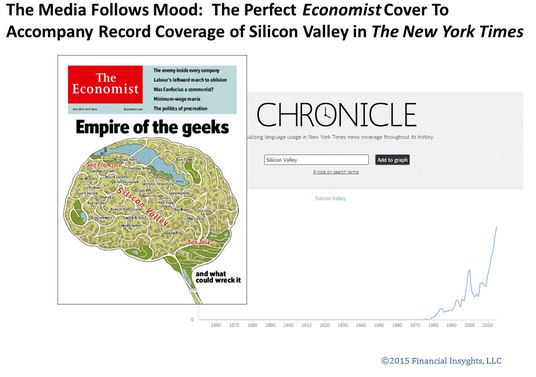
 When Dickens first shared these thoughts he was alluding to London and Paris during the era of the French Revolution. Were Dickens to reappear as an astute financial news reporter, I think he might share the same thoughts for the two worlds of technology stocks and gold today. For the former, things have never been better. For the latter, things have never been worse….
 Oil prices are likely to bounce back from six-month lows to end this year higher and climb further in 2016 thanks to rising demand from emerging markets, a monthly Reuters poll showed on Thursday.
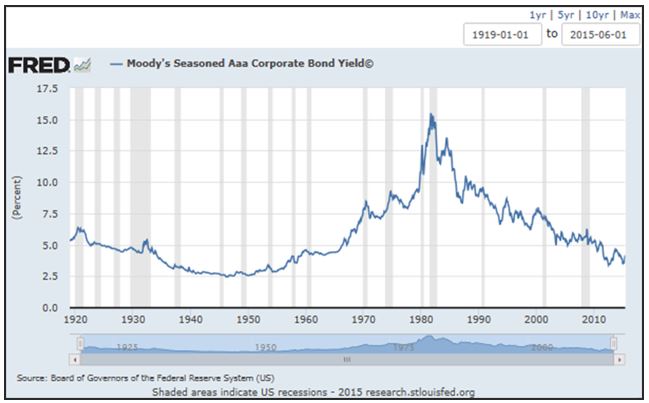 The primary attractions supporting investing in bonds or other fixed income instruments have traditionally been high income and safety. People invest their principal in bonds and receive a stated interest rate (coupon) over the life of the bond and are given the promise of having their principal returned at maturity. Under normal times, bonds would typically pay a higher rate of interest than the dividend rate on stocks. Consequently, bonds have acquired the reputation as low risk and high income instruments.
 Healthy markets? No. When taken together all of the above are signs that tell me a sharp, severe pullback is still in the offing.
 B. In the S&P 500, major support lies at 2,025 and 1,893.50. Worst case I see it falling no lower than long-term support at the 1,709.75 level.
 The line in the sand on the upside remains Dow Industrials 18,500.
 ProShares Short S&P 500 (SH)

The Energy Report: Do you rely on the stock-to-use ratio to predict grain prices and, if so, what is it telling you right now?
Spencer Churchill: Yes, we do. Stock-to-use is a good way of assessing the degree of tightness in any crop market and hence how much underlying support there could be for prices. The lower the amount of “buffer” there is—the amount of stocks or inventory relative to the total usage or demand—the tighter this market could become and the greater the likelihood of higher prices. In North America, by ranking of lowest to highest stock-to-use ratio expected for 2015–2016, we would expect price support/appreciation for 1) canola, 2) soybeans, 3) corn, and 4) wheat.
TER: How is the drought in the Western U.S. impacting projections for ag prices in the coming years?
SC: The states most affected by the drought are generally not large producers of the key crops we follow with regard to fertilizer usage—corn, soy, wheat—so we wouldn’t expect much of an impact here. The potential impact would be more on fruit and vegetable prices of which these states are large producers.
 TER: Asia’s population has quadrupled in the last century according to World Population Review. Do you expect to see continued population growth and urbanization in China and India, and what impact would that have on demand for food?
SC: This continues to be one of the most commonly cited macro trends for agriculture. Larger and wealthier developing world populations generally consume greater amounts of food, and dietary changes like eating more meat also put upward pressure on demand. We agree; however, as experiences in the past several years have shown, other macro variables, such as greenfield/brownfield projects, planted acres, government policies, crop prices and farm income, have a much more influential effect on the demand and prices of fertilizer and other ag products.
TER: You have talked about leveraging demand for food by investing in agricultural input companies. What criteria do you look for in a company that can be successful in this area, and what are some examples?
SC: From a high level, we look for companies with strong track records of profitable growth, solid management teams, good oversight and defensible business models. Ag Growth International Inc. (AFN:TSX) is one of our favorites on the equipment side. The company has remained profitable through several cycles, even during the 2012 drought year, with a very stable, experienced management team and strong board. Near term there could be some pressure on fundamentals, such as less corn planted in the U.S. and the drought in western Canada; however, we view any weakness as a buying opportunity for long-term investors. The company recently completed the acquisition of one of its key Canadian competitors, Westeel, giving it a combined 60% market share of the grain storage market in Canada, while the company continues to have ~60% share of the U.S. grain handling equipment market.
In the larger-cap Canadian space, we currently prefer Agrium Inc. (AGU:NYSE; AGU:TSX)over PotashCorp (POT:TSX; POT:NYSE) for its large, stable retail operations and lower exposure to potash on the wholesale side. Potash prices have been in decline this year, with certain producers lacking discipline.
TER: In your last interview you discussed a unique approach to investing in agriculture through streaming. Can you explain this and give us an update on the company exploiting this opportunity?
SC: Streaming as a business model has been around for several years in the precious metals market. Streaming is where a company makes an upfront payment to a producer/development project in return for a multiyear stream of production, such as a number of gold or silver ounces, etc. It is viewed as a less-risky way to get exposure to any given commodity, with a highly leverageable business model.
Input Capital Corp. (INP:TSX.V) is a public company in Canada that has taken this model and adapted it to become the first-ever agricultural streaming company, using canola as the underlying crop initially. The business is off to a great start and is proving that farmers are demanding alternative forms of financing such as streaming. In FY/15, which ended in March, Input deployed ~$49million (~$49M) into new streaming deals, up ~100% year over year; generated $19.3M in revenue, up ~280% year over year, and $9M in cash flow (before changes in working capital), up from $1.5M in FY/14.
The stock has been a little weak recently on concerns regarding the health of its farmer clients in western Canada; however, Input’s exposure is predominantly in the eastern prairies where conditions are much better. This does bring a key issue to light—the benefit of diversification, both by geography and product. The company’s recent announcement about exploring the addition of soybean streaming is an example of how Input can add further diversification to the model, by adding a different crop and gaining more exposure to eastern Canada.
TER: What words of wisdom do you have for investors looking to get into investing in agriculture today?
SC: Be selective and do your homework. The agriculture space is very complex, with numerous macro and micro drivers that impact the various companies and subsectors differently. It can be a very lucrative area to invest in, but due diligence is required to make smart decisions.
TER: Thank you for your time, Spencer.
Spencer Churchill has been working in the investment industry for 15 years. Prior to joining Paradigm, Churchill worked as a sellside research analyst at CIBC and Clarus Securities, with coverage areas including agriculture, clean technology, special situations, software and wireless technology. Churchill also spent two years working as an associate portfolio manager at a hedge fund in Toronto.
Read what other experts are saying about:
Related Articles
- 8 Billion Reasons to Invest in Potash: Paradigm’s Spencer Churchill
- Winning the Hunger Games: Tom Wallace on How to Choose Successful Agriculture Investments
- How Healthier Food Boosts Margins for Ag Companies and Investors: AltaCorp’s John Chu
1) The following companies mentioned in the interview are sponsors of Streetwise Reports: Input Capital Corp. The companies mentioned in this interview were not involved in any aspect of the interview preparation or post-interview editing so the expert could speak independently about the sector. Streetwise Reports does not accept stock in exchange for its services.
2) Spencer Churchill: I own, or my family owns, shares of the following companies mentioned in this interview: None. I personally am, or my family is, paid by the following companies mentioned in this interview: None. My company has a financial relationship with the following companies mentioned in this interview: Ag Growth International Inc. and Input Capital Corp. I was not paid by Streetwise Reports for participating in this interview. Comments and opinions expressed are my own comments and opinions. I determined and had final say over which companies would be included in the interview based on my research, understanding of the sector and interview theme. I had the opportunity to review the interview for accuracy as of the date of the interview and am responsible for the content of the interview.
3) Interviews are edited for clarity. Streetwise Reports does not make editorial comments or change experts’ statements without their consent.
4) The interview does not constitute investment advice. Each reader is encouraged to consult with his or her individual financial professional and any action a reader takes as a result of information presented here is his or her own responsibility. By opening this page, each reader accepts and agrees to Streetwise Reports’ terms of use and full legal disclaimer.
5) From time to time, Streetwise Reports LLC and its directors, officers, employees or members of their families, as well as persons interviewed for articles and interviews on the site, may have a long or short position in securities mentioned. Directors, officers, employees or members of their families are prohibited from making purchases and/or sales of those securities in the open market or otherwise during the up-to-four-week interval from the time of the interview until after it publishes.











