
Asset protection
 Please read this column carefully, for if you don’t, you are destined to be one of the millions of investors who are soon going to learn about the markets’ next moves the hard way: Through giant losses.
Why? Because in a nutshell, most analysts and investors are confusing normal times with abnormal times.
More specifically, we are approaching a sovereign-debt crisis that will soon cripple the socialist-style Western governments of Europe, Japan and the United States. The ramifications and consequences are going to be felt far and wide. Even in interest rates.
For instance, no one knows for sure if Janet Yellen will raise rates come September or October. But let’s say she does indeed raise rates. Many are predicting some sort of Black Friday, where virtually all markets crash as a result. Gold, commodities in general, stocks, and of course, real estate prices.
And in normal times, that may be true. But these aren’t normal times.
First, we’re coming out of the lowest interest rates in the history of the country. A period that was fraught with financial dislocations, even the near total collapse of the monetary system, and a period where the Fed deliberately kept its short-term interest rates at record lows.
Second, a sovereign-debt crisis is rapidly approaching. It’s already hitting Europe. Soon, it will migrate to Japan, one of the most indebted economies on the planet, And then it will hit Washington, D.C. — the most indebted government in the history of the world.
Third, most investors are not making the appropriate distinction between normal and abnormal times. Nor have they studied history in detail.
Why do I say that? Because when a sovereign-debt crisis starts to hit, almost no one recognizes it.
Moreover, when a sovereign-debt crisis lurks right around the corner, rising interest rates have nothing to do at all with economic growth or inflation. Nothing to do with what analysts are calling “normalization” of interest rates.
Instead, rising rates in a sovereign debt crisis cycle have everything to do with the fact that governments are going bankrupt.
And what does that mean? It means that when interest rates start to rise, so will some of the biggest bull markets you have ever seen.
Simple logic explains why …
FIRST, rates were at record lows because almost nobody wanted to borrow. The demand for credit simply wasn’t there. It’s been a “risk-off” mentality for some time.
So as rates and the cost of money and credit rises, guess what happens. Demand goes up too. All the potential homeowners out there and businesses looking to borrow, for instance, will want to suddenly borrow again, before interest rates go any higher. And that in turn will stoke all sorts of demand, from housing, to commodities, to corporate earnings and to the stock market.
SECOND, interest rates negatively impact indebted governments. Unlike you, indebted governments don’t have the ability to hedge against rising interest rates. They don’t have the ability to reduce their interest-expense burden. All they can do is sit idly by while the cost and burden of their debts explode higher.
THIRD, there will come a time — in the not-too-distant future — when our foreign creditors, knowing fully well our government is broke, start to sell U.S. sovereign debt hand over fist, as they are already starting to do in countries like Greece, Portugal, Spain and in fact, most of the European Union and in Japan.
And that’s when — also not too far off in the future — the resulting rocket ride higher in U.S. interest rates that will occur will be the direct result of our country’s patently unpayable debt of well over $200 trillion.
When that moment comes, when investors begin to realize that it is Washington that is going broke and that Washington’s debts are really the force driving rates higher — they will then start to buy commodities, stocks, prime real estate …
And anything else they can find that is a hedge against collapsing governments.
This is how sovereign-debt crises have unfolded before, time after time. If you study the history of empires like Rome, Byzantium, the Spanish Empire, the British Empire and more.
Almost all of those collapses saw interest rates liftoff from abnormally low levels, to soar to abnormally high levels, and along with the rate ride higher came some of the biggest bull markets the world has ever seen.
All because government was collapsing. Not because of inflation. Not because of high economic growth. But because those empires had run out of ways to fund their patently unpayable debts.
Savvy investors are no dummies. When they see governments failing, they buy certain assets. Portable wealth shines bright: Diamonds, gold, silver, platinum, palladium, art and other collectibles.
Blue chip-like publicly traded stocks shine bright too, as do AAA corporate bonds.
So beware: The Fed’s first rate hike may seem like it’s overdue. Analysts may call it “normalization” of interest rates. Savers will jump for joy that they can get a better yield in CDs and money markets.
But in reality, any rate hike that is forthcoming will merely be the first subtle signs that a sovereign-debt crisis is right around the corner.
Don’t be one of the millions caught off guard with huge losses. Don’t be one of the millions who don’t understand what’s happening or about to happen.
Instead, think out of the box and act out of the box to protect and grow your wealth.
Best wishes and stay safe,
Larry
About Larry Edelson
Larry Edelson, one of the world’s foremost experts on gold and precious metals, is the editor of Real Wealth Report, Power Portfolio and Gold and Silver Trader.
Larry has called the ups and downs in the gold market time and again. As a result, he is often called upon by the media for his investing views. Larry has been featured on Bloomberg, Reuters and CNBC as well as The New York Times and New York Sun.

The uranium sector has been waiting a long time for this week. When one of the world’s most important markets for the metal has finally come back online.
That’s Japan. Where the long-awaited restart of the country’s nuclear reactor fleet officially began yesterday.
Major utility Kyushu Electric Power reported that it flipped the switch on the Sendai number one power plant in southern Japan on Tuesday. With the reactor now expected to reach full power generation capacity by Friday.
The move is of course a small one in terms of Japan’s overall nuclear capability. With over 40 other reactors around the country still sitting idle, after having been shut down in the wake of the Fukushima incident in 2011.
But the restart shows that Japan is intent on returning to nuclear power. Which could pave the way for other plants to return to service soon — potentially beginning with the number two reactor at Sendai, which lies within the same complex as the plant that was rebooted this week.
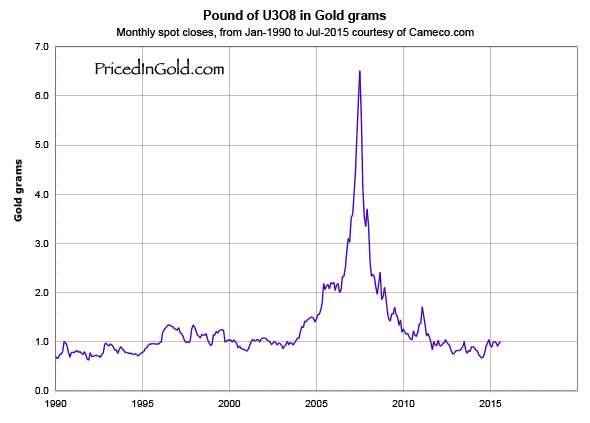
It will be interesting to see if this psychological boost for the nuclear market provides some support for uranium prices. Which have been languishing around $35 per pound since late April.
Prior to that, announcements about potential nuclear restarts in Japan had prompted notable rallies in the uranium price. Including a rapid jump to $44 in late 2014 — and a test of $40 this past April.
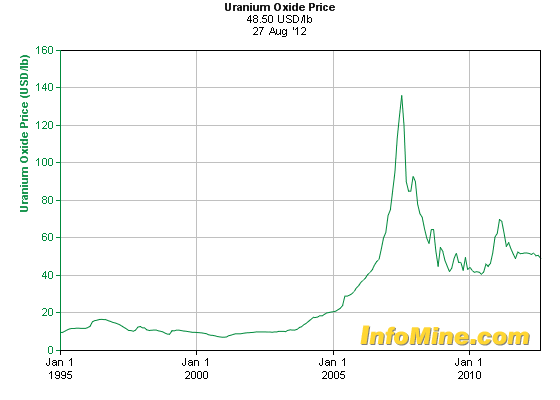
If we do see a similar rise in the price based on this week’s restart, it could create a firmer floor. Potentially leading to a more-sustained rally in the metal.
That would be especially true if more Japanese reactors come online over the coming months. A scenario that is likely — with the restart of the Sendai number two plant currently scheduled for October.
All of which would be welcome news for the commodities complex, given that uranium is one of the only metals holding steady in terms of price lately.
Here’s to a bright spot,
Dave Forest

USDCAD Range 1.2957-1.3055
USDCAD traded higher in early Asia on news that USDCNY fixed 1.6% higher.The initial move proved wrong and USDCAD started to decline, accelerating on the break of 1.3105 and then the after-burners kicked in on the break of 1.3060. From there it was a straight shot down to just below 1.2960 before profit takers emerged to drive the currency pair above 1.3000 again.
Elsewhere, the US dollar retreated across the board against the G-10 currencies with CHF gaining 1.55%.There isn’t any clear reason for the moves. China maintains the devaluation was a one-off but it appears the rest of the world is a tad sceptical. More than likely, a lack of top tier data from the US and increased uncertainty around a September rate hike led to long US dollar positions getting cut.
USDCAD traders need to keep their eye on the ball, or more specifically, WTI prices. WTI is still in a downtrend and not far from the 2015 low. The International Energy Agency released a forecast stating that the oil oversupply will persist through 2016.
Technical Outlook
The intraday technicals are bearish while trading below 1.3030 with the break of support at 1.2960 opening the door for a deeper correction to 1.2800-50. A move back above 1.3030 would negate the downside pressure. For today, USDCAD support is at 1.2940, 1.2910 and 1.2880. Resistance is at 1.3010 and 1.3040.
Today’s Range 1.2960-1.3030
Chart: USDCAD hourly with intraday support Larger Chart


 One of the most common pieces of advice in the gold-bug world is to get as much metal as possible for your money, which means buying bullion rather than rare (i.e., numismatic or collectible) coins. The latter weren’t confiscated in 1934, but — so goes this line of thinking — that’s not an issue this time around because gold isn’t legal tender and therefore doesn’t have to be confiscated for the government to devalue the currency.
But today differs from 1934 in another way that might offset bullion’s advantage over collectibles: Governments around the world, after decades of overspending and overborrowing, are desperate for tax revenues and are actively trying to uncover untapped stores of wealth. That’s why the rules governing Americans’ offshore accounts, for instance, keep getting stricter. And why France and several other countries have lowered the allowable size of cash transactions.
The TSE 300 and S&P 500 have been in a Bull Market for six years now, which simply means a recession and market correction is somewhere between zero and 4 years away according to the 50 year chart below:
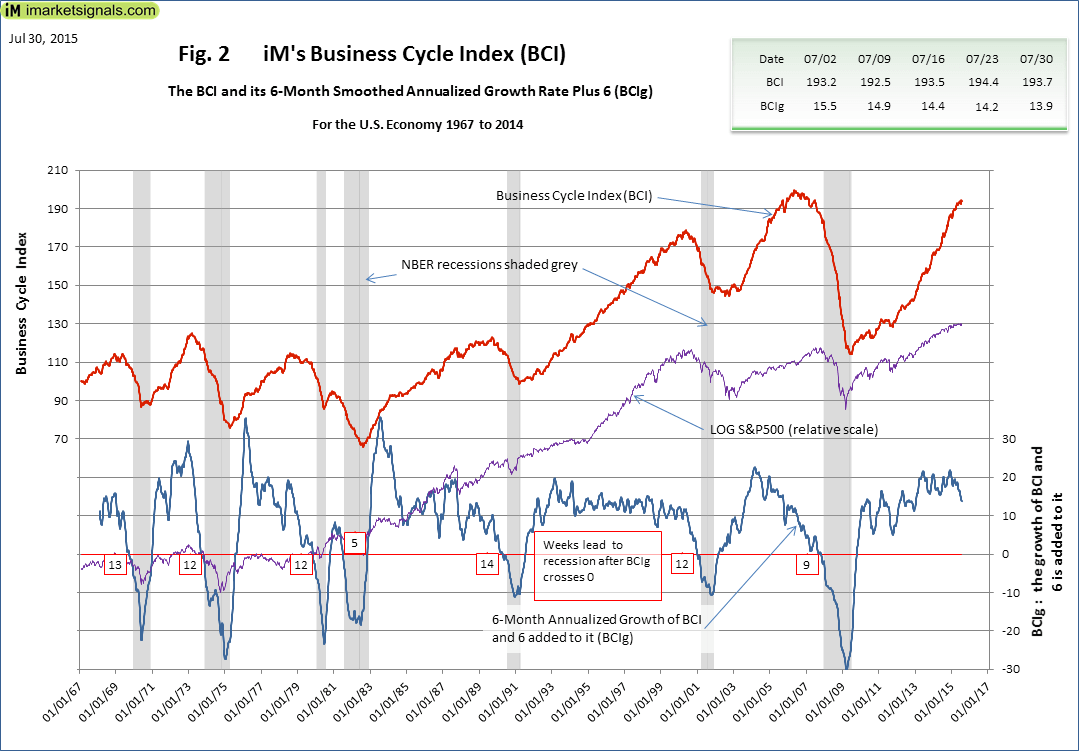
Overall Stock Market losses in each recession average 34.6%, with the worst the 56.8% correction in 2008:

To make matters worse for investors, the other major investment class, Bonds, have seen yields dropping to their lowest levels in more than 50 years:
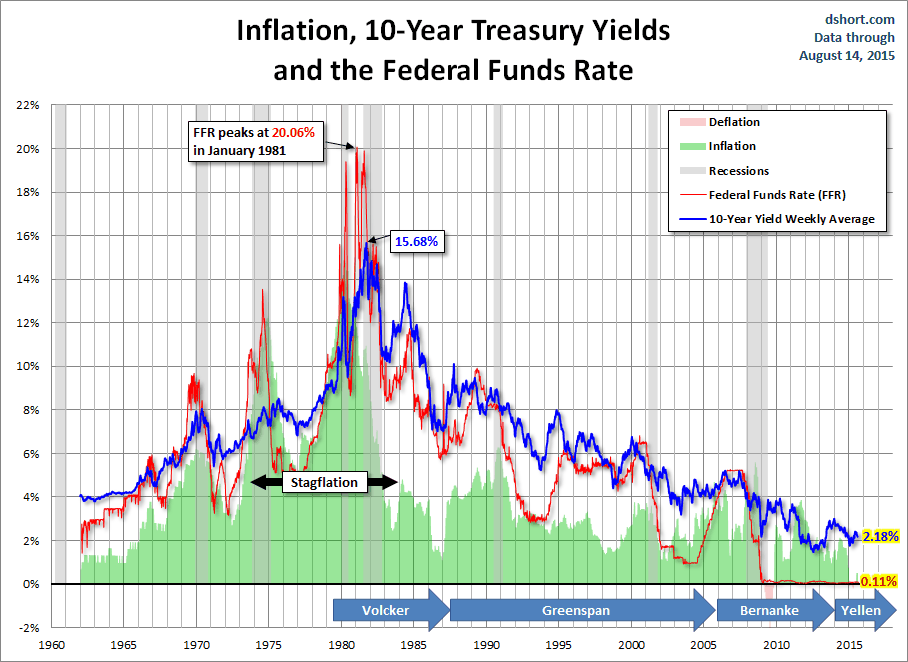
So with stocks becoming less and less attractive, Bonds with miniscule yield, just what is an investor to do? Here again I think the 71-year-old Bill Gross hit it on the head when he wrote in an investment outlook for Janus Capital Group Inc. that:
“Investors should stop focusing on price appreciation and instead look to “mildly levered income,” such as his recommendation to short German government debt.
Also, eliminating long-term bonds from your portfolios, avoiding the most rate-sensitive sectors of the stock market, sticking only with the highest-rated stocks in powerful sectors experiencing their own private bull markets, and dabbling (gingerly) in the most beaten-down, dirt cheap stocks that already reflect a huge amount of pessimism.
And to meet that criteria of beaten down stocks, I think this article below says it best:
Precious Metals Offer The Most Profitable Secular Opportunity Today
by The Secular Investor
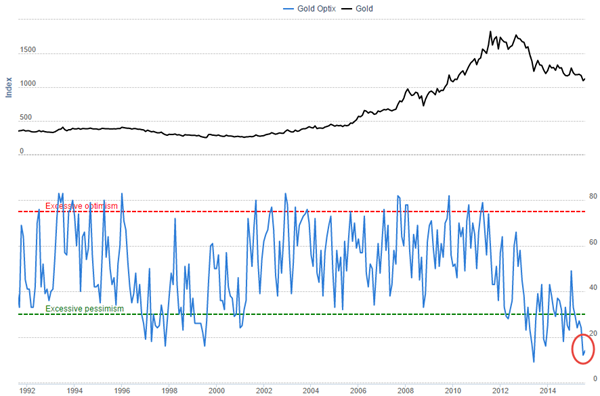
July was a horrible month for precious metals prices. Sentiment reached levels never seen before. As metals and the miners broke through a long term support line, so did pessimism.
To get an idea of the level of pessimism, we are including a very long term chart going back to 1992 (courtesy of Sentimentrader). As readers can see, market sentiment in the last 2 years is worse than the bear market lows of 1998 – 2000.
…read the entire Secular Investor article HERE

-
I know Mike is a very solid investor and respect his opinions very much. So if he says pay attention to this or that - I will.
~ Dale G.
-
I've started managing my own investments so view Michael's site as a one-stop shop from which to get information and perspectives.
~ Dave E.
-
Michael offers easy reading, honest, common sense information that anyone can use in a practical manner.
~ der_al.
-
A sane voice in a scrambled investment world.
~ Ed R.
Inside Edge Pro Contributors

Greg Weldon

Josef Schachter

Tyler Bollhorn

Ryan Irvine

Paul Beattie

Martin Straith

Patrick Ceresna

Mark Leibovit

James Thorne

Victor Adair