
Wealth Building Strategies
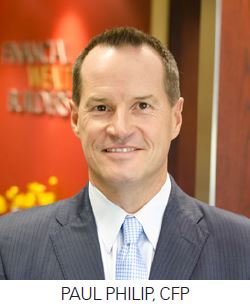
Paul Philip
 Occupation
Financial planner and adviser
The portfolio
Real estate, low-fee index funds, permanent life insurance
The investor
For more than 20 years, Paul Philip has run his own financial-planning business (fwbsecurities.com). He bought his first real estate property at the age of 22.
How he invests
Mr. Philip takes a “holistic” approach. His portfolio addresses “the whole picture” with strategies applicable to more than the accumulation of wealth. A centrepiece is the use of life insurance to enhance after-tax wealth, estate planning and retirement lifestyle. His first and largest asset class is rental and commercial properties, mostly in the Toronto area acquired over the past 15 years. These holdings have made a major contribution to his net worth. They are cash-flow positive and he moves those profits into his investment portfolio to further enhance returns.
His second asset class is… CLICK HERE for the complete article

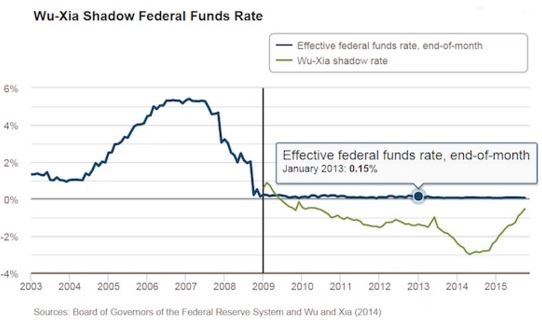 Nearly 92% of economists surveyed this week by the Wall Street Journal expect that our eight-year experiment with unprecedented monetary easing from the Federal Reserve will come to an end at the next Federal Reserve meeting in December. Since we have had the monetary wind at our back for so many years, at least a few have begun to question our ability to make economic and financial gains against actual headwinds. But in reality, the tightening cycle that the forecasters are waiting for actually started last year. Sadly, the markets and the economy are already showing an inability to handle it.
While it’s true that we have yet to achieve “lift-off” from zero percent interest rates, rates have not been the only means by which the Fed has provided stimulus. We also have to account for the effects of…

 Friday evening’s Paris bombings were a tragedy. Over one hundred people were killed with hundreds of others injured.
As a socionomist and researcher in confidence-driven decision making, my mind immediately went in two different directions after I heard the news.
The first question I wanted to answer was “why now?”
Through my research and that of other socionomists, I know that terrorism and other acts of sacrifice tie to extreme lows in confidence.
Was there something that would connect ISIS and low confidence together in a meaningful way that would offer important clues on the timing of Friday night’s attacks as well as the risk of future attacks?
The second question I wanted to answer was….

One of the most successful business models is the “razor-blade model.”
A company sells the razor – sometimes at a loss – but makes great profits by selling the razor blades, which need to be replaced often.
The model originated with King Gillette, the founder of Gillette. Hewlett-Packard also employed this business model successfully with printers and printer ink cartridges.
Today, this is how the surgical robotics industry is being built.
Hospitals buy high-tech robotic arms capable of performing surgery with smaller tools than any human can operate (see image below). Although the $1.5-$2 million price tag for these units may sound high, this is not where manufacturers make their money.

Intuitive Surgical’s da Vinci Xi Surgical System
Just like Gillette, robotics manufacturers make their money off the instruments and accessories that attach to the arms and must be replaced after each surgery. These sales provide high margins and recurring revenues.
That’s one of the reasons the robotic surgery industry is growing exponentially. In 2014, it was $3.2 billion; by 2021 it is forecast to reach $20 billion.
Intuitive Surgical (NASDAQ:ISRG) makes the da Vinci Surgical System. This has been used to perform more than 3 million surgeries to date. It’s changed countless lives… and not just for patients. Investors have watched happily as Intuitive Surgical’s share price has rocketed from around $90 in the wake of the financial crisis to more than $500 today.
Other examples include Accuray (NASDAQ:ARAY), which uses robotics for radiation therapy and radiosurgery treatments; Mako Surgical (NASDAQ:MAKO), which uses robotics for orthopedic surgery; and Titan Medical (TSE:TMD), which is focused on robots for minimally invasive surgery.
The next generation of surgical robotics will be able to perform a range of surgeries autonomously and without any human error. This will be done at a fraction of the cost of surgical procedures today, and will improve the quality and accessibility of health care worldwide.
It could also make well-placed investors famously rich.
Regards,
Jeff Brown
Editor, Published by Bonner & Partners.

-
I know Mike is a very solid investor and respect his opinions very much. So if he says pay attention to this or that - I will.
~ Dale G.
-
I've started managing my own investments so view Michael's site as a one-stop shop from which to get information and perspectives.
~ Dave E.
-
Michael offers easy reading, honest, common sense information that anyone can use in a practical manner.
~ der_al.
-
A sane voice in a scrambled investment world.
~ Ed R.
Inside Edge Pro Contributors

Greg Weldon

Josef Schachter

Tyler Bollhorn

Ryan Irvine

Paul Beattie

Martin Straith

Patrick Ceresna

Mark Leibovit

James Thorne

Victor Adair