
Currency
Forex Trading Alert sent to subscribers on March 22, 2016, 10:57 AM.
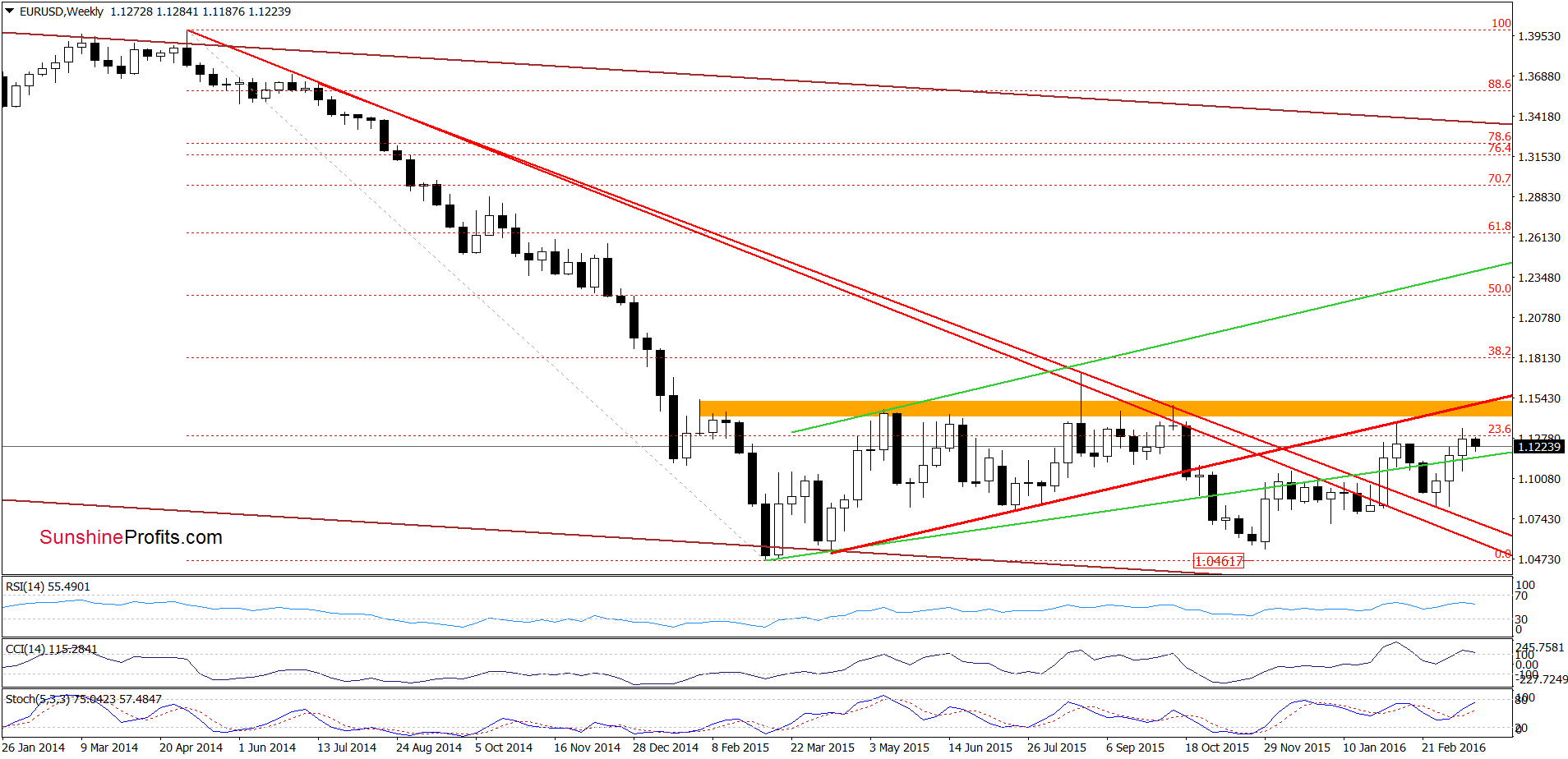
In our opinion the following forex trading positions are justified – summary:
- EUR/USD: short (stop-loss order at 1.1512; initial downside target at 1.0572)
- GBP/USD: none
- USD/JPY: none
- USD/CAD: none
- USD/CHF: none
- AUD/USD: none
Earlier today, official data showed that the U.K. rate of consumer price inflation increased by 0.3% in Feb, missing analysts’ forecasts. Additionally, although month-over-month consumer prices rose by 0.2% in the previous month, the data disappointed market participants, which pushed GBP/USD under 1.4300. How low could the pair go in the coming days?

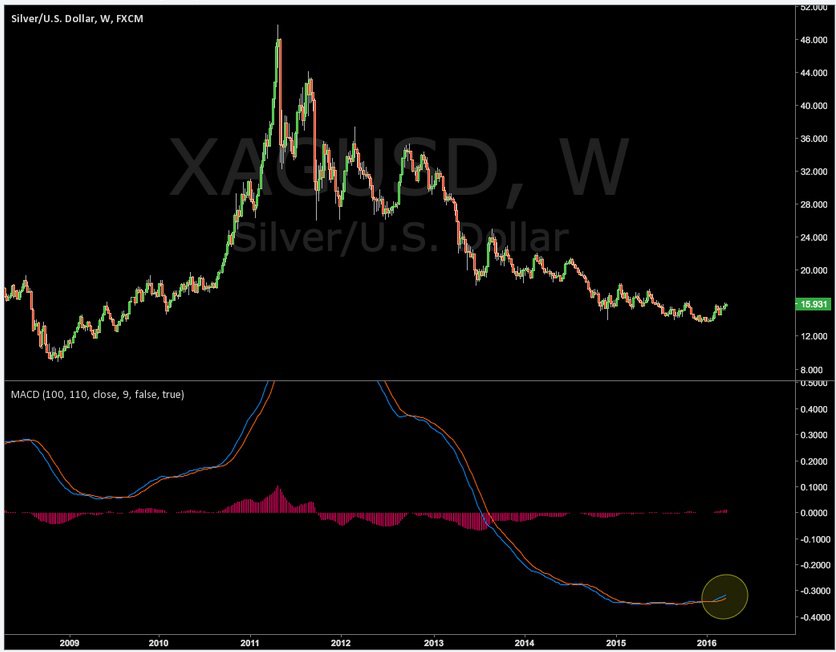
The following long-term silver chart and commentary – “The silver chart looks incredibly bullish. The buy signal on the MACD has confirmed the upward move and just look at the setup.” It will be interesting to see how silver trades in the coming weeks with such a large commercial short position in place. This is a fascinating battle taking place in both the gold and silver markets in the short-term....continue reading HERE

| Tue. | Wed. | Thu. | Fri. | Mon. | Tue. | Evaluation | |
| Monetary conditions | 0 | 0 | 0 | 0 | 0 | 0 | 0 |
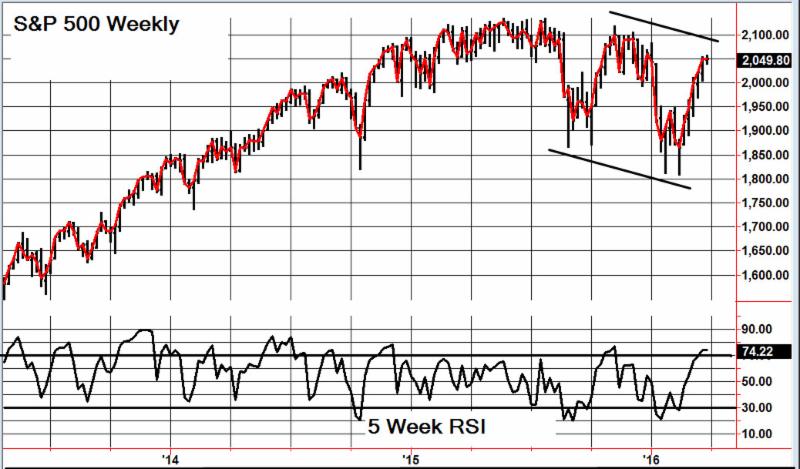
| 5 day RSI S&P 500 | 70 | 76 | 82 | 85 | 85 | 81 | – |
| 5 day RSI NASDAQ | 63 | 71 | 73 | 78 | 80 | 83 | – |
|
McCl-
lAN OSC.
|
+40 | +106 | +167 | +168 | +130 | +90 |
0
|
| Composite Gauge | 10 | 6 | 6 | 7 | 8 | 11 | 0 |
| Comp. Gauge, 5 day m.a. | 8.8 | 8.4 | 7.4 | 7.8 | 7.4 | 7.6 | – |
| CBOE Put Call Ratio | 89 | .91 | .67 | .78 | .90 | 1.08 |
+
|
| VIX | 16.84 | 14.99 | 14.44 | 14.02 | 13.79 | 14.17 | – |
| VIX % change | 0 | -11 | -4 | -3 | -2 | +3 | 0 |
| VIX % change 5 day m.a. | -2.0 | -3.8 | -4.2 | -3.0 | -4.0 | -3.4 | – |
| Adv – Dec 3 day m.a. | -30 | -51 | +680 | +1410 | +800 | +136 | 0 |
| Supply Demand 5 day m.a. | .78 | .79 | .83 | .78 | .82 | .73 | 0 |
| Trading Index (TRIN) | 1.04 | 1.42 | .94 | 1.10 | .79 | 1.25 |
0
|
|
S&P 500
|
2016 | 2027 | 2041 | 2050 | 2052 | 2050 | Plurality -4 |

 “I am not a product of my circumstances. I am a product of my decisions.”
In this decision-making vacuum, the difficulty is to discern between emotion and intuition. I believe intuition is drawn from previous similar experiences that enable us to recall lessons or extrapolate results in a way that gives us additional guidance. Emotional decisions are based on human nature and undisciplined forces that trigger negative behaviors.
Trusting intuition does not come easily since we are often overwhelmed by human nature (for example, fight or flight response) or become frozen by fear (non-decision). In addition, we will use confirmation bias to seek out more information to justify the decision we have already made in our head, rather than going with the sparse data and feeling in our heart.
How do you go about doing that practically? Try the following:
Start Small: get into the habit of making rapid decisions on small matters, so you start to trust yourself more. Don’t overthink any small decision, just respond rapidly particularly if you have a strong feeling about the decision.
Be Positive: Fear heightens our insecurities or negativity, forcing us to seek more certainty when it may not exist. Stay positive, and intuition will rise up within you more naturally.
Be Mindful: Be more aware of how you feel, your psychology or mindset, when making important decisions, and then determine how much of the feeling is rooted in fear or courage. It will help you
.
Don’t Over Analyze: Go with the best information you have in the time available, and then move forward. Over analyzing will drown out you’re your inner voice.
If you go with intuition and it doesn’t work out, try to figure out why. What was it that let you down? Try to understand why and take the time to make improvements. Like any habit, it takes continuous practice, over a long period of time to make it stick. Intuition is one of those soft areas that can be critical in decision making, and understanding it can really help make us avoid making material and costly failures.
By Eamonn Percy

-
I know Mike is a very solid investor and respect his opinions very much. So if he says pay attention to this or that - I will.
~ Dale G.
-
I've started managing my own investments so view Michael's site as a one-stop shop from which to get information and perspectives.
~ Dave E.
-
Michael offers easy reading, honest, common sense information that anyone can use in a practical manner.
~ der_al.
-
A sane voice in a scrambled investment world.
~ Ed R.
Inside Edge Pro Contributors

Greg Weldon

Josef Schachter

Tyler Bollhorn

Ryan Irvine

Paul Beattie

Martin Straith

Patrick Ceresna

Mark Leibovit

James Thorne

Victor Adair