
Daily Updates
As a general rule, the most successful man in life is the man who has the best information
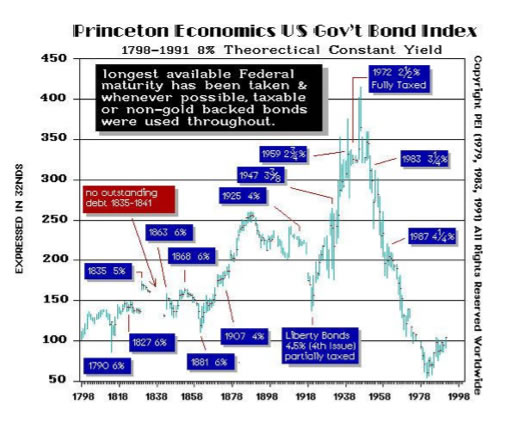
The history of fiat money has always been one of failure – every fiat currency since the Romans started diluting the silver content of their denarius has ended in devaluation and eventual collapse of both the currency and of that particular economy. Most paper money economies downfall can be linked to the costs of financing out of control military growth and its wars.
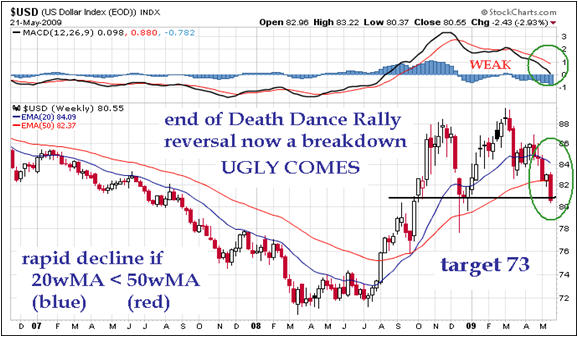
For the very first time in our history, all money, all currencies, are now fiat – the US dollar use to be gold backed and it was the rock all the worlds currencies were anchored to – when the US dollar became fiat, all the worlds currencies became fiat.
According to House Speaker John Boehner and Senate majority leader Harry Reid the budget compromise reached between the White House and Congress in April of this year included an “historic amount of cuts“. President Obama gushed it was “the largest annual spending cut in our history”.
Mainstream media called the cuts sweeping and across-the-board.
Unfortunately not a single penny of the spending cuts will come from the Pentagon’s coffers.
Defense spending in 2011 is actually going to increase, by a reported $5 billion over 2010 levels to $513 billion. The $513B doesn’t actually include the cost of ongoing overseas contingency operations, these would be the wars in Iraq and Afghanistan (the Fiscal Year budget requests for US military spending do not include combat figures which are supplemental requests that Congress approves separately) – if those costs were included U.S. military spending in 2011 will exceed $700 billion.
Also not included, even in the $700B, are nuclear weapons spending, black ops, interest on the defense portion of the debt and ongoing military obligations to veterans. The budget for nuclear weapons falls under the Department of Energy, other military expenses – care for veterans, health care, military training, aid and secret operations – are put under other departments or are accounted for separately.
The US numbers are eye opening – they amount to more than half of all government discretionary spending and represent, at the very least, an astounding 43% of total military spending on the planet.
Neither Obama’s 2012 budget proposal nor Representative Paul Ryan’s “Path to Prosperity” signal a major decrease in military spending – Ryan’s budget projection calls for nearly $8 trillion in military spending over the next decade.
“Of all the enemies to public liberty war is, perhaps, the most to be dreaded because it comprises and develops the germ of every other. War is the parent of armies; from these proceed debts and taxes … known instruments for bringing the many under the domination of the few.… No nation could preserve its freedom in the midst of continual warfare.” James Madison, Political Observations, 1795
The Chinese love their gold…
“Chinese appetite for gold has increased rapidly over the past few years. In March 2010, we predicted that gold demand in China would double by 2020, however, we believe that this doubling may in fact be achieved sooner. Increasing prosperity in the world’s most populous country coupled with their high affinity for gold will serve to drive demand in the long-term. Near term inflationary expectations are likely to support the investment case for gold.” Albert Cheng, Managing Director, Far East at the World Gold Council
So too do Indians…
“Gold demand in India, the world’s largest user of the bullion, may increase to more than 1,200 metric tons by 2020 as economic growth boosts incomes and household savings. Indian households hold more than 18,000 tons of gold, the largest stockpile of bullion in the world. Gold purchases by India accounted for 32 percent of total global sales in 2010.” World Gold Council
India’s total demand exceeded China’s by 383.5 tons in 2011. GFMS Ltd. and INTL FCStone said in March that Chinese consumption of gold may soon climb to rival that of India. Could it be that the Chinese, and Indians, long ago caught onto something we here in the west are just now slowly figuring out?
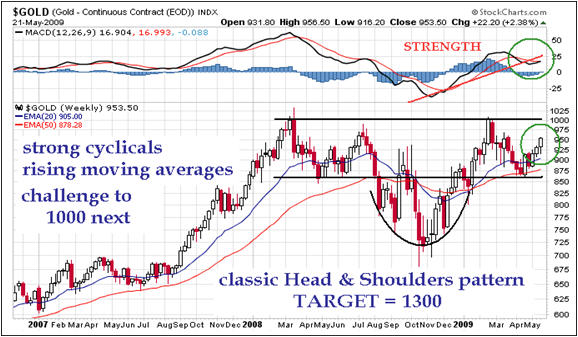
According to the World Gold Council investor demand for gold ownership – in the form of bars, coins and jewelry – is climbing, while at the same time production at existing mines is grinding down, re-cycled gold sales are dropping and central banks are increasingly gold buyers not sellers:
· Global gold demand in the first quarter of 2011 totaled 981.3 tonnes (US$43.7bn), up 11% year-on-year from 881.0 tonnes (US$31.4bn) in the first quarter of 2010. The increase was largely attributed to a widespread rise in demand for bars and coins and increased jewelry demand – demand for physical bars and coins was up 52% at 366.4 tonnes while jewelry demand in the first quarter of 2011 registered a gain of 7% year-on-year to reach 556.9 tonnes. India and China are the two largest markets for gold jewelry and together accounted for 349.1 tonnes of gold jewelry demand or 63% of the total – US$16bn. China’s jewelry demand reached a new quarterly record of 142.9 tonnes, up 21%, from 118.2 tonnes
· In the first quarter of 2011 investment demand grew by 26% to 310.5 tonnes
· ETFs and other similar products witnessed net outflows of 56 tonnes (mostly concentrated in January). The collective volume of gold held by these products at the end of the quarter was still over 2,100 tonnes
· In Q1 2011, gold supply declined by 4% year-on-year to 872.2 tonnes from 912.1 tonnes in the first quarter of 2010 – this against an increase in mine production of 44 tonnes (a growth rate of 7%)
· The decline in total supply was because of two reasons: firstly recycled gold was down 6% on year earlier levels to 347.5 tonnes from 369.3 tonnes and secondly a sharp increase in net purchasing by the official sector – central bank purchases jumped to 129 tonnes in the quarter, exceeding the combined total of net purchases during the first three quarters of 2010.
· Direct mining and processing expenses
· Other onsite charges
· Third party smelting and refining charges
· Royalties and taxes net of by-product credits
In the first quarter of 2011, the average cash cost of production rose from $609 oz to $620 oz.
While production costs were rising, so too were margins – from $758 oz to $767oz.
The Gold Demand Trends report for Q1 2011 states demand for gold will be driven by a number of key factors:
· Continued uncertainty over the US economy and the dollar
· Ongoing European sovereign debt concerns
· Global inflationary pressures
· Continued tensions in the Middle East and North Africa
· Chinese and Indian jewelry demand
· Net purchasing by central banks
Conclusion
If I was looking for superior investment vehicles to take advantage of what I think I know regarding the future for precious metals I’d be looking at junior producers, near term producers and companies that are in the post discovery resource definition stage with the occasional green field exploration play thrown into the mix.
I believe junior resource companies offer the greatest leverage to increased demand and rising prices for commodities. There is also a very real and increasing trend for Mergers and Acquisitions (M&A) in one of the few bright spots available for investors – resources.
Juniors, not majors, own the worlds future mines and juniors are the ones most adept at finding these future mines. They already own, and find, what the world’s larger mining companies need to replace reserves and grow their asset base.
The following factors will drive the growing M&A trend:
· Consolidation to achieve economies of scale and pricing power
· Scarcity of large producing assets
· High demand in industrialized nations for metals and minerals
· V shaped recoveries in developing countries
· Expansion into new geographies
· Diversification of resource bases
· Looser bank lending
· Higher commodity prices and better company cost management = larger operating cash flow
Using history as our guide we know that the greatest leverage to precious metals, the most profitable rewarding way to get involved in precious metals, is to own the shares of junior precious metal companies – our gold junior resource companies, the same ones who today are so oversold and undervalued, are the present owners of the world’s future gold supply.
Gold miners are showing some pretty healthy profits and their coffers are overflowing with cash. Investors are starting to pay attention. Ahead of the herd investors realize the attention being paid to the world’s major and few remaining mid-tier miners will soon trickle down to the juniors developing precious metal projects.
Junior gold stocks should be on every investors radar screen. Are they on yours?
If not, maybe they should be.
Richard (Rick) Mills
rick@aheadoftheherd.com
www.aheadoftheherd.com
If you’re interested in learning more about the junior resource sector, bio-tech and technology sectors please come and visit us at www.aheadoftheherd.com
Site membership and our AOTH newsletter are free. No credit card or personal information is asked for.
***
Richard is host of Aheadoftheherd.com and invests in the junior resource sector. His articles have been published on over 300 websites, including: Wall Street Journal, SafeHaven, Market Oracle, USAToday, National Post, Stockhouse, Lewrockwell, Uranium Miner, Casey Research, 24hgold, Vancouver Sun, SilverBearCafe, Infomine, Huffington Post, Mineweb, 321Gold, Kitco, Gold-Eagle, The Gold/Energy Reports, Calgary Herald, Resource Investor, Mining.com, Forbes, FNArena, Uraniumseek, and Financial Sense.
***
Legal Notice / Disclaimer
This document is not and should not be construed as an offer to sell or the solicitation of an offer to purchase or subscribe for any investment. Richard Mills has based this document on information obtained from sources he believes to be reliable but which has not been independently verified; Richard Mills makes no guarantee, representation or warranty and accepts no responsibility or liability as to its accuracy or completeness. Expressions of opinion are those of Richard Mills only and are subject to change without notice. Richard Mills assumes no warranty, liability or guarantee for the current relevance, correctness or completeness of any information provided within this Report and will not be held liable for the consequence of reliance upon any opinion or statement contained herein or any omission. Furthermore, I, Richard Mills, assume no liability for any direct or indirect loss or damage or, in particular, for lost profit, which you may incur as a result of the use and existence of the information provided within this Report.
Richard Mills does not own shares of any companies mentioned in this report.
John Williams: Debt Limit Debate Sign of Deeper Dysfunction
ShadowStats Editor John Williams advises legislators to stop fooling around with the country’s credit rating. Regardless of the deal reached, he predicts that the Treasury and Fed will continue to print money to meet obligations and add liquidity to the economy. In this exclusive interview with The Gold Report, he explains how that will have the effect of pushing the price of gold and other commodities even higher.
The Gold Report: Unless Congress approves and President Obama signs an increase in the $14.29 trillion debt ceiling, the U.S. Treasury is set to begin defaulting on payments starting August 2. That threat launched months of competing big deals to cut spending and/or raise taxes. To add to the pressure, in mid-July the credit rating agencies Moody’s and Standard & Poor’s threatened to downgrade the U.S. credit rating from its historic AAA status if the debt limit isn’t raised in time to avoid defaulting on interest and bond payments. That could raise interest rates for the government and trickle down to consumer mortgage loan and credit card payments. John, what kind of deal would be good enough to satisfy bond rating agencies and avoid a double-dip recession?
John Williams: First of all, the chances are nil that the government actually will default. There is some talk that if the debt ceiling were not raised by the August 2 deadline, the government could avoid default for a while by playing games with its payments—pay interest and debt first instead of paying other obligations. That could trigger a rating downgrade, if one had not occurred otherwise. Also, I don’t think global investors would view non-payment of general obligations as a plus and could engage in dumping the dollar. I think Congress will agree, however, to something by the deadline. I have no expectation, though, that the deal will be of any substance; nothing that has been proposed would improve U.S. fiscal conditions meaningfully.
A country’s credit rating is a measure of the risk of debt default. The U.S. dollar, as the world’s reserve currency, is considered the benchmark instrument for an AAA rating. That generally is considered the riskless category. It would be very unusual for rating agencies to downgrade a benchmark. Yet the credit rating agencies now are seeing risk of a U.S. default and are talking a possible downgrade of U.S. Treasuries. A downgrade would have about as much negative impact as an actual default. You don’t want to see a downgrade. You don’t want to see a default. Those actions would have all sorts of implications, very negative implications for the financial markets, particularly for the U.S. dollar. You would see heavy U.S. dollar selling and dumping of U.S. dollar-denominated assets such as Treasury bonds. You would see a spike in dollar-denominated commodity prices such as oil. Gold prices would rally sharply, as would silver, as traditional hedges against inflation.
TGR: Is printing more money really what the government is going to do to pay its debt?
JW: That is what countries that spend beyond their means usually do if they can’t raise adequate tax revenues. I can tell you that the current government cannot raise enough taxes to bring the actual deficit under control. It could tax 100% of income, take 100% of income and corporate profits, and it would still be in deficit. In terms of generally-accepted accounting principles (GAAP) that include annual increases in the unfunded liabilities on a net present value basis, the U.S. is long-term bankrupt. A true balanced budget approach would require excessive overhaul—I’m talking massive cuts in the social programs because cutting every penny of government spending except for Social Security and Medicare would still leave the country in deficit. We are spending well beyond the bounds of reason in a number of areas. The country just does not have the ability to pay for all the services it provides.
TGR: In a July 14 commentary, you said that, “In the event of an actual default or downgrade, the United States position as the elephant in the bathtub of sovereign risk likely would cause the dollar to plummet against all major currencies irrespective of any ongoing concerns related to Euro-area debt.” What would this mean for the U.S. dollar and the price of gold going forward?
JW: Already stocks are down because the markets are frustrated with the lack of a deal. The U.S. is such a large player in the world markets that if the dollar is downgraded, the impact will be felt globally. The dollar should sink against most major currencies, including the euro, and gold prices would experience a big bump up. It should be very positive for gold long term. It doesn’t mean that Central Banks aren’t going to intervene and that the Treasury or IMF are not going to try to keep gold prices down. But, over the long haul, you’ll see much higher gold prices.
TGR: What would default or downgrading mean for the dollar?
JW: If the U.S. defaults or gets downgraded, that likely will end the U.S. dollar as the global reserve currency. That’s not a viable option for the United States. People involved with getting the country to that point should be removed from office. If you are the most financially powerful country on earth, you don’t fool around with your creditworthiness.
TGR: So, if the dollar isn’t the benchmark, would it be the euro? Would it be the yen? Would it go back to a gold standard? What would happen?
JW: It would probably revert to some kind of a basket of currencies, probably including gold. The dollar would tend to suffer against the new benchmark and gold would tend to increase relative to the dollar in such a circumstance. But I can’t tell you exactly what would happen.
TGR: The new European Union plan for reducing the debt burden for Greece, Ireland and Portugal offers longer-term and low-interest loans and allows some bonds to go into temporary default. Does that set a precedent? Will it contain Europe’s debt crisis?
JW: The euro never should have been put in place. Anyone who ever thought that the Germans and the Italians could coordinate fiscal policy didn’t know the Germans and the Italians very well. The euro would have been disbanded or at least realigned by now if we weren’t in the middle of a systemic solvency crisis. The European Union will do anything to keep Greece afloat, as long as it is viewed as a threat to systemic solvency. Once the system stabilizes, I’d expect to see a breakup of the euro.
TGR: In our conversation with you last January, you talked about the difference between the true deficit and the cash-based deficit published by the government. What is the true deficit and what can be done to deal with that?
JW: The GAAP-based deficit is running around $5 trillion a year right now. That includes the numbers popularly looked at in the press and the year-to-year change in the unfunded liabilities for Social Security and Medicare adjusted for the present value of money.
To bring the true deficit into balance, there is nothing that can be done short of slashing Social Security and Medicare programs, and I see that as a political impossibility. Again, I mention the entitlement programs here, because you could eliminate every penny of government spending except for Social Security and Medicare, and the government still would be in deficit.
TGR: One of the other things that we’ve discussed with you before is quantitative easing (QE). Federal Reserve Board Chairman Ben Bernanke said there will be no more quantitative easing. In your July 8 commentary, you said the Fed will likely find the markets and banking system pressuring it into some form of QE3. What form might that take? And, how might that impact the dollar and precious metals?
JW: Well, Mr. Bernanke hemmed and hawed about the status of QE3 at his Congressional testimony earlier this month. The economy is weak enough; he will use that as an excuse. I can’t tell you exactly what the Fed is going to do. I imagine it will go back to buying Treasuries, once the debt ceiling is raised. That will cause weakness in the dollar and strength in gold. Generally, anything the Fed does to debase the dollar, which it continues to do on an ongoing and very deliberate basis, means higher gold.
TGR: So, what is your prediction for the final solution?
JW: In terms of the debt ceiling, the solution is going to be to continue raising the debt ceiling. Either that or eliminate the debt ceiling. I don’t know what can be done politically on either side there. But, the government is committed to certain obligations. It doesn’t make sense that it wouldn’t follow through and borrow the funds to pay what it has already committed to spend. As to bringing the U.S. fiscal circumstance under control at present, there simply is no political will by the president or by the aggregate sitting Congress to do so.
TGR: Isn’t it strange that instead of having this debate when they were voting about the budget and whether to spend the money, they are talking about it when it is time to pay the bill for the spending decisions already approved?
JW: No, we’re just dealing with a group of individuals in Washington who are politicians first, second and last. Most of them have very little real interest in the nation’s fiscal condition. They are looking at getting reelected and serving their special interests wherever they can. That has been evident to anyone who has watched the system in recent decades. There are some new, good people in Congress, but not enough to change things, yet. As Congress stands right now, there is no chance whatsoever of putting the U.S. fiscal house in order.
TGR: You look at a lot of numbers. We have really only talked about the debt limit. Anything else that you would like to leave us with that could impact the price of gold?
JW: Well, I think you have covered them. You are going to see ongoing weakness in the economy. The government is going to respond with more stimulus before the 2012 election, despite the so-called efforts at reducing the deficit. The Fed is going to ease liquidity more. All those actions to address the economic problems will tend to be inflationary, and that is generally positive for gold.
TGR: Thank you John.
Walter J. “John” Williams was born in 1949. He received an AB in economics, cum laude, from Dartmouth College in 1971, and was awarded a MBA from Dartmouth’s Amos Tuck School of Business Administration in 1972, where he was named an Edward Tuck Scholar. During his career as a consulting economist, John has worked with individuals as well as Fortune 500 companies. For 30 years he has been a private consulting economist and a specialist in government economic reporting. His analysis and commentary have been featured widely in the popular media both in the U.S. and globally. Mr. Williams provides insight and analysis on his website, www.shadowstats.com.
Want to read more exclusive Gold Report interviews like this? Sign up for our free e-newsletter, and you’ll learn when new articles have been published. To see a list of recent interviews with industry analysts and commentators, visit our Exclusive Interviews page.
Alternative investment assets that offer capital preservation, income and inflation hedging characteristics
-
I know Mike is a very solid investor and respect his opinions very much. So if he says pay attention to this or that - I will.
~ Dale G.
-
I've started managing my own investments so view Michael's site as a one-stop shop from which to get information and perspectives.
~ Dave E.
-
Michael offers easy reading, honest, common sense information that anyone can use in a practical manner.
~ der_al.
-
A sane voice in a scrambled investment world.
~ Ed R.
Inside Edge Pro Contributors

Greg Weldon

Josef Schachter

Tyler Bollhorn

Ryan Irvine

Paul Beattie

Martin Straith

Patrick Ceresna

Mark Leibovit

James Thorne

Victor Adair