
Daily Updates
….pulls Money into Gold ETFs

The “flight to quality” mood that has pushed gold up to $1800 in August 2011 has caused a lot more people to get interested in gold. And it has sucked a lot of money into GLD and IAU, the two biggest gold bullion ETFs. When we see a big surge of assets invested in these ETFs, it can be a useful indication of invesetor sentiment about gold generally.
Market Buzz – Invest for Value & Growth (GARP)
Value is perhaps the most important concept to understand as an investor (next to risk). Most people intuitively understand this in their everyday lives. Unfortunately, it is less understood in the arena of stock investing. What is value? Value, in this sense, is when you get a great deal on buying an asset. In the case of investing, it is when you are able to buy $1 worth of assets for $0.80 or less. When you are making the purchase of an item, like a house, or a car, or a television, and you put extra effort into finding an item of equal or greater quality, but for a lower price, you have made a value purchase. It is the same in the stock market. When you purchase a share of a company, you are buying an ownership interest in an underlying business – an asset.
Almost any stock will have a story describing how the managers will try to make money, but if it’s a real business, it will have more than just that. It will have real products, real sales, real profits, and real business models. A successful business will generate cash flow and it will reinvest this cash flow for growth or it will pay this cash flow to back to its shareholders in the form of dividends. When we find those unique opportunities to purchase successful businesses at prices well below their real or intrinsic value, we have made a value investment.
The tricky part is determining what the stock is actually worth. This is by no means an exact science (not even close) and there are many different techniques that people use with varying degrees of success.
The reality is that two different people can be given the exact same information on a company and arrive at two different conclusions of what the company is actually worth, and neither one of them is necessarily right or wrong. So rather than trying to determine the exact intrinsic value of the company (stock) you are purchasing, focus more on fundamental principles. If a company is not profitable or is not breaking into profitability, then it is not an investment, it is a speculation.
If the company is trading at a premium price, risk increases. If that company is trading at a discounted price, risk decreases. The more solid companies you buy at attractive prices that are making money, the better your portfolio will perform over time. The more you buy speculative ventures, which are innately impossible to value, the worse your portfolio will do over time.
Having said this, our Small-Cap Research Service is not strictly a “value” service. We are also focused on growth in revenues, cash flow, and earnings per share. As such, our investment style is a hybrid of both value and growth investing. Essentially, we are looking for “Growth at a Reasonable Price,” or GARP as it is affectionately known. GARP is a mix between stocks whose earnings are increasing rapidly and stocks whose price is low relative to underlying assets, like book value, cash, etc. Because GARP is a subjective animal, a precise definition is a difficult exercise.
To simplify things, we will break it down. The “G” or growth is in reference to earnings and/or revenue growth. The “RP” or reasonable price refers to whether a stock is currently considered a value or not based on an analysis of its financial position. As a general rule of thumb, many analysts see GARP when a stock’s price-to-earnings ratio (P/E) is less than half its growth rate. For example, if a potential investment were estimated to grow earnings by 30% next year, GARP analysts generally look for a P/E of 15 or less.
Of course, one’s definition of growth and a reasonable price can differ greatly by sector, market size, and other factors, but this should leave you with a basic understanding of our GARP methodology.
Looniversity – Your Friend GARP
“Growth at a Reasonable Price,” or GARP as it is affectionately known, has gained fame (and hopefully made some fortunes) in recent years, as advisers try to compromise between growth and value – that is, between stocks whose earnings are increasing rapidly and stocks whose price is low relative to underlying assets, like book value, cash, etc. Because GARP is a subjective animal, a precise definition is a difficult exercise.
To simplify things, we will break it down. The “G,” or growth, is in reference to earnings and/or revenue growth. The “RP,” or reasonable price, refers to whether a stock is currently considered a value or not, based on an analysis of its financial position. As a general rule of thumb, many analysts see GARP when a stock’s price-to-earnings ratio (P/E) is less than half its growth rate. For example, if a potential investment was estimated to grow earnings by 30 per cent next year, GARP analysts generally look for a P/E of 15 or less.
Of course, one’s definition of growth and a reasonable price can differ greatly by sector, market size, and, other factors, but this should leave you with a basic understanding of your friend GARP.
Put it to Us?
Q. Would you please give me a quick bit of info on earnings per share, or EPS, and fully diluted EPS?
– Rick Delino; Calgary, Alberta
A. . Earnings, otherwise known as net income or net profit, represent the money that’s left over after a company pays all its bills.
Earnings per share, or EPS, refer to the portion of a company’s profit allocated to each outstanding share of common stock. Calculated as:
Average Outstanding Shares
Fully diluted earnings per share are a company’s EPS if all convertible securities were exercised. In other words, diluted earnings take into account all warrants, stock options, and convertible bonds if traded in for stock. This would result in an increased number of shares outstanding.
For many investors, the growth of a company’s EPS is the most important factor when analyzing a company. It’s often used as a gauge of profit performance.
KeyStone’s Latest Reports Section
- Mining & Environmental Drilling Posts Strong Q2 2011, Benefits from High Activity Levels in Global Mining, Remain Cautiously Optimistic – BUY (Flash Update)
- Cash Rich IP Company Posts Strong Q2, Strong Outlook, Share Price Drop Produces Long-Term Opportunity – Initiating Coverage BUY (New Buy Report)
- Wireless Phone Retailer Announces Strong Q2, Reaffirms Strong 2011 Outlook – Maintain Rating (Flash Update)
- Extrusion & Automotive Manufacturer Posts Solid Q3, Boosts Dividend on Strong Outlook as it Enters “Sweet Spot” in its Market – Reiterate BUY (Flash Update)
- Canada’s Leading Industrial Services Firm Posts Solid Q2 2011, Acquisition Pace to Pick-up – Rating Maintained (Flash Update)
Unlimited Wealth. Yes, 100 Trillion Dollars is yours. Offered by the very generous Michael Campbell to the lucky winner of a draw.
To enter the draw simply just email us at info@moneytalks.net with Trillion in the subject line.
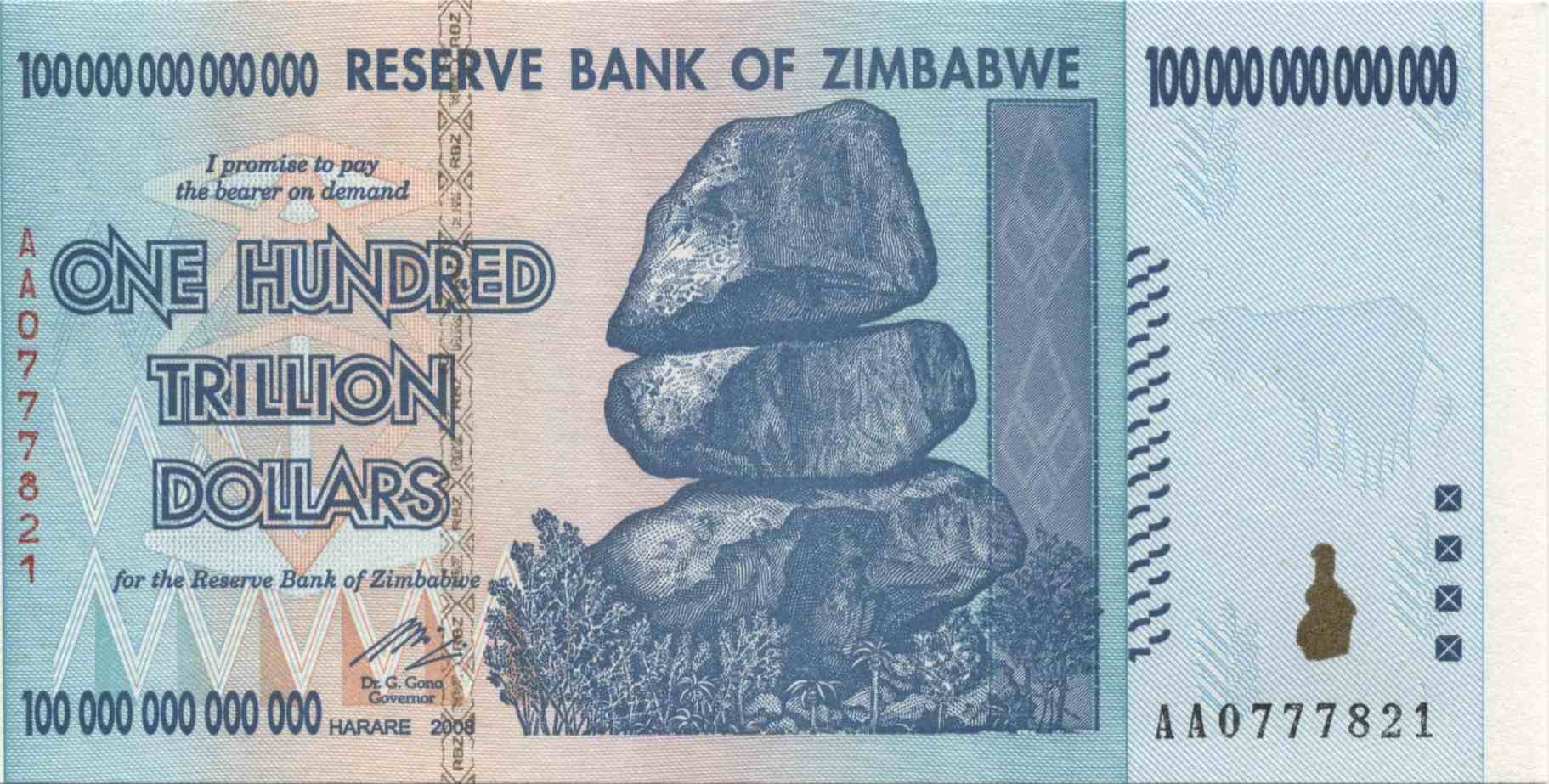
Good Luck All!
In the last weeks we have seen the gold price jump from the price we alerted our subscribers of $1,555, to reach just over $1,800. Contrary to the view of many analysts, we do not see this as a frothy overrun from which it will pull back. On the contrary, this rise in the gold price has said so much more than simply, trading peak.
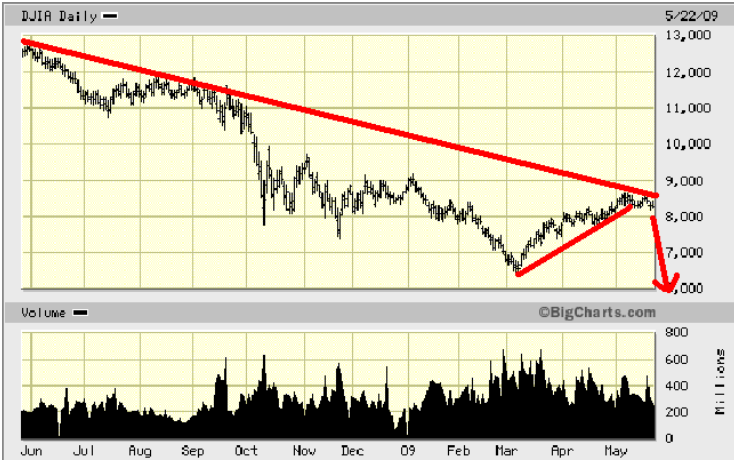
Many have blamed the unfortunate S & P ratings agency for the market dramas in the last two weeks, but they were simply the boy who said ‘the emperor had no clothes on.’ For months now, we have known and commented on the fact that the debt crises on both sides of the Atlantic would lead to trouble. One hopes that the news is not as bad as it seems, but we all knew it was. The build-up of parallel crises added weight to the drama so when the Dow suddenly sank it was simply a postponed reaction. The fact that a ‘head-and-shoulders’ had completed its formation made the market ripe for fall.
Everybody reacted all over the world as this postponed reality was publicly accepted. The oil price fell to below $80, the dollar and the euro fell like a stone, the Swiss Franc and the Yen soared to economy-destructive levels and eventually the Fed confirmed that the U.S. economy should see no growth for another 2 years. The Chinese government called for a new global reserve currency to replace the dollar.
down to a darker investment climate…
The$1,555 gold price had already signaled that it was going to take off in June, but the S & P trigger sent it soaring effortlessly to $1,800. Only now are these new realities being properly absorbed, although slowly…
Why?
We see the S & P downgrade as a judgment on the Congressional inability to properly assess the dire nature of the U.S. credit situation because of their fixation on party politics. It is the first time that the U.S. Congress has had to see the rest of the world react to the declining U.S. global economic dominance. It had to happen for the U.S. Congress to understand that the U.S. is responsible for its behavior and will face consequences if it does not adjust. It’s a change that has not happened for 40 years.
We do not see a change in the political behavior of Congress until more consequences force that change. There may be considerable economic pain before this happens, and the future brightens for the U.S. During this time the U.S. has to see that it is no longer the world’s economic axis, allowed to extract advantage from the rest of the world through its ‘exorbitant privilege’ of printing money to pull itself out of economic decline. As we forecast at the beginning of this year, 2011 would be a year of consequences!
The Future
As we move towards QE3, more dollar printing and the consequential inflation, we fully expect the reaction of the dollar to weaken much faster. QE3 will confirm that they have chosen inflation as a way out of a double-dip recession or deflation. The interdependence of currencies will prevent exchange rates from highlighting any currency’s weakness. We have seen this last week in the actions of Japan and Switzerland to weaken their safe-haven currencies. History will record that the announcement by S & P was simply a trigger for a new era of currency instability and the loss of currency values.
Only the gold price is now truly capable of measuring the weakness of currencies. The jump in the gold price over the last decade has been screaming this to all, but few outside of gold were listening. The leap since June of $250 reflected the acceleration in the speed of declining values.
It is natural for us to assume that the global monetary authorities will agree to a reformation of the monetary system that effectively addresses the mess it is in right now. Certainly we expect the mess to worsen considerably before this is accepted.
What obstacles will they face?
Politicians will have to please those who put them in power and cannot act independently of this power base, no matter how necessary a departure may be. It would be political suicide to do anything else –a consequence of democracy.
- Politicians or Monetary Officials likewise will have to ensure they act in the interests of their nation even if it goes against the greater good of the international community.
- The international pecking order will weigh in to give priority to measures put forward by the most powerful. The battle will likely impact the voting rights in the I.M.F. where the 16.83% of the U.S. –the I.M.F. needs an 85% vote to pass any measure—will come under fire and China will be given a share of the voting commensurate with its growing economic power.
- All of the above has to be decided before China’s request for a new global reserve currency can even be contemplated.
- A new global reserve currency would require either the diminishing of the dollar’s role in the global economy or its removal as its sole reserve currency.
The obstacles will prevent the much-needed structural monetary reform. Are the current powers-that-be impartial enough or be franchised to formulate a globally reformed effective monetary system? Not yet, if we look back at the efforts of the U.S. Congress to cut their budget deficit.
What is next? History shows that willing change, when not forthcoming gives way to unwilling change! Unwilling change climbs out of wars or rupturing, destructive, crises that remove the above barriers and which license the powers-that-be to undertake needed, sweeping reforms.
-
I know Mike is a very solid investor and respect his opinions very much. So if he says pay attention to this or that - I will.
~ Dale G.
-
I've started managing my own investments so view Michael's site as a one-stop shop from which to get information and perspectives.
~ Dave E.
-
Michael offers easy reading, honest, common sense information that anyone can use in a practical manner.
~ der_al.
-
A sane voice in a scrambled investment world.
~ Ed R.
Inside Edge Pro Contributors

Greg Weldon

Josef Schachter

Tyler Bollhorn

Ryan Irvine

Paul Beattie

Martin Straith

Patrick Ceresna

Mark Leibovit

James Thorne

Victor Adair