
Uncategorized

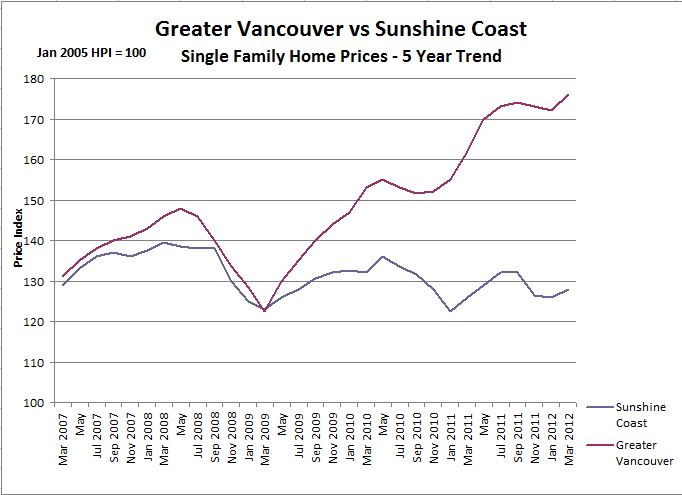
Forty kilometres from Vancouver “North by west in the sunlight”, to quote the former Union Steamship line, basks the Sunshine Coast.
Cast adrift from the Lower Mainland by Howe Sound and the Coast Mountains, this verdant peninusula is accessible only by a 40 minute ferry ride or 20 minute floatplane ride. It feels just like an island.
On the Sunshine Coast you’ll find relaxation and advernture in equal measure, from safe beaches and idyllic inlets to rugged slopes and snowy peaks with a wide arroy of parks and trils, hikers, bikers and dog lovers will never run out of places to explore.
The vibrant communities of Gibson’s, Roberts Creek, Sechelt and Pender Harbour offer big-city amenities in a small town atmosphere. A newly expanded hospital, great schools and quality recreation appeal to young and old alike. Up and down Highway 101 there are great pubs, restaurants, and eclectic coffee houses to suit every budget and taste.
Regular readers know where I stand on retirement: it’s a man-made myth. See the below chapter from my book “Confessions of a Wall Street Whiz Kid” for my views on the subject.
I have also been pounding the drum that health care costs will bankrupt older Americans. In this article from US News & World Report (which you can also read on Yahoo Finance) says, “One of the biggest drivers of poverty in old age is failing health and the associated medical costs.”
I urge all readers to read both the US News article and my chapter.

Poverty Increasing Among Retirees
By Emily Brandon | U.S.News & World Report LP
Growing numbers of older Americans are spending their retirement years in poverty, according to a recent Employee Benefit Research Institute study. The proportion of older people living below the poverty line has been growing steadily since 2005, and many of those people are falling into poverty as they age and spend down their savings.
Click here to read the article in its entirety.
Growing numbers of older Americans are spending their retirement years in poverty, according to a recent Employee Benefit Research Institute study. The proportion of older people living below the poverty line has been growing steadily since 2005, and many of those people are falling into poverty as they age and spend down their savings.
Click here to read the article in its entirety.
~~~~~~~~~~
Chapter 13:
Retirement: A Man-Made Myth
“Retirement at 65 is ridiculous. When I was 65, I still had pimples.” ~ George Burns
There are a lot of things I can point to as being wrong with our society today, but one glaringly obvious shortfall is our entitlement mentality. In general, we feel we “deserve” a whole lot of stuff that we really have no right to claim. First and foremost, in my opinion, is the concept of retirement.
Make no mistake about it: this whole notion of retirement is a man-made creation. There’s nothing Biblical about us supposedly killing ourselves for 75% of our years to store up enough assets to live off for the last 25%, yet that’s the system our society has built. The system is hopelessly broken and our government can do little more than try once again to kick the can down to the next generation. Somebody is going to pay an awful price.
Let me give you a little background on the phenomenon we call “retirement.”
In her New York Times article entitled “The History of Retirement, From Early Man to A.A.R.P.”, author Mary-Lou Weisman briefly and humorously outlines the history of retirement from Cave Man to modern day, and gives supporting facts about why retirement is not just man-made, but a 20th-century creation.
During the Stone Age, says Weisman, we worked until age 20 then died, usually from unnatural causes. During Biblical times, when people lived to be really old – the Bible says Methuselah died at the ripe old age of 969, thus the adage “older than Methuselah” – people worked until they dropped.
This working-until-your-last-breath mentality prevailed through the centuries even after Chancellor Otto Von Bismarck, nicknamed The Iron Chancellor, introduced the concept of retirement. In 1889, Germany’s Old Age Disability Insurance Bill was enacted to provide a pension for all workers at age 65. Sounds generous? Not really. It was proposed by Bismarck as a way of gaining favor among his countrymen, but it wasn’t as sweet a deal as you might think. The average life expectancy at the time was 45, so there weren’t many around at 65 to collect, and those who did usually didn’t live a whole lot longer.
What Bismarck’s bill did, however, was put in motion the idea that at some point in life we deserve to plop down in our rocking chair and grow mold. Did I say mold? I meant old. As Weisman describes, that single move “set the arbitrary world standard for the exact year at which old age begins and established the precedent that government should pay people for growing old.”
Fast forward to 1905 when world-renowned physician William Osler, in his valedictory address at the Johns Hopkins Hospital, where he had been physician-in-chief, said that workers aged 40 to 60 were less productive than their younger counterparts and those over age 60 were “’useless” on average. That must have been popular. At the time, around 60% of men aged 65 and older were still in the workforce.
But it wasn’t until President Franklin D. Roosevelt signed the Social Security Act of 1935, also known as the federal old-age program, that retirement and entitlements, which were mostly available only to white men, became a part of American culture. The average life expectancy in America was just under 62 years. Roosevelt’s old-age program was funded by a 1% tax on employers and employees on the first $3,000 of a worker’s earnings. Today, the Social Security tax rate is more than 6%.
….read page 2 & 3 HERE

“You cannot legislate the poor into freedom by legislating the wealthy out of freedom. What one person receives without working for, another person must work for without receiving. The government cannot give to anybody anything that the government does not first take from somebody else.”
No Free Lunch
There aren’t any. The late Adrian Rogers is one of several iconic former pastors of Bellevue Baptist Church in Memphis (Full disclosure: my wife and I are members). He had a wonderful ability to state complex principles in clear, concise, vivid language. I got this quote via email earlier today; it’s a pretty clear statement of the principle that there is no free lunch (HT: Adrienne Brumley).
You cannot legislate the poor into freedom by legislating the wealthy out of freedom. What one person receives without working for, another person must work for without receiving. The government cannot give to anybody anything that the government does not first take from somebody else. When half of the people get the idea that they do not have to work because the other half is going to take care of them, and when the other half gets the idea that it does no good to work because somebody else is going to get what they work for, that my dear friend, is the end of any nation. You cannot multiply wealth by dividing it.
I assume this came from one of his radio messages. Here’s a different (but very similar) quote from one of his books:
Let me say a word here that may sound political. I hope not, because I believe it’s moral and biblical. You cannot legislate the poor into freedom by legislating the industrious out of it. You don’t multiply wealth by dividing it. Government cannot give anything to anybody that it doesn’t first take from somebody else.
Whenever somebody receives something without working for it, somebody else has to work for it without receiving. The worst thing that can happen to a nation is for half of the people to get the idea they don’t have to work because somebody else will work for them, and the other half to get the idea that it does no good to work because they don’t get to enjoy the fruit of their labor. (Adrian Rogers, Ten Secrets for a Successful Family: A Perfect 10 for Homes that Win. Crossway Books, 1998, p. 138).
Both passages could be taken out of Frederic Bastiat’s The Law (PDF here, audiobook here, courtesy of theMises Institute).
The problem
In 1976, the Alberta government told an Edmonton farmer his private land was to be turned into a park and offered him a pittance for compensation; it was only in court years later that the province was forced to admit it actually wanted his land for a highway—which would have triggered much higher compensation. In Vancouver in 2000, the City told the Canadian Pacific Railway that CPR land was henceforth to be a public space—and that no compensation would ever be paid; six years later, the Supreme Court of Canada endorsed the de facto confiscation.
What do these two cases — one from a private landowner with limited resources and one from a corporation with much deeper pockets — have in common? Both are examples of how government regulation can and does restrict the use of property to such an extent that such restrictions are akin to expropriation. Except that when governments use regulation to seize property, compensation is often small or in most cases, non-existent.
In some cases, that is precisely why governments use regulation: it allows them to avoid paying compensation that would otherwise be due if expropriation statutes were in play. Here’s how it works: the regulation is imposed; the freeze or partial freeze occurs; the devaluation results; little or no compensation is offered.
The remedy from Europe
This book points the way out of such undesirable policies while also recognizing the reality and desirability of some regulation. The book includes international examples of compensation for what’s known as “regulatory takings” and outlines how countries such as Sweden, Finland, Germany, Holland, Israel, and others treat private property owners much more fairly, providing compensation for regulations that “freeze” one’s property. Stealth Confiscation offers examples of such sensible policy, explains Canada’s historic attachment to property rights, and analyzes recent initiatives for both legislative and constitutional reform.
….read the entire 72 page report HERE
-
I know Mike is a very solid investor and respect his opinions very much. So if he says pay attention to this or that - I will.
~ Dale G.
-
I've started managing my own investments so view Michael's site as a one-stop shop from which to get information and perspectives.
~ Dave E.
-
Michael offers easy reading, honest, common sense information that anyone can use in a practical manner.
~ der_al.
-
A sane voice in a scrambled investment world.
~ Ed R.
Inside Edge Pro Contributors

Greg Weldon

Josef Schachter

Tyler Bollhorn

Ryan Irvine

Paul Beattie

Martin Straith

Patrick Ceresna

Mark Leibovit

James Thorne

Victor Adair