
Uncategorized
 Even when it comes to something as basic, and apparently as simple and straightforward, as the question of who shut down the federal government, there are diametrically opposite answers, depending on whether you talk to Democrats or to Republicans.
There is really nothing complicated about the facts. The Republican-controlled House of Representatives voted all the money required to keep all government activities going — except for ObamaCare. This is not a matter of opinion. You can check the Congressional Record.
As for the House of Representatives’ right to grant or withhold money, that is not a matter of opinion either. You can check the Constitution of the United States. All spending bills must originate in the House of Representatives, which means that Congressmen there have a right to decide whether or not they want to spend money on a particular government activity.
Whether ObamaCare is good, bad or indifferent is a matter of opinion. But it is a matter of fact that members of the House of Representatives have a right to make spending decisions based on their opinion.
ObamaCare is indeed “the law of the land,” as its supporters keep saying, and the Supreme Court has upheld its Constitutionality. But the whole point of having a division of powers within the federal government is that each branch can decide independently what it wants to do or not do, regardless of what the other branches do, when exercising the powers specifically granted to that branch by the Constitution.
The hundreds of thousands of government workers who have been laid off are not idle because the House of Representatives did not vote enough money to pay their salaries or the other expenses of their agencies — unless they are in an agency that would administer ObamaCare.
Since we cannot read minds, we cannot say who — if anybody — “wants to shut down the government.” But we do know who had the option to keep the government running and chose not to. The money voted by the House of Representatives covered everything that the government does, except for ObamaCare.
The Senate chose not to vote to authorize that money to be spent, because it did not include money for ObamaCare. Senate Majority Leader Harry Reid says that he wants a “clean” bill from the House of Representatives, and some in the media keep repeating the word “clean” like a mantra. But what is unclean about not giving Harry Reid everything he wants?
If Senator Reid and President Obama refuse to accept the money required to run the government, because it leaves out the money they want to run ObamaCare, that is their right. But that is also their responsibility.
You cannot blame other people for not giving you everything you want. And it is a fraud to blame them when you refuse to use the money they did vote, even when it is ample to pay for everything else in the government. When Barack Obama keeps claiming that it is some new outrage for those who control the money to try to change government policy by granting or withholding money, that is simply a bald- faced lie. You can check the history of other examples of “legislation by appropriation” as it used to be called.
Whether legislation by appropriation is a good idea or a bad idea is a matter of opinion. But whether it is both legal and not unprecedented is a matter of fact.
Perhaps the biggest of the big lies is that the government will not be able to pay what it owes on the national debt, creating a danger of default. Tax money keeps coming into the Treasury during the shutdown, and it vastly exceeds the interest that has to be paid on the national debt. Even if the debt ceiling is not lifted, that only means that government is not allowed to run up new debt. But that does not mean that it is unable to pay the interest on existing debt.
None of this is rocket science. But unless the Republicans get their side of the story out — and articulation has never been their strong suit — the lies will win. More important, the whole country will lose.”
In August 1973, Jan-Erik Olsson walked into the main branch of Kreditbanken bank in central Stockholm, Sweden and attempted to rob the place at gunpoint.
He failed miserably. When the police arrived in short order, Olsson opened fire and injured one of the cops. This only escalated the situation.
In desperation, Olsson took four people hostage, and they were held for six days at the bank until police finally used gas to subdue the captors.
This sort of thing happens all the time, so it’s hardly noteworthy. But what’s unique about this event is that the hostages later said they actually felt safer with their captors than the police.
The victims had, in fact, become emotionally attached to Olsson and his partner, to the point that they even publicly defended the pair after the ordeal was over.
As it turns out, this is actually fairly common. Psychologists call this ‘Stockholm Syndrome’ after the Kreditbanken robbery; the term denotes a traumatic, positive bond that forms between captors and hostages.
To those of us who have never been held hostage, it almost seems fantastical… even intellectually offensive. Seriously, how could anyone ever develop endearing feelings for someone holding you at gunpoint?
But when you think about it, this is the very nature of patriotism.
Through an entire lifetime of bombastic propaganda, complete with songs and flags and parades, people develop an unquestioning commitment to the state.
They’ll say things like ‘this is the freest country in the world’ without a shred of objective evidence to support that conclusion… and overwhelming evidence to the contrary.
But meanwhile, we’re all held at gunpoint.
Spy agencies monitor our phone calls and emails. Central bankers manipulate markets and destroy people who are responsible enough to save.
Politicians confiscate people’s livelihoods, regulate them to the hilt, authorize discretionary assassination of their own citizens, and actively work to destroy any vestiges of personal liberty.
While everyone is allowed to roam around, work, and buy flat-screen TVs, we’re all ultimately handcuffed by the state. Everything in our entire lives– from the value of our savings to our homes and personal property, to even our personal freedom– can all be confiscated in their sole discretion.
I’d be willing to bet the chickens scratching around my yard right now think that they’re free… and have no idea that they’ll be this evening’s dinner.
This is a hostage situation, plain and simple.
Yet they’ve skillfully managed to create bonds of affection. The hostages are standing tall, waving the flag, and defending the government’s absurd, destructive actions… no matter how much they defy reality.
It’s gotten to the point that the hostages have begun talking about government actions in the first person:
‘There’s no way “we” would ever default…’
‘In this country “we’re” innocent until proven guilty…’
‘Airport security makes “us” safer from terrorists…’
‘WE should invade Iran…’
Hostages have become so inured to the violence of our captors that few people even realize that it’s happening. The fear and intimidation tactics have just become part of daily life.
This is really hazardous thinking. Hostage situations are dangerous. When things start getting bad, the captors become desperate and start sacrificing their prisoners.
Candidly, our courses of action are limited.
One can simply hope that the situation will improve, and that you won’t be one of the hostages that gets slaughtered.
Conversely, you can head towards the big, giant EXIT sign and leave the whole situation behind for greener pastures.
Or, you can bear down and stick it out… but at least have a credible escape plan. Reduce your exposure to the captors. Don’t have all of your eggs in one basket.
It costs you nothing, for example, to move a portion of your savings abroad to a safe, stable bank in a jurisdiction that your home government does not control.
It costs you nothing to pursue an ‘ancestry’ passport in the event that your parents or grandparents hailed from certain countries like Ireland or Italy.
Yet in the event that the hostage crisis escalates, it’s these sorts of steps that will end up paying enormous dividends for you… and pave the way to freedom.

The extraordinary life of Richie Parker, who overcame being born without arms to become a chassis and body component designer for Hendrick Motorsports.

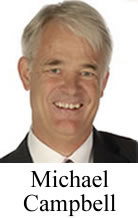 As a listener to Michael Campbell’s radio show, you’re probably not surprised that he has decided to host a workshop on the currency markets. Mike has always said one of the best indicators of market sentiment is the flow of capital. And one of the best ways to track capital flows is to follow the over US$4 trillion of daily activity in the world’s currency exchange markets.
And he doesn’t just pay attention because he is an economist and market commentator. Mike follows these markets because they fundamentally inform his investment choices, returns and overall success.
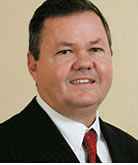 For more on Jack Crooks and Black Swan Capital go to BlackSwanTrading.com
So for the first time ever, with the help of our friends Jack Crooks and Victor Adair, Michael is preparing a seminar that will teach you how to follow and use these markets for your personal benefit. They will show you:
- How these markets impact your current portfolio
- How you can profit from that knowledge
- How to invest in the currency markets with assurance and understanding
Calgary Telus Convention Centre
3pm to 5pm
Scroll down to purchase tickets
At the 2013 World Outlook Financial Conference in February Jack Crooks told us exactly how he would be trading the currency markets in the months ahead. If you followed him you would have:
- Made 300% on a futures trade going long the US$ vs the Yen
- Made 95% crossing the Yen against the British pound
- Made 90% shorting the Euro later in May
- Made 88% shorting the Australian$ in the face of slowing China growth
HOW TO MAKE MONEY IN CURRENCIES – BUY TICKETS |
||||
| Price | Description | Ticket | Video | Purchase Ticket |
| $99 | HOW TO MAKE MONEY IN CURRENCIES featuring Jack Crooks INCLUDES A FREE DAY PASS TO THE SURVIVING & THRIVING IN 2014 CONFERENCE |
 |
{aecaddtocart plan=77 Itemid=217 usage=77 returngroup=0} | |
Added Bonus – an additional whole day of FREE workshops and seminars
When we decided to come back to Calgary to do the Currency Workshop we wanted to make the most of the day. With the help of our sponsors we will be offering much more on Sunday leading up to the main event.
We have invited a host of experts to provide very specific investment workshops and seminars starting at 9am and running through until 3pm – all designed to help you Survive & Thrive in these volatile and chaotic markets.
Larry Berman of BNN and Berman’s Call
Andrew Ruhland of Integrated Wealth Management
Chad Wasilenkoff, our Contrarian Investor
Tyler Bollhorn of Stock Scores
Steve Deschesnes of GPS
Thomas Beyer of Prestigious Properties
Rob Levy of Border Gold
Dave Steele of Western Canadian Mgmt.
And many more…….
And here is the best part….. we’re able to offer this at no extra cost! FREE!
So come down and make a full day of it. Check the sidebar buttons for more information or call our office toll free at 1.877.926.6849

We all receive emails that say they’re inspiring but after watching this 6 minute video you don’t end up like me and wishing you could shake Richie Parker’s “foot”, well, I don’t know what else could inspire you like it has me to get through today, tomorrow……
-
I know Mike is a very solid investor and respect his opinions very much. So if he says pay attention to this or that - I will.
~ Dale G.
-
I've started managing my own investments so view Michael's site as a one-stop shop from which to get information and perspectives.
~ Dave E.
-
Michael offers easy reading, honest, common sense information that anyone can use in a practical manner.
~ der_al.
-
A sane voice in a scrambled investment world.
~ Ed R.
Inside Edge Pro Contributors

Greg Weldon

Josef Schachter

Tyler Bollhorn

Ryan Irvine

Paul Beattie

Martin Straith

Patrick Ceresna

Mark Leibovit

James Thorne

Victor Adair