
Personal Finance
In a nod to our good friends south of the border and their “Black Friday” passions, my team and I have put together our best deal ever for tickets to the 2013 World Outlook Financial Conference Feb 1st & 2nd in Vancouver. But here is the catch – the offer expires at midnight on Sunday. If you heard me on the radio this morning you know the opportunity is two-fold:
#1 – A 20% discount on General Admission tickets OR a 25% discount on the VIP tickets
PLUS
#2 – A FREE ticket to Aaron Dunn’s DIY Portfolio Course for the first 200 purchasers (a $99 value) + two free KeyStone Special Reports from Ryan Irvine (a $300 value)
I urge you to take advantage of this one-time only offer. Surviving the looming debt crisis means making important asset, market and timing choices right now. You cannot afford to miss this year’s World Outlook Financial Conference. Status quo investing is not going to protect your financial future.
All the best
Mike.


3 months ago on Michael Campbell’s MoneyTalks Josef Schachter was spot-on predicting the current $85 range for oil. Last Saturday he returned to the show and predicted another 20% decline into the 1st quarter of 2013 – a potential buying opportunity he described as happening perhaps once a decade. The key will be:
WHAT ARE THE SPECIFIC BUYING OPPORTUNITIES IN 2013?
Find out February 1st & 2nd in
Michael Campbell and High Performance Communications are pleased to announce the return of Josef Schachter as a keynote speaker. Mr. Schachter is one Canada’s most respected oil and gas analysts with over 25 years of experience identifying market trends, and most importantly, specific companies that thrive and profit in any market.
Schachter Market Research is not usually available to the general public. But Josef will offer Conference attendees specific buying opportunities and market analysis for 2013.
Surviving the looming debt crisis means making important asset, market and timing choices right now. You cannot afford to miss this year’s World Outlook Financial Conference. Status quo investing is not going to protect your financial future.
Order your tickets today. Limited VIP packages still available.

AAPL, RIMM And Gold Stocks
I know most Apple enthusiasts will be rolling their eyes with my analysis and that’s fine because the rest of us need people to buy our shares as we unload long positions or sell Apple short .
All joking aside, the charts below clearly show some very interesting information you cannot afford to overlook. At minimum, take a quick glance at the charts which tell the full story on their own…
The Four Stages of Stocks
Markets are cyclical in nature. There is a constant process of expansion and contraction, rally and decline that continues as the market determines the theoretical fair value of a security. The sum of these moves forms an unquestionable cyclical pattern consistent within all time frames.
During a cycle a stock enters different phases of support, from irrational exuberance typically found before its peak, to periods of widespread discontent where its price is continually punished. However there are never distinctly good or bad stocks.
Every “good” stock will eventually become a bad one and vice versa. There are however good trades; trades that reward an investor who has correctly anticipated a move and positioned himself accordingly.
It is important to note that this works with commodities like gold and silver which are trading at a VERY interesting point in their life cycle. Looking at various time frames in GLD and SLV you can see this.
Classic economic theory dissects the economic cycle into four distinct stages: expansion, trough, decline and recovery. A stock is no different, and proceeds through the following cycle:
Stage 1 – After a period of decline a stock consolidates at a contracted price range as buyers step into the market and fight for control over the exhausted sellers. Price action is neutral as sellers exit their positions and buyers begin to accumulate the stock.
Stage 2 – Upon gaining control of price movement, buyers overwhelm sellers and a stock enters a period of higher highs and higher lows. A bull market begins and the path of least resistance is higher. Traders should aggressively trade the long side, taking advantage of any pullback or dips in the stock’s price.
Stage 3 – After a prolonged increase in share price the buyers now become exhausted and the sellers again move in. This period of consolidation and distribution produces neutral price action and precedes a decline in the stock’s price.
Stage 4 – When the lows of Stage 3 are breached a stock enters a decline as sellers overwhelm buyers. A pattern of lower highs and lower lows emerges as a stock enters into a bear market. A well-positioned trader would be aggressively trading the short side and taking advantage of the often quick declines in the stock’s price. More times than not all of stage 2 gains are given back in a short period of time.
While these stages are historically defined over long time periods they actually exists in all time frames, allowing traders to take advantage of a cycle regardless of their trading time frame. Fortunately this phenomenon, known as a “fractal”, exists within all security markets. A fractal is simply a rough geometric shape that can be subdivided into smaller parts that have the same properties; a smaller version of the whole.
This is important to understand because through technical analysis as we are often analyzing multiple time frames. In the short term, the four stage model may repeat itself many times. The combination of these short term cycles form a medium term cycle, and the combination of multiple medium term cycles form a long term cycle. Recognition of these cycles is paramount in trading success.
The Four Stages Profile: This signature profile happens over and over again in the market and all the great leaders eventually become laggards.


Variety in Trading
Investment securities (stocks, ETF’s, options, futures) can be described as being similar to different types of athletes, each with their own unique style and personality. Some can be characterized as sprinters, participating in quick bouts of movement but tiring quickly. Others could said to be more similar to a marathoner, enduring prolonged courses in one direction without pause or interruption.
When I look to make a trade I look for sprinters as historically I have had the most success with them. Other investors like pension and mutual funds are more interested in the long term marathoner that provides steady performance. There is no one way to trade; each method can be equally profitable or unprofitable. It ultimately comes down to what style works best for you, and the only way that can be determined is through trial and error.
Different Phases, Different Strategies
As noted above, the market alternates between periods of trending activity and periods of consolidation. In a trend (stages 2 and 4) there will be an expansion of the price range in one direction. An uptrend will have a series of higher highs and higher lows (stage 2), while a down trend will produce lower highs and lower lows (stage 4). In a consolidation there will be a contraction of price range prior to a reversal in trend. This neutral stage is avoided by trend traders.
A stock in stage 1 or 3 is typically correcting itself after having experience a prolonged move in one direction. These corrections are found after periods of extreme movements that often conclude with emotional and undisciplined trading at peaks and troughs. Trading these two stages is quite different than 2 and 4, and this book will teach you how to manage your risk and trade these stages responsibly.
A short term consolidation within a primary trend is one area where we want to study the price action of a security for clues as to whether there will be a resumption in the trend, continued consolidation, or reversal. Sometimes however it is difficult to identify any order or consistency on any given time frame.
If you are a trend trader these periods should be avoided. Trading has enough inherent challenges already and at all times a successful trader will only be searching out those trades that have a high probability of being profitable.
Trading is all about finding an edge or an advantage and exploiting it for maximum profit. If there is no such edge than there is no reason to be involved. I will say this now and again many other times: Sometimes the best trade is no trade!
Naturally, regardless of the stage a stock is in or your conviction of its direction, risk of financial loss is always inherent in trading and this is critical to always keep in mind. The most successful traders are not immune to this and they too will have unprofitable trades. The key is to minimize those loses by only trading those stocks that have the highest probability of being profitable. This is what separates the profitable and professional traders from those that lose money.
Emotions and Lifecycle Analysis
History has an uncanny ability to repeat itself. Whether it’s the rise and fall of an empire or the rise and fall of a stock, there are clear cycles that are prevalent throughout history.
People may change, but human nature, and our ability to act, react and overreact is simply an innate part of our being. This predictability is what forms the basis of technical analysis and provides a trader with an edge with which to trade upon. When we are analyzing cycles we really are analyzing emotions, trying to gain insight as to how market participants are behaving.
Upon conducting such analysis it can at times seem that markets are be behaving “irrationally” and out of order. Undisciplined traders often fall victim to their emotions and lose control of their objectivity. As people behave irrationally, so too does the market, and unfortunately these conditions can persist for long period of times.
John Maynard Keynes is often quoted for suggesting that “The markets can remain irrational longer than you can stay solvent.” This is a harsh reality and puts great emphasis on the importance of discipline, risk management, and a keen eye for price action.
Emotions are what separate the successful traders from those that lose money. They can be regarded as a relentless opponent, often showing up without warnings and striking you at inopportune times. The successful trader is able to recognize their presence and maintain objectivity, constantly assessing their own strengths and weaknesses.
There will ultimately be times where you can’t control your emotions; however you can always control how you respond to them. Any time you recognize that your emotions are influencing your outlook you are already one step ahead of the average market participant. It is at this point that you step back, refocus your perceptions, examine the price action, and then take the appropriate action.
An understanding of herd or mob mentality is important in trading and can provide you with an edge over the average participant who doesn’t contemplate what is happening around them. In a mob or riot, we never know what the feelings and motivations are of all the individual participants.
There are however certain emotions that seem to appear at distinct times and a certain predictability in their development. A stock’s price action is no different. While we never know the underlying feeling and motivations of all participants, there are distinct emotions that are shared by the herd at various stages of a stock’s life. An understanding of these emotions and their implications on the price action of a stock is an advantage that the profitable trader maintains.
The Stock Market Lifecycle could be explained in much more detail, but this report gives you the foundation of stock / index trading cycles. I will be covering this topic in a future video with much more detail.

The Fruit War – Apples Top While Berries Bottom
It is very interesting that AAPL shares topped the same week rim shares bottomed. Could the BB10 be the turnaround for Research in Motion? Either way the market is somewhat predictable as traders and investors buy the rumor that BB10 will be good, and they sell the news once it arrives no matter the outcome good or bad. Jan 30th is when it’s unveiled so we could see RIM shares continue to claw its way out of the grave.


Conclusion: Knowing this information is crucial to survival as this cycle happens on all time frames (1 minute chart all the way up to yearly charts). Harnessing this information for trade selection and timing greatly reduces the amount of trades you take, while focusing only on new leaders which have massive upside potential. You can see some of my trade ideas which are in Stage 1 Accumulation mode getting ready for takeoff here: http://stockcharts.com/public/1992897
Judging from the recent price action in the broad market (SP500, NASDAQ, DOW, IWM) along with AAPL shares which have a large impact on index price direction. I feel the market is setting up for a strong Santa Clause rally in the coming week.
2013 looks like it will be a VERY exciting year for trading and investing as several sectors, stocks, and foreign country indexes are in Stage 1 Basing patterns about to start a new bull market. These major plays will become part of my trading alert service at www.TheGoldAndOilGuy.com from this point forward.
Chris Vermeulen Co-Author: Brennan Basnicki

There are only a few people who get it: the era of cheap food is over.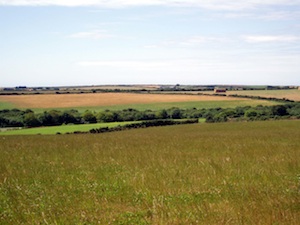
Global net population growth creates over 200,000 new mouths to feed ever single day. Yet supply of available farmland is diminishing each year due to development, loss of topsoil, peak production yields, and reduction in freshwater supply.
Then there’s bonehead government policy decisions to contend with… like converting valuable grains into inefficient biofuel for automobiles. Paying farmers to NOT plant. Banning exports. Etc.
Of course, the most destructive is monetary policy. The unmitigated expansion of the money supply has led to substantial inflation of agriculture commodities prices.
These fundamentals overwhelmingly point to a simple trend: food prices will continue rising. And that’s the best case. The worst case is severe shortages. This is a trend that thinking, creative people ought to be aware of and do something about.
One solution is to buying farmland overseas. It provides an excellent hedge against inflation, plus it’s one of the best (and most private) ways to move money abroad, out of the jurisdiction of your home government.
In a way, overseas farmland is like storing gold abroad. But unlike gold, it produces a yield, ensures that you have a steady food supply, and even provides a place to stay in case you ever need to leave your home country.
So where are the best places to buy?
After travel to over 100 countries, looking at more properties than I can count, and investing in quite a few of them, I’ve come up with a few top picks that meet the following criteria:
- cheap land costs
- low operating costs
- highly productive soil
- low political risk (confiscation, regulation, market interference)
- foreigner-friendly ownership rules
- clear water rights
- climatic stability
Believe it or not, these simple requirements eliminate most of the world. Much of central and Eastern Europe is too politically risky. Western Europe and the US tend to be cost prohibitive. Most of Asia disallows foreign ownership of farmland. Etc.
But there are still several places that remain. I’ll share two of them:
1. Chile. No surprises, Chile ticks all the boxes. Land costs are very reasonable, and operating costs are low. The soil in regions 6, 7, and 8, is some of the most productive on the planet. And best of all, Chile has some of the clearest, most marketable water rights in the world.
Another great thing about Chile is its location; it’s counter-seasonal to the northern hemisphere, so Chilean harvests tend to come at a time of tighter global supplies, pushing up prices.
As an example, we’re currently harvesting blueberries at our farm in Chile’s 7th region. Global blueberry supply is tight in November, so the price we receive is 35% higher than if we were in the northern hemisphere.
See www.chile-farmland.com for more information, it’s a fantastic resource.
2. Georgia. This may be shocking to some, but Georgia is a stable, growing country that’s definitely worth betting on.
Putting boots on the ground there, it’s clear that Georgia is on an upward trajectory with a bright future, much like Singapore was decades ago. Taxes are low, and the country is open to foreigners.
In fact, the government realized that they have tremendously high quality farmland, yet limited expertise in farming. So while most nations shut their doors to foreigners owning strategic farmland, Georgia went abroad actively seeking foreigners to come to their country.
They hit the jackpot in South Africa, offering land, financial incentives, and even citizenship opportunities to South Africans who would move to Georgia and work the land.
Land costs in Georgia are very low; top quality crop land costs about $3,000 per acre, compared to $10,445 in Iowa, or $12,000 in California. Yet simultaneously, yields are very high for everything from corn to wine gapes to peanuts, on par with both of those states.
It’s definitely a contrarian agricultural investment worth considering.
Speaking of Chile…….
You won’t believe the opportunities here
The Chilean economy is booming right now. Full stop. From agriculture to retail to construction to mining. Everywhere you look, it’s happening.
This isn’t pretend economic growth, conjured out of thin air by central bankers who drop freshly printed currency from helicopters. It’s the real kind, brought about by increased production, greater exports, technological development, and fiscal discipline.
So far this year, for example, the Chilean government has posted a budget surplus of 1.7% of GDP, up from 1.4% last year. Unsurprising, Chile’s gross debt level is a paltry 11.3% of GDP, putting it in the same category as countries like Saudi Arabia and Estonia.
…read more HERE
The recent furor over Germany’s request to audit its gold reserves being held by central banks in New York, London and Paris has highlighted the fact that there is even more reason to have one bar in hand versus two bars in the bush in today’s uncertain world.
The controversy arose after the Bundesbank’s official requests for a full audit of German gold reserves were apparently been turned down by the foreign central banks responsible for storing the bulk of German gold.
These central banks include the Federal Reserve Bank (1,536 tonnes), the Bank of England (450 tonnes) and the Banque de France (374 tonnes). The Bundesbank keeps just 1,036 tonnes of the county’s gold reserves in Frankfurt.
The Physical Premium
Of course, the whole point of buying precious metals as an investment in physical form is that they are a relatively easy way to store wealth for the common man. Nevertheless, the modern strategy would be to use the leverage available with precious metal ETFs, futures or options.
The status quo also tends to scoff at paying any premium for physical precious metals, since you could just buy more paper ounces using the premium you would have paid for physical.
They also argue that you may also have to pay to store the physical safely.
The physical premium is typically computed as a function of inventory management, including storage costs and time of delivery factors. Also included are the costs associated with keeping the doors to a low margin business open for all the fledging dealers, which is especially true for precious metal in bullion or non-numismatic form.
Unfortunately, for the elite or wealthy investor, the idea of taking physical possession is still a very radical concept. Only a relatively small percentage of the very small amount of precious metals allocated to the average portfolio is actually stored personally.
Sovereigns Scramble to Audit Their Gold Reserves
Apparently sovereigns like Germany found the idea of holding physical metal in their own vaults just as unromantic. Nevertheless, Germany has recently discovered that getting back all of its 2,360 tonnes of physical gold stored with other central banks may not be as easy as just asking for it.
The reason for sovereigns participating in an overseas gold storage program are numerous, and for many countries are mostly political, but the overseas storage issue is providing a textbook case of the importance of direct control of some, if not all, of one’s wealth.
Now, with unprecedented issuance of debt and rampant paper money printing programs disguised as quantitative easing, the reasons for taking control of your assets are becoming a matter of economics. While this may be bullish for metal prices, the irony is that it could also be a precursor to a move to nationalize precious metal mines.
Venezuela was one of the first countries to request the repatriation of its gold reserves in modern times. More recently, the list of sovereigns repatriating gold has grown, and Germany has announced plans to repatriate 50 tonnes per year from the New York Fed over the next three years.
In addition to Germany’s audit requests, countries including Switzerland, The Netherlands and Ecuador have also requested audits of their gold reserves held abroad by other central banks.
Manipulation May Help Sovereigns Accumulate Metals
Like the Chinese government and many concerned individuals, these countries may all be stealthily accumulating physical gold, which is being facilitated by the ongoing paper market manipulation aimed at keeping physical precious metal prices low.
One wonders if they could be preparing for the eventual demise of the vastly overprinted U.S. Dollar, which may in turn herald the introduction of a new global reserve currency?
Obviously, none of these sovereigns is buying silver, because there is simply not enough physical silver left at prices anywhere near the current levels trading in the paper market.
For more articles like this, and to stay updated on the most important economic, financial, political and market events related to silver and precious metals, visit http://www.silver-coin-investor.com



-
I know Mike is a very solid investor and respect his opinions very much. So if he says pay attention to this or that - I will.
~ Dale G.
-
I've started managing my own investments so view Michael's site as a one-stop shop from which to get information and perspectives.
~ Dave E.
-
Michael offers easy reading, honest, common sense information that anyone can use in a practical manner.
~ der_al.
-
A sane voice in a scrambled investment world.
~ Ed R.
Inside Edge Pro Contributors

Greg Weldon

Josef Schachter

Tyler Bollhorn

Ryan Irvine

Paul Beattie

Martin Straith

Patrick Ceresna

Mark Leibovit

James Thorne

Victor Adair