
Stocks & Equities
Marc Faber is king of thr Barron’s Roundtable Pundits with the best performance over the past decade of an annualized 22.8 per cent, displacing incumbent Felix Zulauf, although he fell slightly short of being the outright winner in 2012 alone (see picks here). Some cracking calls in emerging markets put Dr. Faber on top. He also got the residential real estate recovery right.
Marc Faber has also been a long-term bull of gold, writing his classic book ‘Tomorrow’s Gold’ a decade ago with his main prediction as the title. He’s on the record as predicting $4,000 an ounce for gold before this bull market is over. He’s also keen on silver.
“Continuous interventions by governments with fiscal and monetary measures, instead of smoothing the business cycle, have actually led to greater instability. The short-term fixes of the New-Keynesians have had a very negative impact, particularly in the United States”. Faber said to the LBMA The ANNUAL CONFERENCE of the London Bullion Market Association recently.
“In a Negative Real Interest Environement Some Assets could go Ballistic on the upside. I think there is a lot of money on the sidelines. Some will stay there, because people who don’t trust the system anymore will just keep it there. Some will be invested, but it may not go into equities. It could go into some other asset class, perhaps hard currencies such as gold and silver, or real estate, which is now relatively inexpensive in the U.S.
As for volatility, it increased sharply last year, but has diminished over the last three-months. I expect we’ll see increasingly very high volatility in all asset classes in the next few years. The money in an environment of negative real interest rates will flow. It might flow into fewer and fewer stocks, or into fewer and fewer assets that could go ballistic on the upside”.
In this Dec 13th video Marc Faber explains and predicts the US Dollar, Stocks, Inflation, the economy 2013, gold 2013, silver 2013:

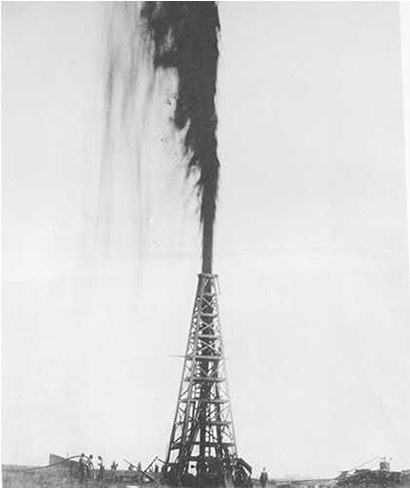 Canada’s energy sector is still home to promising growth stocks and a large number of dividend-paying securities that offer elevated yields.
On October 31, 2006, Canada’s Finance Minister Jim Flaherty announced that his government would start taxing royalty trusts as corporations on January 1, 2011. A frantic sell-off ensued, wiping out about $35 billion worth of market value by the end of the next trading session.
The timing of Flaherty’s announcement and the severity of the subsequent plunge led market-watchers to dub the event the Halloween Massacre.
In the years leading up to the announcement, Canadian royalty trusts had become increasingly popular among income-seeking investors. Free from corporate-level taxation in Canada, these pass-through entities disbursed much of their cash flow to shareholders in quarterly or monthly distributions. Even better, the Internal Revenue Service classified these distributions as qualified dividends, ensuring that US investors paid a tax of only 15% on this income.
Memories of the infamous Halloween Massacre prompted many investors to swear off Canadian equities, a shortsighted move that overlooks the 48% total return posted by the S&P/TSX Income Trust Index from November 1, 2006, to December 31, 2010. In comparison, the S&P 500 generated a loss of 11.2% over this holding period.
Although most royalty trusts converted to corporations, Canada’s energy sector is still home to promising growth stocks and a large number of dividend-paying securities that offer elevated yields.
The country boasts some of the world’s largest oil reserves, from Alberta’s vast oil sands to emerging shale basins and a series of heavy-oil plays across western Canada. Our favorite upstream operators have the wherewithal to grow oil production significantly in coming years, while the surge in drilling activity and output has created opportunities in the midstream and oilfield-services segments.
And US investors shouldn’t overlook the benefits of exposure to the Canadian dollar. The nation’s financial system avoided the excesses that characterized the US credit bubble and emerged from the Great Recession in solid shape. Canada’s strong economy and fiscal strength should support the value of its currency relative to the US dollar and the euro—an appealing prospect for many of our readers.
Before we highlight one of our top Canadian energy stocks, here’s a quick review of the basic tax implications associated with equities that trade on the Toronto Stock Exchange: Investors in the US can claim the 15% withholding tax levied by Canada as a credit against their domestic tax liability. Even better, Canadian equities held in a tax-advantaged account such as an IRA or 401(k) aren’t subject to this 15% withholding tax.
……read page 2 HERE

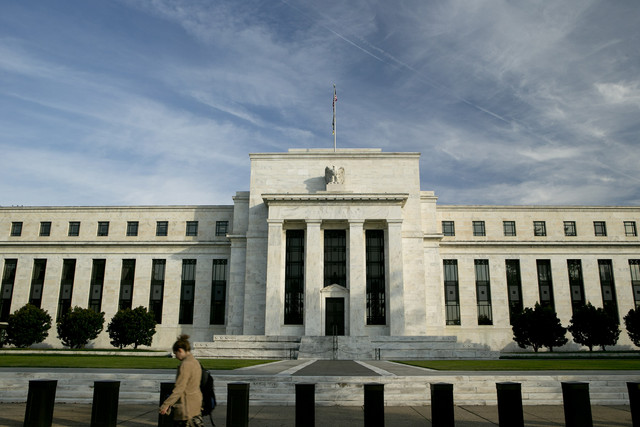 The new easing steps the Federal Reserve announced Wednesday have some virtue, but they carry a lot of danger, too, says Pimco CEO Mohamed El-Erian.
“We should all welcome the greater policy emphasis being placed on unemployment,” he writes in Fortune. “This national jobs crisis has enormous human costs. . . . And the longer it persists, the harder it is to solve.”
The Fed plans to keep short-term rates near zero until the unemployment rate falls to 6.5 percent.
But, “the bad news is that the institution, with its imperfect tools for the challenge at hand and with other federal government entities essentially MIA, may be taking on an unsustainable burden,” El-Erian says.
“As recognized by [Fed Chairman Ben] Bernanke, the outcome of the Fed’s unusual activism is neither predictable nor costless.” There’s no guarantee that expected benefits will materialize, and there could be unpleasant, unintended consequences, El-Erian maintains.
“Second, the Fed’s growing involvement is ultimately inconsistent with the proper efficient functioning of a market economy,” he writes.
The central bank’s Treasury and mortgage-backed security purchases will mean it is “heavily involved in markets as both a referee and player.”
El-Erian’s Pimco colleague Bill Gross, co-chief investment officer, sees potential problems too.
The Fed’s decision to keep interest rates as low as possible “means the Treasury is issuing debt for free,” he tells Bloomberg. “There are complications. Inflation is one of the complications.”
We continue to watch for “at the margin problems” in the world economy that would highlight an upcoming synchronized slowdown and problematic period. These are some of the recent events that are weakening the underpinnings of the current positive consensus view and may indicate that many parts of the world will face a pronounced slowdown and possible recession in 2013.
Watch for a breach of US$84.05/b (now $85.84) to signal that OPEC has not made the appropriate cut in production and that weaker economic conditions worldwide are depressing oil prices.
For the S&P/TSX Energy Index, our forecast remains that we should hit another new low. Our target remains in the 200 area.

Gold Headed to $62,238 or Even $84,131 an Ounce?
I have some important ground to cover with you today, in this special column. So let me get started right away — and with a warning I want to get on the official record:
No matter what happens in the world today … no matter what happens in the markets … no matter how bad the economic news may be … nor how good …
And despite the fact that I remain short-term bearish and see gold’s price falling a bit more …
Hold on to all your core gold holdings!
That’s especially important for you to understand today because, very simply put, I believe that gold is a win-win investment. Period.
First, and foremost, there are really only two possible economic scenarios that could unfold going forward …
Scenario No. 1: [LEAST LIKELY]
The current spate of bad economic news abates … the stock market’s recent rally continues … talk of a double-dip recession recedes … the U.S. economy begins to truly recover.
All looks hunky-dory. Even in Europe.
The Federal Reserve’s efforts to save the U.S. economy and financial system succeed.
So what happens next under this, albeit least-likely, scenario?
- The credit crunch affecting homeowners and businesses starts to ease …
- Banks start lending more money … credit flows through the pipelines … the government’s revenues increase … the sovereign-debt crisis eases …
- And the trillions of paper dollars the Federal Reserve has created begin to work their way through the economy.
In a year or less, normal credit creation has fully resumed. Our fractional reserve-banking system takes over and begins multiplying the lending again, up to $9 for every new dollar of money created by the Federal Reserve.
Up to $20 trillion of largely watered-down money begins to flood the U.S. economy. More than double the country’s current Gross Domestic Product.
And because it is money that had no reason for existence to begin with … and is merely monopoly money printed up by the Federal Reserve, guess what happens?
Inflation takes off to the upside like a bat out of hell. And no matter how hard the Federal Reserve tries to reverse its policies and reign in the inflation, prices for almost everything begin to move up sharply. Very sharply.
Obviously, gold will continue to do quite nicely under this scenario. How nicely? I’ll tell you in a minute. First, consider …
Scenario No. 2 [MOST LIKELY]:
The recent slew of bad economic news continues … the U.S. economy goes from bad to worse … Europe goes into meltdown mode …
And it becomes painfully clear that Europe’s and the U.S. governments’ and central banks’ rescue efforts have failed.
Here and in Europe, it becomes clear that governments are broke. It becomes obvious we’re dealing with depressions.
The Fed and the European Central Bank pump trillions more dollars into their economies. But all to no avail.
What happens under this scenario? The euro and the U.S. dollar race each other to the bottom of the heap of paper currencies that have failed.
Both currencies dramatically lose purchasing power … and the entire Western world sinks deeply into an inflationary depression.
The world’s monetary system is effectively destroyed, and collapses in a quagmire of debts that can never be repaid.
The Bottom Line for Gold …
In Scenario No. 1, I see gold easily hitting my MINIMUM TARGET of $5,000 an ounce. No doubt about it.
But in Scenario No. 2, gold could easily exceed $5,000 an ounce. How high it could go then is anyone’s guess. $7,000. $8,000. $10,000-plus?
It’s hard to say. But I do know this: If the Fed opted to monetize our country’s 261.498 million troy ounces of gold reserves and gear it to the current national debt of $16.375 trillion …
Then you’d be talking $62,237.56 gold.
And if it decided to go even further and monetize, say, just 10% of the country’s total debts and obligations, roughly $22 trillion, you could be talking about $84,130.66 gold.
Do I think gold will get to either one of those numbers? No, I don’t.
But the exercise does prove that no matter how you look at it, gold is ultimately headed higher — much higher. And $5,000 an ounce could easily end up a very conservative figure.
Hence, gold should be your No. 1 insurance policy going forward. Don’t you forget it.
Whatever you do, hold on to your gold holdings, or you’ll be sorry you didn’t. And if you don’t own gold, for whatever reason, get ready to start backing up the truck.
Yes, I was bullish on gold from 2000 to its 2011 high at $1,925. And then, I called for a correction, which unfolded precisely on cue.
And although gold could fall a bit more in the short term, time is running out for gold’s correction. It won’t be long before I issue my first major buy signal in gold since the year 2000.
Best wishes,
Larry
Larry Edelson has over 34 years of investing experience with a focus in the precious metals and natural resources markets. His Real Wealth Report (a monthly publication) and Power Portfolio provide a continuing education on natural resource investments, with recommendations aiming for both profit and risk management.
For more information on Real Wealth Report, click here.
For more information on Power Portfolio, click here.


-
I know Mike is a very solid investor and respect his opinions very much. So if he says pay attention to this or that - I will.
~ Dale G.
-
I've started managing my own investments so view Michael's site as a one-stop shop from which to get information and perspectives.
~ Dave E.
-
Michael offers easy reading, honest, common sense information that anyone can use in a practical manner.
~ der_al.
-
A sane voice in a scrambled investment world.
~ Ed R.
Inside Edge Pro Contributors

Greg Weldon

Josef Schachter

Tyler Bollhorn

Ryan Irvine

Paul Beattie

Martin Straith

Patrick Ceresna

Mark Leibovit

James Thorne

Victor Adair