
Timing & trends
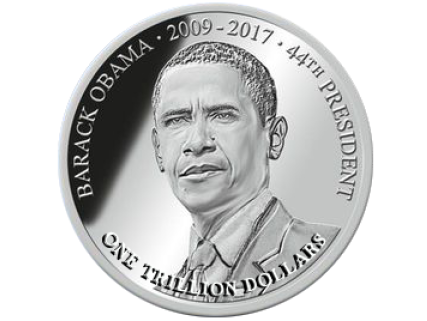 The talk circulating that the U.S. Treasury can circumvent the debt ceiling by minting a trillion-dollar platinum coin is pure nonsense.
 First, to the best of my knowledge, the U.S. Treasury does not own any platinum. That means it would have to go into the market and buy up platinum to mint such a coin.
But the Treasury is broke, so where would the money come from to buy the platinum?
The Federal Reserve, presumably. But I doubt the Fed is going to print another trillion dollars in one fell swoop to let the Treasury go buy 625.8 million ounces of platinum.
Yep, that’s right. It would take 625,782,227 ounces of platinum to make a trillion-dollar coin.
And even if the Treasury could come up with the money via the Fed, where would that much platinum come from?
The total global above-ground supplies of platinum are estimated to be roughly 7.5 million ounces, and the total annual production is about the same.
That means there would be about 15 million ounces of platinum available, assuming the Treasury could purchase 100% of available above-ground supplies and 100% of the production for 2013.
Even if Washington could pull off buying every single one of those above-ground ounces, it would take another 82 years of Washington buying up every single ounce of the world’s annual platinum production.
Utterly and ridiculously unrealistic, to say the least.
OK, so let’s say that $1 trillion coin has “seigniorage” in it. Its value — because it’s sovereign money — is worth more than the platinum in the coin.
And let’s say the government’s profit on the difference between the value and the cost to produce it is as high as 50% and only half the amount of platinum I just mentioned is required.
You’re still looking at 312 million ounces of platinum that would be needed. Still an utterly impossible feat to accomplish.
And then there’s another problem …
Who, or what country — in their right mind — would buy a platinum coin or coins from the U.S. Treasury knowing full well the metal is not worth a trillion dollars and that the Treasury has a large seigniorage markup on it?!
Let’s try another angle: Let’s say Washington dumps some of its gold reserves or borrows against them to buy platinum. Would that work?
Hardly. Washington owns some 287 million ounces of gold, worth roughly $474 billion. In other words, Washington would have to dump or hock our entire gold reserves.
Not going to happen.
Second, even if any of the above were logistically possible, what would it say about the U.S. and the U.S. dollar?
Minting a trillion-dollar platinum coin or even 657 million one-ounce platinum coins to pay our current debt, with more borrowed or printed money, would just send the signal that Washington is so desperate that it’s resorting to loony acts of desperation.
The dollar would plummet in value, and our government’s credibility would be toast. So would the dollar’s.
Even the platinum market doesn’t buy the idea of a trillion-dollar platinum coin. If it did, the price of platinum would be soaring, and it’s not.
Will all this nonsense lead to something else, like more talk of going back to a gold standard?
For sure, you’re going to hear a lot more about that in the months and years ahead.
But let me go on record again about a gold standard: Washington will never go back to a gold standard. Period. It robs Washington of accountability, the ability to overspend.
Nor will Europe. A gold standard is outright deflationary. If we went to a gold standard the world would collapse, like it did in the 1930s, into a massive deflationary depression.
Let me make something else perfectly clear:
In the months and years ahead you’re going to hear all sorts of nonsense, rumors and rhetoric about gold, about silver, about precious metals. 99% of it will be just that, nonsense.
Yes, gold is headed much higher over the longer term. So is silver, and so is platinum.
But the next leg up in the metals is not yet here and when it does come (from still-lower prices) it will not be due to any of the above nonsense.
It will simply be due to the fact that the governments of both Europe and the United States are flat-broke … and that there is nothing that can be done about it …
Short of all the governments of the world getting together … canceling all debts … and designing a new, debt-free-based monetary system.
It’s going to happen. The problem is that the world is going to have to go through hell to get to the other side.
Chief reason: We have leaders in Washington (and to be fair, other governments, like Europe) … and economists and analysts who are absolutely harebrained.
We passed though the eye of the hurricane last year …
And this year, the back wall of the greatest financial hurricane of all time will start to hit.
Best wishes,
Larry

Gold and gold miner stocks have underperformed in 2012 disappointing most traders. That being said it has traded in a large sideways range since September 2011 and remains stuck in this range as of this week. Investments trading sideways are not my preferred investment of choice because some commodities and stocks for that matter can trade sideways for years before making another bull market rally.
That being said in the last six months gold has started to show life that a new bull market may be starting. 2013 is starting to look as though gold, silver and precious metals miners could lead the market higher if they can break out of their basing patterns. Until we get more bullish price action I am not planning to get long.
Take a look at the gold ETF and Gold Miner charts:
These daily charts show the trend (up/down) along with short term extreme overbought/oversold trading days. The key to long term success is to trade with the trend 90% of the time. Only years of experience will you know when it’s ok to break the rules and even then the odds are stacked against you.
Gold Weekly Chart:

Gold Daily Chart:

Gold Miners Daily Chart:

SP500 Stock Market Analysis:
The last five years I have been fine tuning my SP500 index trading with the use of cycles, sentiment, volume, momentum and the volatility index. Until just recently some of the data I use for generating these extreme overbought/oversold conditions were only available after the market closed. This made the high volatile trading sessions difficult to truly know if an extreme level was reached during the trading session. The exciting news is that a new data feed and a top notch programmer is allowing me to turning this once manual calculation of 17 data points taking me an average of 25 minutes to figure out into a system that generates signals in real time complete with profit taking signals, tend direction and a protective stop which self-adjusts depending on the market volatility and cycle stages.
Two other benefits are that during extremely high volatility levels and mixed cycles the system does not generate any signals. This allows us to avoid the large daily swings in price that typically shake even the most seasoned traders out of the market for repeated losing trades. Also during potential trend changes when cycles and volatility become choppy trading signals are not generated helping to avoid the volatility that takes place during reversals points when the bulls and bears are pushing each other around.
Below is a very basic version of the trend and signals for the SP500 index as it does not show profit taking, trend reversal stops or protective stops for individual swing trades yet, but it’s coming soon.

Crude Oil Weekly Chart:
Crude oil has been making a move higher in the past four weeks but it’s now testing resistance and the chart shows a high volume doji candle. This is pointing to a pause or pullback in price should take place.

Natural Gas Weekly Chart:
Natural gas futures have been under pressure the past couple months but it may have put in a bottom last week. The daily and 60 minute charts show strong buyers stepping in here.

Weekend Trading Conclusion:
In short, gold and silver remain in a sideways/down trend on the daily chart. The weekly long term outlook is very bullish and once I start to see real buyers enter the market in terms of volume and price patterns I will start to accumulate a long position.
The stock market overall remains in an uptrend. We are waiting for a pause ro pullback before getting long the index. But that being said there are other sectors and commodities starting to look ripe for big moves. They are not there yet but getting closer each day.
Keep in mind that stocks, commodities and trading in general go in waves. There are times when you are busy with trades popping up left right and center and there are times when setups just do not happen. On my free stock charts watch list in November and December I posted 16 stocks and ETF setups and only one stock went south which happened to be a short trade (count trend trade). You can view my watch list here for more info:https://stockcharts.com/public/1992897
Crude oil is giving mixed signals and I am avoiding it until the daily chart gives us a bullish setup.
Natural gas weekly chart looks bullish but the current price is now trading at resistance. It must break this level before a full reversal can be confirmed.
If you would like to keep up to date on market trends and trade ideas be sure to join my newsletter atwww.TheGoldAndOilGuy.com
Chris Vermeulen
Disclaimer:
I currently do not own a position in these investment but plan on buying them in the near future. This material should not be considered investment advice. Chris Vermeulen is not a registered investment advisor. Under no circumstances should any content from this website, article, video, seminar or email from Chris Vermeulen (TheGoldAndOilGuy.com) be used or interpreted as a recommendation to buy or sell any type of security or commodity contract. This material is not a solicitation for a trading approach to financial markets. Any investment decisions must in all cases be made by the reader or by his or her registered investment advisor. This information is for educational purposes only.

Someday, someone will fund an academic study identifying the crevice in the human brain that craves year-end predictions for the coming 12 months. Wherever it resides, it is undeniably strong and far more prevalent among the populace than the craving for news about, say, the “fiscal cliff” or the New York Jets’ quarterback saga.
Within the finance sector, such predictions abound. “Macro surprises” from Morgan Stanley, “13 outliers for ’13” from Deutsche Bank, and the ever popular “outrageous predictions” from Denmark’s Saxo Bank. And you know what? These institutions are, umn, lily-white, every last one of them.
Saxo, for instance, describes its predictions as an “annual exercise in rooting out relatively extreme market and political events for which the probability is perhaps low, if still vastly underappreciated.” In other words, they’re “thought experiments.” They do a nice job of covering their backsides, however.
Then again, they have depositors and clients and shareholders to please. Actually predicting the German stock market will plunge 33% next year — the lead item on Saxo’s list — might discomfort one or more of those constituencies. So they’re obligated to couch their predictions in the abstract.
We, on the other hand, suffer no such conflicts of interest. We rise and fall, live and die on the trust you place in our research… a liberating state, especially given the amount of rope you’ve shown you’re willing to give us.
With that rope firmly in mind, we bring you the following six provocative predictions for 2013… and beyond.
These are not thought experiments to be touted in a late-December press release and posted on Zero Hedge, then quickly forgotten. These are themes that we fully expect to develop during the next 12 months. Let’s begin!
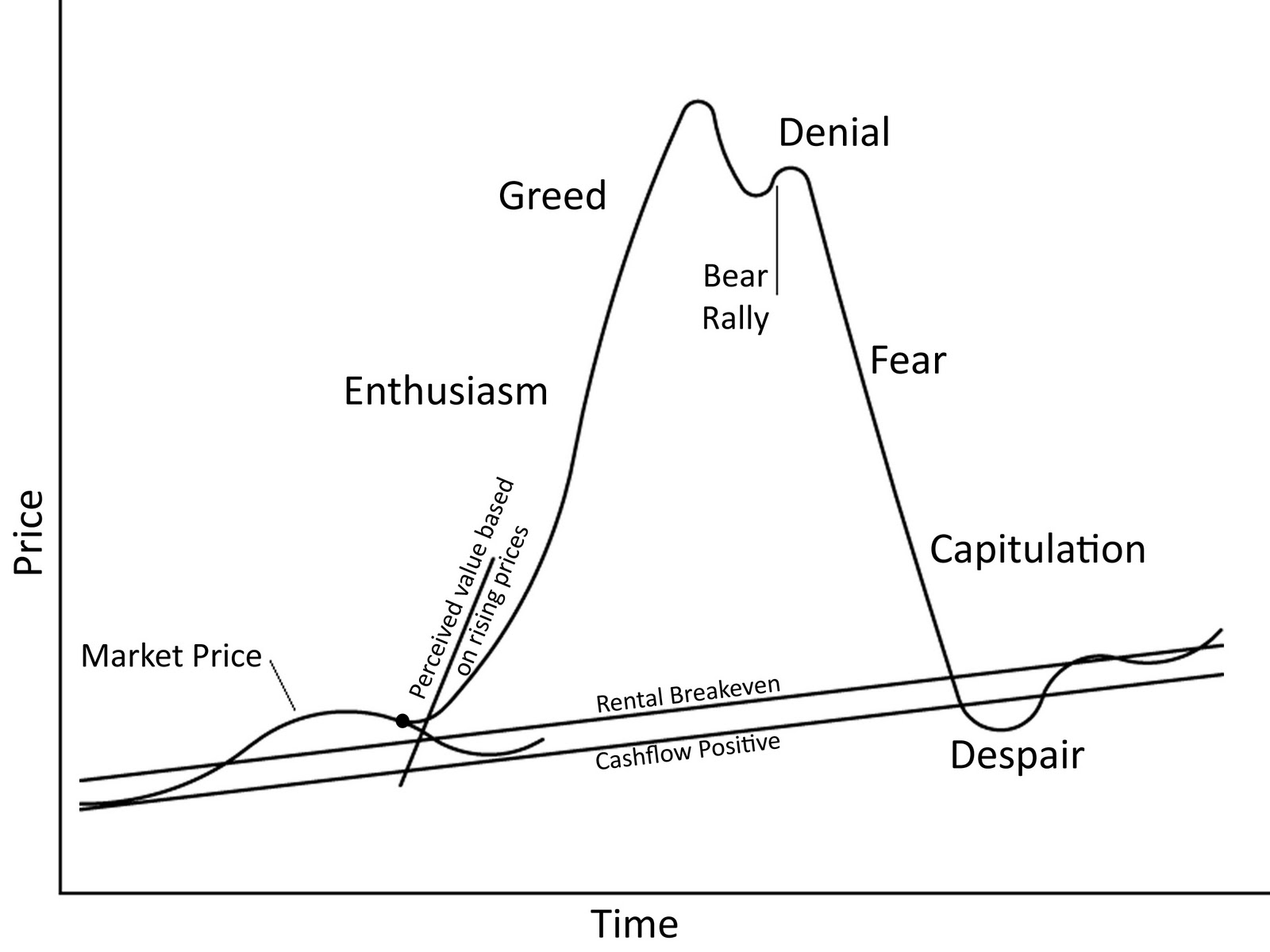 1. The “mother of all financial bubbles” will burst… but not before blowing up even bigger! Money manager and Vancouver Symposium favorite Barry Ritholtz recently bored himself silly with a spreadsheet: It showed a monthly survey of economists by Bloomberg going back to 2002, revealing their “expert” guesses about the 10-year Treasury yield over the following six months.
“In the history of finance,” Barry quips, “we cannot find a more one-sided opinion about a freely traded double-auction market.” Ninety-seven percent of the time a majority of economists predicted higher yields. On three occasions, including last May, the consensus was unanimous: The average forecast was for a yield of 2.4%. Oops… It turned out to be 1.7%. Just a little bit off.
The most recent survey? Ninety-four percent of economists surveyed expect higher rates by next May… and their average guess is 1.93%.
We’ll take the other side of that trade. Indeed, as we told the subscribers of Apogee Advisory last October, “We think the 30-year bull market has one more blowoff phase before the end. You need to act accordingly.”
Back then, the factor we cited was the pending demise of money market funds. We figured on a time horizon of three years. But now that we see such an overwhelming consensus for higher yields and lower prices, we’ll double down: We’ll see a Black Swan emerging early next year — another debt-ceiling crisis (even if the “fiscal cliff” issue is resolved) or more likely another euro-scare. Hot money will flood back into the “safety” of Treasuries. The 10-year yield will plunge below its 1.4% record set last July. It might even go all the way down to 1%.
But that would be the final blowoff that would signal the beginning of a major bear market in bonds. In other words, we think interest rates will rise substantially over the next few years…but not quite yet.
“At some point,” Barry says, “the bond bears are going to be right.” We’re confident that point will arrive before the end of the decade.
2. Boomers’ retirements are about to be crushed (again) in junk bonds and the wrong dividend stocks. First, they lost their shirts in the tech bust. Then they lost their pants in the housing bust. And in 2013, the baby boomer cohort is about to be stripped of its skivvies…thanks to the Fed’s zero-interest rate policy. Because intermediate-term Treasurys and CDs yield close to nothing, savers have been trying to get some yield on their savings wherever they can find it. In this context, junk bonds seem appealing. They offer yields that are at least greater than zero, which is why many investors have been flooding into the junk bond market.
Bad call.
Understand the Fed’s priorities: Saving and investing is their mortal enemy. “They want spending and speculating,” says our macro strategist Dan Amoss, “and are willing to risk the entire monetary system in the process.” Result: “Investors are taking foolish risks; they’ve bid up junk bonds and dividend stocks, pushing yields down in the process.”
If only investing were as simple as buying risky assets when interest rates are stuck at zero. Ask the average Japanese investor how that’s worked for them the last 20 years.
“The 2012 rallies in almost every stock and bond will not last,” declares Dan. “When investors bid up junk bonds and stocks in a zero interest rate environment, they are simply pulling future returns into the present.”
When interest rates start rising again, junk bond prices could plummet.
3. The World’s Fastest-Growing Economies in 2013: Forget the BRICs. If it’s emerging markets with explosive potential you’re looking for, the globe-trotting Chris Mayer has identified three. He’s visited all of them — the first two in 2012.
- Mongolia. “The story is very simple,” says Chris. “You have a tiny economy of just under 3 million people. And they are sitting on enormous reserves of natural resources. The top 10 deposits alone are worth an estimated $3 trillion. It’s a decade-long story. I think a good analogy is Kazakhstan, which is culturally similar — an old Soviet-style economy that opened up and created an enormous boom, thanks to resources. The stock exchange went up 2,400% in six years from 2002; apartment prices rose 800%-plus and land prices in Almaty rose 8,000%.”
- Myanmar, or if you prefer, Burma. “If I could put all of my money in Myanmar, I would,” says globe-trotter and Asia bull Jim Rogers. “Another great story,” says Chris. “Fifty years of isolation and dictatorial rule and it is finally starting to thaw. There is no reason why Myanmar can’t approach the development of its neighbors such as Thailand, given time, investment and a commitment to freer markets. I think it will be one of the fastest-growing economies in Asia…” Hard to invest there, but a great story to watch.
- United Arab Emirates. Chris concedes this one might come as a surprise. “The economy went through a giant bust, but its place as the money center for the Middle East is secure, thanks to low taxes, privacy protection and location. It has the region’s biggest marine port and airport and is home to the highest number of foreign businesses… Best of all, the market is cheap after an epic bubble, but the underlying economy is still growing rapidly.”
Check in tomorrow to see my final three provocative predictions! (Ed Note: Final 3 HERE)
Regards,
Addison Wiggin
for The Daily Reckoning
Addison Wiggin
Addison Wiggin is the executive publisher of Agora Financial, LLC, a fiercely independent economic forecasting and financial research firm. He’s the creator and editorial director of Agora Financial’s daily 5 Min. Forecast and editorial director of The Daily Reckoning. Wiggin is the founder of Agora Entertainment, executive producer and co-writer of I.O.U.S.A., which was nominated for the Grand Jury Prize at the 2008 Sundance Film Festival, the 2009 Critics Choice Award for Best Documentary Feature, and was also shortlisted for a 2009 Academy Award. He is the author of the companion book of the film I.O.U.S.A.and his second edition of The Demise of the Dollar… and Why it’s Even Better for Your Investments was just fully revised and updated. Wiggin is a three-time New York Times best-selling author whose work has been recognized by The New York Times Magazine, The Economist, Worth, The New York Times, The Washington Post as well as major network news programs. He also co-authored international bestsellers Financial Reckoning Day and Empire of Debt with Bill Bonner.

 The financial world is pretty exciting right now – the rapidly shifting investment landscape tends to draw and hold most people’s attention, but what is frequently forgotten is some basic – yet essential – big picture planning.
Imagine that you are three years away from retirement and contemplating a future move to a warmer climate for at least part of the year. Would a reasonable person hire a builder to construct their dream home without a basic blueprint? Would a prudent person look through a bunch of brochures of attractive show homes, agree to similar concepts scribbled on the back of a napkin, then sign over a small fortune to a salesperson? Unfortunately, this parallels the norm in today’s financial services industry.
When I first meet with clients, few have ever had a truly comprehensive Wealth Management Plan (WMP) prepared. Even fewer have a WMP that is updated regularly, and almost no one has an Investment Policy Statement. Investment accounts are often scattered around in different places with no sense of what the objectives are, and there is rarely a unifying strategy about how to get “there,” wherever that might be. In the vast majority of cases, even high net worth investors have entrusted their nest egg to one or more institutions without a comprehensive financial blueprint. This is a recipe for disaster.
Just a few of the MANY important reasons to have a holistic WMP created and maintained include:
- A greater sense of context for your family. How do world events really affect my financial life? How much capital do we really need to achieve or maintain financial independence?
- Lower anxiety levels regarding your long term security. Do you need to make 10 to 15% per year to retire when you had hoped, or will a steady 4 to 7% return from current levels keep your family “in the black?”
- A very clear understanding of your investment priorities. This should result in more appropriate initial investment recommendations, which should lay the groundwork for a mutually beneficial long-term professional relationship. It also makes you a more patient investor
A great WMP is essentially the synthesis of the technical and the human. The technical stuff is left-brained and the human is more right-brained. At the center of this should be your own unique, deeply personal Life Goals. Your Life Goals flow from your values, beliefs and priorities, and should become the unifying principles behind all of your major decisions. The process should be dynamic, candid, collaborative and flexible. It does NOT need to feel like “work” but it does require some effort.
A comprehensive WMP addresses all of the following areas that are relevant to your family situation:
- Financial Security – cash reserves, and group and personal life, disability, critical illness and long-term care insurance coverage
- Retirement Planning – location, lifestyle, volunteering, part-time paid work, etc
- Investment Management – protecting and growing your nest egg
- Tax Minimization – so you are paying only what is required under law
- Estate Planning – current Wills, Enduring Powers of Attorney and Personal Health Directives
- Planning for Aging and Health – aging beats the alternative, but planning in advance is essential
- Optimizing Business Values – growth, succession, disposition
- Debt Elimination – especially before interest rates escalate again
- Post-Secondary Education Funding – for children or grandchildren
In the introduction I also referred to an Investment Policy Statement (IPS). I’ll cover this in more detail in future, but an IPS is essentially a contract for how your capital will be invested. Most external IPS’s I’ve reviewed do NOT have a clearly articulated framework for managing risk, choosing to focus mostly on capturing upside opportunities. This is another recipe for disaster.
How important is your family’s financial security? Do you have a current and comprehensive Wealth Management Plan AND an Investment Policy Statement for your nest egg?
Cheers,
Andrew H. Ruhland, CFP, CPCA
President of Integrated Wealth Management Inc. and
Portfolio Strategist with ETF Capital Management

New research from The Real Asset Company finds that Q1 is the best time to watch the gold price make gains from month to month, which suggests the end of December or right at the beginning of the year are the times to get on the gold investment band-wagon.
Not “if” but “when” to invest in gold
According to World Gold Council data, it is estimated that in the UK alone 600,000 people will be looking to invest in gold, for the first time, over the next 12 months. So we thought we would try and give some helpful advice as to what to look out for in gold price action in 2013, based on the last 12 years.
We looked at the gold price action since 2000 and how it changed from month to month, hoping it would give us some indication as to when is best to invest in gold. We looked at the percentage change in the month end gold price, month to month, across three major currencies – the US dollar, the British pound and the euro.
We can see that there are some clear months when the gold price, on average, appears to perform weaker than other months.

From the graph above we see that across all currencies December, or the beginning of January, is most likely to be the best month to buy gold bullion, regardless of which of these currencies are chosen. On average the month-end gold price decreases by 0.4% compared to November, but increases by 2.5% and 2.1% in January and February respectively.
Months when we see the worst price performance are July and October, the only two months where there are simultaneous decreases in the gold price at month end across all currencies.
It is unsurprising that October is a bad month for gold (but a good month for gold investors); gold’s track record for the Halloween month is a bad one. For instance, between the mid-1970s and 2011, the London PM fixing price for October fell by 0.9% on average compared to a 0.6% gain in other months. This often blamed on the brutal behavior of stocks in the same month and the slowdown in gold buying before the Asian wedding season.
…….read more HERE

-
I know Mike is a very solid investor and respect his opinions very much. So if he says pay attention to this or that - I will.
~ Dale G.
-
I've started managing my own investments so view Michael's site as a one-stop shop from which to get information and perspectives.
~ Dave E.
-
Michael offers easy reading, honest, common sense information that anyone can use in a practical manner.
~ der_al.
-
A sane voice in a scrambled investment world.
~ Ed R.
Inside Edge Pro Contributors

Greg Weldon

Josef Schachter

Tyler Bollhorn

Ryan Irvine

Paul Beattie

Martin Straith

Patrick Ceresna

Mark Leibovit

James Thorne

Victor Adair