
Personal Finance
 It’s easy enough to focus on the smoldering ashes of the politically and economically insane move in Cyprus by the heavy-handed bureaucrats in Brussels and Germany.
Instead, I suggest we focus on the bright side, and there is plenty to be found.
- The nannycrats have been permanently exposed as liars
- Trust is gone
- Everyone can now clearly see that deposit guarantees were a lie
- Realization has set in that in spite of nannycrat denial, this will happen again
- The move in Cyprus will strengthen the Five Star Movement in Italy
- The move in Cyprus will embolden the separatists in Spain
- The move in Cyprus will strengthen UKIP in Great Britain
- The move in Cyprus is even likely to strengthen Alternative für Deutschland (AfD)
- Eurobonds and joint budgets are exposed as dead
- In Germany, Merkel is likely to have won a Pyrrhic victory (if indeed she won anything at all)
- Sensible people now realize all this talk of European solidarity is a gigantic lie
- Even ardent supporters of the eurozone are now starting to question its existence
That is one heck of a lot of good things for the bargain basement price of a mere €5.8 billion.
If Europe could not come together to scrape up a mere €5.8 billion to rescue tiny Cyprus, what exactly can they come up with? The answer of course is nothing.
Philosophically speaking, Northern and Southern Europe could not possibly be wider apart.
No Union, Only Dreams
There is no union, only foolish dreams of one. There is no solidarity, only talk.
Yet the talk has changed. I was wondering exactly what it would take to light a fire in Telegraphcolumnist Ambrose-Evans Pritchard and we now have the answer.
Pritchard says Daylight robbery in Cyprus will come to haunt EMU. But so have two-dozen others. What struck me was these paragraphs.
They [EU creditor States] have demonstrated that the rhetoric of EMU solidarity is just hot air, that they will not force their own taxpayers to share a single cent of clean-up costs for the great joint venture of monetary union.
The sooner this is made clear, the better. The sooner they take the proper course of withdrawing from EMU and organise the break-up the euro in the least disruptive way, the sooner Europe can recover.
America and China must crush Germany into submission
Please compare the above paragraphs with an article Pritchard wrote on November 9, 2011: America and China must crush Germany into submission
As we watch Italy’s 10-year bond yields near 7.5pc and threaten to detonate the explosive charge on €1.9 trillion of debt, it is time for the world to reimpose order.
Yes, this means mobilizing the full-firepower of the ECB – with a pledge to change EU Treaty law and the bank’s mandate – and perhaps some form of quantum leap towards a fiscal and debt union.
The EU Project has become both dangerous and insane.
Two days later, on November 11, 2011, I wrote a rebuttal: We Must Crush Ambrose Evans-Pritchard, Nouriel Roubini, Martin Wolf, the Army of Krugmanites into Submission; Reflections on “Dangerous and Insane”
Reflections on “Dangerous and Insane”
- What’s dangerous and insane is economists like Prichard demanding treaties be tossed to the wind to test poorly thought out economic ideas.
- What’s dangerous and insane is economic theory that says printing presses are the answer. It has never worked in history and will not work now.
- What’s dangerous and insane is more leverage. Didn’t Lehman and LTCM prove that? How many more times do we have to prove that before it sinks in?
- What’s dangerous and insane is the idea is that central banks can impose their will on the world.
- What’s dangerous and insane is doing the same damn thing over and over and over again hoping for a different result
- What’s dangerous and insane is the moral hazard policy of time-and-time-again forcing the 99% to bail out the 1%.
The world will not end if banks fail. Forcing the 1% (banks and bank bondholders) to take a hit will not cause the world to end either, nor will it cause lending to cease.
In my rebuttal, I also wrote “Widespread debt restructuring and partial break-up of the eurozone is where we are headed, and the debate ought to be how to do that correctly instead of how to achieve the impossible.”
As you can see, Pritchard finally has it correct. Given that he was one of the original eurosceptics, I knew he would eventually come around.
It’s one thing for eurosceptics to finally get back on the right track, but it’s another thing indeed for dyed in the wool euro supporters to begin questioning the euro itself.
Wolfgang Münchau, founder of Eurointelligence and columnist on the Financial Times is one such euro supporter.
The Failure of the Euro-Politicians
Please consider Münchau’s recent column on Der Spiegel Expropriation in Cyprus: The Failure of the Euro-politicians.
The euro finance ministers will partially expropriate bank customers in Cyprus. This decision is the worst accident in the monetary union. Anyone now trusting his savings to a southern-European bank must be pretty naive.
It was by far the most stupid and dangerous decision the politicians in the euro zone have made. Europe’s finance ministers have knitted the Cyprus package with hot needle – and triggered a fire storm.
The fatal mistake was to try to overturn deposit insurance for savers. What’s important is not the formal legal nature of the guarantee but its credibility in Cyprus and elsewhere. In the euro zone deposits are insured up to 100,000 euros. If now the government comes and says: we’ll take money by a property tax, then the trust is gone. This action constitutes theft.
When Tanks Are Needed
Reader Bernd translated the final two paragraphs as follows …
“Readers of my column know, that I have always defended the Euro, including the instruments (tools) needed to make it a success. However, there comes a point when it is no longer morally acceptable to uphold a currency if Governments and Parliaments do not have the will and the insight to manage it properly.
The day approaches when the Euro can only be defended with tanks. When that happens, the Euro will no longer be worth defending”
And so here we are, at long last, with ardent supporters finally questioning whether this experiment can work. The answer should now be obvious to all: it can’t.
So we finally need to do what I suggested long ago, start frank discussions on how to break up the eurozone in the least disruptive manner.
Wine Country Conference
I am hosting an economic conference on April 5 in Sonoma, California. Proceeds go to the Les Turner ALS Foundation (Lou Gehrig’s Disease).
Please see My Wife Joanne Has Passed Away; Stop and Smell the Lilacs for my association with the disease.
To learn about the economic conference with world-class speakers including John Hussman, Michael Pettis, Jim Chanos, John Mauldin, Mike “Mish” Shedlock, Chris Martenson with guest moderator Lauren Lyster and other Special Guests, please visit Wine Country Conference April 5, 2013

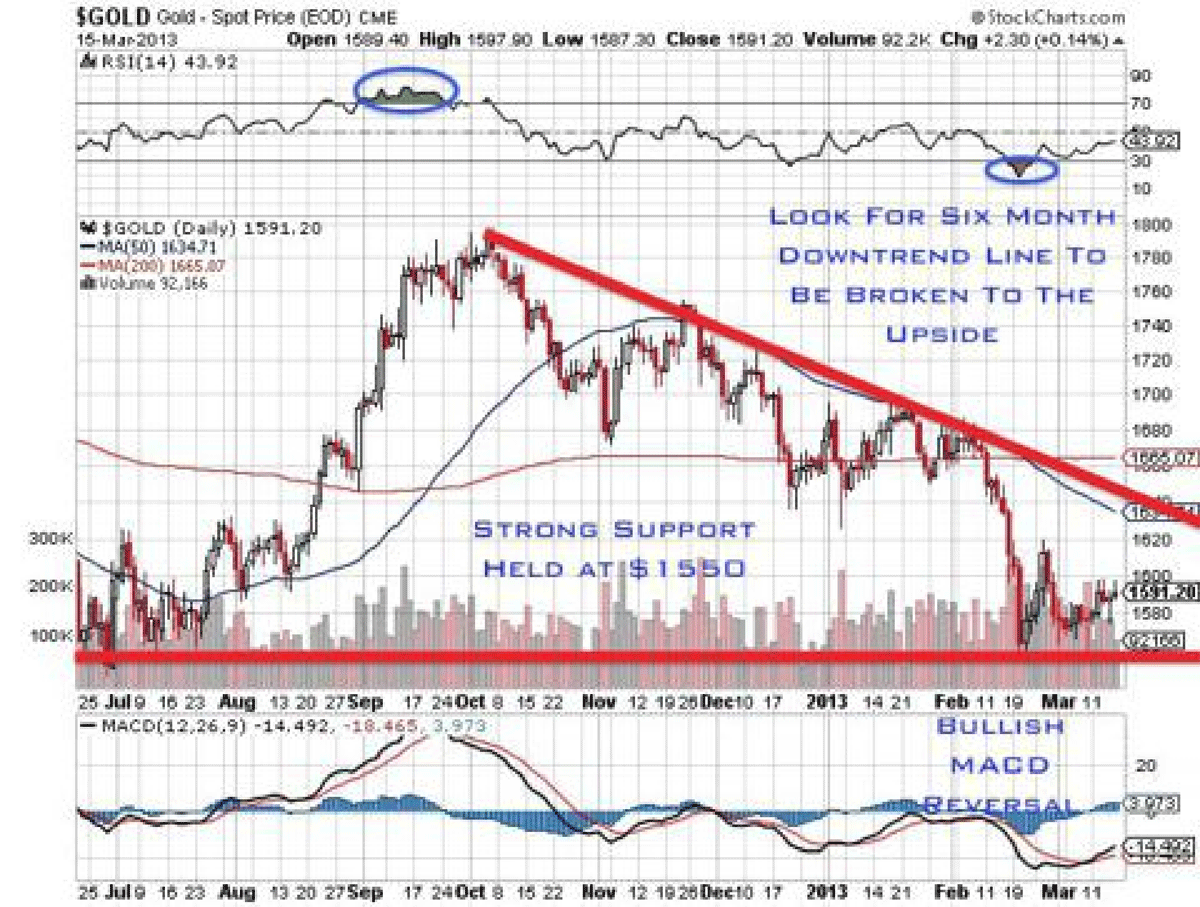
For weeks, I alerted you to a yen devaluation and warned that it may next turn into a Euro decline, which could then be followed by a U.S. greenback collapse. All of these global bailout attempts and now this levy on depositors in Cyprus could destabilize the European banking system and boost the discounted gold (GLD) and silver (SLV) prices.
In ancient Greece, farmers would plant crops based on prophecies from an oracle. Today investors look to spreadsheets and minute by minute charts to try to predict the future. Trying to be a prophet is an unprofitable occupation. The secret to wealth is buying wholesale, waiting and hopefully selling it retail. Gold (UGL) and silver (AGQ) should bounce off key support levels.
Chart below as of 8:14am PST March 19th:

…..read more HERE

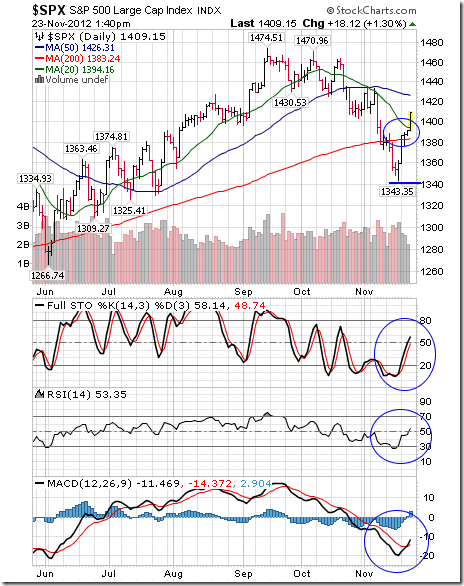
Selected sectors with favourable seasonality at this time of year remain attractive purchases candidates on weakness. The trigger could be additional weakness in the U.S. Dollar. If it happens, commodity stocks including metals & mining, energy, coal and steel stocks will continue to strengthen.
News that Cyprus was planning to tax bank deposits had an immediate impact on currency, commodity and equity markets around the world.
The Russian market was hit the most. Rich Russian investors are known to hold large deposits in Cyprus.

Strength in the U.S. Dollar Index following the news from Cyprus pressured copper prices.

The VIX Index spiked.
…….40 more Charts & Analysis HERE
Right now, I remain bearish most commodity markets. The reason being, they simply have not fulfilled a short-term cyclical test of support. So, more downside is possible in gold, silver, oil, and an assortment of other commodities.
In fact, I expect we’ll soon see gold break down and plunge well below the $1,500 level and head even lower … silver crater through $26 and drop to below $20 … and crude oil plunge to below $70.
We’ll see food prices also get creamed. Sugar, coffee, cocoa, corn, wheat, and soybeans. Just about every commodity under the sun is soon going to sink further.
That’s because we’re not in the next phase of inflation yet. Rather, we’re in temporary deflation.
Deflation brought about largely because the only money that is moving these days is coming out of sovereign bonds and going into equities … and because taxes all over the world are headed up, threatening to send the rest of the capital that’s out there into hiding, rather than into business formation or investment.
But there’s also no doubt in my mind that …
Another Inflationary Surge
Is Coming One Day
For one thing, nearly $4 trillion of printed money is sloshing around the global banking system. Money printed by the U.S. Federal Reserve … by the European Central Bank … by the Bank of Japan … and by the Bank of England.
That money is mainly still in commercial banks’ coffers. It was designed to bail them out. And that it did.
But because loan demand is still soft, the banks aren’t lending. They soon will, and that money — $4 trillion worth — is likely to run rampant through the global economy.
I know …
The Federal Reserve and the other central banks are largely following Ben Bernanke’s lead — and they all believe that when the time comes, they can reel that excess liquidity back in, and prevent it from running rampant through the global economy. Thereby snuffing out the next inflation surge.
 But in my opinion, there’s no way the central bankers are going to be able to reel that money back in, for two chief reasons:
1. Once the banks start to see an increase in loan demand — instead of hoarding the money, they’re going to use it to make a slew of new loans — which is how banks make most of their profits. And …
2. Believe it or not, the central banks don’t understand interest rates. They think that they can raise rates at the appropriate time and that higher rates will quell loan demand, thereby pulling liquidity out of the system.
That might be true in a more normal economy, but in today’s economy, it’s totally backward. Why?
Because rates are so low to begin with, as rates rise, it’s likely to have the opposite impact: Investors and consumers will begin to realize that rates are going up — and they are then going to want to buy more and borrow more.
In other words, as the central banks raise rates somewhere down the road, they’re going to see precisely the opposite of what they intended …
A Surge in Credit and Loan Demand!
I’ve been waiting for the first signs that interest rates are headed back up again, because before they really take off, I want to buy a second home back in the USA and mortgage it to the hilt with cheap, borrowed money.
There are a lot more investors out there just like me. Millions of them.
And when that anticipation of a long span of rising interest rates comes, the $4 trillion the central banks printed will run like crazy through the global economy, pushing up overall price levels.
So the questions then become … “When will it start?”
“How high could inflation go?”
“What sectors will be impacted the most and what can I do to protect the value of my money?”
And “Where can I make the most profits?”
My answers …
First, while no one can accurately nail down when the next inflation surge will begin, all of my indicators tell me that we should start to see general, across-the-board price rises toward the end of this year.
Second, I do NOT believe the U.S. economy will ever see hyperinflation as we saw in Weimar Germany, in Zimbabwe, and in a host of other countries like Brazil and Argentina.
Reason: From a global perspective, core economies never experience hyperinflation. Only the peripheral economies do. Even Rome didn’t collapse from hyperinflation.
Third, the sector that will respond almost immediately will be none other than the same sector that responded the most in the earlier wave of rising inflation: Commodities, tangible assets, natural resources.
But don’t kid yourself on equity markets. They too will rise, even more rapidly than they currently are, as inflation lifts equities.
Fourth, some of the biggest profits you’ll ever see in your lifetime will come from equities in the natural resource sector. Companies that leverage the power of the underlying commodities they explore for, refine, produce, sell and distribute.
But again, we are not there yet. Real inflation is not here yet and will NOT begin for several more months. Instead, deflation is still the major near-term threat.
So, as always, stay tuned …
Best wishes,
Larry
 Industrial demand for Silver to average 483 mn oz from 2012 to 2014 – SILVER INSTITUTE
“Silver helps make today’s interconnected lifestyle possible and is a vital component of virtually every automobile, cell and smartphone, computer and laptop, appliance and electronic device we use. Further, silver’s antibacterial properties are finding new uses in textiles, medical instruments and hospital equipment, providing an effective tool in combatting infection and bacteria.”
Industry’s widening use of silver is expected to average more than 483 million ounces (Moz.) from 2012 to 2014, a level 53 percent greater than the average annual industrial fabrication demand of 313.4 Moz from 1992-2001.
Speaking last week at the annual Prospectors & Developers Association of Canada convention in Toronto, Michael DiRienzo, Executive Director of the Silver Institute, said that demand for silver is broadening in many directions.
….read more HERE
Ed Note: Some older articles on Silver becoming Extinct:
According to the U.S. Geological Society: “Silver will be the first element in the periodic table that will become extinct.”

-
I know Mike is a very solid investor and respect his opinions very much. So if he says pay attention to this or that - I will.
~ Dale G.
-
I've started managing my own investments so view Michael's site as a one-stop shop from which to get information and perspectives.
~ Dave E.
-
Michael offers easy reading, honest, common sense information that anyone can use in a practical manner.
~ der_al.
-
A sane voice in a scrambled investment world.
~ Ed R.
Inside Edge Pro Contributors

Greg Weldon

Josef Schachter

Tyler Bollhorn

Ryan Irvine

Paul Beattie

Martin Straith

Patrick Ceresna

Mark Leibovit

James Thorne

Victor Adair