
Gold & Precious Metals

As a general rule, the most successful man in life is the man who has the best information
Commodity super-cycles are defined as decades long price movements in a wide range of commodities. Super-cycles differ from shorter term fluctuations in three ways:
- Super-cycles are demand driven because they follow world GDP
- Super-cycles span a much longer period of time with upswings of 10-35 years, taking 20-70 years to generate complete cycles
- Super-cycles are observed over a broad range of commodities, mostly inputs for industrial production and urban development of an emerging economy
According to DESA Working Paper No. 110 ‘Super-cycles of commodity prices since the mid-nineteenth century’ published February 2012 by Bilge Erten and José Antonio Ocampo there have been 3.5 non-fuel commodity super-cycles from 1894 to 2009:
(1) from 1894 to 1932, peaking in 1917. The first long cycle begins in late 1890s, peaks around World War I, and ends around 1930s, and shows strong upward and downward phases.
(2) from 1932 to 1971, peaking in 1951. The second takes off in 1930s, peaks during the post-war reconstruction of Europe, and fades away in mid 1960s. It shows a strong upward phase but a weak downward one.
(3) from 1971 to 1999. The early 1970s marks the beginning of the third cycle, which peaks around early 1970s and turns downward during mid 1970s and ends in late 1990s. This cycle shows a weak upward phase and a strong downward one.
(4) 2001 still ongoing. The post-2000 episode is the beginning of the latest cycle, which has shown a strong upward phase which does not seem to have been exhausted so far.

 The most recent boom (from 2001) in global economic growth or GDP, is unprecedented.
“Global growth performance has been attributed as the single most important driver of commodity markets, being most pronounced for metals.
The basic premise is that commodity prices and world GDP have a long-term relationship over time because the robust growth episodes in the world economy are accompanied by a rapid pace of industrialization and urbanization, which in turn require an increasing supply of primary commodities as inputs of production. However, there is often a lag between the investment in further commodity production and the actual results, which leads to price hikes in periods of strong world economic growth. As growth slows down and investment generates with a lag an increase in commodity supplies, the pressure on commodity prices eases. This hypothesis implies that the super-cycles in world output fluctuations generate corresponding super-cycles in real commodity prices.” DESA Working Paper No. 110

The real prices of energy and metals more than doubled from the lows of 1999 and late 2001/2002 to the high in 2008.
After suffering a severe correction in late 2008 (because of a global economic slowdown) and bottoming in early 2009 commodity prices started to recover – from the low in early 2009 commodity prices have been putting in higher highs and higher lows.
By comparing the charts above it’s obvious metals and agricultural have a long running integrated relationship with global GDP.
The phases and durations of previous super-cycles lead us to expect an upswing phase of between ten and thirty years. Being that we’re twelve years into this super-cycle is there more to come, or has supply caught up to a cooling global economy?
First let’s recap, commodity prices are dependent on:
- Demand side factors – the rapid pace of industrial development and urbanization in China, India, and other emerging economies
- Supply side factors – increasing costs due to resource depletion, resource nationalization, geo-political risk or lack of investment in capacity enhancement
To help us answer whether or not commodity price strength will continue we first turn to global growth predictions:
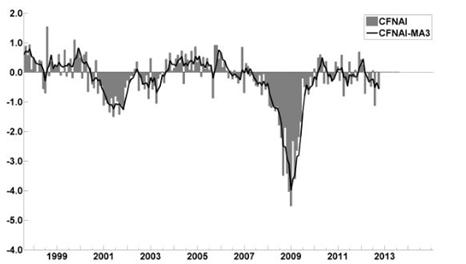


No one it seems is predicting a global no growth scenario. In fact, the prediction seems to be a call for average future global GDP to be at four percent with developing countries clocking in at a six percent average.
That’s a lot of continuing forward demand for commodities. Global demand seems to be well supported – economic growth in emerging economies will continue because of:
- Industrialization
- Urbanization
- Population growth
- Higher reserve price
“There is also the issue of the so-called reserve price (the highest price a buyer is willing to pay for a good or service). The reserve price places a cap on how high commodity prices will go, as it is the price at which demand destruction occurs (consumers are no longer willing or able to purchase the good or service).
For many commodities, such as oil, the reserve price is higher in emerging countries than in developed economies. One explanation for the difference is accelerating wage growth across developing regions, which is raising commodity demand, whereas stagnating wages in developed markets are causing the reserve price to decline. By implication, if nothing else, global energy, food, and mineral prices will continue to be buoyed by seemingly insatiable emerging-market demand, which commands much higher reserve prices.
Ultimately, emerging economies’ absolute size and rate of growth both matter in charting commodity demand and the future trajectory of global commodity prices, with per capita income clearly linked to consumers’ wealth. If people feel rich and enjoy growing wages and appreciating assets, they are less inclined to cannibalize other spending when commodity consumption becomes more expensive. They just pay more and carry on.” Dambisa Moyo, Commodities on the Rise
The facts are:
- Global economic growth is going to continue
- As long as developing countries commodity demand grows at a higher rate than global supply, prices will rise
- There will be no demand destruction in developing economies as prices rise
“Although it is perhaps difficult to believe at present, the third great economic super-cycle is underway. Since 2000, emerging market countries have been unlocking their growth potential and facilitating the catch up process. This will last until 2030 and will be commodity intensive throughout.” Neil Gregson, fund manager, JPM Natural Resources Fund
Supply-side challenges
There is a concern on the supply side, from the DESA Working Paper referenced above comes this cautionary note…
“As growth slows down and investment generates with a lag an increase in commodity supplies, the pressure on commodity prices eases.”
Now we get to the nut-crunching, the ‘rub’ as they say. Will the investments into ramping up commodity supply over the last ten or so years fill the gap, has supply caught up to demand?
As we’ve seen both demand and prices dropped temporarily but both demand and prices are quickly rebounding. That’s because, in addition to a continuing growing demand there are real deep seated structural issues on the supply side.
There are many serious concerns in regards to global metals extraction that we need to consider:
- Resource nationalism/Country risk, political instability of supplier
- A looming skills shortage
- Competition with Chinese mining investment, smaller areas open for exploration
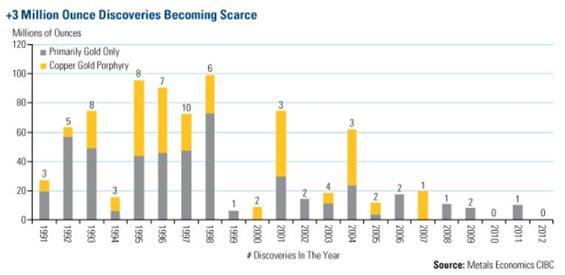
- Low hanging fruit – the high quality large deposits have already been found, lower economic attractiveness of new projects, cost inflation
- Supply bottlenecks for much needed and scarce equipment
- The manipulation of supplies ie speculation and concentrated ownership of LME stocks
- Rising capex/opex, lack of financing options, capital project execution
- Lack of innovation and technological advancements
- Declining open pit production, ongoing operational issues, declining grades at older mines, more complicated metallurgy
- Lack of recognition for population growth, growing middle class w/disposable incomes and urbanization as on-going demand growth factors
- Environmental group and labor risks, mining unrest – lack of a social license to operate, incredibly difficult and lengthy permitting processes
- Climate change, accidents and natural disasters
- Lack of infrastructure or poor infrastructure access, attacks on supply infrastructure
- Price and currency volatility
- Fraud and corruption
A Few Rising cost and Resource Nationalism Examples
Brazilian mining giant Vale SA is likely to cancel a $5.9 billion potash project, has put mining projects around the world on review and took a $5.66 billion write down on assets.
Chile’s Copper Commission (COCHILCO) stated that the country will be delaying 11 out of 45 copper and gold mining projects or US$38.9 billion out of the total US$104.3 billion worth of projects.
Chile is the world’s top copper producer but the country as a whole is woefully short of power. The country’s power generation capacity currently stands at 17,000 megawatts. It is estimated that the country will need at least 30,000 megawatts of power by 2020 to keep up with the demand, the increased demand coming primarily from mining projects. Unfortunately the government only plans to add 8,000 megawatts between now and 2020 and there is serious opposition to these plans from environmental groups who have, so far, been wildly successful by suspending several key projects and more than $22 billion worth of power investment. The Chilean Supreme Court recently struck down the planned 2,100-megawatt, $5 billion Castilla thermoelectric power plant project, citing environmental concerns.
Codelco, the Chilean state owned copper company, and the world’s largest copper miner with 20% of global copper reserves, said that their 2012 first half copper production fell 6.4% because of lower grades mined. Codelco’s direct cash costs increased 27% year-on-year mostly because of paying higher prices for electricity from the drought stricken SIC grid.
“On the demand side, new reactor construction continues in China and there are strong indications that additional plants will be coming back on line in Japan. On the supply side, about 24 million pounds of annual uranium supply will be removed from the market after 2013 with the end of the Russian highly enriched uranium agreement. We are also seeing new mine projects delayed or cancelled due to the prevailing uncertainty in our markets.” Tim Gitzel, Cameco president and CEO
Antofagasta announced in that it was dropping its Antucoya project because of a 20 percent jump in costs, primarily due to higher energy costs. Antucoya was to come online in 2014.
Resource nationalism is increasing – Xstrata Plc’s plans to create a $5.9 billion copper-gold project in the Philippines has been halted because of a mining reform bill. The almost $6 billion Tampakan mining project has had its start of operations delayed until 2019 because of the political cost of doing business in the Philippines.
Antofagasta’s Esperanza Sur project capex went from under US$3 billion to US$3.5 billion
Inmet’s Cobre Panama project capex climbed to US$6.2 billion from US$4.8 billion, that’s a capital intensity north of $15,000/t
Teck’s Quebrada Blanca’s capex is US$5.6 billion. The amount of money required to build Teck’s new, and very large copper mine in a difficult environment, corresponds to a US$28,000/t capital intensity.
Peru is the world’s second biggest producer of copper and silver. At least 135 projects worth $7.5 billion have been delayed because of social unrest, mining investment in the country is expected to fall 33 percent in 2013 because of the unrest.
Barrick Gold, the world’s biggest gold miner, says its capital costs to develop a giant gold mine high in the Andes could reach $8 billion dollars and has delayed production. Barrick has lowered its copper production outlook for 2013 due to permitting delays at its Jabal Sayid project in Saudi Arabia.
Labor costs jumped 54 percent on a per hour basis in Argentina in 2012.
“In 2014, substantially all the mine production growth will come from new greenfield projects and these are subject to higher risk of production shortfall. New production from Africa, where infrastructure is less developed, also faces higher risk of shortfall particularly from power disruption.” FitchRatings, Base Metals Update
Vale’s New Caledonia (Goro) is many years behind schedule. The Goro nickel project in New Caledonia has become the bad boy poster child for the assortment of problems associated with HPAL technology. Minority partners Sumitomo and Mitsui have reduced their participation in the project.
Zambia is Africa’s largest copper producer (and wants to directly market its copper), in second place is the DRC, the world’s largest cobalt producer. The copper-belt which straddles Zambia’s and the Democratic Republic of the Congo’s borders is being tied up for internal development by the two countries. The DRC and Zambia are amending their mining codes to enable the government to raise taxes and implement a 35-percent minimum ownership threshold for state shareholding in projects.
“The spectre of resource insecurity has come back with a vengeance. The world is undergoing a period of intensified resource stress, driven in part by the scale and speed of demand growth from emerging economies and a decade of tight commodity markets. Poorly designed and short-sighted policies are also making things worse, not better. Whether or not resources are actually running out, the outlook is one of supply disruptions, volatile prices, accelerated environmental degradation and rising political tensions over resource access.”Chatham House, Resources Futures
Conclusion
There’s good news and bad news. First the bad news, consumers are going to be paying more for their very basics of survival because of a continuing price rise, across the board, in commodities.
The good news is you are being presented with an opportunity to get into commodity investing ahead of the herd. There are compelling reasons, and likely profitable ones, for an investment into commodities via junior resource companies at their current lows.
The two facts you need to have on your radar screen to be ahead of the herd are one, the world’s developing economies still have a lot of commodity intensive growth ahead and two, the best leverage to rising commodity prices has historically been investments into quality junior resource companies.
Are these two facts on your radar screen? If not, maybe they should be.
Richard (Rick) Mills
Richard is the owner of Aheadoftheherd.com and invests in the junior resource/bio-tech sectors. His articles have been published on over 400 websites, including:
WallStreetJournal, USAToday, NationalPost, Lewrockwell, MontrealGazette, VancouverSun, CBSnews, HuffingtonPost, Londonthenews, Wealthwire, CalgaryHerald, Forbes, Dallasnews, SGTReport, Vantagewire, Indiatimes, ninemsn, ibtimes and the Association of Mining Analysts.
If you’re interested in learning more about the junior resource and bio-med sectors, and quality individual company’s within these sectors, please come and visit us atwww.aheadoftheherd.com
***
Legal Notice / Disclaimer
This document is not and should not be construed as an offer to sell or the solicitation of an offer to purchase or subscribe for any investment.
Richard Mills has based this document on information obtained from sources he believes to be reliable but which has not been independently verified.
Richard Mills makes no guarantee, representation or warranty and accepts no responsibility or liability as to its accuracy or completeness. Expressions of opinion are those of Richard Mills only and are subject to change without notice. Richard Mills assumes no warranty, liability or guarantee for the current relevance, correctness or completeness of any information provided within this Report and will not be held liable for the consequence of reliance upon any opinion or statement contained herein or any omission.
Furthermore, I, Richard Mills, assume no liability for any direct or indirect loss or damage or, in particular, for lost profit, which you may incur as a result of the use and existence of the information provided within this Report.

“Can you by legislation add one farthing to the wealth of the country?” The great classical-liberal thinker Richard Cobden asked the House of Commons on Feb. 27, 1846.
The Argentines think so. So do the Europeans. And of course, the Americans.
But first let us continue with Cobden’s remarks:
“You may, by legislation, in one evening, destroy the fruits and accumulations of a century of labour; but I defy you to show me how, by the legislation of this House, you can add one farthing to the wealth of the country.”
Two news items yesterday reminded us how vain and treacherous the politicians can be.
Uh Oh!
First, from the Argentine press came a story with the following headline: “Kirchner Government to Tighten Capital Controls.”
Uh oh! It’s already a pain in the neck to try to keep the lights on south of the Rio de la Plata. If you move money into the country officially, you will take about a beating. Officially, the exchange rate is under six pesos to the dollar. But guys will come up to you on the street and offer you eight pesos to the dollar — and more.
In Salta, for example, you pull up in front of a bank at the corner of the central square. You beckon to one of the many money changers standing on the sidewalk. You don’t get out of your car.
“How much do you want,” he asks.
“I want to change $1,000,” you reply.
“Then, I’ll give you eight.”
“No thanks,” you say… shooing him away.
“Alright, 8.1.”
“OK… we have a deal.”
You count out your money and go on your way. No standing in line. No need for photo IDs. Cash and carry. Remarkably efficient. As long as you stay in the black market. You can spend your money, no problem.
But try to do business in an aboveboard way and you will quickly be caught in a trap. The government is running out of dollars. It tries to force you to give up dollars at less than the market rate.
Already, these controls have driven many imported products off the market completely. And now, with even stricter controls coming, it’s going to get even tougher.
But what would you expect from Argentina? Is there any foot in the Argentina banking system that isn’t missing at least a couple of toes? Give them a super-stupid policy “gun,” and they will aim for their feet.
The Turning of the Screw
Europe is a different matter. Or so we thought. More sophisticated. More subtle. More careful. Run by German bankers with memories that stretch all the way back to the Weimar debacle of the 1920s.
But here’s another story from yesterday’s news. You’ll see that Europe is thinking of imposing the same capital control policies that are hobbling the Argentine economy. From Reuters:
Eurozone finance officials acknowledged being “in a mess” over Cyprus during a conference call on Wednesday and discussed imposing capital controls to insulate the region from a possible collapse of the Cypriot economy.
In detailed notes of the call seen by Reuters, one official described emotions as running “very high,” making it difficult to come up with rational solutions, and referred to “open talk in regards of (Cyprus) leaving the eurozone.”
“Some additional laws need to be passed. Overall we are in a very difficult situation,” the official said, according to the notes. “(We’re) trying to do everything within the powers to limit any unauthorised outflows.”
We hope you are paying attention, dear reader. The euro feds are talking about passing laws to stop “unauthorized” outflows. In other words, they will make it illegal for you to put your money where you want. You will need their permission to move it. They want it right where they can get it… if they need it.
They think they can pass laws and add to the wealth of the nation — or at least parts of it. And it won’t be too long before Americans join in. They’re already robbing savers with ultra-low interest rates. And the U.S. has already passed laws to make it difficult to keep funds in foreign bank accounts.
As their financial problems mount, the feds will turn the screws harder — just like the Europeans and the Argentines.
Regards,
Bill

Bill Bonner started Diary of a Rogue Economist to share his over 30 years of economics and market experience with as many interested readers as possible.
Diary of a Rogue Economist is always free, and it’s delivered to your email each business day.
What Planet Are These U.S. Congressmen On?
REVEALED: Straight FACTS on the Most Lurid… Stomach-Churning… and Un-American Behavior Seen in the “Corridors of Corruption” since Watergate Brought Our Nation to Its Knees.
Outrageous? Yes. But profitable too. Here’s the entire exposé on this sordid and breaking affair…
Like Bill’s Diary?
Republish our articles on your website or blog for free. Learn How
Have a question for our editorial team?
Contact Us
“The central banks’ gold is likely gone, and the bullion banks that sold it have no realistic chance of getting it back” Eric Sprott tells us.
He also says that these “bullion bank” intermediaries are probably turning around and selling their gold to China.
China, by the way, is the mostly likely catalyst to set off the “zero hour” scenario we told you about on Friday…
We’ve chronicled China’s ongoing gold grab here at Agora Financial — going all the way back to April 24, 2009, when the People’s Bank of China announced its gold reserves had grown to 1,054 tonnes — up from 600 in 2003. And that’s the last official word.
Then there’s private-sector demand in China. The government is equally opaque on this score. But we do get regular figures on Chinese imports via Hong Kong. Last year, they totaled a staggering 834.5 tonnes. And remember, that’s in a market that produces only 3,700 tonnes a year!
Couple those imports with Chinese mine production — and the total amount of gold known to be inside China has doubled in a mere three years.

Then there are the voluminous statements by Chinese public officials best taken at face value…
- China’s gold reserve is “too small,” says the Department of International Economic Affairs of Ministry
- “No asset is safe now,” says the head of the People’s Bank of China’s research bureau. “The only choice to hedge risks is to hold hard currency — gold”
- And maybe most telling for our purposes: “The U.S. and Europe have always suppressed the rising price of gold,” according to a commentary in the Shijie Xinwenbao newspaper, duly noted by U.S. diplomats in cables exposed by WikiLeaks.
Echoing a theme we first wrote about in The Demise of the Dollar (John Wiley & Sons, 2005), “suppressing the price of gold,” the article went on, “is very beneficial for the U.S. in maintaining the U.S. dollar’s role as the international reserve currency. China’s increased gold reserves will thus act as a model and lead other countries toward reserving more gold. Large gold reserves are also beneficial in promoting the internationalization of the renminbi.”
The plot thickens: “In 2009,” says our own Outstanding Investments editor Byron King, “a high-ranking government adviser let slip that a special government task force recommended increasing China’s gold reserves to a staggering 10,000 tonnes.” What’s more, “word is already starting to leak out in Chinese newspapers that government officials intend to make the renminbi ‘fully convertible’ by 2015” — that is, able to be freely exchanged for other currencies.
Put it all together and the picture becomes clear: China aims to grow its gold stash tenfold to bolster the renminbi’s credibility in only two more years.
We come back to Mr. Sprott’s question: “So where’s the gold coming from?”
Germany Has to Wait 7 Years for Its Gold… Make Sure You Have Yours Now
In January, Germany’s central bank posed the same question. It made plans to repatriate much of its gold stash — heretofore kept in France and America, the better to keep it out of the Soviets’ hands in case the Cold War ever turned hot.
The process of moving 674 tonnes back to Germany is scheduled to take… seven years.
Not the sort of time frame that should make you feel warm and fuzzy about how much of the U.S. and French reserves are actual gold — or “gold receivables.”
Which brings us back to zero hour in the gold market. On any given day, the amount of physical gold that’s traded around the world is dwarfed by “paper gold” — mostly futures. In the estimation of experts like our friend Egon von Greyerz of Gold Switzerland and Hong Kong-based hedge fund manager William Kaye, the ratio is 100-to-1.
Up until now, the ratio has posed no problem. Most people trading gold futures are in it for a short-term gain. But a few people always want to take delivery of actual metal. At zero hour, “what happens is someday some guy or country wants to buy gold, and it’s not going to be available,” says Eric Sprott.
The Comex can’t deliver… and offers up a cash settlement instead.
“When does the last bar disappear and somebody fess up? We trade all this paper gold, but we now know there’s nothing behind it, because you can’t get delivery.” The timing is impossible to pinpoint… but “we’re living sort of hand to mouth already,” Sprott warns. “So it could be quite imminent.”
When the day arrives, you don’t want to be holding paper gold — and that includes exchange-traded funds like GLD. As we’ve pointed out before, the ETFs are subject to “counterparty risk” — the risk that whomever you’re doing business with won’t, or can’t, live up to their promises. Just like futures.
When zero hour comes, GLD’s price will do what it’s always done — track the Comex price of gold. Meanwhile, real physical gold in your possession will break away from that price… and you’ll be glad you have it.
While Mr. Sprott hesitates to put numbers to his forecast, we can perform a little napkin math. If the Comex price is $1,800, experience from 2008-09 shows that a Gold Eagle on eBay might go for a 30% premium — that’s $2,340! If panic takes over the Comex and the price rises to $2,000, real metal in your hand will be worth $2,600.
As the old commercial said, “Accept no substitutes.” Own physical gold.
Regards,
Addison Wiggin
Original article posted on Daily Resource Hunter
About Addison Wiggin
Addison Wiggin is the executive publisher of Agora Financial, LLC, a fiercely independent economic forecasting and financial research firm. He’s the creator and editorial director of Agora Financial’s daily 5 Min. Forecast and editorial director of The Daily Reckoning. Wiggin is the founder of Agora Entertainment, executive producer and co-writer of I.O.U.S.A., which was nominated for the Grand Jury Prize at the 2008 Sundance Film Festival, the 2009 Critics Choice Award for Best Documentary Feature, and was also shortlisted for a 2009 Academy Award. He is the author of the companion book of the film I.O.U.S.A.and his second edition of The Demise of the Dollar… and Why it’s Even Better for Your Investments was just fully revised and updated. Wiggin is a three-time New York Times best-selling author whose work has been recognized by The New York Times Magazine, The Economist, Worth, The New York Times, The Washington Post as well as major network news programs. He also co-authored international bestsellers Financial Reckoning Day and Empire of Debt with Bill Bonner.


-
I know Mike is a very solid investor and respect his opinions very much. So if he says pay attention to this or that - I will.
~ Dale G.
-
I've started managing my own investments so view Michael's site as a one-stop shop from which to get information and perspectives.
~ Dave E.
-
Michael offers easy reading, honest, common sense information that anyone can use in a practical manner.
~ der_al.
-
A sane voice in a scrambled investment world.
~ Ed R.
Inside Edge Pro Contributors

Greg Weldon

Josef Schachter

Tyler Bollhorn

Ryan Irvine

Paul Beattie

Martin Straith

Patrick Ceresna

Mark Leibovit

James Thorne

Victor Adair