


“The Uncertainty is Much Higher Than in The Past”
Gold & Precious Metals
 ….and Friday’s Job Report provides more bullish fuel to the “Golden Race Car!”
- Recently, many bullish gold analysts have started questioning their own theory that money printing causes inflation.
- Commodity prices have fallen, despite accelerated QE. I would argue that money printing does cause inflation, but only if what is printed overwhelms the assets that are destroyed, in global markets.
- The Fed continues to buy billions of dollars of illiquid and arguably-worthless OTC derivatives each month, with printed money. If the Fed printed more money than what is required to purchase those assets, inflation would likely be much higher than what it is now. So far, that’s not happening.
- Quantitative easing is not the same thing as just printing money and pushing it into the banking system.
- The inventory of marked-to-model OTC derivatives held by commercial banks is gigantic, so it could be many years before serious “cost push” inflation envelops America.
- The Fed believes in a business cycle that lasts for about 8 years. The last cycle probably ended in 2007, which means that the current upswing could continue to about 2015.
- From 2015 onwards, the Fed is likely to become much more dovish than they already are, in an attempt to counter a likely downturn in the business cycle.
- The actions of global central banks, in the 2015-2022 timeframe, are likely to usher in cost push inflation. Clearly, investing in gold requires lots of patience!
- Please click here now. You are looking at my monthly “big picture” HUI chart. I’ve lighted the price zones where gold offers value with blue HSR (horizontal support & resistance) lines.
- Also, note the action of the Stochastics indicator. I call this situation, “Close, but no cigar!” A crossover buy signal for long term investors has not yet been generated, but it’s very close.
- Many bank economists and technical analysts are stating that the current gold rally will fail, and gold will break the lows near $1320. It’s hard to know how such a decline would affect gold stocks, but I doubt it would be a positive experience for investors.
- Put options are like fire insurance; nobody likes to pay the premiums, but if there is a really serious fire, you’ll be glad you bought them.
- If you are afraid that gold could fall and break the $1320 area lows, you may want to consider looking into this type of insurance policy, for your portfolio.
- Cash is another form of insurance. The gold market is probably many years away from offering a “back up the truck” type of market to investors.
- I wouldn’t be overly concerned about drawdowns (gold is a high quality asset), but some cash should be kept on hand, so you can buy more gold if it goes surprisingly lower.
- In the short term, gold stocks are grinding higher, but volume is a big concern. Please click here now. That’s the GDX daily chart. Some technical analysts see a bearish flag pattern in play.
- On up days, volume has been stronger than on down days, but the overall pattern is one of declining volume, and that’s bearish.
- My “stokeillator” is highlighted at the bottom of the chart. It suggests that even if gold stocks are “doomed” to make fresh lows, the rally could continue further.
- Please click here now. This chart provides a closer look at GDX, using 2 hour bars.
- Note the top of the price gap at about $32. If you were able to buy some stock at lower prices, I would book some profit at $31.90, $33.50, and $35.25.
- Many physical metal enthusiasts have noted the enormous surge in demand in Asia and at mints around the world, but most bank analysts are projecting lower prices.
- I think gold needs to consistently trade above $1500 to put some real fear into the bears. So far, that hasn’t happened.
- From the $1590 area highs, gold fell about $270, to the $1320 zone. It’s retraced about 60% of that decline now, and Fibonacci traders are probably quite aggressive sellers in the $1480-$1500 area. I suggest very light selling now, and more between $1500 and $1550, if we get there.
- Gold probably can get over $1500 on this move, but only if both the FOMC meet and Friday’s job reports provide more bullish fuel to the “golden race car”!
Special Offer For Website Readers: Please send me an Email tofreereports4@gracelandupdates.com and I’ll send you my free “What’s Up With The Phizz?”report. I discuss why the gold price is stagnant while buyers in Asia line up to buy, and the tactics to use to profit from this bizarre market!
Thanks!
Cheers
St
Note: We are privacy oriented. We accept cheques. And credit cards thru PayPal only on our website. For your protection. We don’t see your credit card information. Only PayPal does. They pay us. Minus their fee. PayPal is a highly reputable company. Owned by Ebay. With about 160 million accounts worldwide.
Written between 4am-7am. 5-6 issues per week. Emailed at aprox 9am daily.

STOCKS: The Dow was down over 80 in the early going, but as has happened so often lately, the buying came in and continued into the close. As long as this continues, there is no reason to change our investment posture.
DOW + 21 on 850 net advances
NASDAQ COMP + 22 on 400 net advances
SHORT TERM TREND Bullish
INTERMEDIATE TERM TREND Bullish
GOLD: Gold pushed up still again, probably aided by a weak greenback. It has now been higher 8 of the last 11 days.
CHART: The Dow is well into record territory as it has solidly eclipsed the old highs set back in mid to late 2007. However, we need pay attention here. We’re entering a weak seasonal period and five month RSI is very overbought (arrow).

TORONTO EXCHANGE: Toronto rose a whopping 144.
S&P\TSX Venture Comp: The Venture Comp gained 1.
GOLD: gold was up $8.
BONDS: Bonds gave a little more ground.
THE REST: The dollar was down sharply and this helped silver and gold. However, copper and crude were lower.
BOTTOM LINE:
Our intermediate term systems are on a buy signal.
System 2 traders Are in cash. Stay there on Wed.
System 7 traders We are long the SPY from 156.50. Stay with it on Wednesday.
Stock investors We are long Intel from 21.61. Stay with it for now.
NEWS AND FUNDAMENTALS:
Chicago PMI came in at 49.0, worse than the expected 52.4. The Case Shiller home price index rose 1.2%, more than the consensus 1.0%. Consumer confidence came in at 68.1, better than last month’s 61.9. On Wednesday we get the ADP employment report, the PMI manufacturing index, the ISM manufacturing index, construction spending and the FOMC announcement.
————————————————————————————
We’re on a buy for bonds as of April 18.
We’re on a sell for the dollar and a buy for the euro as of April 9.
We’re on a buy for gold as of April 22.
We’re on a buy for silver as of April 25.
We’re on a buy for crude oil as of April 22.
We’re on a buy for copper as of April 25.
We’re on a buy for the Toronto Stock exchange TSX as of April 24.
We are on a sell for the S&P\TSX Venture Comp. as of Jan. 29.
We are long term bullish for all major world markets, including those of the U.S., Britain, Canada, Germany, France and Japan.

INDICATOR PARAMETERS
Monetary conditions (+2 means the Fed is actively dropping rates; +1 means a bias toward easing. 0 means neutral, -1 means a bias toward tightening, -2 means actively raising rates). RSI (30 or below is oversold, 80 or above is overbought). McClellan Oscillator ( minus 100 is oversold. Plus 100 is overbought). Composite Gauge (5 or below is negative, 13 or above is positive). Composite Gauge five day m.a. (8.0 or below is overbought. 13.0 or above is oversold). CBOE Put Call Ratio ( Below .80 is a negative. Above 1.00 is a positive). Volatility Index, VIX (low teens bearish, high twenties bullish), VIX % single day change. + 5 or greater bullish. -5 or less, bearish. VIX % change 5 day m.a. +3.0 or above bullish, -3.0 or below, bearish. Advances minus declines three day m.a.( +500 is bearish. – 500 is bullish). Supply Demand 5 day m.a. (.45 or below is a positive. .80 or above is a negative).
No guarantees are made. Traders can and do lose money. The publisher may take positions in recommended securities.
TODD MARKET FORECAST: Stock Market, Gold and Bond Advice
RANKED # 1 BY TIMER DIGEST
Timer Digest of Greenwich, CT monitors and ranks over 100 of the nation’s best known stock market advisory services.
Once per year in January, Timer Digest publishes the rankings of all services monitored for multiple time frames.
For the years 2003, 2004 and 2005, The Todd Market Forecast was rated # 1 for the preceding ten years. For the year 2006, we slipped to # 3 and in 2007, we were ranked # 5.
Our bond timing was rated # 1 for the years 1997, 2007 and 2008.
Gold timing was rated # 1 for 1997 and # 2 for 2006. Late word! We were rated # 1 for 2011.
We were # 1 in long term stock market timing for the years 1998 and 2004 and # 4 in 2010.
To subscribe go to Contact Us.

Marc Faber: He see’s stocks falling at least by 20%. Says the he believes Obama is a disaster for business and the United States as a whole. . – in Bloomberg TV:
The Uncertainty is much Higher than in the Past
Marc Faber : I can say one thing that today the uncertainty is much higher than in the past. We continue to have central banks running the expansionary policies in terms of fiscal and monetary stimulation, which has led to the asset price inflation. This creates very high uncertainty because you do not know how much more money will be printed in the US. Uncertainty arises because of these reasons. The interventionists want to stimulate the economies by manipulating the markets, particularly interest rates. They are creating higher economic and financial volatility than in the past. – in rediff
Marc Faber : We may have a total Collapse in Confidence in the System
Marc Faber : “The next crisis could lead to a deflationary bust. And a bust in governments. In other words, we may have a total collapse in confidence in the system.” – in a recent interview with cnbc
Marc Faber : Central Banks are Buying Bonds to Manipulate asset Markets and bring Interest Rates down
Marc Faber : Central banks are buying bonds to manipulate asset markets and bring interest rates down. Essentially the quantitative easing policy is supposed to be independent. Actually, it’s closely related to fiscal policy. In a sense, these programmes and the monetisation are designed to purchase government bonds. Indirectly, these central banks, which have large fiscal deficit, are monetising the deficits and piling up more debts. With these measures, they are postponing the problems rather than curbing them. In this process, the debt levels will only go up and certainly the sovereign rating of the US debt will come down at some point in time. – in rediff
Marc Faber’s Short Biography

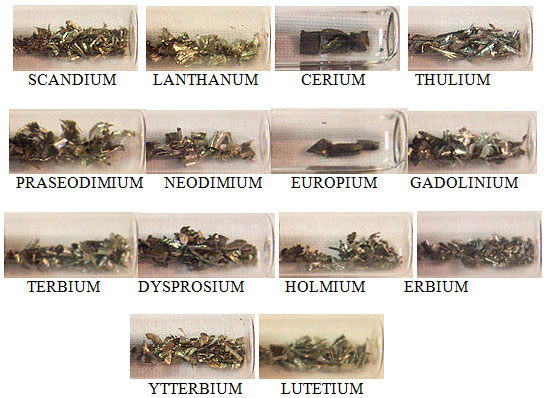
Rare earth elements are a crucial component of our everyday lives, but many of the companies unearthing them are still learning to navigate the supply chain. Those that can master the dance of metallurgy and end-user relationships will find success, says Luisa Moreno, a senior research analyst with Euro Pacific in Toronto. In this interview with The Metals Report, Moreno updates us on which miners are making the most progress.
COMPANIES MENTIONED : AVALON RARE METALS INC. : FRONTIER RARE EARTHS LTD. : GREAT WESTERN MINERALS GROUP LTD. : LYNAS CORP. : MATAMEC EXPLORATIONS INC. : MOLYCORP INC. : MONTERO MINING AND EXPLORATION LTD. :ORBITE ALUMINAE INC. : TASMAN METALS LTD. : UCORE RARE METALS INC. : VEOLIA ENVIRONNEMENT
The Metals Report: Luisa, where does the rare earth elements (REE) space stand now?
Luisa Moreno: This space has been a learning experience for all of us, and by “us” I don’t just mean analysts, but investors, companies, management and end-users.
In the beginning, we realized that some elements are less common than others and we all became very excited with the idea of finding deposits that were rich in heavy rare earth elements (HREEs). But it’s harder to develop these projects; hopefully some of them will be developed fast enough to show end-users that the sustainable supply of these elements is possible. The challenges have been around the metallurgy and that’s where we stand right now. We have a few frontrunners that have made progress with their metallurgy and we continue to learn more about the economics.
TMR: So, every HREE project out there has warts; it’s just a matter of finding the one with the least warts?
LM: You could say that. Each company in this space has a challenge. The key is to find a company with a team that has the potential to overcome its challenges to reach success. It’s very hard to know which few companies will make it first, but there are good teams working toward that.
TMR: Some countries and end-users have built up REE stockpiles. How does that impact the space?
LM: It’s basically keeping end-users away from the market, as long as they have stockpiles. Some stockpile to avoid high prices. As prices fall to levels that make economic sense to them, they return to the market. In the meantime, there is weak demand and falling prices that send a negative signal to the space. Potential investors may be discouraged when they see such weak demand. However, it was a necessary event. Prices were not economic for some end-users and needed to fall to a more sustainable level.
TMR: When do you believe demand will return?
LM: We’re probably 6–12 months away from seeing demand come back.
TMR: You expect production of total rare earth oxides to return to about 140,000 tons in 2015. What’s significant about that number?
LM: Just before prices began to sink, the total rare earth production, including yttrium in 2010 for instance, was about 140,000 tons, according to the U.S. Geological Survey. If production reaches those levels again, spurred by demand, it could mean that the market is normalizing.
TMR: You’re predicting a dramatic increase in rare earth element production in 2014. What accounts for that jump?
LM: It’s based on production from Molycorp Inc. (MCP:NYSE) and Lynas Corp. (LYC:ASX). They’re working to ramp up production and plan to reach their targets before the end of this year. My forecast is that they will both be at full production next year.
TMR: Chinese authorities note that 10,000–20,000 tons of rare earth oxides are sold illegally each year. What’s your best guess as to how this is affecting publicly traded REE companies?
LM: As long as there is illegal production and exports at those levels, we could conclude that the Chinese are not successfully controlling exports and their production or the producers in their country. My understanding is that some of these are small operations, but they add up. They could be artisanal mines that are not very safe, that operate with poor health, safety and environmental conditions. Even if China is able to enforce all these regulations, it is still likely to remain a lower-cost producer.
TMR: You suggest that there could be a shortage of HREEs until 2016, when a couple of different mines come online. You also forecast that the price per kilogram (kg) of nearly all the rare earths will be heading lower until then, with one exception: dysprosium.
LM: I believe prices will continue to fall. New mines at Molycorp and Lynas coming into production will put pressure on prices of the most common light elements: lanthanum, cerium and even neodymium. Less common elements, such as dysprosium, europium and terbium, will experience less price pressure, I believe.
TMR: What’s the path toward investors making money in this market?
LM: The challenge for investors is to find the ones that will make it. They should watch the frontrunners very closely, but adopt a basket approach. Some companies are very close to a definitive feasibility study but might face delays. Others that started later might have a simple metallurgy and be able to advance faster.
This space takes a little bit more technical diligence than other mining spaces. It’s important to know the minerals and what the metallurgy is, how much work has been done, what projects have passed the lab scale, what projects are at pilot stage, what are the recovery rates per element. Also important in this market are the cash position and working capital requirements, and, as always, who the management team is and their experience.
TMR: You note that the cost, including separation, of HREE mining projects will likely be around $22 per kilogram ($22/kg) or higher. Meanwhile, the basket cost of light rare earth element mining projects including separation could be as low as $10/kg. What are some projects that should stay close to those thresholds?
LM: Ucore Rare Metals Inc. (UCU:TSX.V; UURAF:OTCQX) put out results early this year at a cost level close to that, at $21/kg. I estimated that Avalon Rare Metals Inc. (AVL:TSX; AVL:NYSE; AVARF:OTCQX)costs would be roughly $23/kg, as per its preliminary feasibility study. However, Avalon just annouced the results of the definitive feasibility study and the costs estimates seem to be more conservative.
TMR: What did you make of Ucore’s preliminary economic assessment (PEA)? It said it has a pre-tax net present value (NPV) of $577 million ($577M) using a 10% discount rate. That’s a pretty positive number.
LM: It is positive and the company is making good progress. It is an overall good project and a good contender to supply HREEs in the future. Ucore has received great support from the Alaskan Government.
TMR: Frontier Rare Earths Ltd. (FRO:TSX) is reporting costs of about $13/kg. What gets them to that level?
LM: That includes separation of about 10 elements. About 7% of the deposit is estimated to have HREEs and the remaining is light. That is a pretty good cost level if it can achieve that.
Frontier is targeting 20,000 tons per year (20,000 tpa) of total production. Although the HREEs only make about 7% of the deposit, because Frontier targets such a large output, it would be able to produce almost as much HREEs as Matamec Explorations Inc. (MAT:TSX.V; MRHEF:OTCQX) and Ucore, which are smaller-scale projects targeting about 2,000–3,000 tpa. I have a buy rating on Frontier at $1.
TMR: Frontier bills itself as the next major western rare earths producer. Is that realistic?
LM: Yes, it is realistic. Again, time is of the essence. It has a strong team and a good-sized monazite deposit. It’s facing fewer challenges than others. Its cash position is strong. It has KORES as a partner. It’s doing all the right things.
Project financing will be an important step. If it can achieve that, it will be moving very close to positioning itself as a viable source of development. It could become a good source for some of these less common elements in the market. It is possible, but there are challenges.
TMR: What other companies are making progress?
LM: Tasman Metals Ltd. (TSM:TSX.V; TAS:NYSE.MKT; TASXF:OTCPK; T61:FSE) is working in parallel on a different project. It’s showing very high levels of HREEs. The company is still focused on Norra Kärr and has been updating its metallurgy work. The process has been positive. It’s targeting production by 2016.
TMR: One company that you cover and that no one else does is Montero Mining and Exploration Ltd. (MON:TSX.V). What do you see in that play that others don’t?
LM: I see a simpler metallurgy. The Wigu Hill deposit in Tanzania mimics, in some ways, Molycorp’s Mountain Pass deposit in Southern California, which went through a lot of challenges but has been in production since 2007. It will probably have relatively less challenges developing it from a chemical processing point of view.
It is well known that bastnaesite, which is the main mineral at Wigu Hill, has been processed historically for the production of rare earths. The metallurgy is likely to be less complex than the metallurgy of other projects that are using lesser-known, more complex minerals. Sometimes the combination of different minerals in the same deposit makes for a difficult process.
Montero has also made good progress with its metallurgy. It’s been able to separate some of the rare earths and even produce some cerium products at lab scale. It signed a memorandum of understanding with a new partner in addition to KORES and it’s working on a way to develop the project at a potentially low cost relative to its peers.
TMR: Where are things at with Orbite Aluminae Inc. (ORT:TSX; EORBF:OTXQX)?
LM: Orbite is developing an alumina project that it expects to have byproduct rare earths. In its first plant, the production of rare earths, gallium and scandium will be only a few tonnes. It will be a small source of rare earths.
TMR: Orbite developed a new method of recovering rare earths, but there was some debate as to whether or not it would work on a larger scale. Has that been proven now? Is this a legitimate recovery process?
LM: Currently, Orbite is building a plant for high-purity alumina; that is the focus. The capacity is at about 5 tons per day. It could potentially work as a demonstration plant for the larger smelter-grade alumina plant, but until it completes the commissioning and proves that it’s economically and technically viable, we cannot make definitive conclusions. Management is very confident in the project and indicated that it should reach commercial production by Q1/14. I think many agree that the technical viability of the project is there. It just has to ultimately prove that it’s also economically viable. The process could be adapted to recover alumina and rare earths from red mud, and Orbite has an agreement with Veolia Environmental Services (a subsidiary of Veolia Environnement [VE:NYSE]) for that purpose. The production of rare earths from multiple red mud remediation plants could become important source of rare earths and other rare metals.
TMR: Are you planning to initiate coverage on any new names in this space?
LM: Yes, I am. I can’t tell you which ones because then I would have to kill you and that’s not good for any of us. We’re always looking for good names and we have seen projects that are in our universe that are progressing well and we could potentially add more rare earth names.
TMR: You see supply-chain development as the next challenge in the REE space. Fill us in on what you mean by that.
LM: The REE companies we are discussing are developing mines and some may build refineries to refine or produce individual elements. China still has most of the capabilities downstream for magnets, for instance. After the elements are separated, China also dominates the process of producing the metals and alloys. China has about 80% of the capability for the production of alloys; Japan has close to 17%; and the rest of the world has a miniscule portion. Great Western Minerals Group Ltd. (GWG:TSX.V; GWMGF:OTCQX) produces alloys, but its production was about 203 tonnes in 2012. Furthermore, it doesn’t yet have the capability to produce metals.
The bottom line is that we will have to see that supply chain developed outside of China.
TMR: In the magnet supply chain, can those percentages dramatically change over the next several years or is that the way it’s going to be for the foreseeable future?
LM: They could change, but other regions need to get enough metal to be able to close the gap. The rest of the world needs to produce its own metal and supply it to the Japanese and Europeans, otherwise they will still be dependent on China to get the products to produce their magnets.
TMR: Molycorp brought the market its “mines to magnets” strategy, and that was successful for a time, but the message seems lost now. Do you believe that other companies should go further downstream and adopt that tact to attract investors back to the sector?
LM: The supply chain needs to be developed. The mining companies need to be talking to potential end-users. But complete vertical integration may not be the solution. One step at a time is a better strategy. Develop the mine first, be able to produce a concentrate and then learn how to refine. Then continue talking to the end-users and alloy producers and magnets producers. Those are very complex materials that require a lot of knowledge—some of them are patented protected as well.
End-users and miners will have to meet halfway and work together. It is a bigger challenge for miners to try to develop complete vertical integration. It’s very difficult. It’s also difficult for end-users to operate a mine when that is not their experience or business model. End-users downstream and miners upstream will gradually meet halfway for development of a supply chain.
TMR: Thanks for speaking with me today.
Luisa Moreno is a mining and metals analyst. She covers industry metals with a major focus on strategic metals companies. She has been a guest speaker on television and at international conferences. Luisa has published reports on rare earths and other critical metals and has been quoted in newspapers and industry blogs. She holds a bachelor’s and master’s in physics engineering as well as a PhD in materials and mechanics from Imperial College, London.
Want to read more Metals Report interviews like this? Sign up for our free e-newsletter, and you’ll learn when new articles have been published. To see a list of recent interviews with industry analysts and commentators, visit our Metals Report homepage.
DISCLOSURE:
1) Brian Sylvester conducted this interview for The Metals Report and provides services to The Metals Report as an independent contractor. He or his family own shares of the following companies mentioned in this interview: None.
2) The following companies mentioned in the interview are sponsors of The Metals Report: Frontier Rare Earths Ltd., Tasman Metals Ltd., Great Western Minerals Group Ltd. and Orbite Aluminae Inc. Streetwise Reports does not accept stock in exchange for its services or as sponsorship payment.
3) Luisa Moreno: I or my family own shares of the following companies mentioned in this interview: None. I personally am or my family is paid by the following companies mentioned in this interview: None. My company has a financial relationship with the following companies mentioned in this interview: None. I was not paid by Streetwise Reports for participating in this interview. Comments and opinions expressed are my own comments and opinions. I had the opportunity to review the interview for accuracy as of the date of the interview and am responsible for the content of the interview.
4) Interviews are edited for clarity. Streetwise Reports does not make editorial comments or change experts’ statements without their consent.
5) The interview does not constitute investment advice. Each reader is encouraged to consult with his or her individual financial professional and any action a reader takes as a result of information presented here is his or her own responsibility. By opening this page, each reader accepts and agrees to Streetwise Reports’ terms of use and full legal disclaimer.
6) From time to time, Streetwise Reports LLC and its directors, officers, employees or members of their families, as well as persons interviewed for articles and interviews on the site, may have a long or short position in securities mentioned and may make purchases and/or sales of those securities in the open market or otherwise.


Just remember, guess wrong, and you may be totally unprepared for we cannot stop this crisis – Martin Armstrong 30/04/13
QUESTION: I read your metals report. This is really a great read. It is deflation that destroys empires by sucking in all assets like a black hole eats star systems. I am correct?
ANSWER: Yes! The hyperinflationists only look at Germany and Zimbabwe and assume if you print enough money that is where you go. What they fail to grasp is that they had no debt markets nor were they the reserve currency with worldwide demand. Germany was a brand new revolutionary government that was inviting the Russian communists to come take Germany. Who would buy their debt under such conditions? Capital withdrew even from the banks, so there was no cash or “real” money to be found. That stands in stark contrast to our position where we have a $17 trillion debt outstanding, $11 trillion in international central bank reserves (primarily debt starting to diversify into stock), with no alternative anywhere in sight since Europe is incapable of offering a national debt product, and who wants Japan?
The dollar is the ONLY game in town for now. Consequently, 40% of the interest is exported and it does not stimulate the domestic economy – non-inflationary. Then we have government aggressively raising taxes and where is much of that money going? Either overseas to service the debt or to government expense. We are sucking the lifeblood of the economy from our veins like a vampire and consuming it by the rising cost of government and exporting what they do not burn up.
….read more of this analysis of the current state of Inflation/Deflation HERE


-
I know Mike is a very solid investor and respect his opinions very much. So if he says pay attention to this or that - I will.
~ Dale G.
-
I've started managing my own investments so view Michael's site as a one-stop shop from which to get information and perspectives.
~ Dave E.
-
Michael offers easy reading, honest, common sense information that anyone can use in a practical manner.
~ der_al.
-
A sane voice in a scrambled investment world.
~ Ed R.
Inside Edge Pro Contributors

Greg Weldon

Josef Schachter

Tyler Bollhorn

Ryan Irvine

Paul Beattie

Martin Straith

Patrick Ceresna

Mark Leibovit

James Thorne

Victor Adair