The Metals Report: Alex, what is your overview of the rare earth element (REE) space?
Alex Knox: The highlight is that two large deposits of light rare earth elements (LREEs) are coming into production: Molycorp Inc.’s (MCP:NYSE) Mountain Pass and Lynas Corp.’s (LYC:ASX) Mt. Weld deposit. The considerable increase in LREE production has eliminated the need for any market niche for these types of deposits, at least for the short-term.
I see a dramatic need for development of heavy rare earth element (HREE) deposits in the western world, now that China’s crackdown on illegal mining has presumably cut into its production of HREEs. A number of companies have reached prefeasibility or preliminary economic assessment (PEA), and one already has a feasibility study. Overall, I believe this space offers the most potential growth and the most potential to add new deposits.
TMR: Can investors make money in REEs?
AK: Certainly. On the HREE side, the deposits coming on stream will be profitable. At the present prices of the companies that own these deposits, there is substantial upside. I think the market will pick two or three of these companies and make them the winners in the HREE space.
TMR: Rare earth expert Jack Lifton has written that, “non-Chinese sources of heavy rare earths must now be brought into production under all circumstances. Non-Chinese manufacturing centers and regions need to attain self-sufficiency as soon as possible.” What’s your view?
AK: I totally agree. The Chinese will protect their low-cost resources, the South China ionic clays. End users operating outside of China will need to secure supplies elsewhere. There is a good market opportunity for companies that can get these deposits to market in a profitable state.
TMR: Yet in 2012, half of China’s export quota on REEs wasn’t used. The 2013 quota is 5 tons higher than 2012. Doesn’t that suggest there is less demand?
AK: Again, there is a distinction between LREEs and HREEs. Given China’s crackdown on illegal mining and illegal export of HREEs, those exports are volumetrically small compared to the LREEs. There is not a lot of tonnage, but there is high value. The tonnage mainly comes from the LREEs.
The fact that the overall quota has risen doesn’t mean that the output of HREEs will increase. I believe the supply of HREEs from China may actually decrease, while the overall quota for all REEs increases.
TMR: Can illegal Chinese exports meet the world’s supply needs for HREEs?
AK: The South China clays are a finite resource. They lack vertical extent. Some are only 10 meters thick and are often fairly low grade. To extract significant quantities requires immense surface disturbance because you have to strip off a lot of land to take out the top 10 or so meters. This surface destruction is unsustainable. The Chinese recognize that and are trying to eliminate illegal mining to save these resources for themselves.
TMR: Lifton noted that, even if non-Chinese HREE costs become level or lower than prices in China, the cost of building new separation and alloy-making facilities would be in the billions. He argues that the problem can be solved by “central, regionally deployed tolling facilities for separation.” How likely is that?
AK: These facilities are expensive to build. Also, the expertise to design and run them is very thin on the ground. The facilities largely depend on Chinese technology or Chinese expertise. For a western company to build its own rare earth separation plant seems to me inefficient.
One would hope that companies could agree to reduce their individual capital costs by creating a central, large-volume, efficient and well-managed separation plant as Lifton suggests. However, these companies are competitors. One wonders whether they could collaborate to bring this vision into reality.
TMR: Could a company with deep pockets and expertise take that on?
AK: It’s a bit of a chicken-and-egg situation. A company would have to have secure sources of supply for a proposed processing plant before it had the economic justification to build it.
TMR: If there were steady supplies of REEs, especially HREEs, would manufacturers start changing the way they build high-tech devices, such as cars and lighting systems?
AK: This is another chicken-and-egg situation. Lack of reliable supplies of, say, dysprosium, terbium or lutetium inhibits research into their uses. As deposits come on stream and the supply becomes stable and predictable, people will do more research and find uses for these elements.
There are certain HREEs—holmium and lutetium, to name a couple—for which there are almost no known uses because the supply is virtually zero. If supplies could be found, people would research how to use them and they would gain in value.
TMR: Could governments get involved in building regional facilities or backing loans for their construction?
AK: The U.S. government might do it, because it takes a more strategic view of things. Some of these HREEs have military applications, and a secure source might be desirable. This might be an advantage to a company like Ucore Rare Metals Inc. (UCU:TSX.V; UURAF:OTCQX) whose HREE deposit is in the U.S. There are a number of HREE deposits in Québec, so the Québec government might fund something or offer tax advantages to the Québec producers to secure a supply.
TMR: The Tech Metals Research Advanced Rare-Earth Projects Index identifies 56 advanced-stage REE projects and almost that many companies. How many of these companies do you reckon will develop their projects into mines in the next 6 to 10 years?
AK: The REE space is microscopic compared to other metals markets. Market capacity can be satisfied by a handful of REE deposits coming into production. On the LREE side, many would argue that demand has already been more than met by the Mt. Weld and Mountain Pass deposits. There may be room for one or two more if they’re very cost effective. On the HREE side, four or five deposits might saturate the market. Out of that list of 56, I suspect no more than 10 would find the market share to get into production. Anybody who enters the market after that will have to compete on price and knock out existing producers.
TMR: What’s the name of the game now in this space? Part of the game has to be financing, but what else?
AK: Metallurgy. In many cases, the metallurgy is based on assumptions that may no longer be valid. Some of these companies have been working on the metallurgy of their deposits since 2009.
Looking at the HREE space, only Avalon Rare Metals Inc. (AVL:TSX; AVL:NYSE; AVARF:OTCQX) has done a feasibility study. That’s on its Nechalacho deposit up in the Northwest Territories.
Another half dozen or so companies have released a PEA or are close to it and are working toward a feasibility study. Of note would be Tasman Metals Ltd. (TSM:TSX.V; TAS:NYSE.MKT; TASXF:OTCPK; T61:FSE) and Ucore. Matamec Explorations Inc. (MAT:TSX.V; MRHEF:OTCQX) plans to release a feasability study this month. Search Minerals Inc. (SMY:TSX.V) has a PEA out on its Fox River deposit in Labrador.
Since 2009, some companies have changed their processes to take advantage of advances in filtration technology. For example, Ucore has apparently completed successful trials on using X-ray technology to concentrate its ore and reject 50% of the material with virtually no loss of rare earths.
It’s important to use the metallurgy to extract as much of the REES as you can and coproduce the byproducts that will add value to the bottom line. The more money you’ve got coming out of your process the better. For example, Quest Rare Minerals Ltd. (QRM:TSX; QRM:NYSE.MKT) recently announced a preliminary understanding with a ceramics company to buy Quest’s zirconium offtake at the Strange Lake deposit.
TMR: Does that materially add to the economics for Strange Lake?
AK: I think it does. We don’t yet know what price Quest is getting. The supply of high-purity zirconium that can be used in ceramics is limited. Most zirconium is produced as zircon concentrate and is made into paint. This is another example of uses being found for elements as the supply increase and becomes reliable.
TMR: Will other companies follow Quest’s lead regarding byproducts?
AK: I would hope so. Granite-based HREE deposits can be quite treasure troves of other minerals: niobium, tantalum, uranium, even thorium. There are lots of little cash registers in these deposits. If they can be extracted and marketed profitably, they could add substantially to the revenue from the same amount of ore. That is nothing but great for the bottom line.
The idea of thorium reactors is getting a lot of play in the nuclear industry. To date, byproduct thorium has been a detriment. If it could be sold for use in a thorium reactor, it would be a real benefit.
TMR: If you were an investor with $100 million ($100M) to invest in the REE space, how would you deploy it among those equities and what company characteristics would you look for?
AK: I would certainly go toward the HREEs or look for an LREE producer with significant byproduct credits to ensure another revenue source.
Looking at the five principal deposits, Avalon and Quest are high-grade, but rather remote. Tasman is bigger than Ucore and Matamec. Ucore is right on tide water. Matamec has an ideal location and the metallurgy is good, but to fund the feasibility study, the company gave away half of the deposit in an offtake agreement.
There are substantial opportunities in the sector once you we see who has the upper hand in terms of metallurgy and who can keep costs down and revenues up. The prices of the HREE producers are so depressed now that the companies—maybe as many as three of them—that get into production will be profitable investments in the long run.
TMR: You plan to do some work in Québec this summer. Tell us about that.
AK: Commerce Resources Corp. (CCE:TSX.V; D7H:FSE; CMRZF:OTCQX) has a large carbonatite-hosted deposit in the Labrador Trough in northern Québec. The company is doing a low-cost drilling program this summer to upgrade its resources.
This carbonatite deposit contains substantial, separate showings of high-grade niobium and tantalum. The property could produce both elements from the same carbonatite, thus getting byproduct credits in through the back door. Even though this is an LREE deposit, it has zones enriched in the mediums and heavies. The potential production of niobium, tantalum and even other minerals makes this an attractive carbonatite deposit. My role this summer will be to help Commerce Resources explore and to work on the niobium and tantalum zones.
TMR: Orbite Aluminae Inc. (ORT:TSX; EORBF:OTXQX) is another Québec-based company you have worked with, yes?
AK: I helped Orbite with the REE part of its PEA last year. As I became familiar with the Orbite process, I realized it would have great potential for the metallurgical extraction of non-carbonatite-type, REE-bearing ores.
Most of the ore minerals in REE deposits are silicate minerals. Presently, producers bake the silicates with sulfuric acid to fix the silica, which affects the recoveries. The sulfuric acid bake also can consume large amounts of reagent.
Orbite developed a process to break down the silicate minerals and filter off the silica more effectively, making it possible to extract many or all of the byproducts, not just the REEs. Plus, the acid can be recycled.
Orbite is using its process to extract alumina, scandium and gallium from its deposit. If Orbite has actually solved the silicate mineral problem, its process could be used to extract REES in a very purified form that would be imminently suitable for separation technology. It would dramatically reduce the operating costs for all granite-based HREE deposits.
TMR: The Orbite process is used primarily to recover alumina from bauxite. Does that make Orbite a technology play or an aluminum play?
AK: In the short term, Orbite intends to make money from extracting aluminum from any aluminum-bearing rock, not just bauxite. That includes shale, red mud or fly ash, anything that doesn’t have high carbonate content.
The potential for crossover into extracting REEs and other elements is a satellite to the main aluminum play. Orbite’s ore contains 500 parts per million rare earth oxides, which the company has proved on a bench scale can be concentrated and extracted even at low levels as a byproduct of aluminum extraction. The technology seems to be applicable outside of the aluminum space and could, in the future, provide another source of revenue for Orbite.
TMR: Of the top-tier, advanced-stage rare earth projects, which deposits would be most amenable to Orbite’s processing technology?
AK: Tasman and Matamec’s deposits both have eudialyte, which is extremely acid soluble. It dissolves in vinegar at room temperature. These would be the ideal. The process also would be useful to Quest and Ucore. In fact, all of the granite-type, non-carbonate REE deposits could potentially benefit.
TMR: Are other companies developing similar recovery technologies?
AK: Yes, but not many details have been made public. Matamec intends to finish its feasibility study this month; it should give us a good look at what that company has accomplished. Tasman, with a similar metallurgy, has obtained decent recoveries from its processes.
Quest must be able to extract zirconium from its deposit or the ceramics company wouldn’t be involved there. Ucore has an ore-sorting technology that appears to be applicable and successful in reducing the throughput to the mill with little or no loss of rare earth potential.
TMR: Let’s look at Tasman. The company recently got a mining lease for its Norra Kärr project. Is that meaningful for investors?
AK: To me it is. It means that the Swedish government believes the company can operate safely and control emissions, in a relatively populated area. That is a major hurdle to get over.
TMR: What are the most dramatic changes investors should expect in this space over the next 6 to 10 years?
AK: It is a given that you will start to see major western REE producers. If a consistent supply of rare earths causes a rise in demand, there will be space in the market for additional producers. That may spur exploration.
Exploration for rare earth deposits has been in the doldrums for the last couple of years. Many of the deposits we’ve been talking about are 30–40% HREEs. That leaves a substantial quantity of LREEs that will have to be gotten rid of. Neodymium is easy to sell because there’s a demand. But the deposits will also produce substantial quantities of lanthanum and cerium, which are not in short supply at all.
A couple of recently announced deposits contain ore that more than 90% HREEs. If these get to production, they will be producing exactly what the marketplace wants and none of the stuff that’s in oversupply.
For example, Namibia Rare Earths Inc. (NRE:TSX, NMREF:OTCQX) has a small NI-43-101-compliant resource in Namibia: Measured and Indicated and Inferred of about 2 million tons of a nice, HREE-rich deposit. The company is well financed, with something like $20M in the bank.
TMR: What did you make of Namibia’s recent metallurgical tests?
AK: Namibia’s mineral is called xenotime, a fairly heavy mineral that has the potential to be concentrated by gravity methods. Namibia also has some carbonate in its ore that can be removed by acid dissolution.
TMR: Could the fact that it’s in Namibia be its biggest advantage?
AK: I would suspect the company won’t have as many environmental hoops to jump through and that labor could be less expensive. Compared to the long lead times and permitting processes in North America, that can’t hurt.
TMR: What do you know about Pro-Or Inc.’s (POI:TSX.V) chlorinator recovery technology?
AK: Right now, Pro-Or is targeting the platinum group elements. There is nothing to suggest the company is looking at the rare earth side, but certainly any new recovery technique is worth looking into.
TMR: Do you have a parting thought or two for our readers?
AK: There is very little news in the REE sector now because everybody’s doing their metallurgical testing, their optimization. It’s not a very exciting time in the rare earth space because there’s not much exploration. Companies are hunkered down to boost the value of their products and lower their capital costs.
In the next six months, I expect to see a real shakeout as companies release amended PEAs, prefeasibility studies and feasibility studies across the REE space. That is when smart investors will be able to look at the numbers and pick out the winners. At these depressed prices, there will be substantial profit potential when the winners and losers emerge. This is a good time to keep your eyes open and sharpen your pencil to crunch some numbers.
TMR: Alex, thank you for your time and your insights.
Geologist Alex Knox has been involved in the mineral exploration industry since 1970. He served in the mineral exploration division at Unocal Canada Ltd., the exploration arm of Molycorp, where he was involved in the discovery of the Kipawa deposit in western Quebec. Knox has explored for uranium, gold, rare earths, niobium, diamonds, slate and limestone in Canada, the U.S., Mongolia, Bolivia, Peru and Argentina. Highlights include Matamec’s Kipawa deposit, Commerce Resources’ Eldor and Blue River properties and Quantum Rare Metal’s Elk Creek deposit. Knox is on the REE Advisory Board of three publicly traded Canadian junior mineral exploration companies.
Want to read more Metals Report interviews like this? Sign up for our free e-newsletter, and you’ll learn when new articles have been published. To see a list of recent interviews with industry analysts and commentators, visit our Metals Report homepage.
DISCLOSURE:
1) Brian Sylvester conducted this interview for The Metals Report and provides services to The Metals Report as an independent contractor. He or his family own shares of the following companies mentioned in this interview: None.
2) The following companies mentioned in the interview are sponsors of The Metals Report: Commerce Resources Corp., Pro-Or Inc., Namibia Rare Earths Inc., Tasman Metals Inc. and Orbite Aluminae Inc. Streetwise Reports does not accept stock in exchange for its services or as sponsorship payment.
3) Alex Knox: I was not paid by Streetwise Reports for participating in this interview. Comments and opinions expressed are my own comments and opinions. I had the opportunity to review the interview for accuracy as of the date of the interview and am responsible for the content of the interview.
4) Interviews are edited for clarity. Streetwise Reports does not make editorial comments or change experts’ statements without their consent.
5) The interview does not constitute investment advice. Each reader is encouraged to consult with his or her individual financial professional and any action a reader takes as a result of information presented here is his or her own responsibility. By opening this page, each reader accepts and agrees to Streetwise Reports’ terms of use and full legal disclaimer.
6) From time to time, Streetwise Reports LLC and its directors, officers, employees or members of their families, as well as persons interviewed for articles and interviews on the site, may have a long or short position in securities mentioned and may make purchases and/or sales of those securities in the open market or otherwise.



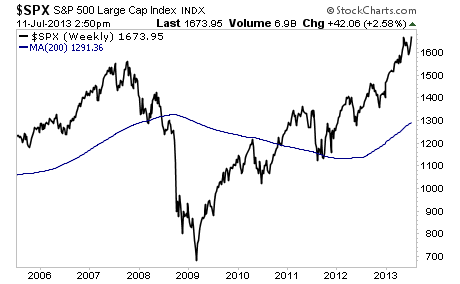

 “this is my fourth major market cycle. The three previous down-cycles that I’ve been through previously were the cause of my personal wealth, and Eric Sprott’s personal wealth….”
 89 Yr. old Legend Russell on how bull markets typically end, how the Gold Market hasn’t in his opinion fit the scenario and is more likely “seeing the wind-up of the gold bull market” that will end with “an exciting and frantic “all-in” entrance of the crowd”