
Personal Finance
 From Morgan Housel, here are several cognitive biases that cause you to do dumb things with your money. Be sure to check out the entire article.
15 Biases That Make You Do Dumb Things With Your Money
1. Normalcy bias
2. Dunning-Kruger effect
3. Attentional bias
4. Bandwagon effect
5. Impact bias
6. Frequency illusion
7. Clustering illusion
8. Status quo bias
9. Belief bias
10. Curse of knowledge
11. Gambler’s fallacy
12. Extreme discounting
13. Ludic fallacy
14. Restraint bias
15. Bias bias
I like Nobel Prize winning cognitive psychologist Daniel Kahneman’s take on this: He once said, “I never felt I was studying the stupidity of mankind in the third person. I always felt I was studying my own mistakes.”
Source:
15 Biases That Make You Do Dumb Things With Your Money
Morgan Housel

Who Cares?
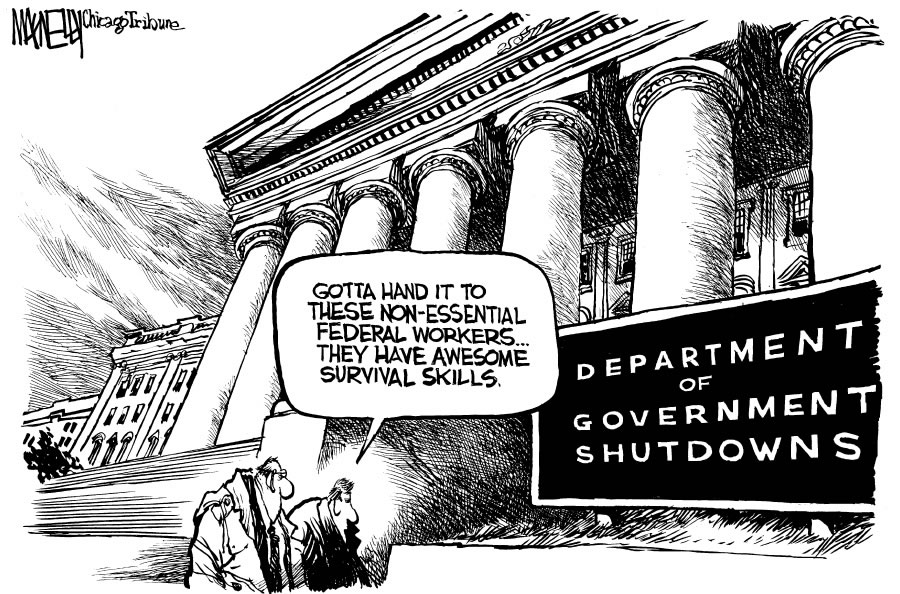
Apparently the unresolved back and forth between House and Senate concerning the ‘Obamacare’ bill in the run-up to the debt ceiling cut-off date on October 17 will lead to what is breathlessly referred to as a ‘government shutdown’ in the media. Wish that it were so, as an actual shutdown would have the salutary effect of demonstrating that very few are going to particularly miss the government.
In fact, one wonders why the recent stock market decline is blamed on this looming shutdown (which essentially consists of the cessation of ‘non-essential services’. If they are ‘non-essential’, why do they even exist?). Stock market participants should be glad that government meddling in the economy might be temporarily interrupted.
…..read more HERE

 The year 2013 in the gold investment market will be remembered as the year of China, so we’ve produced a stunning infographic detailing China’s great golden rise to power.
In just a few months the world’s largest country will overtake India as the biggest consumer of gold and its gold market continues to break records.
A country that already mines more than 400 tonnes of gold a year, China still demands more physical gold no matter the price. Between January and July this year the Shanghai Gold Exchange delivered more than 1,333 tonnes to gold investors.
In the last 100 years China’s gold mine productivity has climbed from just 4 tons of gold in 1949 to an expected 440 tons this year, none of which is exported. Hong Kong imports have been more than 600 tonnes this year alone, but still more gold is demanded.
Whilst it may appear that China has exploded onto the gold scene, this is by no means the case. China’s ancient monetary history is well documented. They are the world’s oldest scientists when it comes to different forms of money, having being the first to experiment with paper money and different metallic standards. Therefore during an international financial crisis one would imagine that the country with the longest and most diverse monetary history would be the place to turn to for direction.
Global domination in less than a century?
Less than 100 years ago the Shanghai Gold Business Exchange was one of the biggest gold centers in the Far East. Since then gold has gone from being an almost illegal investment to a market that has become increasingly open in modern China.
Whilst the Western world works to keep the paper system upright, China’s experience with fiat money and its concomitant phenomena of debasement and inflation may mean that they are looking to diversify their monetary system. Their recent history certainly suggests as much, as they have been gradually opening themselves up to the world’s most precious marketplace.
Between 1950 and 1995 small changes in China’s gold market were made, a gold jewelry retail market was opened and the Gold Panda was launched. But the first indication that the government was looking to develop the gold market came in 1993. At this point the State changed the price-fixing method for gold from a state-determined price to a floating one.
Between 2000 and 2002 key measures were taken that would provide the foundations for the country’s power in the gold market. In 2000 the Chinese government included the establishment of an open gold market in its five year economic plan, indicating gold is a strategic market. Shortly after the PBOC abolished the monopoly of the gold market and announced a planning and management system to see it forward.
Just 18 months after the new weekly quotation system for the gold price was launched (opening up the gold price to international markets) the Shanghai Gold Exchange officially opened in 2002. It is this exchange that has grabbed the attention of the Western media this year.
The State has also worked hard in the last decade to encourage institutions to participate in the gold market. In 2010 the paper “Guiding opinions on promoting the development of the gold market” was co-authored by several senior figures in the gold market. Amongst other targets commercial banks were asked to be actively engaged in developing China’s national gold market. Bullion producers were targeted for strategic assistance, with banks instructed to offer finance for overseas gold mine purchases and innovation.
….read page 2 HERE

 With the current Debt Ceiling crisis in the US and the ongoing Soverign Debt crisis in Europe, Michael asks an important question. A question that many in the media and positions of power would almost certainly rather not answer….
 When Bubbles Fail: Albert Edwards Explains What Happens When The Fed Can No Longer Contain The Fury Of The “99%”.
The premise in Albert Edwards’ latest letter “Is the Fed blowing bubbles to cover up growing inequality… again” is simple: the unprecedented social inequality in the US (and the rest of the world – as pointed out here), and what it will ultimately lead to. Regarding what it will lead to, Edwards believes, is that “growing inequality drains the swimming pool dry. The crunch, when it comes, will be ugly.” Simple enough.
Digging a little deeper.
Ed Note: This article recommended by Peter Grandich can be read in full HERE

-
I know Mike is a very solid investor and respect his opinions very much. So if he says pay attention to this or that - I will.
~ Dale G.
-
I've started managing my own investments so view Michael's site as a one-stop shop from which to get information and perspectives.
~ Dave E.
-
Michael offers easy reading, honest, common sense information that anyone can use in a practical manner.
~ der_al.
-
A sane voice in a scrambled investment world.
~ Ed R.
Inside Edge Pro Contributors

Greg Weldon

Josef Schachter

Tyler Bollhorn

Ryan Irvine

Paul Beattie

Martin Straith

Patrick Ceresna

Mark Leibovit

James Thorne

Victor Adair