


Bonds & Interest Rates

Federal Reserve Chairman Ben S. Bernanke said the Fed will probably hold down its target interest rate long after ending $85 billion in monthly bond buying, and possibly after unemployment falls below 6.5 percent.

“The target for the federal funds rate is likely to remain near zero for a considerable time after the asset purchases end, perhaps well after” the jobless rate breaches the Fed’s 6.5 percent threshold, Bernanke said yesterday in a speech to economists in Washington. A “preponderance of data” will be needed to begin removing accommodation, he said.

….read more HERE

A Limited Central Bank

This week’s Outside the Box is unusual, even for a letter that is noted for its unusual offerings. It is a speech from last week by Charles I. Plosser, President of the Federal Reserve Bank of Philadelphia at (surprisingly to me) the Cato Institute’s 31st Annual Monetary Conference, Washington, DC.

I suppose that if Dallas Fed President Richard Fisher had delivered this speech I would not be terribly surprised. I suspect there are some other Federal Reserve officials here and there whoare in sympathy with this view Plosser presents here, but for quite some time no serious Fed official has outlined the need for a limited Federal Reserve in the way Plosser does today. He essentially proposes four limits on the US Federal Reserve:


  • First, limit the Fed’s monetary policy goals to a narrow mandate in which price stability is the sole, or at least the primary, objective;
  • Second, limit the types of assets that the Fed can hold on its balance sheet to Treasury securities;
  • Third, limit the Fed’s discretion in monetary policymaking by requiring a systematic, rule-like approach;
  • And fourth, limit the boundaries of its lender-of-last-resort credit extension.


“These steps would yield a more limited central bank. In doing so, they would help preserve the central bank’s independence, thereby improving the effectiveness of monetary policy, and they would make it easier for the public to hold the Fed accountable for its policy decisions.”

Some of you will want to read this deeply, but everyone should read the beginning and ending. I find this one of the most hopeful documents I have read in a long time. Think about the position of the person who delivered the speech. You are not alone in your desire to rein in the Fed.

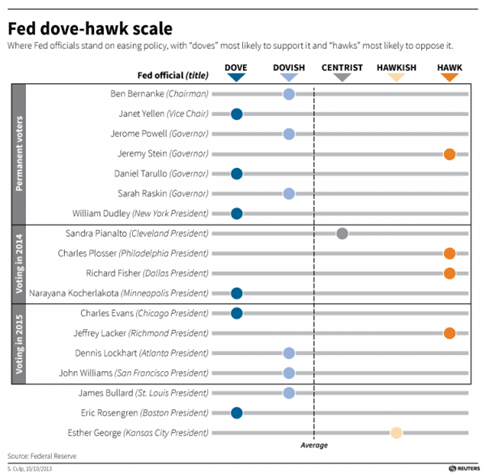
Two points before we turn to the speech. Both Fisher and Plosser will be voting members of the FOMC this coming year. Look at the lineup and the philosophical monetary view of each of the members of the FOMC. Next year we could actually see three dissenting votes if things are not moving in a positive direction, although another serious proponent of monetary easing is being added to the Committee, so it may be that nothing will really change.

Image 1 20131120 OTB

I am not seriously suggesting that the reigning economic theory that directs the action of the Fed is going to change anytime soon, but you will see assorted academics espousing a different viewpoint here and there. I think there may come a time in the not-too-distant future when the current Keynesian viewpoint is going to be somewhat discredited and people will be open to a new way to run things. This will not happen due to some great shift in philosophical views but because the current system has the potential to create some rather serious problems in the future. This is part of the message in my latest book, Code Red.

A lot of education and change in the system is needed. I want to applaud Alan Howard and his team at Brevan Howard for making one of the largest donations in business education history to Imperial College to establish the new Brevan Howard Centre for Financial Analysis to study exactly these topics and counter what is a particularly bad direction in academia. The two leaders at the new center, Professors Franklin Allen and Douglas Gale, are renowned for their pioneering research into financial crises and market contagion – that is, when relatively small shocks in financial institutions spread and grow, severely damaging the wider economy. This new center will help offer a better perspective. What we teach our kids matters. I hope other major fund managers will join this effort!

And speaking of Code Red, let me pass on a few quick reviews from Amazon:

“Excellent review of our current economic circumstances and what we can do about it to protect our assets. Even better, it is written with the non-economist in mind.”

“I read this book from cover to cover in 24 hours and was glued to every page. Do I know how to protect my saving exactly? No. But I have the critical information necessary to make informed decisions about my investments. My husband recommended this book to me after reading a brief article, and I’m so glad I impulsively bought it. It will definitely change my investment decisions moving forward and perhaps even provide me with more restful nights of sleep.”

You can order your own copy at the Mauldin Economics website or at Amazon, and it is likely at your local book store.

It is getting down to crunch time here in Dallas as far as the move to the new apartment is concerned. Work is coming along and most of it is done, although some things will need to be finished after I move in. Furniture is being delivered and moved in as I write, and today an the new kitchen is being entirely stocked, courtesy of Williams-Sonoma – they’ll be showing up in a few minutes. I am fulfilling a long-held dream (maybe even a fantasy or fetish) of throwing everything out of the kitchen and starting over from scratch. Between my kids and a returning missionary couple, all the old stuff will find a new home, and I will renew my role as chief chef with new relish next week.

I have always maintained that I think I am a pretty good writer but I a brilliant cook. With a new kitchen from top to bottom, I intend to spend more time developing my true talent. Between the new media room and my cooking, I hope I can persuade the kids (and their kids!) to come around more often. Yes, there are a few bumps and issues here and there, but in general life is going well. I just need to get into the gym more. Which we should all probably do!

Your feeling like a kid in a candy store analyst,

John Mauldin, Editor
Outside the Box

Are you looking for an edge 
in our current economic environment?

As an Outside the Box reader, you already benefit from some of the most important financial research John Mauldin receives from his network of elite investors and analysts. Now, you can step these benefits up to a whole new level by looking over John’s shoulder. In his premium service,Over my Shoulder, John acts as your personal filter for all of the news and analysis he feels is critical to your investments and money management.

Click here to discover what having access to the best of John’s research can mean for your finances today!

OECD Says CDN Rates to Double

stephen poloz.jpg.size.xxlarge.promo

Era of low interest rates coming to an end says OECD report, thanks to more stable global economies and predictable growth.

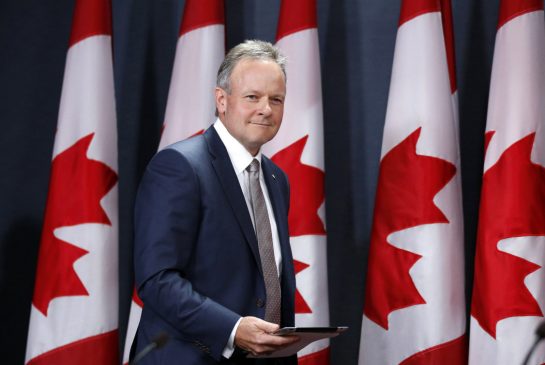
OTTAWA—The Bank of Canada may need to start hiking its trendsetting interest rate within the next year and steadily push it to 2.25 per cent by the end of 2015, according to an international think-tank representing the world’s leading economies.

The central bank has kept its policy rate fixed at one per cent since September 2010, leading to one of the most stable and favourable borrowing environments in many de

But the Organization for Economic Co-operation and Development said in a report Tuesday that with the Canadian and global economies about to return to more stable and predictable growth, that period is coming to an end.

….read more HERE

One of childhood’s happiest memories is flying kites. Now, an American academic is developing a novel idea — underwater kites equipped with turbines to generate electricity from ocean currents.

Ramping up the potential ridicule factor, a number of media outlets reporting on the technology note the proposed underwater kite’s eerie resemblance to the starship “Enterprise.”

But the National Science Foundation is not among the skeptics, having awarded a three-year, $300,000 grant to Worcester Polytechnic Institute for a new research program directed by David J. Olinger, PhD, associate professor of mechanical engineering to research ways to harness ocean currents and tidal flows using the novel technology.

Professor Olinger is convinced of the research’s potential, noting, “Unseen under the waves, winding along coastlines and streaming through underwater channels, there are countless ocean currents and tidal flows that bristle with kinetic energy. And just as wind turbines can convert moving air into electricity, there is the potential to transform these virtually untapped liquid ‘breezes’ into vast amounts of power. For example, it has been estimated that the potential power from the Florida Current, which flows from the Gulf of Mexico into the Atlantic Ocean, is 20 gigawatts—equivalent to about 10 nuclear power plants.”

….more explanation HERE

Canada Bucking Global FDI Trend

main 79f527f7-003e-4422-9450-c0a4e2a7c3f6World political leaders still have an axe to grind with business. Corporations are still sitting on a vast cash-stash, and don’t seem to me in a hurry to invest. The same is true of cross-border investments. From a low level in 2012, they are eking out very modest growth thus far in 2013. Will business hesitation hold back the world economy indefinitely, or is there hope that things will turn around?

Global foreign direct investment (FDI) plunged by a stunning 33 per cent in 2009 as the world tumbled into the Great Recession. However, by 2011 solid growth lifted FDI up to a level just 9 per cent below the 2008 level. Something spooked investors in 2012, though, shoving FDI back down by 18 per cent. In the first half of 2013, FDI is up, but by a slim 3.8 per cent. Seems like we have waited a long time for a resurgence, only to get a relapse. Is it temporary, or are we in trouble?

So far this year, weakness is widespread. Collectively, emerging markets are growing 8.8 per cent, but take away the impressive gains in Russia and Mexico, and total FDI is actually contracting by 5.5 per cent across a broad swath of markets. Together, developed-market FDI is down 12 per cent in the first half of the year, with few gainers. Five years beyond the crisis-point, the figures aren’t comforting.

Is there a good explanation for current performance? Discouragement could be a factor – after all, five years is a long time to wait for true recovery. Yet business confidence numbers argue against gloom. Could it be the nascent slowdown in emerging markets? Perhaps, but that doesn’t explain either the isolated aggressive gains or the developed-market losses. Is it the multiple, potentially havoc-wreaking global risks that followed the recession? Maybe, but they have recently moderated.

Maybe it’s China’s fault. After all, its labour markets are tightening, dissuading companies scanning the globe for sources of abundant, inexpensive workers. But if so, we would see evidence of that investment going elsewhere, and to date, that’s not obvious in the numbers. Moreover, FDI to China actually posted a reasonable gain in the January-June period. Could it be access to credit? Possibly, but if companies really want to invest, they have the cash. So far, none of these typical factors that stymie investment makes a compelling case for sluggish FDI performance.

Truth be told, the hesitation in current FDI is likely more normal than not. Businesses typically invest when they are convinced that they have to in order to process the inflow of orders. When they have spare capacity – as they did in spades following the recession – they hold back until they’ve used it up. They thought that was the case in 2010 and 2011, when massive stimulus created the illusion of a recovery – but that faded fast, leading to today’s tepid FDI activity. They will invest again – but only when an upsurge of activity compels them to. Until then, we’ll have to be content with what we get.

Fortunately, Canada is one of the few that is bucking the global trend. Thus far in 2013, FDI inflows are up 44 per cent, and the recent $36 billion Petronas announcement, together with interest from other sources, bodes well for future growth. Canada’s rich resources, solid economic structure and economic prospects will likely remain an effective magnet for future foreign investment.

The bottom line? UNCTAD’s mid-year checkup of foreign investment flows is uninspiring – but thankfully, those flows aren’t an economic bellwether. As global activity picks up, so too will investment flows. Widespread aging of the population suggests that FDI will play an even greater role in the next economic cycle, as international sourcing of labour is added to the list of reasons to do it.




test-php-789




