
Timing & trends
The Dow has struggled so far in 2014 – down 6.8% year to date. For some perspective, today’s chart illustrates the overall trend of the stock market (as measured by the Dow) since 2003. As today’s chart illustrates, the Dow has benefited from a strong upward trend since early 2009 (see upward sloping green trendline). This year, however, the Dow has sold off sharply due to concerns over steep declines in emerging markets. The Dow’s steep decline has been significant enough to result in a break below long-standing support (upward sloping green trendline).
Notes:
Where’s the Dow headed? The answer may surprise you. Find out right now with the exclusive & Barron’s recommended charts of Chart of the Day Plus.

Quote of the Day
“We are not retreating – we are advancing in another direction.” – General Douglas MacArthur
Events of the Day
February 14, 2014 – Valentine’s Day
February 16, 2014 – NBA All-Star Game
February 17, 2014 – President’s Day – Washington’s Birthday (observed)
Stocks of the Day
— Find out which stocks investors are focused on with the most active stocks today.
— Which stocks are making big money? Find out with the biggest stock gainers today.
— What are the largest companies? Find out with the largest companies by market cap.
— Which stocks are the biggest dividend payers? Find out with the highest dividend paying stocks.
— You can also quickly review the performance, dividend yield and market capitalization for each of the Dow Jones Industrial Average Companies as well as for each of the S&P 500 Companies.
Mailing List Info
Chart of the Day is FREE to anyone who subscribes. Subscribe HERE

We’re in Washington Dulles airport, on our way to India. As we write, the Dow is down some 300 points… and still falling.
As Chris has written about in his Market Insight columns, it’s still way too early to know if the bull market trend of the last five years has run its course. Mr. Market may be exhausted from all this running uphill. Or he may be just toying with us. We will wait to see.
What goes around comes around. What’s been going around lately has been fear and loathing of emerging markets and gold. Because these are among our favorite investments – and are investments we have recommended to members of Bonner & Partners Family Office, our little family wealth advisory – we are forced to think about what is going on.
When prices go in your direction, you’re asking for trouble. No need to think; you know it all already. No need to worry either; just sit back and let the money come to you. Until it doesn’t.
You are much better off when the financial news goes against you. Then you have to wonder about your premises, your emotions – and your sanity.
Hardly a day goes by that we don’t thank our lucky stars. We were blessed, you see, by misfortune.
As a child, we had no money. We couldn’t lose the family fortune; we didn’t have one to lose! Which turned out to be a good thing. For if we had had any money, we would have lost it in the Great Bear Market in Gold of 1980 to 1998.
President Nixon finally severed the dollar’s connection to gold on August 15, 1971. We’d read enough history to know what that meant. Soon, we would be pushing wheelbarrows full of $100 bills to the liquor store to buy a six-pack.
How to protect yourself from the inevitable hyperinflation?
Simple: Buy gold.
That is how we became a “gold bug.”
Then the worst possible thing happened: Gold went up. From $41 an ounce in 1971, the yellow metal soared to over $800 an ounce by 1980.
We were right! We were smart! We went “all in” on gold… and waited to be rich.
Fortunately, our luck changed before we got far. Misfortune smiled on us… setting us at odds with an 18-year secular bear market in gold.
Do you know what that is like, dear reader?
Every day… every month… every year… losing money… mocked by the market gods… dissed by family and neighbors.
Every day proved even more emphatically than the day before that we didn’t know what the hell we were doing. Every day, at the sound of the closing bell, Mr. Market pronounced his solemn judgment: We were idiots.
For 18 years we endured this punishment. And thank God we did. Because now we know how easy it is to be wrong.
You try to make out what is going on. But you see only shadows and hear only echoes.
Like a ghost haunting an old house, you will feel a chill breeze brush your face…. you will see things appear in strange places and wonder how they got there. But you will never know how this spectral world works, not as long as you cling onto your mortal coil…
As we clung to our losing positions in gold, the smart money went into stocks. Perhaps it understood that we were in a huge credit expansion that would take stocks up to 20 times their value in 1971.
From 874 in 1971, to 15,400 yesterday. Wow!
But wait. What if you had just stuck with gold?
Let’s see… from $41 to $1,250 an ounce. Holy smokes. That’s 30 times your money!
Maybe our “crackpot” insight was right all along. And maybe gold and emerging markets will turn out to be stellar investments after all.
Regards,
Bill
Don’t Do Something…
Just Stand There!
From the desk of Chris Hunter, Editor-in-Chief, Bonner & Partners
US stock markets BOMBED yesterday… (Ed Note: written Feb 4th)
The S&P 500 and the Dow ended the day with the steepest selloff since last June.
So what should you do about it?
First, let’s take a quick look at the technical picture.
As I warned yesterday, doubts had already been creeping into the market. The S&P 500 had already broken below its 50-day moving average and was sitting in “no man’s land” between its 50-day and its 200-day moving average.
It had also been trading sideways – a sign of no clear trend, either up or down. As I wrote:
If this sideways action gives way… and the index breaks lower… the next big level of support is at the 200-day moving average.
The bulls will be looking for the index to climb back above its 50-day moving average and resume its uptrend.
Which way the index breaks from its sideways trading will determine the market’s next big move.
Well, guess what…
Yesterday, the S&P 500 knifed lower, as you can see from the yellow shaded area on the six-month price chart below. That means the next level of support is at 1,707 – at the 200-day moving average (red line on the chart below).

Does this mean you should sell?
That’s not the way we approach the business of investing at Bonner & Partners.
As we like to say, money in the stock market is “made in the buying.” We recommend you buy stocks when they are cheap relative to underlying values… and sell when they become fairly valued or overvalued.
Charts like the one above help you get a visual picture of how the market is trading. And they can help identify good entry points. (For instance, you don’t want to buy when prices are in free fall.)
But the evidence is overwhelmingly against individual investors beating the market by trading in and out of stocks based on market timing indicators.
Whatever “alpha” – or above-market returns – you may generate (and that’s an extremely difficult challenge in and of itself) will be gobbled up by the broker fees and spread costs you incur as you churn your portfolio.
The S&P 500 hasn’t had a meaningful drop in a long time. A 10% – or more – correction is long overdue. But that doesn’t mean you should panic.
As Vanguard founder Jack Bogle puts it:
| While the interests of [Wall Street] are served by the aphorism ‘Don’t just stand there. Do something!’ the interests of investors are served by an approach that is its diametrical opposite: ‘Don’t do something. Just stand there!'” |
So, get used to the fact that stocks go down as well as up. And resist any knee-jerk reaction to price falls in positions you’ve “bought well.”
P.S. I am taking some time off this week for my annual snowboarding trip in the Czech Republic. I’ll be back with more market insights on Monday.

 Taken from a Barron’s roundtable discussion, ZeroHedge reports Marc Faber Warns “Insiders Are Selling Like Crazy… Short US Stocks, Buy Treasuries Gold”.
Faber: What I recommend to clients and what I do with my own portfolio aren’t always the same. That said, my first recommendation is to short the Russell 2000. You can use the iShares Russell 2000 exchange-traded fund [IWM]. Small stocks have outperformed large stocks significantly in the past few years.
Next, I would buy 10-year Treasury notes, because I don’t believe in this magnificent U.S. economic recovery. The U.S. is going to turn down, and bond yields are going to fall. Abby just gave me a good idea. She is long the iShares MSCI Mexico Capped ETF, so I will go short.
Q: What are you doing with your own money?
Faber: I have a lot of cash, and I bought Treasury bonds. … I have no faith in paper money, period. Insider buying is also high in gold shares. Gold has massively underperformed relative to the S&P 500 and the Russell 2000. Maybe the price will go down some from here, but individual investors and my fellow panelists and Barron’s editors ought to own some gold. About 20% of my net worth is in gold. I don’t even value it in my portfolio. What goes down, I don’t value.
Curious Position
US treasuries are a curious position for someone frequently in the hyperinflation camp, which brings up this humorous conversation from Barron’s.
Faber: I recommend the Market Vectors Junior Gold Miners ETF [GDXJ], although I don’t own it. I own physical gold because the old system will implode. Those who own paper assets are doomed.
Zulauf: Can you put the time frame on the implosion? Faber: Let’s enjoy dinner tonight. Maybe it will happen tomorrow.
Price Inflation on Hold
If the economy implodes (or even modestly declines) US Treasuries will benefit. Even a frequent hyperinflationist and firm disbeliever in paper assets gets it!
Here’s my claim: Deflation Will Return: Europe First, Then US
Strong consumer price inflation, is on hold for a long time. US hyperinflation in this environment is next to impossible.
Mike “Mish” Shedlock
http://globaleconomicanalysis.blogspot.com
The lack of cheap oil will soon collapse global markets.
A bold statement, I know — especially with a U.S. “shale boom” at hand and stocks still near all-time highs.
But stocks have only risen that high because of the largest governmental intrusion on free markets the world has ever seen. Of course stocks will go up when money is free and banks aren’t accountable for their actions.
None of the problems that led up to the 2008 crash have been fixed.
And it’s been my mission for the last year or so to determine what would cause this new ruse to come to an end.
My conclusion is the perception of cheap energy is the only thing that’s keeping the free-money paper asset bubble inflated.
Let me put a finer point on it for you with a section of a brand new report I put together specifically to address this issue:
Once we understand that the majority of the world’s pension assets (including a significant portion of mutual and insurance funds) are invested into equities and bonds, it’s no secret why the Fed and the central banks are propping up the markets with their huge injections of monetary liquidity. And, of course, these injections are funneled into the broader stock indexes as well as the Treasury and bond markets.
But energy has to be burned to produce economic growth that will pay back or settle these global conventional paper assets in the future. That is why it is indeed a huge Ponzi scheme.
An individual with a retirement account or pension plan, for example, really only has a promise to receive future income streams when they retire if, “and only if,” there is a healthy growing economy. And a healthy growing economy is predicated upon a growing global energy supply.
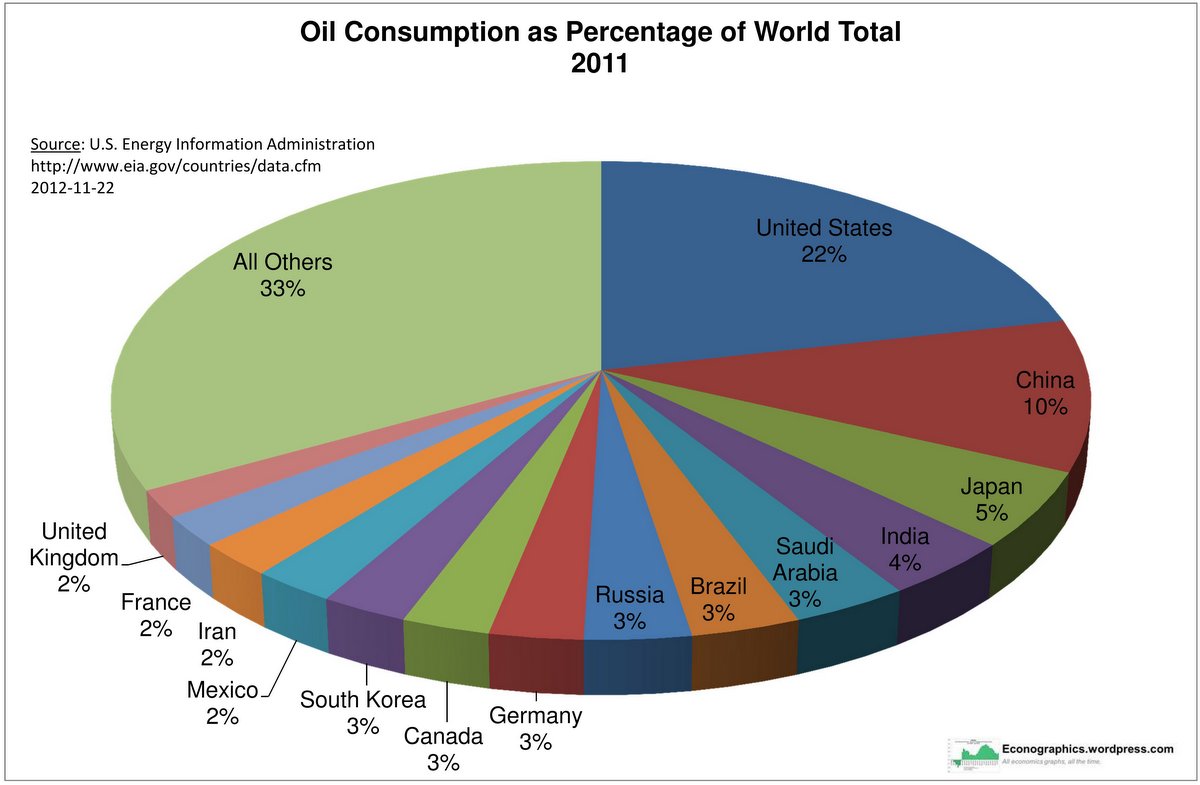
Due to the propping-up of the economy by a massive amount of debt, Americans are able to purchase a percentage of this energy — oil that, in all likelihood, they probably could not afford otherwise.
Furthermore, this debt will never be repaid, as there will not be the available energy supply in the future to do so. As I mentioned before, there needs to be a growing economy that allows a small profit or percentage left over to either pay back debts or satisfy future retirement income streams.
Thus, the majority of conventional paper assets will lose a great deal of their value as debts are either written off or excused due to the inability to service them any longer (just like is happening in Detroit).
We must remember the majority of paper assets have parties on the other side holding the debt. For instance, the bank owns the home (asset), while the homeowner holds the mortgage (debt).
And in many cases, the bank has transferred the ownership of these mortgage-backed securities to another party such as the Federal Reserve, who purchases $40 billion a month of these financial products. So now the Fed owns the assets (really the American public), allowing the banks to sell homeowners more mortgages, which the majority will never be able to pay back in the future.
It’s one giant, happy merry-go-round to nowhere.
Now that you have a good idea of what assets are going to be experiencing serious trouble in the future and why, the proper question to ask is…. what are some of the safest assets to own?
I released this report last week, and already events are unfolding that are proving its merit.
Concerning consumers, we now know Americans burned through $46 billion in personal savings to fund December purchases. That left the Personal Savings Rate at its lowest level since January 2013.
And holiday sales were still down 0.7% at department stores in December… and down 3.3% for the full year. Last year saw the weakest retail sales in four years.
Thanks to a report out last week from the Corporation for Enterprise Development, we now also know that almost half of Americans are living in a state of “persistent economic insecurity” that makes it “difficult to look beyond immediate needs and plan for a more secure future.”
As Time Magazine summarized:
In other words, too many of us are living paycheck to paycheck. The CFED calls these folks “liquid asset poor,” and its report finds that 44% of Americans are living with less than $5,887 in savings for a family of four. The plight of these folks is compounded by the fact that the recession ravaged many Americans’ credit scores to the point that now 56% percent of us have subprime credit. That means that if emergencies arise, many Americans are forced to resort to high-interest debt from credit cards or payday loans. And this financial insecurity isn’t just affected the lower classes. According to the CFED, one-quarter of middle-class households also fall into the category of “liquid asset poor.”
So that’s the first piece of this equation: The real economy is not recovering, which is necessary for assets to increase in value.
The other way for assets to increase is with perpetually cheap energy. Many have said the shale boom guarantees this. But that is simply not the case.
Here’s what we learned last week from major oil companies…
ExxonMobil, Chevron, Shell, and Conoco all reported seriously disappointing earnings last week.
Amidst this “shale boom,” Exxon production actually fell 1.5%. And that was despite it increasing capital expenditures by 4% to over $38 billion.
Let that sink in. It spent 4% more to produce 1.5% less.
That is not a “boom” by any measure.
And it was the same story for other majors.
Chevron’s production was down 3% while it increased its debt position to $5 billion and only replaced 85% of its produced reserves.
(Five years ago, we would have been shouting this from the rooftops as proof of peak oil. So why not now?)
Conoco production fell 6%, and the company had an abysmal 3% reserve growth. Shell actually took billions in write-downs from disappointing programs in the Eagle Ford and Mississippi Lime formations.
Are you supposed to produce less, spend more, and lose money during a boom?
And remember, this comes in a $100 oil environment. These guys can’t even make money while you’re paying $3.35 at the pump.
It doesn’t get any more ironic than Bloomberg Businessweek’s write-up of what’s going on. Here’s a piece from its article last week entitled, “Big Oil Has Big Problems”:
In a way, the world’s major oil companies all suffer from some version of the same problem: They’re spending more money to produce less oil. The world’s cheap, easy-to-find reserves are basically gone; the low-hanging fruit was picked decades ago. Not only is the new stuff harder to find, but the older stuff is running out faster and faster.
Just to maintain production rates, oil companies have to race to find new reserves faster than the old ones dry up. That essentially puts them on a treadmill at which they must run faster just to keep pace—a horrible problem in any business. “It’s like feeding an elephant,” says Fadel Gheit, an energy analyst at Oppenheimer. “You can’t just give him a couple bags of peanuts. You have to find a truck load every day, just to keep him happy.”
Folks, Bloomberg just admitted all the major oil companies are facing peak oil. It’s a treadmill to nowhere.
And as this research shows, it’s going to have dire implications for the value of your paper assets.
The fire of inflated assets stoked by free money and the illusion of cheap energy is coming to a close.
Call it like you see it,

Nick Hodge
 @nickchodge on Twitter
Nick is the Founder and President of the Outsider Club, and the Investment Director of the thousands-strong stock advisory, Early Advantage. Co-author of two best-selling investment books, including Energy Investing for Dummies, his insights have been shared on news programs and in magazines and newspapers around the world. For more on Nick, take a look at his editor’spage.
WASHINGTON (MarketWatch) – The services side of the U.S. economy likely expanded in January at a slightly faster pace, according to economists polled by MarketWatch. The Institute for Supply Management’s non-manufacturing index is expected to rise to 54% last month from 53 … full article


-
I know Mike is a very solid investor and respect his opinions very much. So if he says pay attention to this or that - I will.
~ Dale G.
-
I've started managing my own investments so view Michael's site as a one-stop shop from which to get information and perspectives.
~ Dave E.
-
Michael offers easy reading, honest, common sense information that anyone can use in a practical manner.
~ der_al.
-
A sane voice in a scrambled investment world.
~ Ed R.
Inside Edge Pro Contributors

Greg Weldon

Josef Schachter

Tyler Bollhorn

Ryan Irvine

Paul Beattie

Martin Straith

Patrick Ceresna

Mark Leibovit

James Thorne

Victor Adair