
Timing & trends
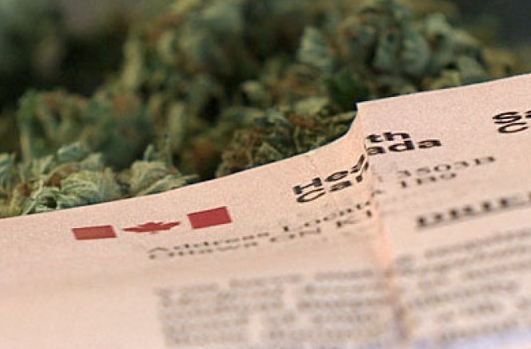 Less than a month after the federal government began handing out licenses to producers of medical marijuana, there are early signs from some companies that business is growing faster than expected in the fledgling industry.
Smiths Falls, Ont., based Tweed Inc. announced last week it would not be registering new customers until it was sure it had sufficient supply to meet the demand.
The company also announced it was accelerating its expected production by the end of 2014 from 1.5 million grams to 6 million grams per year. The company said it had upgraded its forecast demand based on higher-than-expected registration and application information.
“We’re accelerating our construction program, bringing much of the construction we thought would be next year into this year,” said Tweed chair Bruce Linton….

 Coming off successes in Iraq and Afghanistan, it makes sense that the US should send troops to Ukraine, no?
When we first read this in the Washington Post, we thought it might be a late April Fools’ Day joke. Then we discovered the writer was sincere about it; apparently, James Jeffrey is a fool all year round:
The best way to send Putin a tough message and possibly deflect a Russian campaign against more vulnerable NATO states is to back up our commitment to the sanctity of NATO territory with ground troops, the only military deployment that can make such commitments unequivocal.
To its credit, the administration has dispatched fighter aircraft to Poland and the Baltic states to reinforce NATO fighter patrols and exercises. But these deployments, like ships temporarily in the Black Sea, have inherent weaknesses as political signals. They cannot hold terrain – the ultimate arbiter of any military calculus – and can be easily withdrawn if trouble brews.
Troops, even limited in number, send a much more powerful message. More difficult to rapidly withdraw once deployed, they can make the point that the United States is serious about defending NATO‘s eastern borders.
And why not?
The US has a global empire, supported by an unprecedented mountain of debt. All bubbles need to find their pins. And all empires need to blow themselves up. What Jeffrey is proposing is to speed up the process with more reckless troop deployments.
We’re with him all the way…
Push ol’ Humpty Dumpty off the wall and get it over with… so the US can go back to being a decent, normal country without phony “red alerts”… “see something, say something” snitches… and a trillion-dollar “security” budget that reduces our safety.
But we doubt it will be that easy. Empires do not go gently into that good night…

 Ian Morris is the author of “War! What is it Good For? Conflict and the Progress of Civilization from Primates to Robots.”
Norman Angell, the Paris editor of Britain’s Daily Mail, was a man who expected to be listened to. Yet even he was astonished by the success of his book “The Great Illusion,” in which he announced that war had put itself out of business. “The day for progress by force has passed,” he explained. From now on, “it will be progress by ideas or not at all.”
He wrote these words in 1910. One politician after another lined up to praise the book. Four years later, the same men started World War I. By 1918, they had killed 15 million people; by 1945, the death toll from two world wars had passed 100 million and a nuclear arms race had begun. In 1983, U.S. war games suggested that an all-out battle with the Soviet Union would kill a billion people — at the time, one human in five — in the first few weeks. And today, a century after the beginning of the Great War, civil war is raging in Syria, tanks are massing on Ukraine’s borders and a fight against terrorism seems to have no end.
So yes, war is hell — but have you considered the alternatives? When looking upon the long run of history….

 U.S. drugmaker Pfizer Inc approached Britain’s AstraZeneca Plc two days ago to reignite a potential $100 billion takeover and was rebuffed, raising investor expectations it will have to increase its offer to close the deal.
Pfizer said on Monday it proposed a takeover to AstraZeneca in January worth 58.8 billion pounds ($98.9 billion), or nearly 47 pounds per share. It had contacted its British rival again on Saturday, seeking to discuss further a takeover.
The chase was welcomed by investors in both companies, as deal-making grips the healthcare industry….

 Solar power is celebrating a big event. The solar panel turns 60 on Friday– but this birthday celebration will be unlike any other the industry has seen so far.
I know what you’re thinking…
Solar’s an interesting idea. But it’s nothing new. Why bet on an industry that’s had a long history of over-promising and under-delivering?
“You wouldn’t be wrong to think that,” chimes in Rude researcher Noah Sugarman. “It’s not that unlimited renewable energy from the sun was ever a bad idea. The timing was just wrong. But now that’s all changed – the market’s ready for solar.”
In the past, solar energy’s high price tag meant its wide-spread usage was nothing more than a pipe dream. But now an event 60 years in the making just occurred – solar is potentially cheaper than oil and Asian liquefied-natural-gas.


-
I know Mike is a very solid investor and respect his opinions very much. So if he says pay attention to this or that - I will.
~ Dale G.
-
I've started managing my own investments so view Michael's site as a one-stop shop from which to get information and perspectives.
~ Dave E.
-
Michael offers easy reading, honest, common sense information that anyone can use in a practical manner.
~ der_al.
-
A sane voice in a scrambled investment world.
~ Ed R.
Inside Edge Pro Contributors

Greg Weldon

Josef Schachter

Tyler Bollhorn

Ryan Irvine

Paul Beattie

Martin Straith

Patrick Ceresna

Mark Leibovit

James Thorne

Victor Adair