
Timing & trends
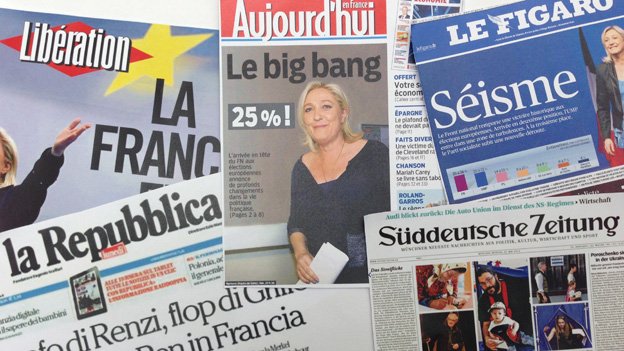 One of the last remaining impediments to total global domination by the banks and their politicians is the quaint tradition of popular elections. Every so often the powers that be are required to see if the 99% want them to remain in charge. Obviously since the global financial system is still intact the answer, implicit or explicit, has always been “yes, keep harvesting us and accumulating vast fortunes and immense power.”
But that might be about to change. Most European countries are holding elections for the European Parliament this weekend, and the results imply that a sizable number of voters have peered behind the curtain and don’t like what they see. As possible future British Prime Minister (!!!) Nigel Farage put it today, the results constitute “an earthquake”:
UKIP on course to top European election in UK
UKIP leader Nigel Farage said his party was on track to win the European elections, which “will be an earthquake because never before in the history of British politics has a party seen to be an insurgent party ever topped the polls in a national election”.
He suggested the results could lead to Nick Clegg losing the Lib Dem leadership, Labour leader Ed Miliband needing to “change his position” on an in/out referendum and David Cameron being forced into “a much tougher negotiating stance” on Europe.
Britain, of course, is a member of the European Union but not the euro currency bloc. So as interesting as UKIP’s ascendancy is, electoral results in the major eurozone countries are even juicier. France in particular:
Protest Parties Surge in Greece, France in Early EU Votes
Protest parties surged in Greece and France in European Parliament elections, in a sign of the anti-European mood across the economic divide opened up by the sovereign debt crisis.
Voters in Greece, the first crisis victim, handed first place to Syriza, the party which argues the bailouts weren’t generous enough, according to a NERIT TV exit poll that gave it as much as 30 percent support. In France, the anti-immigration National Front led with 25 percent, estimates by TNS Sofres, Ipsos and Ifop showed.
“The sovereign people have declared that they are taking their destiny back into their own hands,” Marine Le Pen, head of the National Front, told a rally in suburban Paris broadcast on France 2 television. It is time for “politics of the French, for the French, with the French.”
Initial returns in the 28-nation election indicated swelling support for political groups that blame the European Union for economic injustice — symbolized by a bloc-wide 10.5 percent unemployment rate — and say its leaders are letting immigration get out of hand. National returns will be released throughout the evening, with the first EU-wide projections due after 11 p.m. in Brussels.
National Impact
Early results were broadly in line with projections by PollWatch 2014, a non-partisan forecasting group, that fringe parties would combine for 30 percent in the new parliament, up from 20 percent now. While that outcome is unlikely to upset EU lawmaking, it will rattle national leaders such as Greek Prime Minister Antonis Samaras.The breakthrough by France’s National Front dealt a further blow to President Francois Hollande, the least popular leader in France’s modern history. The National Front has cashed in on economic discontent, with jobless claims at a record of more than 3 million and an economy that has barely grown in two years.
Le Pen called on Hollande to dissolve the French national parliament and hold new elections, saying that he had little choice after such “a humiliation.”
What does this mean?
Probably not a lot legislatively in the short run. EU elections generally have low turn-out (because most voters don’t seem to care who represents them in Brussels), so protest parties sometimes rack up totals that exaggerate their true popularity. In any event, pro-EU and pro-eurozone parties are still nominally in charge and will continue with business as usual in the year ahead.
But they might have just one more election cycle in which to do so. In France, for instance, the socialists got just 15% of the vote, which must be a record low for the ruling party of a major country. UKIP and National Front may be within striking distance of actual working majorities in Britain and France, respectively, and another few years of the current European malaise (almost guaranteed under current policies) would pretty much hand the next election to the insurgents. Same thing in Greece and several other EU countries.
And THAT would be an earthquake. Electing people who promise to withdraw their countries from major international organizations and go back to previous ways of running immigration and monetary policy would call the euro into question as a reserve currency. That in turn would send the leveraged speculating community, which has recently gorged on PIIGS country euro-denominated bonds, into chaos.
This prospect virtually guarantees that the European Central Bank will start buying up Italian, Spanish and Portuguese bonds on a vast scale, while it still can.

As a general rule, the most successful man in life is the man who has the best information
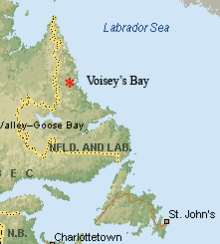
One of the most famous large, high-grade sulphide nickel deposits might be Voisey’s Bay.
In 1993, Albert Chislett and Chris Verbiski, while exploring for diamonds discovered significant sulphide mineralization south of Nain, Labrador.
Drilling at the site – now known as Discovery Hill – commenced in late 1994.
The second drill hole returned 41 meter’s of2.96% Ni, 1.89% Cu and 0.16% Co. The third, fourth and fifth drill holes returned similar grades.
An electromagnetic (EM) survey was done. Most rocks don’t conduct electricity, sulphide minerals do. Electromagnetic surveys take advantage of the fact that the iron sulphide pyrrhotite is a good conductor of electricity. A primary electromagnetic field is generated penetrating into the subsurface where it generates a much weaker secondary field around any conductive rocks in the area. Results indicated the presence of material that conducts electricity. A large EM anomaly had been found, it was drilled and the rest is mining history.
Hole VB-95-07 returned 104 m of high-grade massive sulphide core grading 3.9% Ni, 2.8% Cu and 0.14% Co. They had found the Ovoid, a huge, bowl-shaped accumulation of massive sulphides containing 32 million tonnes grading 2.83% Ni, 1.69% Cu and 0.12% Co.
Within a year, deep drilling east of the Ovoid had discovered a second nearby sulphide zone – the Eastern Deeps. A third discovery, the Reid Brook Zone was made just to the west of the Ovoid.
 Several things stand out regarding the Voisey’s Bay deposit:
- The realized potential for additional discoveries, after the initial discovery, is extremely high because of the depositional model of these types of deposits.
- The Ovoid can be mined very easily, and extremely economically, by open-pit methods. It is the deposits ‘starter pit’ and makes mining the Eastern Deeps, Robert Friedland’s ‘Ocean of 1% nickel’ all that more attractive.
- At Voisey’s Bay a lot of high-grade nickel sulphide ore is close to surface and to deep-water access. Voisey’s Bay might be the only place in the world where this situation exists. The high price tag for Voisey’s Bay ($4.3b) was because the deposit was a game changer in the nickel sector. Nothing like it had been found before, and nothing like it has been found since.
Or has there?
Speculative fear (of missing out) and greed (reaping the great rewards associated with world class discoveries) has got to be on your radar screen.
Are they?
If they aren’t, they should be.
Richard (Rick) Mills
About Richard Mills:
Richard lives with his family on a 160 acre ranch in northern British Columbia. He invests in the resource and biotechnology/pharmaceutical sectors and is the owner of Aheadoftheherd.com. His articles have been published on over 400 websites, including:
WallStreetJournal, USAToday, NationalPost, Lewrockwell, MontrealGazette, VancouverSun, CBSnews, HuffingtonPost, Beforeitsnews, Londonthenews, Wealthwire, CalgaryHerald, Forbes, Dallasnews, SGTreport, Vantagewire, Indiatimes, Ninemsn, Ibtimes, Businessweek, HongKongHerald, Moneytalks, SeekingAlpha, BusinessInsider, Investing.com and the Association of Mining Analysts.
Please visit www.aheadoftheherd.com
If you are interested in advertising on Richard’s site please contact him for more information, rick@aheadoftheherd.com
***
Legal Notice / Disclaimer
This document is not and should not be construed as an offer to sell or the solicitation of an offer to purchase or subscribe for any investment.
Richard Mills has based this document on information obtained from sources he believes to be reliable but which has not been independently verified.
Richard Mills makes no guarantee, representation or warranty and accepts no responsibility or liability as to its accuracy or completeness. Expressions of opinion are those of Richard Mills only and are subject to change without notice. Richard Mills assumes no warranty, liability or guarantee for the current relevance, correctness or completeness of any information provided within this Report and will not be held liable for the consequence of reliance upon any opinion or statement contained herein or any omission.
Furthermore, I, Richard Mills, assume no liability for any direct or indirect loss or damage or, in particular, for lost profit, which you may incur as a result of the use and existence of the information provided within this Report.
Last week I told you how platinum and palladium are now preparing to blast off to the upside. This week, I want to tell you more about them, and why the Putin factor is so important in these markets.
First and foremost, the driving force that will send these metals higher is none other than the war cycles that I have been pounding the pavement about.
Those war cycles are now starting to turn the markets on their heads. They are impacting every market on the planet and threatening to send almost all of them substantially higher.
But with platinum and palladium, you also have some very unique fundamentals coming into play.
First, both metals are in what is called a structural supply deficit. That’s when supplies are limited and getting even more limited — and there isn’t much that can be done about it.
The chief reasons platinum and palladium are in a structural supply deficit are:
A: As I mentioned last week, the ore grade of the platinum group metals, that is the amount of the metals found in ore, is declining rapidly, with a plunge of more than 50 percent in ore grades in Russia and South Africa combined since 1998.
B. It takes as long as 10 years to open a new mine. Gold and silver mines take anywhere from five to seven years typically, but not so with the white metals group.
There are additional environmental concerns, different equipment used, and in both Russia and South Africa, the bureaucracies can often lead to major delays in opening new mines.
 C. Inventories are already being squeezed, with platinum demand expected to exceed available supplies this year by 705,000 ounces, while palladium demand is expected to exceed supplies by a huge 959,000 ounces this year, more than double the official 455,000 ounce deficit in 2013.
Second, this structural long-term supply constraint is only going to get worse, for the following reasons:
A: South African labor strikes. They’re pretty frequent these days and they are putting a serious crimp in South Africa’s production, at times shutting it down. At Impala, for instance, operations were recently halted due to the worst worker strikes since the end of apartheid in 1994.
B. Soaring demand from the auto sector. Both platinum and palladium play important roles in pollution control, especially in the auto sector.
And the auto industry’s demand for both metals is off the charts, with 2013 showing the industry’s demand for palladium exceeding available supplies by as much as a half million ounces.
At the same time …
C: Investment demand is rising sharply, largely due to China. According to HSBC Bank and the latest data, Chinese investment demand for platinum recently hit a 30-month high, increasing 11.2 percent to a total of 69.98 metric tons for the three quarters of 2013 ended September 30. Palladium inflows hit an eight-month high.
In addition, investment demand globally, overall, rose 9.1 percent — largely due to the advent of trading of the new South African ETF, NewPlat.
NewPlat is traded on the Johannesburg Stock Exchange and tracks platinum’s price in rand, which has made it a very attractive investment, not only for South African investors, but also South African and Russian platinum group companies that use the new ETF for hedging and delivery policies.
Is it any wonder that the war cycles could make
platinum and palladium such explosive markets?
I don’t think so, especially when you consider the strategic importance they play in the world and that Russia is such a major producer of both metals.
Russia, supplying 42 percent of the world’s palladium, is already in a supply crunch, with the country’s above-ground inventories having fallen from roughly 1.5 million ounces in 2007 to as little as 100,000 ounces at the end of 2013.
Russia’s platinum figures are tightly held state secrets so there are no reliable estimates available, but I think it’s safe to say that Russia’s platinum stockpiles have seen similar declines.
Most importantly, however, is the Putin factor. Putin will not hesitate a second to use platinum and palladium supplies in retaliation to economic sanctions from the West.
He hasn’t thus far, but he’s no dummy. Withholding those two metals from the global markets could wreak some pretty hard financial damage on several major European and U.S. multinational companies, particularly in the automotive and pollution control industries — so I am sure he is keeping those cards close to the vest and will use them when the time is right.
Bottom line: Platinum and palladium are shaping up to be major bull markets.
Specific recommendations to trade in and out of the two metals and mining companies that will benefit from their new bull markets are naturally reserved for members of my Real Wealth Report and my premium trading services.
Best wishes,
Larry

The S&P TSX Composite Index ended Friday little changed, but up just under a percent on the week, powered by financials, for its highest close of the year.
Both TD Bank and Royal Bank reported strong growth powered by wealth management, solid core business and, in the case of the former, strong exposure to a recovering U.S. financial sector.
The growth in RBC’s wealth management business signifies a couple of things for the company and the Canadian market in general. Now, RBC has been putting a big emphasis on wealth management for some time now, and recently this has paid off. In the most recent quarter, the division earned $278 million, up 25% year-over-year. One takeaway from this is that the company is now reaping the rewards of its investment in this business. Of course, a good deal of the growth also comes from rising stock markets – not only do clients’ portfolios grow, resulting in more fees, but rising markets also encourage people to plow more money into higher-fee equity funds.
The last point is one that could use a little more analysis – should investors be “plowing” their hard earned dollars back in at present as markets hit or approach all time highs.
While we are loathe making investment decisions based on market indicators (i.e. We will buy a great stock at a cheap price no matter what the broader market is telling us). Many market watchers have been scratching their heads over low readings in the VIX or Volatility Index.

The VIX, often called the market’s “fear index,” continued to drop ahead of the holiday weekend, briefly touching 11.46 in recent trading, its lowest intraday level since March 2013.
Market Bulls and Market Bears are at odds over what factors are driving ultra-low volatility and what it might portend for the markets. Bulls point out that the VIX is rightly at a multi-year low given that the S&P 500 is repeatedly carving out fresh all-time highs. The VIX measures the prices investors pay for options as insurance on S&P 500 stock portfolios. In the near term, one could point to lighter stock-trading volumes and the predictable lull in risk-taking that occurs before holiday weekends. People have less risk, so there’s little need to hedge that risk, they say.
Bears will argue that a low VIX reading demonstrates that investors have let their guard down, dropping demand for S&P 500 stock-portfolio insurance just when they may need it.
Broadly speaking, we think there is an element of “fear” that has left the market and in certain segments we have seen bubbles from. But we do not see a broad bubble – stocks generally are just not cheap. We are in a stock pickers market.
We again remain steadfast in our belief that quality over quantity remains key – stick to 8-12 quality small-cap and/or dividend producing stocks. Look for our 2014 Breakthrough/Turnaround Report out over the upcoming weeks.
KeyStone’s Latest Reports Section
Disclaimer | ©2014 KeyStone Financial Publishing Corp.

I’ve talked a lot recently about growing exports of natural gas liquids from the U.S.
This is a space where staggering numbers have been thrown around of late. When it comes to financial metrics for some of the companies involved.
One of the biggest beneficiaries is expected to be shipping companies. Firms that operate gas carrier vessels–the kind that transport commodities like propane and butane to overseas buyers.
In December, I discussed how shipping analysts at DNB Markets saw big gains for shipping prices. Predicting that day rates for gas carriers could rise by over 700% during the next few years.
Now it appears those gains are coming sooner than expected.
The chart below tells the story. Over the last few weeks, day rates for very large gas carriers (VLGCs) have gone through the roof. Rising more than 300% in an incredibly short time.

Why the sudden leap? Analysts have attributed it a pick up in propane shipments. Following the ultra-cold winter in the U.S.–which saw a lot of propane supply used domestically, for heating.
But it appears that global flows of natural gas liquids are now strengthening. Leading to the shocking run up in VLGC rates shown above.
The incredible thing is, analysts like DNB markets think this could be just the beginning. The group has predicted VLGC rates could rise as high as $300,000/day. Which would be another 200% gain from today’s lofty levels.
In short, this is a market that’s going through massive change. Creating the potential for huge profits for shipping companies, vessel owners and other players in the space.
There are few commodities seeing these kinds of gains today. Making this one of the most exciting sectors to arise in natural resources for some time. It’s also one that few market observers are aware of. Yet.
Here’s to a great-looking chart,
dforest@piercepoints.com / @piercepoints / Facebook



-
I know Mike is a very solid investor and respect his opinions very much. So if he says pay attention to this or that - I will.
~ Dale G.
-
I've started managing my own investments so view Michael's site as a one-stop shop from which to get information and perspectives.
~ Dave E.
-
Michael offers easy reading, honest, common sense information that anyone can use in a practical manner.
~ der_al.
-
A sane voice in a scrambled investment world.
~ Ed R.
Inside Edge Pro Contributors

Greg Weldon

Josef Schachter

Tyler Bollhorn

Ryan Irvine

Paul Beattie

Martin Straith

Patrick Ceresna

Mark Leibovit

James Thorne

Victor Adair