
Timing & trends
“Mid-June is seasonally one of the weaker times of the year for stocks as investors begin to take summer vacations, leading to a drop in equity volumes and a rise in volatility.”
Upcoming US Events for Today:
- Chain Store Sales for May will be released throughout the day.
- Weekly Jobless Claims will be released at 8:30am. The market expects Initial Claims to show 310K versus 300K previous.
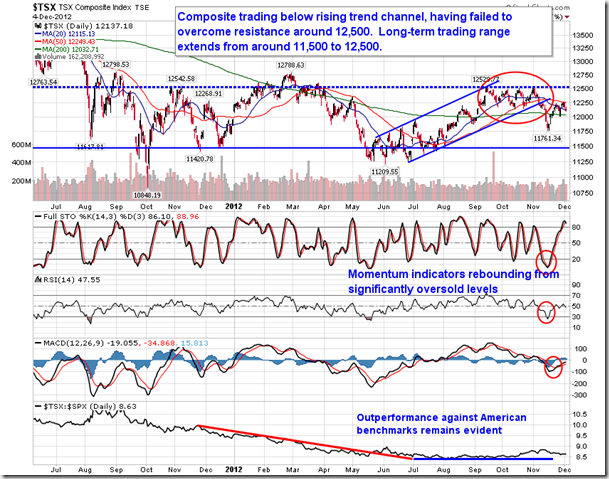
The quote above is reflected in the TSE seasonality chart below, part of a comprehensive report that also identifies periods of reoccurring strength in the S&P 500, Sector & individual stock analysis. Read & view the report in full HERE – Editor Money Talks


 Ecuador hands Goldman Sachs 466,000 ounces of gold worth roughly $580 million at today’s ruling price. Ecuador under its socialist President Rafael Correa is seeking sources of cash after they borrowed over $11 billion from China because they defaulted on $3.2 billion of foreign debt five years ago. This is the consequence of debt and in the hands of socialists-communists, the bonds ultimately are always defaulted upon.
Like Zimbabwe, who had to adopt foreign currency because people will not trust their own, Ecuador is the only country in South America that is using the US dollar as currency. Ecuador did not sell its gold, it effectively borrowed against it in exchange for more liquid assets. Ecuador expects to turn a profit of as much as $20 million on the transaction and it will get the gold back within three years and the central bank expects to turn a profit of as much as $20 million on the transaction without explaining how.
It appears that Goldman will most likely sell the gold forward helping to break the back of gold and will most likely look to replace it at the lows under $1,000.


In silver, we need to see a daily closing back above 1952 to suggest a reaction to the upside. The key resistance on a nearest futures basis stands at 1993 and only a daily and weekly closing above this level will temporarily relieve the downward pressure. It is 1825 where we see a big gap down to the high $15 range.
We see next week and the week of 6/30 as the key turning points ahead in silver on a weekly basis. The major support levels are at 17.30 and 13.30.
…more from Martin Armstrong:
EU to Seize Greek Pension Funds
Will The Petrodollar Die?

Prediction: European Central Bank leader Mario Draghi is going to disappoint people tomorrow. We just don’t know who they will be.
Tomorrow’s ECB action will be a huge media event, much like last year‘s Federal Reserve meetings. Ben Bernanke kept us all in suspense for months over the “taper“ decision, and then most Fed news went back to being routine and unexciting.
The same may happen tomorrow …

Most of Europe is still stuck in recession, or at least close to it. The ECB is the central bank for countries in the euro currency system. The U.K. doesn’t use the euro — but Germany, France, Spain, Italy, Greece, and others do. Draghi is their version of Janet Yellen or Ben Bernanke.
As far as I can tell, most Europeans want Draghi to “do something“ that stimulates economic growth.That’s where the agreement ends. Many Germans worry about inflation, while Greeks want more inflation.
Draghi can’t please everyone. So what will he do?
The expectation as of this afternoon is that the ECB will cut its “deposit rate,” which is the amount of interest it pays for reserves that European banks must deposit with the ECB. That rate has been 0% since July 2012.
How do you cut rates below zero? Draghi is probably about to show us exactly how.
If the deposit rate goes to -0.1% or -0.15%, banks will have to start paying the ECB for the privilege of complying with laws that make them deposit money there. The theory is that discouraging banks from holding cash at the ECB will make them increase lending to people and businesses, thereby stimulating growth.
I don’t believe it will work that way. Loan rates in Europe are already over 5%. If the spread between 0% and 5% isn’t enough to make banks start lending, another 0.1% won’t make much difference.
So why go to the trouble? Draghi and his colleagues may think the psychological jolt of negative interest rates will have some kind of positive impact. They’re also trying to discourage foreign capital from entering Europe and making the euro currency stronger.
It’s also possible the ECB will launch an asset purchase program, similar to the Fed’s quantitative easing policy. We don’t know what assets they would buy, or whether a European QE will work any better than QE did over here.
Some of our analysts are on the other side of that opinion. In fact, my colleague Geoff Garbacz made a bet today: a bottle of Chilean Malbec wine if the ECB does asset purchases.
***
Bond traders already presume the ECB will pull the negative interest rate trigger. Markets have “priced in“ that change, so reaction will be minor if that’s all we get.
All bets are off if Draghi surprises the markets with a Euro QE or other new schemes. The news will break in the morning hours for Americans, so our markets could get crazy.
Warning: If you’re planning any portfolio changes, tomorrow is probably not a good day to implement them. Friday may not be, either, if the U.S. jobs report contains any big surprises.
Even if you aren’t trading anything directly exposed to Europe, events like this one can create gyrations for everyone.
If you’re not a professional trader, the best move is to watch from the sidelines. The near-term forecast will be a lot clearer once these two events are behind us.
***
Speaking of Europe, President Obama is over there right now. Today in Warsaw he met with Ukrainian president-elect Petro Poroshenko.
From there, Obama went to Brussels for a meeting with the former G-8 group, which is now down to G-7 with Vladimir Putin’s ejection. Putin was originally supposed to host this meeting in Sochi, Russia.
Obama and Putin will still cross paths when both attend a ceremony Friday marking the 70th anniversary of the Allied invasion at Normandy. According to press reports, Putin’s schedule includes private meetings with French president Francoise Hollande, German chancellor Angela Merkel, and British PM David Cameron.
No Obama-Putin meeting shows up on any schedule I’ve seen — but they will both be inside the same big French chateau for several hours. Maybe something will happen once the cameras are off. They certainly have plenty to discuss.

U.S. stocks advanced Wednesday, with the S&P 500 index hitting a record high, as investors weighed a mixed bag of news on the economy.

The Dow Jones Industrial Average advanced 15.19 points, or 0.1%, to 16737.53. The S&P 500 tacked on 3.64 points, or 0.2%, to 1927.88, its 16th all-time high this year.
The Nasdaq Composite Index gained 17.56 points, or 0.4%, to 4251.64.
On Tuesday, the Dow slipped 21 points, or 0.1%, to snap a three-session win streak, and the S&P 500 eased less than 0.1%, failing to close at a record for the first time in four sessions.
Stock benchmarks started Wednesday in the red but drifted higher in midday trading, as investors weighed mixed economic reports.
“Now’s going to be the time when the data is, or isn’t, going to point to an accelerating recovery,” said Hank Herrmann, chief executive of money-management firm Waddell & Reed. But “there’s still some confusing elements.”
Many investors have been holding tight in their current positions or raising cash levels as the S&P 500 trades at all-time highs. Wells Fargo Private Bank, which oversees $170 billion in client cash, recently raised its recommended cash level for its advisers. Mark Litzerman, head of equity research for the bank, said that the bank plans to invest that cash eventually, but it is holding back until it gets a clearer read on the economic outlook.
“One of the big conundrums for investors is, if you take money out of a certain asset class, where do you put it?” he said. “We’re waiting to see how things play out with the economy this summer before we make a move.”
Stock futures had pushed lower before the market’s open after a disappointing report on the labor market. Data compiled by Automatic Data Processing and Moody’s Analytics showed that 179,000 private-sector jobs were added in May, falling short of expectations of a 210,000 increase.
But benchmarks pared losses after a report on service-sector activity came in better than expected. The Institute for Supply Management’s nonmanufacturing composite index for May came in at 56.3, above expectations of 55.2.
Despite the raft of data, trading remained relatively light on Wednesday, traders said. “The volume has been awful,” said Michael O’Rourke, chief market strategist at JonesTrading Institutional Services.
Investors are awaiting Thursday’s policy-setting meeting for the European Central Bank, when most economists expect the bank to cut rates, and Friday’s U.S. employment report. Wednesday’s ADP report is seen as a preview of the government’s May employment report Friday, which is expected to show nonfarm-payroll growth of 210,000.
Among other economic data released Wednesday, the trade deficit for April widened 6.9% to $47.2 billion versus expectations of $40.9 billion. First-quarter productivity was revised to show a decline of 3.2% and unit labor costs increased 5.7%, close to expectations.
The yield on the 10-year Treasury note rose to 2.604%, after settling at a three-week high of 2.592% late Tuesday.
Gold futures lost less than 0.1%, to settle at $1,244.00 a troy ounce, after snapping a six-session losing streak on Tuesday. Crude-oil futures slipped less than 0.1% to settle at $102.64 a barrel.
The dollar rose against the euro and the yen.
The Stoxx Europe 600 was little changed, gaining less than 0.1%. Economic data out of the euro zone continued to support expectations that the ECB will introduce new stimulus measures by either cutting interest rates or boosting liquidity through asset purchases. Data firm Markit said its composite purchasing managers index, which measures activity across both the manufacturing and services sectors, fell to 53.5 in May from 54 in April.
Asian markets were mostly lower, with China’s Shanghai Composite falling 0.7% to suffer a fourth-straight decline. Japan’s Nikkei Stock Average bucked the regional trend by tacking on 0.2%.
New on WSJ: Frontier Markets
Among other economic data released

Is it for real?
That was the question I was asking when the S&P 500 kept flirting with the 1,900 mark. Now, with the index notching up one closing record after another and trading solidly in the 1,920s range, I’m becoming a believer.
Why does it matter? Because now is the time for even long-term investors to add equity market exposure for the summer months. I’m even seeing some cues emerging from the Weiss Ratings model results that point me to certain sectors and industries for gaining fresh exposures. I have highlighted both the healthcare and consumer discretionary sectors as fertile ground for stock pickers to find those with high Weiss Ratings that have become wall flowers at this latest sentiment-driven dance of a rally. I still feel those areas should be explored by serious investors who recognize high quality at a discount.
That’s really the crux of what I do here at Weiss Research. I take the results of a very successful set of combined algorithms, which assess stocks mainly on their companies’ fundamental strengths — like sustainable cash-flow growth, and a well-managed balance sheet — but I also take into account forward-looking cues from the market, in the form of share price performance and volatility. The end result of these algorithmic observations is a ranked list of potential investments, which, if successfully analyzed further, can lead to above-market returns on a consistent basis over time.
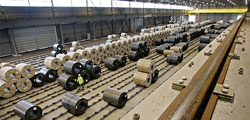 Opportunity may arise in materials, one of the most economically-sensitive sectors, as a result of the summer’s trading.
While the Weiss Ratings capture short-term hreats (such as the negative trend in healthcare ratings versus their market-beating performance over the past month), it still points us to potential winners in this sector that is clearly in the line of fire for politicians in the U.S. this summer and fall because of Obamacare. That said, it appears to me that some of the top service providers — like insurers, but also some of the distribution-centric industries — may suffer most in the near term, so we should probably wait until fall to revisit them.
My picks from my last column on healthcare still stand, even those in the potential trouble spots, for longer-term time horizon investors. However, I am getting warmer on some of the device companies that have taken it on the chin lately. I’m eyeing them for my subscription service as shorter-term potential trades during the next few months. Of course, my focus is on those stocks that have pulled back, but still retain a B- or better Weiss Rating.
On the back of a sentiment-driven stock market rally over the past couple of weeks, I am seeing more and more stocks falling in their Weiss Ratings, in some cases despite upticks in current market prices. So even though I maintain my bullish overall view on stocks, I think it’s time to refocus on disciplined investing in those areas where Weiss Ratings are rising, and take note of the reasons for weakness in our ratings for those that are falling.
That divergence — rising stock prices and falling ratings — has kept me slightly cautious in deploying new capital in general for my subscription service. That’s because despite a stable environment in terms of earnings growth expectations following the first-quarter earnings season, forward-looking expectations remain stubbornly low in relation to the market’s seeming buoyancy. These are not only cues to shorter-horizon traders, but also to longer-horizon investors about what might happen in the very short-term — “noise”-type news flow that can either set up a short-term trading opportunity, or signal a buy or sell order from even the most long term-minded investors.
While the rest of the market (including me) focuses on macro trends that affect the economically sensitive sectors, providing entry points for new names, it’s also important to remember the principles of portfolio management that tell us to have at least some exposure (underweight though it may be) to industries and sectors that do not correlate with those stocks in your main thrust (in our Weiss Ratings Portfolio’s case, that is the resurgence of pro-cyclical areas of the economy).
I have added a defensive name recently, and did so to buttress the Portfolio’s diversity as I position it for the second half of 2014. Opportunity may arise in materials, one of the most economically-sensitive sectors, as a result of the summer’s trading. But I’m after those that pass both the Ratings gauntlet (or soon to do so) and a fundamental scrutiny. Pro-cyclical is how I intend to increasingly position the Portfolio for now.
Best,
Don Lucek
P.S. Watch your inbox today after the market closes for Mike Larson’s afternoon edition of Money and Markets. Mike will give you a market roundup, a top story for the day, and an opportunity to share your thoughts on his blog.
-
I know Mike is a very solid investor and respect his opinions very much. So if he says pay attention to this or that - I will.
~ Dale G.
-
I've started managing my own investments so view Michael's site as a one-stop shop from which to get information and perspectives.
~ Dave E.
-
Michael offers easy reading, honest, common sense information that anyone can use in a practical manner.
~ der_al.
-
A sane voice in a scrambled investment world.
~ Ed R.
Inside Edge Pro Contributors

Greg Weldon

Josef Schachter

Tyler Bollhorn

Ryan Irvine

Paul Beattie

Martin Straith

Patrick Ceresna

Mark Leibovit

James Thorne

Victor Adair