
Timing & trends
The markets of late have been like watching paint dry.
I’ll address them in a few minutes.
But first, let me tell you about some reflective thoughts I had while watching the markets this past week.
Thoughts about what a mess the world is in. There’s a whole lot going on that I don’t like one bit at all.
I don’t like the fact that China is being very aggressive in the South China Sea, and that it is all but certain a war will break out there some day soon.
I don’t like the fact that Germany is now becoming the last shoe to drop in the European Union, with its GDP for the most recent quarter slumping badly.
 I don’t like the rise of neo-Nazi and fascist groups all over Europe.
Nor the very real chance Putin will invade Ukraine and other Eastern European countries and former Soviet Union satellites.
I am very worried too about the Middle East. I have absolutely no doubt that a wider war looms dead ahead, between several Middle Eastern countries.
Or that the Ebola virus could become the 21st century’s Black Death.
But these are just a few of the things I don’t like about the current state of the world.
I am extremely worried about what’s happening in my own country.
I am worried that our insane and arcane tax code is driving the rich to invest overseas and to even give up their citizenship.
And that there is now a rash of “corporate inversions” going on where some of our biggest and brightest companies are leaving our shores for lower-taxed homes in other countries.
Our tax code is precisely what our forefathers didn’t want. A direct tax on our labor that effectively turned our country into a socialist state by making us all slaves of a leviathan.
And by giving the government the right to intrude on your privacy by monitoring everything you make and do.
That’s what our income tax is. Our forefathers were against all forms of direct taxation, and were for indirect taxation instead, such as a national sales tax.
But now, we have the opposite — an income tax that has become so repressive that the IRS is now chasing down every penny it can find, even money you have or earn outside of the U.S. — making our country the only developed country in the world to have such a draconian tax system.
Yes, you are an economic slave to Washington.


I don’t like how our federal government wastes more money than one could do if they were stinking drunk, and though they could issue blank checks and promises to everyone.
And that behind closed doors in Washington, our leaders are actively considering the International Monetary Fund’s socialist answer to simply grab 10 percent of everyone’s wealth to help solve our debt problems …
And to further confiscate our wealth by requiring all retirement accounts to buy U.S. Treasuries.
I totally despise the fact that 200 million Americans now live completely without any constitutional rights, in a so-called “Constitution-free zone” where you can be stopped, searched and thrown in jail without a warrant or due cause.
The NSA spying, which continues unabated, has trampled on our right to privacy — another completely distasteful act our leaders are engaging in.
I also despise the fact that our country’s legal system has become such a farce that each and every one of us is guilty of committing as many as three felonies a day, according to research by Harvey Silverglate and Alan M. Dershowitz.
 And the Department of Homeland Security (DHS)? Along with the IRS, it’s become the modern-day Gestapo — an internal standing Army intruding and trampling on your privacy and liberty.
Arming and militarizing local police with military-grade armored vehicles and weapons, 1.8 billion hollow-point bullets and more.
Can you blame the people of Ferguson, Missouri? How would you react if militarized police paraded down your street loaded to the gills with all sorts of hardware you’d normally see only in a war-like situation?
And lest you think Ferguson is an extreme example of the American police state, think again. There are countless examples of heavily armed SWAT teams being used in America even for routine investigations and petty crimes.
Thing is, the war cycles ramp up all the way into late 2020. That means we have almost six years to go before there is any relief in sight.
Sure, there will be brief interludes between now and then. But in the months and years ahead you can expect …
 More civil wars across the globe
Massive social and political unrest in the developed economies of Europe and the U.S.
Rising taxation and confiscatory wealth measures
International wars
More international terrorism
More invasions on your privacy
More Fergusons
And more, lots more geo-political unrest, the worst we have seen, according to my war cycle models, since the mid-1800s.
And on top of all that, you will see the baton of the largest economy in the world get passed from the U.S. to China.
As to the markets, there have been no changes since my column last week.
First, the U.S. broad equity markets, as expected, have bounced. But that’s all it is, a bounce. A 20 percent swoon in the Dow lies dead ahead.
Second, continue to avoid U.S. and European sovereign bonds. Though rallying a bit in price, the risk to owning them vastly outweighs the potential reward.
Third, gold and silver remain a bit lackluster, due to summer seasonal weakness.
But be sure to use that weakness to accumulate precious metals. The next phases of their long-term bull market are right around the corner.
Fourth, continue to steer clear of the euro currency. Instead, keep most of your money in dollar-based investments. As much as there is not to like about what’s happening to the U.S. — Europe and the Middle East are in worse shape, which is driving frightened capital directly into the dollar.
Fifth, consider investing in Asia, which is a bright spot in the world. I repeat my warning in my last column: According to all of my models, most Asian equity markets are now embarking upon new long-term bull markets, with China leading the way higher.
What is your view on all this? How do you see things developing in the near term? Feel free to add your comments to the discussion — click here to participate.
Stay tuned, stay safe and best wishes,
Larry

 Quotable
““The thought is not something that observes an inner event, but, rather it is this inner event itself. We do not reflect on something, but, rather, something thinks itself in us. ”
Robert Musil
Commentary & Analysis
Japanese yen – Can 92% of the punters be right?
In currency markets we should be concerned about those that act, i.e. acting bulls and bears who take real positions as opposed to talking bulls and bears that are either on the sideline or just talk about currencies and don’t really trade for a living. This positioning is what drives price action.
….92% bearish yen…can that many be right?
Jack Crooks
President, Black Swan Capital

Economic concerns weighed on silver and oil.
Palladium and corn outperformed this week, while other commodities struggled. At the same time, the S&P 500 eked out a gain of less than 1 percent, bringing its year-to-date gain up to 5.4 percent.
Macroeconomic Highlights
Geopolitical headlines were mixed this week. On the one hand, Putin struck a dovish tone in comments he made on Friday: “We will do everything in our power so that this conflict is ended as soon as possible, so that the blood can stop flowing in Ukraine.”
On the other hand, Ukraine reported that Russia made a recent “incursion” into Ukraine, which Ukrainian forces propelled. Russia denied the claims.
This week’s economic news was on the disappointing side. According to Eurostat, eurozone gross domestic product was unchanged in the second quarter, below the 0.1 percent increase that was expected. On a year-over-year basis, GDP was up by 0.7 percent.
The eurozone’s largest economy, Germany, saw its GDP shrink by 0.2 percent in the second quarter, also below expectations.
Separately, Eurostat reported that the consumer price index in the eurozone grew by 0.4 percent year-over-year in July, while the core CPI rose by 0.8 percent from a year ago. Both figures were in line with expectations, but well below what the European Central Bank is comfortable with.
In the U.S., the Commerce Department reported that retail sales were flat in July, worse than the consensus estimate that was calling for a 0.2 percent increase.
Finally, highly anticipated growth figures from Japan showed that the country’s economy contracted by an annualized 6.8 percent in the second quarter. Though that was better than the 7 percent contraction that was expected, it was the worst showing since the 2011 earthquake and nuclear crisis.
Economists say the GDP decline is a response to a sales tax hike that took effect in April, which took the rate from 5 to 8 percent. Anticipating the hike, consumers had pushed their purchases forward to the first quarter, fueling a 6.1 percent GDP increase. We now know that that was more than reversed in the second quarter.
Commodity Wrap

….read page 2 HERE
 “Carpe diem. Seize the day, boys. Make your lives extraordinary.” – Dead Poets Society
The stock market’s July swoon sure didn’t last long. From closing high to closing low (July 24 to August 7), the S&P 500 lost a grand total of 3.94%. That small bit of turbulence unnerved a lot of folks who should have known better. But since there’s been so little volatility of late, that minor dustup seemed larger than it truly was.
Last week, the Russian military called off some exercises near the Ukrainian border. I can’t say those exercises specifically caused the market’s tumble, but ever since they ended, the stock market has rallied. The S&P 500 has advanced in four of the last five sessions, and we’re not too far from another new high. Since August 7, the S&P 500 has gained 2.39%. Another sign that tensions have chilled out is that small-cap stocks have led the bounce-back rally, and the VIX is back down again.
Now that second-quarter earnings season is past us, this is a good time to run through all 20 stocks on our Buy List and review their prospects for the rest of the year. I’ll also take a look at the recent bond market rally. Long-term yields have been dropping, and I think the time has finally come for bonds to take a rest. We’ll also preview two Buy List earnings reports for next week. But first, let’s look at the stretched market for bonds.
It’s Time for Bonds to Sit Down
As well as the stock market’s done lately, the bond market has been a rock star this year. The yield on the 10-year Treasury closed at 2.40% on Thursday. That’s a 14-month low. If you had told me on New Years Day that the 10-year would go for 2.40% by August, I would have thought you were out of your mind. The yield has dropped more than 60 basis points since the start of the year.
It’s interesting how few people saw this big bond rally coming. Jeffrey Gundlach, the bond kingpin, was one of the few who got it right. There seems to be an insatiable appetite for all things bond. This week, the Treasury auctioned off some 30-year bonds, and yields were the lowest in more than a year.
Why the demand for fixed-income? I think this represents misplaced concerns about stock prices. Given where we are in the economy, it’s safe to say that the bond rally has run too far. The idea that investors are willing to lock in their capital for 10 years to get a measly 2.4% seems a bit crazy to me. That’s almost exactly what the stock market has gained in the last five years.
Several of our blue-chip Buy List stocks yield more than the 10-year, such as Wells Fargo(WFC), Ford (F) and Microsoft (MSFT). Not only do they yield more, but they’re also thriving businesses. As much as I love bonds, they just sit there.
You can really see the absurdity of the bond market by looking at the TIPs — the inflation-protected bonds. The 10-year TIP currently yields 0.2%. That’s down from 0.8% late last year. I understand why investors are nervous about stocks, but I don’t see why anyone would invest in a bond that barely beats inflation for the next 10 years. In 2012 and 2013, the 10-year TIPs turned negative, but the fear was more understandable, given the dramatic events in Europe. The 10-year Spanish bond now yields less than American bonds. In Germany, the 10-year bond dropped below 1%. The 1% Club is very exclusive; the only other members are Japan and Switzerland.
Thanks to improved economic numbers, we can expect long-term yields to drift higher as the year goes on. By this time next year, the Federal Reserve may have already started raising interest rates. Now let’s take a look at our Buy List.
Rundown of the Buy List
I was puzzled by the market’s negative reaction to AFLAC‘s (AFL) Q2 earnings report. I thought the earnings were fine. After all, they beat expectations by seven cents per share, but the shares fell as low as $58.50, and two weeks ago, I said the stock was an especially cheap buy below $60. The good news is that AFLAC ticked up above $60 per share on Thursday. AFLAC remains a good buy up to $66 per share.
Bed Bath & Beyond (BBBY) continues to recover, but unevenly. BBBY broke above $64 per share in late July. That’s nearly $10 more than its July low. Investors clearly overreacted to BBBY’s bad news. Remember that this is one of our off-cycle stocks, so they’ll report their Q2 earnings in about six weeks. They see Q2 earnings ranging between $1.08 and $1.16 per share. That’s not bad. Bed Bath & Beyond remains a good buy up to $65 per share.
Last week, I mentioned that CA Technologies (CA) was in danger of being knocked off next year’s Buy List. I’m free to change my mind before then, but I need to see more signs of improvement from CA. The part I really like is the generous yield. Going by Thursday’s close, CA yields 3.52%, but I’m not crazy about them. CA Technologies is a moderate buy up to $31 per share.
Cognizant Technology (CTSH) seemed to be our only bomb from last earnings season. Now that I’ve looked at the numbers, I’m not worried about CTSH at all. I apologize if you were caught in the sell-off, but the company is still doing well. If you don’t own CTSH, this is a good time to start a position, especially if you can get it below $45 per share. Cognizant Technology remains a good buy up to $48 per share.
CR Bard (BCR) is one of those quiet stocks that you tend to forget about because they’re so quiet. That’s unfair, because this is a solid company. Bard beat earnings last month and raised their full-year guidance. They now expect $8.25 to $8.35 per share for the full year. I held off on changing our Buy Below on Bard, but I think this is a good time for an increase. I’m raising our Buy Below on CR Bard to $160 per share.
I also mentioned DirecTV (DTV) last week as a possible deletion from next years’ Buy List. The difference is that I love DTV. It’s the AT&T deal that makes them less attractive as an investment. Their business continues to do well. I’ll let you know as we hear more about the AT&T deal. My decision will come down to how close the shares are to $95 by year’s end. There’s no point in holding on to a stock for a few more percent. Until then, DTV is a buy up to $95 per share.
eBay (EBAY) got knocked around for most of the spring. I’m pleased to see the shares are making their way back. They beat earnings by a penny per share last month, and the stock has continued to rally. eBay sees full-year earnings ranging between $2.95 and $3.00 per share. I’m going to keep a tight Buy Below for eBay at $55 per share.
Express Scripts (ESRX) was our surprise star from last earnings season. The shares jumped 7.15% over two days. The pharmacy-benefits manager now expects full-year earnings of $4.84 to $4.92 per share. I also like that ESRX has a fairly clean balance sheet. I’m going to keep our Buy Below at $74 per share for now, but I may raise it soon.
After the market’s July slide, I was curious which Buy List stock would be the first to make a new high. I remember thinking that picking Fiserv (FISV) would be “too easy.” The stock rarely disappoints. On Thursday, Fiserv got as high as $62.47 per share, which is only 63 cents below the high from three weeks ago. This week, I’m raising our Buy Below on Fiserv to $66 per share.
You should never fall in love with a stock, but I have to admit that I have a serious crush onFord Motor (F). The stock had a strange sell-off that brought it below $17 for a few days. Don’t let that scare you. Things are going very well for Ford. I think we can expect another run at $18 per share. Ford currently yields 2.87%. Ford Motor is a buy up to $19 per share.
IBM (IBM) was the stock that everyone loved to hate. I think that’s softened a bit, but Big Blue has many problems ahead. Fortunately, the shares are pretty cheap here. I don’t know if they’ll hit their highly touted earnings target of $20 per share for next year. I’m assuming they will. The company has been spending enormous amounts of money buying back their own shares — $3.7 billion in Q2! I don’t think this is the wisest strategy. I’d rather see that money go back to shareholders. IBM is a buy up to $197 per share.
McDonald’s (MCD) is another stock that I listed last week as a candidate to stay home next year. I want to see signs from management that they get how serious the problems are. I don’t consider MCD to be a speculative play, since the dividend is quite solid at 3.46%. McDonald’s is a buy up to $101 per share.
Medtronic (MDT) is due to report on Tuesday, August 19. Wall Street currently expects earnings of 92 cents per share. My numbers say that’s about right. The medical-device maker is currently working through its big deal with Covidien. This is another stock that may not be back next year. Again, it’s not because I don’t like Medtronic, but the new company will be quite different. They see full-year earnings ranging between $4.00 and $4.10 for this year. Medtronic is a buy up to $67 per share.
Satya Nadella, Microsoft‘s (MSFT) new CEO, is still enjoying his honeymoon on Wall Street. Investors clearly love Steve Ballmer’s replacement. The irony is that much of the company’s recent success is due to Ballmer as much as to Nadella. If you recall, the stock fell in the after-hours market after the last earnings report came out. Then, once folks had a second to actually read what the company had to say, investors realized they had a good quarter. I think MSFT will make a run at their 52-week high soon. It’s our second-best performer this year. Microsoft continues to be a solid buy up to $48 per share.
Moog (MOG-A) is the final company I listed last week as a potential candidate to be culled from the Buy List. I didn’t like their recent guidance. I’m keeping a tight Buy Below at $71 per share.
Oracle‘s (ORCL) last two earnings reports were not particularly inspiring. But the more I look at the company, the more impressed I am. Thanks to the sell-off, I think Oracle is an especially good bargain here. Oracle will report fiscal Q1 earnings in mid-September. In June, they gave guidance of 62 to 66 cents per share. They should be able to get that easily. Oracle is a very good buy below $40. My Buy Below is at $44 per share.
Qualcomm (QCOM) got wrecked after its last earnings report, but here’s the hitch — the earnings were outstanding. Qualcomm also raised their full-year guidance, but investors were worried about their legal conflict with China. Unfortunately, there’s not much QCOM can do. I think they may wind up paying a hefty fine which may be the easiest route. Qualcomm remains a buy up to $79 per share.
Shares of Ross Stores (ROST) have not done well this year, but that’s mostly due to the lousy environment for retail, not with their performance. This week’s poor retail report also hurt the deep discounter. Ross is due to report fiscal Q2 earnings next Thursday, August 21. The company expects earnings between $1.05 and $1.09 per share. They also gave full-year guidance of $4.09 to $4.21 per share. If Ross can land in the upper end of that forecast, then the current share price is quite good. But I want to see next week’s results before I can say I’m more confident. Ross Stores is a buy up to $71 per share.
Stryker (SYK) is one of those steady stocks that rarely surprises us. However, they surprised last month when they lowered guidance. Stryker lowered the top end of their full-year forecast by 10 cents per share. The shares pulled back from $86 at the beginning of July to $81 recently. Nevertheless, this isn’t one I worry about. Stryker remains a good buy up to $87 per share.
Wells Fargo (WFC) is simply the best-run big bank in the country. Wells is having a good year for us (+11%). The bank isn’t quite the bargain it used to be, but I hope to see another dividend increase soon. For now, earnings growth has slowed down, but Wells is also a much safer stock than it used to be. Wells Fargo remains a buy up to $54 per share.
That’s all for now. Next week should be another slow week. There’s not a lot of economic news or earnings reports due, so traders may be especially sensitive to headline risk. On Tuesday, the Labor Department reports on consumer inflation. The recent up trend has been very modest, and it may have peaked. On Wednesday, the Fed releases the minutes from its most recent meeting. I think it’s clear what path they’re on. Be sure to keep checking the blog for daily updates. I’ll have more market analysis for you in the next issue of CWS Market Review!
– Eddy
Named by CNN/Money as the best buy-and-hold blogger, Eddy Elfenbein is the editor of Crossing Wall Street. His free Buy List has beaten the S&P 500 for the last seven years in a row. This email was sent by Eddy Elfenbein through Crossing Wall Street


The Sovereign Debt Crisis is unfolding on schedule. I have warned at thePhiladelphia Conference that half of Germany’s municipalities are on the edge of bankruptcy as was the case with Detroit. Instead of reform, no, government just increases the tax burden upon the people who they see having an endless supply of money to be expropriated for their personal glory.
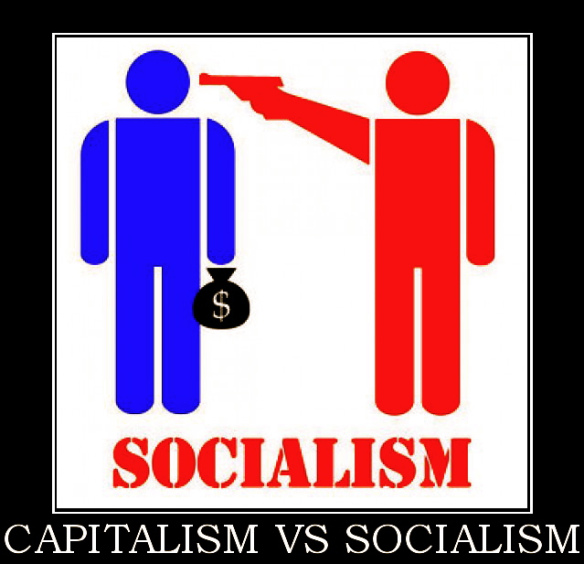
Just like a small business that keeps expanding, those in government do the same thing except it consumes money never creates anything. Socialism is not about helping the less-fortunate. It is about government workers helping themselves to what you have. This is no different from giving money to a charity and you find out 80% goes to administration costs.
In Germany where the average person already pays more than half their wages in taxes to support government, here comes another tax on top of the existing proposal to confiscate 10% of everyone’s accounts to pay for the banks. Now there will be the “solidarity” contribution (solo) which is for continuous control of government. According to information from the German economic news, the Federal Government, states and municipalities intend to share the solos revenues, in order to meet their debt service obligations. You see, there cannot be hyperinflation. Governments resort to hyperinflation ONLY when they cannot borrow or tax anymore. They will turn you upside-down and take your gold fillings before they will ever resort to printing.
What the new tax will be called, is still open to speculation. In order to bring the matter quickly across the stage, some top officials have been punished with forced furloughs to prevent their objections. It is becoming very clear: Taxpayers are dispossessed not only with low-interest rates to keep government financing artificially low, confiscation of assets to help bailout banks who lost speculating with your money, but they will have to pay 5% of their income to now bailout state and municipal debt. There will never be enough money to go around because pensions will continue, workers will retire, they will hire replacements and the size of government will grow exponentially until this bubble bursts just as a speculative bubble in stocks – there is no difference! This is a bubble in government!

There is just never any end in sight to the bull market in taxation until the bubble bursts and the people rise up creating the next revolution. That is ALWAYS the historical out come unless they can find an external enemy to create war to hide their defaults.

-
I know Mike is a very solid investor and respect his opinions very much. So if he says pay attention to this or that - I will.
~ Dale G.
-
I've started managing my own investments so view Michael's site as a one-stop shop from which to get information and perspectives.
~ Dave E.
-
Michael offers easy reading, honest, common sense information that anyone can use in a practical manner.
~ der_al.
-
A sane voice in a scrambled investment world.
~ Ed R.
Inside Edge Pro Contributors

Greg Weldon

Josef Schachter

Tyler Bollhorn

Ryan Irvine

Paul Beattie

Martin Straith

Patrick Ceresna

Mark Leibovit

James Thorne

Victor Adair