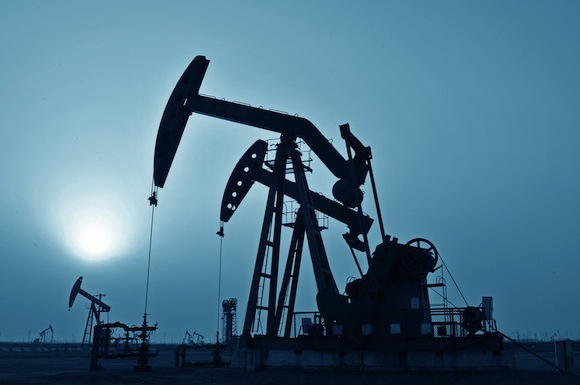
 In this exclusive interview with
 The Energy Report: Your expertise is in the exploration and production (E&P) space. Please give our readers some key investable ideas among those names.
Philip Juskowicz: We’ve seen a divergence between the micro-cap space and the small-cap space within the oil E&P companies. The micro caps have underperformed substantially versus the small caps over the past couple of years. I attribute that to enthusiasm for shale plays, yet only small-cap companies have the financing necessary to develop those expensive plays. Micro caps missed out on that investor appetite; that’s probably why they’ve underperformed.
 Given the current oil price environment—uncertainty, downward pressure—the first companies to get hit were the ones with strong exposure to oil prices, even if it was just headline exposure. In fact, my research shows a 58% correlation between the small-cap universe and oil prices, whereas the micro-cap space only vaguely correlates to oil prices. Most small caps are going to be hit regardless of what hedges those companies have in place, whereas many micro-cap companies are one-off value plays, and those value plays are still intact. There is a good case for micro-cap stocks here.
TER: The predominant oil price theory making the rounds is that surging U.S. oil production from old basins and shale plays has reduced America’s dependence on imported oil and will keep downward pressure on the oil price for the foreseeable future. Is that how you see it?
PJ: I do. At the same time, though, there are at least two different factors that should put something of a floor under falling oil prices. First, the marginal cost to produce a barrel of oil is more than it used to be. About 10 years ago, it cost $30 to produce a barrel of oil. Now it’s $60/barrel ($60/bbl). If the oil price falls to that level, many plays would no longer be economic. Second, we have already seen some producers cut back on drilling in response to lower prices. With lower prices comes lower production, and that would put some sort of floor under pricing, too.
TER: What are your near- and mid-term crude forecasts?
PJ: I’m a little bit below the consensus on The Street. The consensus was $94/bbl for 2015 and $95/bbl for 2016. I’m at $91/bbl in 2015 and $93/bbl in 2016. The drilling curtailments should help lower production.
TER: In mid-November, JPMorgan Chase & Co. downgraded its 2015 Brent price by $33 to $82/bbl, citing pressures in the Atlantic basin and the inability of the Organization of the Petroleum Exporting Countries (OPEC) members to curtail production. It also lowered its 2016 forecast to $87.80 from $120. What are your thoughts on those moves?
PJ: The consensus figures out there are too bullish. It feels good that there’s a major bank that has lowered its pricing forecasts. JPMorgan Chase is not saying it’s going to be an all-out blowout, but that its 2016 price of $120/bbl may have been too high. The company has a lot of quantitative people behind those numbers.
TER: JPMorgan Chase also warned us that if there is not a new OPEC agreement in place, crude could slip as low as $65/bbl in January. Is that likely?
PJ: Over the last three years or so, OPEC has become less relevant, less cohesive and, therefore, less able to dictate world oil prices. If the market thinks that OPEC is falling apart, there could be a psychological impact, but not an actual fundamental impact. I don’t think OPEC is acting on the basis of supply/demand fundamentals.
TER: Do you expect the spread between West Texas Intermediate (WTI) and Brent to continue to contract?
PJ: I definitely don’t see it widening. If anything, it should narrow or remain status quo. The main factor is that the petroleum industry has become more global. You see that with Saudi Arabia dillydallying to U.S. pricing; you see that with the U.S. moving toward exporting oil; and you see that with more infrastructure being built in the U.S., which is lessening the gap between WTI, Cook and other benchmark prices.
TER: It was recently reported that Halliburton Co. (HAL:NYSE) has made a takeover bid for Baker Hughes Inc. (BHI:NYSE) How will this merger impact the energy services sector? Do you project any other major M&A news in the coming months?
PJ: The consolidation of two major oilfield service companies can only result in stronger pricing power, notwithstanding any Hart-Scott-Rodino-mandated divestitures. This would hurt explorers and producers (E&Ps).
 I expect further consolidation in the oilfield services sector in an effort to compete with the new Halliburton. Any decrease in activity by the E&P space would put even more pressure on the space to engage in mergers and acquisitions (M&A).
TER: What is your basic investment thesis for the micro caps?
PJ: Number one is that there are value plays in the micro-cap space. These companies have been overlooked in the shale play revolution happening over the past couple of years.
Another item for investors to consider is good old natural gas, because lower oil prices have reduced the oil-and-gas spread. On an energy-equivalent basis, not that long ago oil was five times as valuable as gas. That number is now three times. And natural gas generally costs less to drill for and produce. The margins for natural gas companies are going to widen. That may be another investable theme going into 2015.
TER: Do you think natural gas demand could dramatically increase with the onset of another cold winter?
PJ: Yes, but I don’t like to guess the weather. Another factor that could drive demand is that several petrochemical plants and liquefied natural gas facilities (some of the biggest end-users of natural gas) are slated to begin production over the next couple of years. We talked about how the margins for gas have improved relative to oil, but those margins could further improve if gas prices move higher. Natural gas has some good pricing momentum behind it.
TER: What are your 2015 and 2016 price forecasts for gas?
PJ: They’re $4.16 per thousand cubic feet ($4.16/Mcf) for 2015 and $4.50/Mcf for 2016.
TER: If investors are doing their due diligence on micro-cap equities and come across companies with working capital issues, should they consider that a red flag?
PJ: It is a red flag, and I would put those companies down as speculative buys. I had one company modeled as having a negative cash position within a couple of months; my speculative buy assumed the company received a capital infusion. I think that is normal for micro-cap companies. The company doesn’t have accounts receivable per se, yet has general and administrative expenses. It’s not uncommon to have a working capital deficit.
TER: You recently upgraded your rating on an oil services name. Please tell us about that.
PJ: ENSERVCO Corp. (ENSV:NYSE.MKT) is a relatively small company that provides frack water heating, hot oiling and acidizing services to the E&P universe. I like that the company is increasing its exposure to these defensive types of services. We’re in a questionable environment for oil prices. Drillers are being squeezed and rig counts are going down, but even in a down market drillers need someone to pump hot oil down a well to dislodge paraffin buildup or to acidize a well to stimulate production. ENSERVCO has done a good job gaining market share in its existing markets, as well as with making small acquisitions and growing organically into new markets.
TER: It recently made a small purchase of 12 hot oiling trucks. How is that material to its top line, if not its bottom line?
PJ: ENSERVCO pointed to about $6 million ($6M) of revenue potential related to that purchase, and that’s what triggered my upgrade. The stock recently went down to levels where an upgrade made sense. This is an example of a company being able to develop relationships with much smaller companies so that it can make acquisitions to grow its business.
TER: What is your rating?
PJ: It’s a Buy-rated company. I have a $2.85/share price target.
TER: What names have you recently launched coverage on?
PJ: I launched coverage on Taipan Resources Inc. (TPN:TSX.V), which operates in Kenya. I have a Speculative Buy rating on the company given that it doesn’t have reserves at this point; it has “prospective resources.”
 What I like about the resource is that the first well, which will go down in December, will test a structure that’s identical to several geological structures that have proven to be 100+ million barrel (100 MMbbl) discoveries over the past few years. In fact, the company’s exploration manager found 1.75 billion barrels in a similar geological structure.
TER: Though Kenya is one of the more established countries in Africa, it is not an established oil production jurisdiction like South Africa or even Egypt. Is the risk of Kenya worth the reward?
PJ: I haven’t seen a lot of civil unrest, especially in the exploration areas. People automatically chalk up every country in Africa as being dangerous, but not every country is Sudan. Taipan is a Speculative Buy: It’s a risky name and it’s going to be years until any success becomes commercial. Tullow Oil Plc (TLW:LSE) is the main player in this East Africa rift play, and Tullow has discovered enough oil to justify the construction of infrastructure, which is estimated at $4.5 billion ($4.5B). And Kenya and Uganda are working together to commercialize the resource there.
The other thing I want to point out is that Premier Oil Plc (PMO:LSE), a large company based in the United Kingdom with a market cap of about $1.9B, paid $30.5M for a 55% interest in the well that’s going to be tested in December—and it’s allowing Taipan to operate the well. That investment speaks volumes about Premier’s belief in Taipan’s prospects in Kenya.
TER: Certainly, Chinese state-owned enterprises have bought a lot of oil and gas assets in Africa. Is there a chance of that happening in this case?
PJ: Chinese firms have traditionally come in after these plays get up and running. That has happened offshore in Brazil, in the Gulf of Mexico, and in the Eagle Ford shale. If China comes in, it would probably be farther down the road.
TER: What is your price target on Taipan?
PJ: It’s $1.10/share.
TER: Are there other stories you’d like to share with us?
PJ: Miller Energy Resources (MILL:NYSE; MILL:NASDAQ) is a stock that’s been killed, yet its production has come up. And the company has made significant management changes, which should satisfy frustrated investors.
 Miller hired Carl Geisler, former managing director of investments for Harbinger Group Inc., as CEO. At the same time, it’s retained former CEO Scott Boruff’s deal-making expertise. Miller has done a great job of consolidating assets, acquiring assets, finding new reserves and developing resources. Production should continue to climb. In the latest quarter, Miller produced 3,300 barrels of oil equivalent a day (3,300 boe/d). Company guidance suggests that Miller will exit the fiscal year, which ends in April, at 6,000 boe/d. We calculate its net asset value per share at more than $7.50. Its midstream and rig assets alone have been appraised at $175M, and that does not include the value of its reserves. This company has the defensiveness of having real midstream assets that are strategic in nature, meaning that they’re the only production facility in the regions where Miller operates, and it doesn’t have to rely on the oil price to maintain the entire net asset value.
TER: Miller recently sold its assets in Tennessee, and now is exclusively an Alaskan play. What did you make of that move?
PJ: It’s another example of Miller saving some money on selling, general and administrative expense, and consolidating its focus. It started as a Tennessee company, but production there was about 1% of the company’s total production. Shareholders are interested in its Alaskan assets, not Tennessee.
TER: Miller has a nonbinding agreement to buy Buccaneer Energy Ltd.’s (BCGFQ:OTCMKTS) assets in Alaska. How likely is that to happen?
PJ: There’s a good chance that a decent portion of the Buccaneer assets go to Miller. It makes strategic sense. These assets should just fit right in to what Miller does, which would be buying distressed assets. And some of the other major oil companies operating there, like BP Plc (BP:NYSE; BP:LSE), are deemphasizing their Alaskan operations.
TER: What themes do you expect to be dominant in the E&P space in 2015?
PJ: The good old natural gas names might well be the ones to look at in 2015, because time and time again the E&P industry jumps on board the latest trends and might overspend when times are good. I’m not saying times are going to be bad, but witness how some companies—Chesapeake Energy Corp. (CHK:NYSE), Encana Corp. (ECA:TSX; ECA:NYSE), for example—reinvented themselves as liquids-focused. A lot of these companies have track records of doing the exact opposite of what they should have done, in hindsight.
Some of the natural gas names are lower risk. They’re exhibiting stable, long-life production. The Piceance, Marcellus and Pinedale Anticline are areas that fit that model. Those are areas that have low operating costs and low cost of discovery. I don’t follow Ultra Petroleum Corp. (UPL:NYSE), but it fits into two of those plays—the Marcellus and Pinedale.
TER: Thank you for talking with us today, Philip.
Philip Juskowicz, CFA, is a managing director in the research department at Casimir Capital, a boutique investment bank specializing in the natural resource industry. Juskowicz began his career at Standard & Poor’s in 1998, where he was one of the first analysts to recommend Mitchell Energy, credited with discovering the Barnett Shale. From 2001–2005, he worked with a former geologist in equity research at both First Albany Corp. and Buckingham Research. At Buckingham, Juskowicz was promoted to a senior oilfield service analyst position, leveraging his extensive knowledge of the E&P space. From 2006–2010, he was an insider to the oil and gas industry, serving as a credit analyst at WestLB, a German investment bank. In this capacity, Juskowicz was responsible for $500M of loans to energy companies and projects. He earned a master’s degree in finance from the University of Baltimore.
Read what other experts are saying about:
Want to read more Energy Report interviews like this? Sign up for our free e-newsletter, and you’ll learn when new articles have been published. To see a list of recent interviews with industry analysts and commentators, visit our Streetwise Interviews page.
Related Articles
- Phil Juskowicz: How to Beat the Street to North American Energy Profits
- Reactors Restart Uranium Mines: Thomas Drolet
- Harry Dent’s Simple Strategy for Surviving Withdrawals from ‘Markets on Crack’
DISCLOSURE:
1) Brian Sylvester conducted this interview for Streetwise Reports LLC, publisher of The Gold Report, The Energy Report, The Life Sciences Report and The Mining Report, and provides services to Streetwise Reports as an independent contractor. He owns, or his family owns, shares of the following companies mentioned in this interview: None.
2) The following companies mentioned in the interview are sponsors of Streetwise Reports: ENSERVCO Corp. The companies mentioned in this interview were not involved in any aspect of the interview preparation or post-interview editing so the expert could speak independently about the sector. Streetwise Reports does not accept stock in exchange for its services.
3) Philip Juskowicz: I own, or my family owns, shares of the following companies mentioned in this interview: None. I personally am, or my family is, paid by the following companies mentioned in this interview: None. My company has a financial relationship with the following companies mentioned in this interview: Miller Energy Resources and Taipan Resources Inc. I was not paid by Streetwise Reports for participating in this interview. Comments and opinions expressed are my own comments and opinions. I determined and had final say over which companies would be included in the interview based on my research, understanding of the sector and interview theme. I had the opportunity to review the interview for accuracy as of the date of the interview and am responsible for the content of the interview.
4) Interviews are edited for clarity. Streetwise Reports does not make editorial comments or change experts’ statements without their consent.
5) The interview does not constitute investment advice. Each reader is encouraged to consult with his or her individual financial professional and any action a reader takes as a result of information presented here is his or her own responsibility. By opening this page, each reader accepts and agrees to Streetwise Reports’ terms of use and full legal disclaimer.
6) From time to time, Streetwise Reports LLC and its directors, officers, employees or members of their families, as well as persons interviewed for articles and interviews on the site, may have a long or short position in securities mentioned. Directors, officers, employees or members of their families are prohibited from making purchases and/or sales of those securities in the open market or otherwise during the up-to-four-week interval from the time of the interview until after it publishes.




 Recent statements by Federal Reserve officials would lead just about anyone to believe that one of the bank’s central missions has always been to guard against the lurking threat of deflation. They warn that since official inflation has remained below the Fed’s 2 percent target for almost two years, the country is liable to fall into a stagnant morass unless the Fed acts boldly to hit its target. It may surprise many that this view is strictly a 21st-century development. The fear (some would say paranoia) regarding sub-2 percent inflation was nowhere in evidence in the past, even when inflation was lower than it is today.