
Currency
Gold Trading Alert originally published on January 19th, 2015 7:00 AM
Briefly: In our opinion no speculative positions are currently justified from the risk/reward perspective. Being on the long side of the precious metals market with half of the long-term investment capital seems justified from the risk/reward perspective.
Gold soared on Friday once again and so did the USD Index. It was yet another day of the two rallying together, which is a very bullish development. What’s next?
We generally don’t post alerts when the markets are closed, but we decided to update you this time anyway, as quite a lot happened last week and we thought that posting a comment today would be useful to you.
The medium-term outlook has improved greatly, but not based on what most market participants (individual investors, mutual- and gold hedge funds, etc.) think. The most recent move higher is not what improved it – we have already seen significant – yet counter-trend – rallies in the past years, which didn’t change the medium-term trend, so why should this one be any different? The real difference comes from the situation in the gold-USD link and the gold link to the bond market. Let’s start today’s alert with the USD Index (charts courtesy of http://stockcharts.com).

Larger Image
The USD Index moved and – more importantly – closed the week above the resistance level. We have just seen a breakout.
The USD Index had been trading below the resistance for some time and it paused at the cyclical turning point. Perhaps the pause was the effect that the turning point had – the trend might have been too strong for this signal to generate a decline.
The breakout has not yet been verified, but a weekly close above the resistance (quite visibly above it) is quite meaningful. The situation is not very bullish yet, but it’s more bullish than not at this time. The next resistance is slightly above the 96 level, so there’s quite significant upside potential.
The above has bearish implications for the gold market, however, given gold’s recent ability to rally along with the USD, we could expect the bearish implications to be delayed. Let’s check the signal from the bond market.

Larger Image
Let’s be clear – the above chart doesn’t have meaningful short-term implications. It covers many years to filter-out the short-term price sings and focus on the main trends. The relationships between major economic indicators, such as gold and bond prices, don’t have to work in the short term – they are not technical tools. The way the two markets react to each other can tell us something about the major trends, though.
We divided the entire period into 4 sub-periods. Before mid-2011 both gold and the ratio of 20-year to 1-year bond yields rallied. Then they both declined for about a year. After that the ratio moved higher, while gold declined. The early divergence was a bearish sign indicating a major decline.
In the final weeks of 2014 we saw something different. The gold market finally reacted to the moves in the bond market. The huge decline in the ratio wasn’t able to push gold price lower but gold reacted visibly to a move up in the ratio. They are both rallying together this year. This suggests that the next big change in the precious metals market “is here” and that it was a very good decision to get partly back on the long side of the market with the long-term investments a few tens of dollars ago in the case of gold.
On the above chart, we’ve marked the only situation that was similar to the current one – the 2012 bottom. Both the ratio and gold bottomed after a visible decline and then started to rally together. Back then it meant that a rather significant rally would follow in gold. However, there was some back and forth trading before gold moved much higher.
Will gold decline or rally shortly?

Larger Image
Gold moved visibly higher above the declining resistance line and ended the session close to the 38.2% Fibonacci retracement level based on the 2001 – 2011 rally, which was a significant support at the time and now could provide resistance. The next significant resistance is at about $1,300, which is not only a psychologically important number (being a round one) – it’s also where the rising very long-term resistance line is currently located.
Please note that the long-term cyclical turning point is very close. The previous turning point was due in mid-2013 and the major bottom materialized several weeks after that point. Perhaps it will be the case once again, which means that we could see a bottom after April or so. It’s not a very strong bearish factor, but we’d say it’s something worth keeping in mind – especially given the breaking-out USD Index.

Larger Image
Gold broke above the medium-term resistance line and several other resistance levels, but this move has not been verified, and if the USD Index keeps rallying, it might not be verified. On the other hand, the self-similar pattern that we marked on the above chart in green and red remains in place, which has bullish implications as back in Feb. 2014 gold rallied even higher before stopping.
The RSI indicator just moved above 70, which means that the rally could pause or stop shortly. In June 2013 gold kept rallying for a few more weeks, but it didn’t move much higher. We could be in this type of situation once again.

In our previous alert, we wrote the following:
Because of the rising red support line, the Dow to gold ratio chart tells us that this ratio could move lower, but it’s not likely to move much lower before stopping or pausing. This means that gold could move higher but not likely much higher before stopping or pausing.
Gold has indeed moved higher and the ratio has moved lower, reaching the support line. The implications are bullish for the ratio and bearish for gold.

Larger Image
Silver moved back slightly above the very long-term, rising resistance line, which seems bullish, but let’s keep in mind that silver tends to “fake out” instead of “breaking out”. Breakouts are often signs of a looming decline, which makes us skeptical toward this “traditionally bullish” development.

Larger Image
Gold stocks corrected about half of their recent decline, but the strongest resistance was not reached. The 3 important resistance levels intersect close to the 210 level: the 61.8% Fibonacci retracement, the 50-week moving average, and – most importantly – the declining long-term resistance line. If gold stocks manage to break and confirm the breakout above this level, it might serve as a confirmation that another major upswing is underway. For now, the current rally looks similar to the corrections that saw in July 2013, in late-2013 to early-2014, and in June 2014.
Summing up, while there are some signs that this rally might be the beginning of another major upleg in the precious metals market, it’s still more likely than not that it’s just a correction. Gold seems to be once again responding very positively to the signs from the bond market, but if the USD Index keeps rallying, the yellow metal might give up its recent gains and decline once again. Whether it declines significantly or not, it could be the case that we’re just one decline away from the final bottom before the next major rally.
That’s the clearest thing that we can say based on the current situation in many markets. Things are not as clear regarding the very short-term outlook. Gold could decline based on the USD’s strength or simply because the short-term breakouts have not been confirmed yet. It could move higher based on the self-similar pattern that has been working very well in the recent weeks. It seems that “when in doubt, stay out” is a justified approach at this time. Things might become clearer in the coming days or weeks. We’ll keep you – our subscribers – informed.
To summarize:
Trading capital (our opinion): No positions
Long-term capital (our opinion): Half positions in gold, half positions in silver, half position in platinum and half position in mining stocks.
Insurance capital (our opinion): Full position
You will find details on our thoughts on gold portfolio structuring in the Key Insights section on our website.
Thank you.

BIG PICTURE – During the previous year, the stock markets of the developed world consolidated whereas the majority of the developing nations performed poorly.
In 2014, the European stock markets essentially traded sideways, Japan produced modest growth and unsurprisingly, Wall Street delivered the best returns. Over in the developing world, the commodities producing nations (Brazil and Russia) fared badly, whereas China, India, Philippines and Thailand produced decent growth.
It is notable that over the past 12 months, a number of our expectations were met as the US Dollar strengthened, the Euro and Japanese Yen weakened considerably, stocks in the US did reasonably well, high yield bonds ended their epic bull run and commodities as well as precious metals took it on the chin! Finally, over in the emerging world, both of our preferred stock markets (China and India) did very well.
So, as we start this year, we wish to set out our expectations for the following 12 months.
Although there are no guarantees in the investment business, we are of the view that last year’s trends will probably continue over the following months, so you may want to remain over-weight stocks in the developed world. Elsewhere, we suspect that the US Dollar will continue to make headway against the majority of the world’s currencies and this will benefit American assets.
If you review Figure 1, you will note that the US Dollar Index has recently broken out of a huge trading range and climbed to a multi-year high! Usually, such breakouts are followed by explosive moves in the direction of the prevailing trend; so we should expect a big rally in the greenback. As you can see from Figure 1, at the turn of the millennium, the US Dollar Index topped out at 121.21 so at the current level (91.82), there is plenty of scope for additional gains.
Figure 1: US Dollar Index (weekly chart)

Source: www.stockcharts.com
If our assessment proves to be on the mark and the world’s reserve currency appreciates, it will drive capital to the US; thereby benefiting American bonds, real-estate and stocks. Furthermore, the ongoing strength in the American economy should also attract investors’ interest and this is why we recommend an over-weight position in the US.
Over in Europe, we suspect that at some point in the not too distant future, the ECB will unleash its own version of quantitative easing and this will drive up equities at the cost of the single currency. Remember, the European economy is still struggling and with the recent plunge in the price of oil, deflation has become a genuine threat. Thus, it is probable that the ECB will announce some form of ‘stimulus’ this year and it should benefit European stocks.
If you observe Figure 2, you will see that the Dow Jones Euro STOXX 50 Index is currently trading significantly below the highs recorded in 2000 and 2007; so there is sufficient upside potential for this recovery candidate. Should Mr. Draghi commence a wide scale bond buying program, European stocks will come to life. Accordingly, we recommend some exposure to this part of the world.
Figure 2: Dow Jones Euro STOXX 50 (monthly chart)

Source: www.stockcharts.com
Over in Asia, we continue to feel that the Japanese stock market will do reasonably well over the following months, so our readers may want to gain some exposure. After all, the Japanese policymakers are aggressively trying to stimulate the economy and this is driving up equities at the cost of the Japanese currency. Although we do not believe that Japan will regain its competitive edge anytime soon, we believe that quantitative easing will benefit local equities (especially, the exporters which become more competitive from a falling Japanese Yen). Thus, modest exposure to Japanese stocks is recommended.
In the emerging world, we are of the view that the commodity-producing nations will continue to suffer due to the ongoing primary downtrend in hard assets; so these stock markets may underperform over the following year.
Conversely, nations which are massive importers of oil will get tremendous assistance from the recent plunge in crude and their stock markets are likely to appreciate.
In terms of specifics, we believe that both China and India will benefit a great deal from the slide in the prices of commodities, so their stock markets should (once again) deliver good returns this year. It is worth noting that although India’s stock market has already appreciated by approximately 2½ times since the bear market low, China’s stock market (Shanghai Composite Index) has only recently come out of a 7-year bear market and it has appreciated by just 80% from the recent low! More importantly, the Shanghai Composite Index is still trading approximately 45% below its all-time high recorded in 2007; so there is lots of room for additional gains.
If you review Figure 3, you will see that the Shanghai Composite Index has just broken out of a 3-year trading range and once the 2009-high is overcome, we will probably get a big advance. Furthermore, you will observe that during the previous bull market, the Shanghai Composite went up approximately 600% in less than 3 years, so it is conceivable that we may also see some impressive fireworks in the current primary uptrend.
Figure 3: Shanghai Composite Index (weekly chart)

Source: www.stockcharts.com
China bulls may want to take heart from the fact that last month, investors on the mainland opened 2.7 million new stock trading accounts and since retail trading volume accounts for 80% of total transactions, this can only be seen as a positive development.
Although we do not possess a crystal ball, we believe that over the following months, we will witness an epic stock market mania in China! Similar to the last bull market, tens of millions of new trading accounts will probably open up and before it is all over, taxi drivers will proudly boast about their exploits in the stock market. Needless to say, when that happens, the bull market will be very mature and the painful end will be around the corner. Fortunately, we are still several months away from such a euphoric blow-off phase and in the meantime, there is a real opportunity to profit from China’s bull market.
Bearing in mind the above, we have allocated some capital to China’s A-Shares and over the past few weeks, these positions have produced a very good return. In the same vein, we suggest that our readers also consider getting some exposure to China’s domestic stock market.
Now that we have given you our outlook for the stock and currency markets, we want to briefly discuss the state of the commodities market. You will recall that we first turned bearish on the sector in late 2011 and since then, commodities have been in a persistent downtrend.
Even though prices have declined for almost 4 years, we suspect that we are only halfway through this primary downtrend. From our perspective, the macro-economic environment is not conducive to a sustainable bull market in commodities and this is primarily due to weak aggregate demand and ample supplies. More importantly, the US Dollar is in a primary uptrend and this should continue to weigh down on the commodities complex. After all, commodities are denominated in the world’s reserve currency, thus their prices are inversely correlated to the direction of the US Dollar. If the greenback continues to advance over the following months, this will probably create a significant headwind for commodities and precious metals. Accordingly, we believe that this is not the appropriate time to have any significant exposure to hard assets as the coming year will probably disappoint investors.
If you review Figure 4, you will note that last summer, the Reuters-CRB Index (CCI) sliced through an important area of support and by falling below the 500 level, it commenced another down leg in its primary bear market.
The CCI is currently trading at the same level as the 2010-low; so a near term bounce cannot be ruled out. However, the path of least resistance remains down and we are likely to witness further declines in the prices of commodities.
Figure 4: Reuters-CRB Index (weekly chart)

Source: www.stockcharts.com
In addition to commodities, we suspect that the prices of precious metals will also drift lower over the following year. Therefore, this may not be the best time to gain exposure to the metals.
Last but not least, as far as bonds are concerned, we are of the firm view that the high yield corporate bond market topped out last spring and we are now in the early stages of a lengthy bear market. Elsewhere, we believe that capital will continue to migrate towards US government bonds, so the ongoing rally will probably continue in 2015.
In summary, apart from the periodic counter-trend moves, we suspect that last year’s trends will continue this year, so our readers should refrain from swimming against the tide. For our part, we have allocated our managed portfolios to our preferred investment themes and it is our contention that these strategies will perform well this year.
Finally, in terms of sectors, we are seeing ongoing strength in the cyclicals (airlines, asset managers, auto parts, clothing, footwear, railways, retail and restaurants), therefore we have concentrated our equity portfolio in these areas.

Today is a US holiday which generally makes for an illiquid market in USDCAD which in turn could lead to some exaggerated moves. Not much in the way of economic releases this week although Wednesday’s Bank of Canada interest rate statement and Monetary Policy Report will be eagerly pored over. We would expect the tone of these to be dovish (risks to economy, weak oil, weak jobs, falling inflation etc) and point to no interest rate hikes until possibly 2016 which could well be the catalyst to push the Loonie firmly through 1.20 and heading towards 1.22 .

The Swiss Peg cracked because of the flight of capital from Euroland. There is still a risk that the money flows more into treasuries going into the end of the summer. The more unstable Euroland APPEARS, the more capital will flee to the dollar. The higher the dollar, the more PROFIT on US debt for foreign investors.
This is similar to the 1987 Crash that took place in equities. The 1987 Crash was currency driven set in motion by
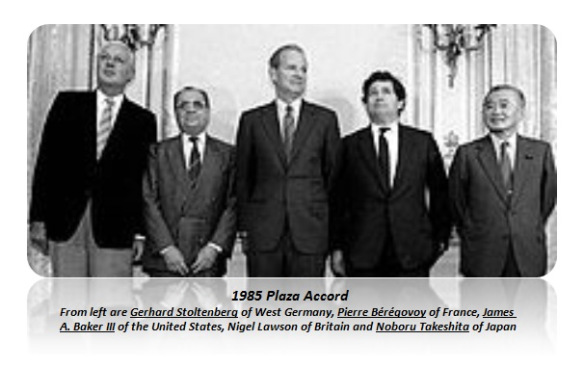
another BRAIN-DEAD idea of forming the G5 in 1985 to manipulate the dollar lower. It was the Plaza Accord that forced structural changes in Japan known as “reforms” all designed to lower the US Trade Deficit that was not even real. The lawyers in charge looked at the current account and did not understand the more Japanese invested in US government bonds, the inflow appeared in the capital account while the interest payments flowed out of the current account these fools assumed was trade.
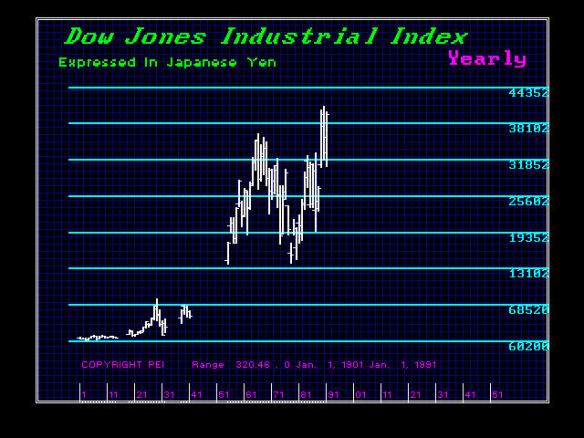
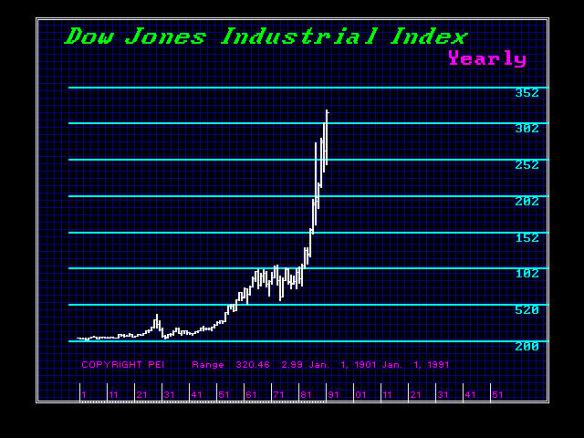

The stock market crashed because foreigners perceived the dollar would decline by 40% and sold dollar assets. We are looking at this phenomenon in Euroland. The spread between German 10 year and US 10 Year Treasuries may prove to be the trade of the century later in the year (short Germany Long US). German rates .45% v 1.84%.
….more from Martin Armstrong on January 19th:
Brokerage Houses – Deep Pockets Are Mandatory
Looking At Things Globally – Moving Beyond Human Intelligence
Does the Model Change Its Mind?

 Shopping malls across America are going to look a whole lot emptier soon. An exodus of giant retailers is beginning with the announcement of hundreds of store closures and thousands of people newly unemployed.
The first of January, I broke with my usual tradition and wrote not about positive resolutions, but about the impending rockslide of the US economy. And “rockslide” is an apt word: as one thing starts rolling down the mountain, it will pick up other things until a veritable avalanche of other businesses and people are affected and rolling pell-mell right alongside.
Last year, we saw announcements of the expected closure of some retail giants. In February of 2013, Michael Snyder wrote on The Economic Collapse Blog that we would see the following:
…..read more HERE


-
I know Mike is a very solid investor and respect his opinions very much. So if he says pay attention to this or that - I will.
~ Dale G.
-
I've started managing my own investments so view Michael's site as a one-stop shop from which to get information and perspectives.
~ Dave E.
-
Michael offers easy reading, honest, common sense information that anyone can use in a practical manner.
~ der_al.
-
A sane voice in a scrambled investment world.
~ Ed R.
Inside Edge Pro Contributors

Greg Weldon

Josef Schachter

Tyler Bollhorn

Ryan Irvine

Paul Beattie

Martin Straith

Patrick Ceresna

Mark Leibovit

James Thorne

Victor Adair