
Asset protection
….The Global Money Tsunami is Back!
Two major bloody wars — in Syria and Iraq — are gaining momentum, reaching a tipping point, speeding toward a fatal climax.
A third, even larger war between the region’s oil superpowers — Iran and Saudi Arabia — is looming.
These wars are now spilling over into Africa, Asia and Europe.
They are forcing millions of people to flee for their lives.
And they are driving billions of dollars to rush to safety.
This is not just my opinion.
It’s also the very somber-and-sober assessment of serious analysts at respected Washington think tanks, in the Pentagon and in the region itself.
It’s precisely what Larry Edelson has been forecasting, consistently and unambiguously, since his now-famous War Cycles speech on a 2013 Weiss Research investment cruise.
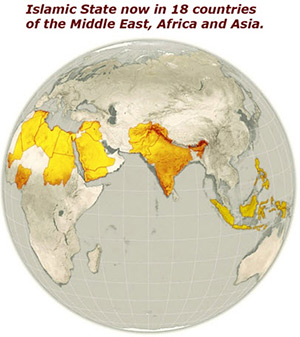 And it’s happening — right now, all over the world:
Most of the war refugees are fleeing to Europe, by sea, by land, by air, legally and illegally. But just as we warned, most of the flight capital is flowing to the world’s largest, militarily strongest, most liquid, safe haven — the United States.
We call it …
The Global Money Tsunami
It’s gushing into choice U.S. real estate, helping to drive up the value of American homes, commercial properties, industrial real estate and more.
It’s rushing into U.S. stocks, one of the key factors driving the Dow, the S&P 500, and the Nasdaq Composite to new all-time highs.
And no matter where these global investors put their money, the last thing they want is to jump from one danger to another.
They want stability, liquidity and a good measure of safety — choice locations for real estate and extreme high quality for stocks.
Of course, you and I are aware of the investment risks in the United States. But for many foreign investors, what we
might consider to be a threat here at home is little more than a tickle on their toes. Just take a closer look at what they’re seeing in their home countries or regions, and you’ll see what I mean …
The Mad, Bloody Rampage of Islamic State (ISIS or ISIL)
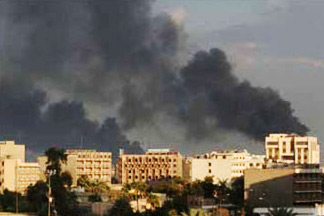 Three key cities have gone down …
Mosul, Iraq’s second largest city, 250 miles from Baghdad, with twice the population of San Francisco, fell to the Islamic State one year ago.
On the night of June 9, 2014, an estimated 1,300 armed militants seized government offices, army facilities, and the Mosul International airport. They beheaded hundreds of government supporters. They drove a half-million residents to flee the city. And they sent tens of thousands of government troops into a panicky retreat.
All by using the power of sheer terror and unthinkable brutality!
From there, they fanned out over Iraq’s Anbar province, larger than the state of North Carolina or New York. And despite massive U.S. coalition bombing, they’re doing it again and again …
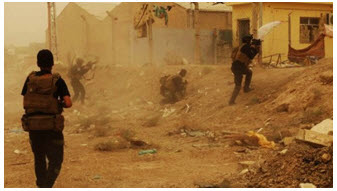 Ramadi, the Anbar provincial capital just 68 miles from Baghdad, fell to the Islamic State just 15 days ago.
The militants loaded a series of armored bulldozers and trucks with massive amounts of explosives, manned them with suicide bombers and used them like mini-nukes to utterly obliterate government complexes.
They rounded up the wives and children of government officials, killed them on the spot and sent the rest of the government into a wild retreat out of the city, escorted by tanks. The Iraqi army, including U.S.-trained special forces, soon followed.
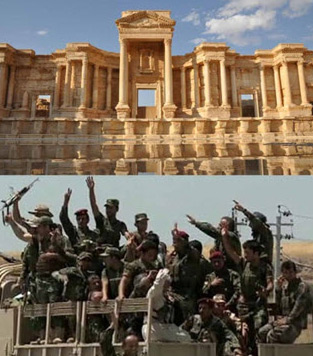 Palmyra, a strategic city and UNESCO World Heritage Site in Syria, fell to the Islamic State three days later.
At first, it was reported that Syrian army forces evacuated the city’s civilians to save them from an inevitable massacre. But residents reported that high-ranking army officers were the first to flee the city, leaving all others to fend for themselves. Mass executions soon followed.
The very next day, Islamic State proceeded to capture the last government-held border crossing with Iraq plus strategic military bases, while another extremist group announced that the fall of Damascus, the capital of Syria, was next.
And as The New York Times recently demonstrated, this is just a microcosm of the rapid, mass expansion of Islamic State across the Middle East, Africa and Asia. Islamic State now directly controls and governs vast areas and large population centers of Syria and Iraq.
Their empire or terror stretches all the way from towns near the Syrian capital Damascus in the West to the outskirts of Baghdad 500 miles to the East.
That’s like controlling the states and cities between the outskirts of Chicago to the suburbs of New York City.
But it’s just one way Islamic State is expanding. Their second tactic is infiltration.
As the Times explains it, “The Islamic State infiltrates local groups, often using intimidation to influence community leaders. They also establish sleeper cells that emerge at critical moments. The invasion of Ramadi relied on local sleeper cells. ISIS cells surfaced in Arsal, Lebanon, when local rebel groups rose up against the government.
“Analysts believe that the Islamic State is building networks in Saudi Arabia and in the Kabylie region of Algeria in order to seed uprisings. In Yemen, an Islamic State cell added fuel to the escalating crisis there by carrying out bombings that killed 135 people in two mosques in March. The country is now in chaos.”
Most alarming of all is their third tactic: Absorbing other extremists groups.
At least 30 jihadist groups across 18 nations have already pledged support or allegiance to the Islamic State.
In Libya, for example, extremists in all three of the country’s regions have aligned with the Islamic State, transforming much of the country into their own, private training grounds.
As you can see from the New York Times’s global map above, we’re now talking about a vast area of Islamic State influence that stretches from the Atlantic to the Pacific.
That includes billions of people with trillions of dollars in wealth — many directly or indirectly threatened by Islamic State, many more feeling increasingly frightened by those threats, whether real or not.
Now do you see why so much flight capital is rushing to the world’s safest haven? Well, that’s just the beginning of the story …
Looming War Between Two Oil Superpowers
The world’s largest oil superpower (Saudi Arabia with 268 billion barrels in proven oil reserves) is now on a warpath with the world’s second largest oil superpower (Iran, with 157 billion).
Hard to believe? Then consider the facts:
In just the five months since he was crowned in January, the new Saudi King Salman has already taken a series of tactical steps to prepare for war:
He has built a formidable alliance of Sunni Muslim nations to counter Shiite forces in the region.
He has thoroughly shaken up the Saudi royal line of succession, installing strong military leaders to key positions to succeed him.
He has greatly expanded the nation’s procurement of U.S. weaponry.
And by attacking neighboring Yemen, he has launched Saudi Arabia’s first war against Shiite forces in modern history.
Moreover, the forces driving the two countries into a conflict are among the most powerful of history:
First, religion — the Sunni-Shiite rift — pits their governments, their militaries and nearly their entire populations on opposite warring sides.
This is the conflict that dates back to 7th century brutal wars over the succession of the Prophet Mohammed. And it’s a conflict that’s been reignited in modern times by events that are now spinning out of control — the rise to power of the Shiite clerics in Iran … the U.S.-inspired Shiite takeover of the government in Iraq … and now, the possible fall of Baghdad.
Second, geopolitical influence — the all-out, all-consuming, oft-fanatic drive by each to be the dominant power of control and influence in the entire region.
The Iranians claim to be the rightful regional leader thanks to their large population, big military, strong anti-Israel rhetoric, and, yes, their nuclear program. Meanwhile …
The Saudis make the same claim, based on their huge oil reserves, their holiest of Muslim cities (Mecca and Medina), their huge financing of major nations like Egypt, and most recently, their war on Shiite rebels in Yemen.
Third, both countries accuse each other of abusing their brethren — the Shiite minority in Sunni Saudi Arabia and the Sunni minority in Shiite Iran. This may not be a real reason to go to war. But each country’s propaganda machine uses any abuses or atrocities of religious minorities to fire up hatred and heat up the winds of war.
What about the potential consequences of a Saudi-Iranian conflict? They’re enormous …
1. Despite the recent oil-price decline, over the years, oil profits have led to one of the greatest accumulations of wealth in the history of mankind — much of it in liquid assets held locally or in major financial capitals. This vast pool of money is contributing a big part of the Global Money Tsunami now reaching our shores.
2. Despite any temporary glut, a Saudi-Iranian conflict would immediately threaten the world’s oil supplies. You probably remember talk from years ago — about the narrow Strait of Hormuz through which most oil must flow from the Persian Gulf to the world. That was during the first Gulf War. But the dangers then pale by comparison to the dangers now.
On one side of the Strait of Hormuz is the Saudi Peninsula. On the other is Iran.
It remains the world’s most important oil passageway, with oil flows representing a whopping one-third of all the oil in the world that’s transported by sea. Even just the threat of conflict is hugely disruptive. And any actual harassment or infrastructural damage — let alone outright closure — will send shock waves through oil markets.
3. Worst of all, a Saudi-Iranian conflict would force the world’s superpowers and wannabe superpowers to take sides — the U.S. and E.U. on the Saudi side, Russia and China on the Shiite side. With a cold war between them already heating up, the economic consequences are both unthinkable and unpredictable.
So if you think a war between Saudi Arabia and Iran is unlikely, unimportant or just plain crazy, think again. It’s not.
In fact, just the fear of this conflict, now widespread in the region, is already driving hundreds of billions of dollars into the Global Money Tsunami.
Russian Money Flowing to the U.S. in Huge Amounts
Just when some analysts believe Russia’s incursions into the Ukrainian conflict are over, they discover exactly the opposite.
Just when most Americans begin to forget about Russia’s president Vladimir Putin, he raises his head again with another major verbal attack on the West.
And just when they think Russia’s millionaires and billionaires are mostly done pouring their money into the U.S., new torrents of rubles arrive.
In the second half of 2014, for example, the capital flows out of Russia were over ten times larger than those of the year-earlier period. And in 2015, the outflows have accelerated even further — most of them seeking to buy up choice stocks and real estate in the United States.
Larry will give you a complete update on these critical money flows — and what to do about them — Wednesday. In the meantime, be sure to stay on the alert for these kinds of black swan events.
Good luck and God bless!
Martin
….more from Marting on Money and Markets – Financial Advice | Financial Investment Newsletter.

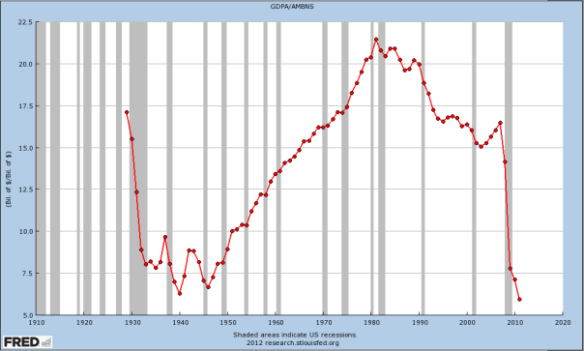
“The collapse in the VELOCITY of money illustrates the collapse in liquidity in the markets which will erupt in higher volatility we have not seen before. The VELOCITY of money declines as HOARDING rises. This is how empires, nations, and city states decline and fall.’
The New York banks have destroyed banking when Robert Rubin of Goldman Sachs managed to get the Clinton Administration to repeal Glass Steagall, Even Mario Draghi, head of the ECB, who is taking interest rates negative, was a vice chairman and managing director of Goldman Sachs International and a member of the firm-wide management committee (2002–2005). So the tentacles of NY spread wide and far.

That corruption in New York controlling Congress, the Justice Department, and the courts, has allowed the NY bankers to rise to the top of the world from a power elite perspective. They even control much of the media and Hollywood. This power which has transformed banking has been emulated by other banks around the world insofar as Transactional Banking has displaced Relationship Banking as the “new” way to make money.
But the banks outside the USA do not control their governments as fully as they do in the USA. Who does Hillary run to for money – the NY bankers. Yet, the battle over the banking industry’s reputation is emerging everywhere but New York. It intensified last Friday in Australia as two of Australia’s top regulators took a simultaneous shot at the “culture” at the heart of the nation’s largest financial institutions.
The banking industry suffers from Narcissistic Personality Disorder (NPD) which typically only affects 1% of the population but they all seem to be working at the top of the banks. NPD is when someone has unrealistic fantasies of success, power and intelligence. That seems to be a qualification to be on the board of the major New York Banks.
Ever since the repeal of Glass Steagall by Bill Clinton in 1999, this “new” way of making money transforming banking from Relationship to Transactional Banking has destroyed the economy in ways we are soon to discover. The VELOCITY of money has fallen to BELOW Great Depression levels. This is the destruction of Capitalism and I fear the response against the banks on the next downturn will lead to authoritarianism.
Taking interest rates NEGATIVE will not reverse this trend – it will accelerate the trend. This is all part of Big Bang. We seriously need to understand the nature of the problem or we will lose all rights and freedom because of what the bankers have set in motion. Transactional Banking only benefits the banks and fails to create a foundation for economic growth. This is not about Fractional Banking, this is all about the destruction of Relationship Banking that creates small businesses and employment.
The collapse in the VELOCITY of money illustrates the collapse in liquidity in the markets which will erupt in higher volatility we have not seen before. The VELOCITY of money declines as HOARDING rises. This is how empires, nations, and city states decline and fall.
 “The latest monthly figures showing investors’ preference (or lack thereof) for cash have been released. Like most other months during this bear market, they showed a drop in cash levels. Unlike most other months, the rate at which that cash is dropping has picked up. This is most notable in the margin figures from the NYSE. Debt increased, cash decreased, and that pushed the “available cash” or “net worth” of investors to the worst level ever.”
….continue reading HERE


 James Turk who recommended betting against the housing bubble, on how the current money bubble is going to burst and the nature of the tremendous volatility in the financial markets it is going to ignite
HardAssetsInvestor: Last year when I last spoke to you, we had an interesting conversation about your new book in which you discuss the money bubble. You talked about how the money bubble is going to burst, and it’s going to ignite tremendous volatility in the financial markets. Is that still your view?
James Turk: Yes, but the money bubble has not yet burst, although we’re getting close to that moment in time. We’re seeing some unusual events that have occurred over the past 12 months.
For example, although interest rates have moved back up recently, a couple of weeks ago, people were paying money to have the German government take their money for 10 years. That’s a sign something is amiss. Capitalism doesn’t work that way. If you pay to have your money decrease over 10 years, you’re destroying capital.
Still, we haven’t had the pop of the bubble yet, but we’re on a clear trend toward the bubble popping, which it will if we don’t go back to sound money policies. The popping of the bubble means that fiat currencies will no longer be used and trusted in commerce the way they are now because people will have lost confidence in them.
HAI: In that context, what do you make of the recent rally in the U.S. dollar? Is it just one fiat currency rising against other ones? Is it meaningless?
Turk: It’s basically meaningless in the sense that nothing fundamental has changed for the better for the dollar. The federal government is still running huge deficits. There’s still too much debt. There are still a lot of problems in the banking system. There’s just too much money-printing going on around the world.
What’s happened is that for six months or so the dollar rallied because of all of the problems that were emerging in Japan and in the eurozone. The dollar jumped all the way up to 100 on the Dollar Index, but it was an emotional knee-jerk reaction. People were moving their money into the dollar to avoid the problems plaguing other currencies. They were also drawn to the dollar to try generating a rate of return, or if that was not possible, to at least avoid the negative interest rates in the euro, yen and Swiss franc.
…..read page 2 HERE
This is part 1 of our interview with James Turk. Click here to read part 2.
James Turk is the founder of GoldMoney.com, which is a European-based precious metals firm that presently safeguards $1.3 billion of precious metals assets owned by customers. He is a popular speaker at conferences as well as on radio and television. Turk’s 2004 book, “The Collapse of the Dollar,” recommended buying gold and betting against the housing bubble, which were two of the best investment ideas of the decade. His latest book is “The Money Bubble: What To Do Before It Pops.” HAI Managing Editor Sumit Roy caught up with Turk to discuss his current views on gold and the financial markets.

 The tech news you need to know to start your week.
1. The creator of The Silk Road has been sentenced to life in prison without parole. Ross Ulbricht’s legal team will appeal the decision.
2. Apple is reportedly in talks with Drake, Pharrell Williams and David Guetta to try and bring them on as DJs for its upcoming streaming service. Drake’s contract is worth $19 million.
3. Slack says it has already turned down between eight and 10 acquisition offers. It’s currently worth $2.8 billion.
4. Investors in Snapchat are taking common stock. That means they’re giving up on privileges like voting rights in order
to invest.
5. A North Korean defector has claimed that the country’s hacker army now has over 6,000 people. Professor Kim Heung-Kwang has warned about the country’s capabilities.
6. Google is partnering with Levi’s to create “smart trousers.” Project Jacquard involves a smart thread that can control smartphones.
7. Apple is partnering with Postmates to offer same-day delivery. It’s only available for some areas in the US for now.
8. Twitter’s director of corporate development and strategy is leaving to join Google Ventures. Jess Verrilli had been at Twitter for six years.
9. SuperTrips, one of the biggest drug dealers on The Silk Road, has been sentenced to 10 years in prison. Cornelis Jan Slomp pleaded guilty to running the operation.
10. It looks like Lego is working on a “Minecraft” competitor called “Lego Worlds.” It was spotted on the back of an instruction manual for a Lego set.


-
I know Mike is a very solid investor and respect his opinions very much. So if he says pay attention to this or that - I will.
~ Dale G.
-
I've started managing my own investments so view Michael's site as a one-stop shop from which to get information and perspectives.
~ Dave E.
-
Michael offers easy reading, honest, common sense information that anyone can use in a practical manner.
~ der_al.
-
A sane voice in a scrambled investment world.
~ Ed R.
Inside Edge Pro Contributors

Greg Weldon

Josef Schachter

Tyler Bollhorn

Ryan Irvine

Paul Beattie

Martin Straith

Patrick Ceresna

Mark Leibovit

James Thorne

Victor Adair