
Gold & Precious Metals
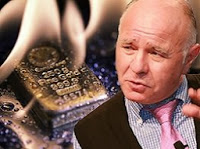 “The only thing I’ve really done recently is I added to my gold position about two months ago, and I bought some gold-related equities.” “But other than that, I’ve done very little because I believe that in this extreme volatility where markets suddenly drop 10%, individual stocks drop 10% or 20% in one day – it’s a very difficult environment to make a lot of money unless you take huge risks.”
“Gold hasn’t done that badly, it has done actually better than stocks … I’m not a prophet, but I’m telling you I want to own some gold because I don’t trust the financial system anymore.”
-recently on CNBC

 1.
1. by The 10th Man – Mauldin Economics
Many people think that they ring a bell at the top of a bull market. Ding-a-ling-a-ling.
That is indeed often the case. The bell was rung in 2000 at the top of the dot-com bubble—I like to think it was 3Com spinning off Palm that broke its back.
But sometimes there is no bell, no catalyst, no story to tell. A bull market becomes a bear market, and it happens just like that. – more HERE
2. Silver Stocks: Volume Bar of Champions
by Morris Hubbartt
Gold & Silver Bullion Video Analysis
US Stock Market & Bonds Video Analysis
GDX, GDXJ, GLDX, & SIL Video Analysis
Trader Time Swing Trades Video Analysis
….read all HERE
by Ryan Irvine
The adage, “cash is king” could be a whole lot more appropriate in today’s market than in recent years. For equity investors, after a strong three and five year bull runs in Canada and the U.S. respectively, recent market volatility have caused a higher degree of uncertainty about keeping your entire nest-egg in the market. – read all HERE
One more on a key market:
4. US Dollar Index Rally: Was That a Major Head Fake?
by Jack Crooks
A bunch of dollar bulls, euro bears, have been hammered so far today (time left of course). Did we just see a major head fake from Mr. Market? There were a lot of one-way bets…Is the price action also telling us Fed Chairman Yellen will disappoint in some way? – read all HERE

From a speech by Hilary Benn, before the British House of Commons voted on Dec. 2 to support airstrikes against Islamic State in Syria:
Now Mr Speaker, no one in this debate doubts the deadly serious threat we face from Daesh and what they do, although sometimes we find it hard to live with the reality. We know that in June four gay men were thrown off the fifth story of a building in the Syrian city of Deir ez-Zor. We know that in August the 82-year-old guardian of the antiquities of Palmyra, Professor Khaled al-Assad, was beheaded, and his headless body was hung from a traffic light. And we know that in recent weeks there has been the discovery of mass graves in Sinjar, one said to contain the bodies of older Yazidi women murdered by Daesh because they were judged too old to be sold for sex . . .
It has been argued in the debate that airstrikes achieve nothing. Not so. Look at how Daesh’s forward march has been halted in Iraq. . . . Look at how their military capacity and their freedom of movement has been put under pressure. Ask the Kurds about Sinjar and Kobani. Now of course, air strikes alone will not defeat Daesh—but they make a difference. Because they are giving them a hard time—and it is making it more difficult for them to expand their territory. . . .
Now, Mr Speaker, I hope the house will bear with me if I direct my closing remarks to my Labour friends and colleagues on this side of the House. As a party we have always been defined by our internationalism. We believe we have a responsibility one to another. We never have—and we never should—walk by on the other side of the road.
And we are here faced by fascists. Not just their calculated brutality, but their belief that they are superior to every single one of us in this chamber tonight, and all of the people that we represent. They hold us in contempt. They hold our values in contempt. They hold our belief in tolerance and decency in contempt. They hold our democracy, the means by which we will make our decision tonight, in contempt. And what we know about fascists is that they need to be defeated. And it is why, as we have heard tonight, socialists and trade unionists and others joined the International Brigade in the 1930s to fight against Franco. It’s why this entire House stood up against Hitler and Mussolini. It is why our party has always stood up against the denial of human rights and for justice. And my view, Mr. Speaker, is that we must now confront this evil.

If you have been in the investing world for any period of time you are undoubtedly familiar with the man who many label as the greatest investor of all time – Warren Buffett. For those who require a little background, Warren Buffett is the self-made billionaire who built an empire through an unwavering focus on the simplest tenets of value investing. For nearly 50 years, Warren Buffett has earned prominence as the genius behind Berkshire Hathaway and has generated its investors a staggering average compound rate of return of 21.6% per year (1965 – 2014), compared to the S&P 500 which has produced an average return of 9.9% over that period (less than half of Buffett’s return).
Many detractors to Buffet’s value-investment style claim that his success cannot be replicated by individual investors. Often cited is Buffet’s solid reputation as a capital allocator and the deep investigative resources of his investment company Berkshire Hathaway. Undoubtedly Warren Buffet is a genius and we would not expect that any but the most gifted individuals would ever be able to replicate his success in its entirety. Nevertheless we can easily dispel the myth that reputation and resources were the ingredients to his success. Going back to 1956, before Buffet was a world famous billionaire (or millionaire for that matter), he was a relatively unknown man who operating his first investment partnerships out of an office in his bedroom. The limited partnerships were started with his own capital and a few some contributions from family and friends. He had no world renowned reputation, no staff of highly-skilled MBAs, and no special resources outside of himself. Buffet recognized the most basic and useful facets of valuing investing and applied the concepts to generate great success. Throughout the years he has participated in numerous interviews and writes a letter to his shareholders on an annual basis. Through these small snippets of information the general public has been able to gain some insight into how Buffet views the investing world. The following are a couple of his most well read quotes with a little insight into how anyone can use them to better far more intelligent investors.
“Price is what you pay. Value is what you get.”
Separating value from price is the most fundamental tenet of Buffet’s investment strategy. Pretty much everybody has a basic understanding of what the word “value” means but unfortunately this is rarely applied to investment decisions. There is a saying that most investors spend more time researching the purchase of their television set than they do their investments. This is largely due to a lack of knowledge and valuation skills which is why many investors rely on stock price movements as a signal of investment quality. When Buffet starts researching a stock he says he intentionally will not look at the market price. Instead he starts with valuing the underlying business as if it were a private company. He looks at the cash flow…he determines whether or not the business model is sustainable and if the earnings are being inflated by too much leverage (debt). Buffet then determines what we would pay for the actual company without any consideration for the fact that it is publicly-listed. If after making this determination the current stock price is significantly below his measurement of intrinsic value then he may move forward and make his purchase.
“I never attempt to make money on the stock market. I buy on the assumption that they could close the market the next day and not reopen it for five years.”
Don’t worry…nobody is planning on closing the market for the next five years. What Buffet is saying is that he doesn’t buy a stock with the intention of following the short-term market fluctuations and selling in and out on whims. When Buffet buys a stock, he is buying an ownership interest in an underlying company. This is largely the reason that Buffet is so successful. Rather than wasting his energy following day-to-day market oscillations (as many investors do), he focuses on the business that he has acquired and gauges success based on sustainable generation and growth of the underlying cash flow. Many businesses generate returns for their shareholders through the distribution of cash flow in the form of dividends. A successful company will also be able to grow their dividends over time. Eventually success is recognized in the markets. Although it can take time for value to be realized, there are very few examples of companies that produce strong and growing cash flow over time without either this eventually being recognized in the share price or by an independent buyer looking to acquire the company.
 “We simply attempt to be fearful when others are greedy and to be greedy only when others are fearful.”
We are often asked by clients whether or not we utilize a timing strategy to move in and out of the markets with changes in the business cycle. Although market timing may appear to be a sound investment strategy, in practice, the results investors generate are far from astonishing. “Hindsight is 20-20, while foresight is legally blind”. The truth is that there are no
magical indicators that will tell you (with consistent success) when to buy and sell stocks. If there were then we would expect to see at least one of these magical market timers (or technical analysts) on Forbes list of the world’s richest people (but we have not). Buffet as well does not subscribe to the traditional idea of market timing. He has however been able to apply his value investment methodology to creating a somewhat modified version of the strategy. If we take a step back to 2008 at the time of the stock market crash we will remember the fear that plagued the markets. Stock market prices dropped to levels not seen in over a decade causing private and professional investors to rush to the exits. Although fear was abundant and the outlook was grim, this was exactly the best time to be greedy with many very high-quality companies available for purchase at a fraction of their real value. If we go back to the summer of 2000, when the NASDAQ’s chart (along with the charts of many other exchanges) was nearly parabolic, investor optimism was high and greed pushed market valuations of internet stocks well beyond reasonable levels. This was undoubtedly a good time to be fearful. We would never suggest that you try and time the markets based on anyone’s assessment of market sentiment. This won’t produce any better results than any other market timing strategy. However, the next time market valuations have undergone expansion far beyond historical ranges, and experts are justifying the sentiment with the mantra “everything is different now”, you might want to consider separating yourself from the crowd and become a little more fearful.
“Success in investing doesn’t correlate with I.Q….. Once you have ordinary intelligence, what you need is the temperament to control the urges that get other people into trouble in investing.”
This has got to be my favorite quote from Warren Buffet. It gives hope to every ordinary investor who believes that they cannot compete with the pros. While Buffet is commonly referred to as the “smartest man in the room”, he himself openly confesses that his skills outside of capital allocation are fairly limited. And within this skillet Buffet utilizes only the simplest and most basic techniques in investment analysis. There are no super computers systems, no Nobel Prize winning mathematicians, and certainly no new age strategies in the Berkshire Hathaway investment management office. The biggest asset (aside from their near $400 billion in capital) is their underlying philosophy that investment success is derived from purchasing high-quality, cash flow positive businesses at undervalued prices and holding those businesses over a long-term horizon. By controlling the emotions of fear and greed, individual investors can set themselves apart from the investment heard and create for themselves a very practical competitive advantage that the vast majority of people (including professionals) do not have.
Disclaimer | 2015 KeyStone Financial Publishing Corp.
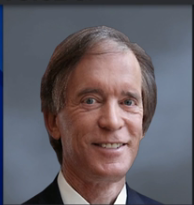 Bill Gross of Janus Capital Management joined Bloomberg Radio and Television to react to today’s jobs report.
Gross said the Federal Reserve is “certainly set to go…Fed is ready to go I think because of concerns on the real economy.”
When asked if he lost money yesterday, Gross said: ” Oh no, made money yesterday. I had lots of calls, sold lots of calls on five and 10-year German bunds, went the other way this time and so made a lot of money, making a lot of money today on those particular trades.”
MICHAEL MCKEE: I guess this one is in train now.
BILL GROSS: Well, yes, they are certainly set to go. And it’s something that I have been encouraging for a while, not because of the
tightness of the labor market or the fact that wages are increasing. As a matter of fact, wages were up 0.2 percent and the YOY is 2.3 percent relative to 2.5. So there is no pressure from the standpoint of wages, but the Fed is ready to go I think because of concerns on the real economy.
And it’s going to be an interesting experiment over the next three months or so, I’d say, they shift to a new policy in terms of determining the Fed funds rate, the — using the excess reserves in terms of an interest rate as a top, and using reverse repos as a bottom. They’re going to have to work with that.
TOM KEENE: And I think they’re going to need at least three months to make sure it’s smooth.
KEENE: Bill Gross, you wrote about Wiley Coyote yesterday. I don’t think that translates in Paris, France too well. So what I would suggest, Bill, is please address for the international audience how Janet Yellen can avoid international mediocrities, including the challenges Mario Draghi has.
GROSS: Well the Fed has sort of backed off of their QE almost 12 months ago. Draghi continues. And Draghi’s policy statement yesterday was quite interesting because he gave the market most of what they wanted. He’s still in a whatever it takes mode.
He did give them quantitative easing for six more months. He included additional assets. It seemed like a very stimulative type of forward statement, but the market I think had a sense that since the amount wasn’t increased that perhaps the ECB is the last bastion of quantitative easing and monetary, easing policy basically is at its limits.
KEENE: Right. Mike, I want to cut in here. This is an incredibly important question. Bill Gross, how many billions of dollars did you lose yesterday?
GROSS: Oh no, made money yesterday. I had lots of calls, sold lots of calls on five and 10-year German bunds, went the other way this time and so made a lot of money, making a lot of money today on those particular trades. So I think the U.S. is in a better position in terms of their yields relative to Germany and the EU, although to be fair, if $60 billion a month has been extended by six months and we’ve got with 18 months to go that’s a trillion euros to go, and that puts their balance sheet close to EUR4 trillion euros relative to the Fed’s balance sheet of EUR4 trillion with a much larger economy. So there is a lot of firepower left, and it pays to be careful when a central bank employs what I call a Martingale strategy, which is basically double up to catch up.
MCKEE: Well we thought until the Mario Draghi press conference yesterday, Bill, that we had a narrative going. They were stimulating. We were going to start raising rates and you would see the divergence trades in place. It could be predicted, but now it seems like what has brought back to the market is a lot of volatility, and we can’t necessarily say we’re going to see a big bond selloff here in the United States, and the opposite overseas, and the dollar gets stronger and the euro get weaker. We’re not sure what’s going to happen.
GROSS: And the United States has for the last 12 to 24 months have been talking about the new neutral interest rate. Right now the forward market in terms of Fed funds is basically forecasting the 80 to 85 basis points higher from a year from now, and then another 60 or so two years from now and then another 40 or so three years from now. So the pace, the expected pace is like 75, 50, 50. And that eventually takes us up to close to two percent, which is what I think is the neutral level given normal economic conditions.
KEENE: Bill, one more question and then we want to get to Alan Krueger of Princeton University helping out this half hour. Bill Gross, I’m sitting here in the city hall of Paris. And the basic idea is this is the land of perpetuity bonds. Is the thing that America is missing in our new fixed income world that we need longer duration bonds? Do they make sense for investors?
GROSS: Well not really at these levels do they? I mean and let’s talk about pension funds, and I know you mean individual investors, but basically the same thing. Do they want to lock in future liabilities basically at a three percent level for a 30-year treasury or, amazingly, at a 2.69 percent level for a 30-year swap, to get a little esoteric?
KEENE: Yes.
GROSS: But anyway, does that pay the bills going forward? I don’t think so. You know that for sure by looking at pension estimates they expect seven to 7.5 percent in terms of a 50/50 stock and bond mix. Do individual investors get that from a three percent long bond? I don’t think so. I think it pays for the treasuries of these countries to issue long debt, as opposed to individuals and corporations to buy them.
MCKEE: Bill, we’ve got Alan Krueger of Princeton University here. Alan, we’ve got time for a quick question for Bill if you’ve got one.
ALAN KRUEGER: Well I guess I was a little bit confused on the long bonds. If you think there’s not going to be much demand for them, wouldn’t the interest rates be lot higher than three percent?
GROSS: Well there’s not going to be a lot of issuance, first of all, as you know, next year from the treasury, going to be very mild period of time in terms of issuance. And there is still accumulation from Japan and from China, plus or minus. We’re not quite sure what China does, but there is demand there. And there is demand, Alan, from corporations, surprisingly. I don’t think there should be, but there is demand because they issue debt and then they basically hedge it out and turn it into short-term debt by basically receiving or buying long-term swaps.
That’s a strange situation these days in terms of financial markets and in terms of the varying interest, but it seems to me that if Fed funds peak at two percent during this particular cycle that there’s not much downside in price, and not much upside in yield for U.S. treasuries to buy. I would simply favor them versus German bunds or anything in Europe, still in a negative camp up to five years of course.

-
I know Mike is a very solid investor and respect his opinions very much. So if he says pay attention to this or that - I will.
~ Dale G.
-
I've started managing my own investments so view Michael's site as a one-stop shop from which to get information and perspectives.
~ Dave E.
-
Michael offers easy reading, honest, common sense information that anyone can use in a practical manner.
~ der_al.
-
A sane voice in a scrambled investment world.
~ Ed R.
Inside Edge Pro Contributors

Greg Weldon

Josef Schachter

Tyler Bollhorn

Ryan Irvine

Paul Beattie

Martin Straith

Patrick Ceresna

Mark Leibovit

James Thorne

Victor Adair