
Stocks & Equities
… It is going to take longer to unfold then people think!
Japan’s NIRP announcement & the US$
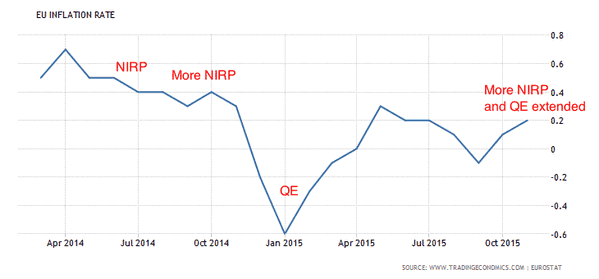
Japan is at the forefront of the Keynesian central planning that has been in the markets for the past few decades. The federal reserve first went to ZIRP and launched quantitative easing in 2008. The European central bank went to ZIRP and they launched QE in 2015. The bank of Japan first went to ZIRP in 1999, in which they then launched quantitative easing in 2000. They’re much more experienced in seeing what these sorts of policies can accomplish.

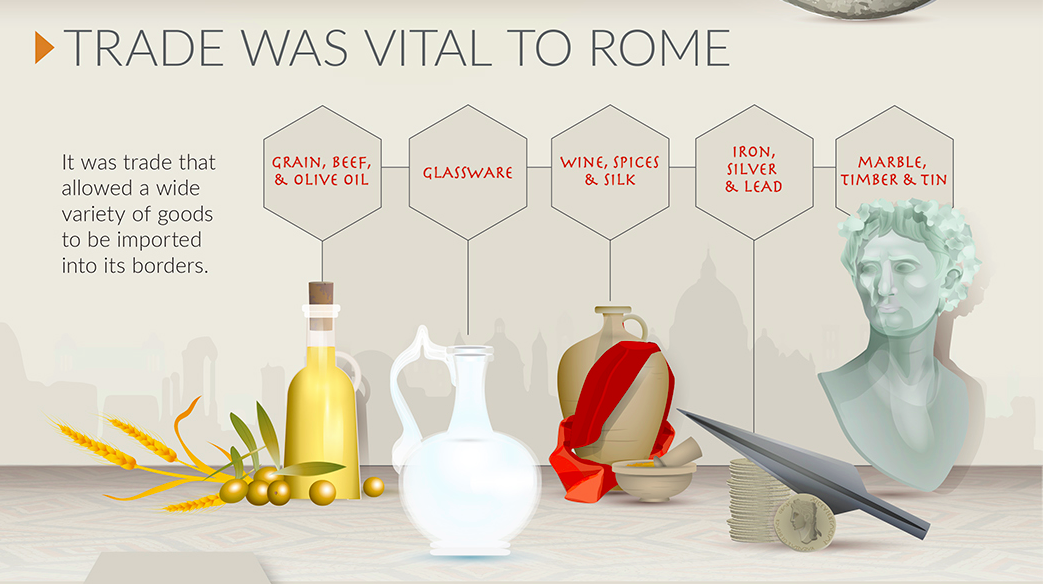 At its peak, the Roman Empire held up to 130 million people over a span of 1.5 million square miles.
Rome had conquered much of the known world. The Empire built 50,000 miles of roads, as well as many aqueducts, amphitheatres, and other works that are still in use today.
Our alphabet, calendar, languages, literature, and architecture borrow much from the Romans. Even concepts of Roman justice still stand tall, such as being “innocent until proven guilty”.
How could such a powerful empire collapse?
THE ROMAN ECONOMY
 Operating under the mistaken belief that a modest dose of inflation is either a prerequisite for, or a by-product of, economic growth, the nation’s top economists have been assuring us for quite some time that inflation will stay very low until the currently mediocre economy finally catches fire. As a result, they believe that the low inflation of the past few months has frustrated Federal Reserve policy makers, who have been supposedly chomping at the bit to keep hiking rates in order to restore confidence in the present and to build the ability to cut rates in the future if the nation were to ever, god forbid, enter another recession.
In the weeks leading up to the Fed’s December 16 decision to raise rates by 25 basis points (their first increase in nearly a decade) the consensus expectations on Wall Street was that the Fed would deliver three or four additional interest rate hikes in 2016. But with the global markets now in turmoil, GDP slowing, and the stock market off to one of its worst starts in memory, a consensus began to emerge that the Fed is reluctantly out of the rate hiking business for the rest of the year.
With such thoughts firmly entrenched, many were largely caught off guard by the arrival last Friday (February 19th) of new inflation data from the Labor Department that showed that the core consumer price index (CPI) rose in January at a 2.2 % annualized rate, the highest in more than 4 years, well past the 2.0% benchmark that the Fed has supposedly been so desperately trying to reach. It was received as welcome news.
A Reuter’s story that provided immediate reaction to the inflation data summed up the good feeling with a quote by Chris Rupkey, chief economist at MUFG Union Bank in New York, “It is a policymaker’s dream come true. They wanted more inflation and they got it.” The widely respected Jim Paulsen of Wells Capital Management said that the stronger inflation, combined with upticks in consumer spending and jobs data would force the Fed to get on with more rate hikes.
But higher inflation is not “a dream come true”. In reality it is the Fed’s worst possible nightmare. It will expose the error of their eight-year stimulus experiment and the Fed’s impotence in restoring health to an economy that it has turned into a walking zombie addicted to cheap money.
While most economists still want to believe that the recent slowdown in economic growth (.7% annualized in the 4th quarter of 2015, which could be revised lower on Friday) was either caused by the weather, confined to manufacturing, oil related, or just some kind of statistical fluke that will likely reverse in the current quarter, and that the stock market declines of 2016 have resulted from distress imported from abroad, a much more likely trigger for all these developments can be found in the Fed’s own policy.
The Chinese economic deceleration and market turmoil made little impact on U.S markets prior to the Fed’s rate hike. And although U.S. markets rallied slightly in the days around the historic December rate hike, they began falling hard just a few days later. Stocks remained on the downward path until a recent rally inspired by dovish comments from various Fed officials which led many to conclude that future rate hikes may be fewer and farther between then was originally believed.
In truth, the markets and the economy have been walloped not just by December’s quarter point increase, but from the hangover from the withdrawal of QE3, and the anticipation of higher rates in 2016, all of which contributed to a general tightening of monetary policy.
The correlation between monetary tightening and economic deceleration is not accidental. As it had been in Japan before us, the unprecedented stimulus that has been delivered by central banks, in the form of zero percent interest and trillions of dollars in quantitative easing bond purchases, failed to create a robust and healthy economy that could survive in its absence. Our stimulus, which was launched in the wake of the 2008 crash, may have prevented a deeper contraction in the short term, but it also prevented the economy from purging the excesses of artificial boom that preceded the crash. As a result, we are now carrying far more debt, and the nation is far more levered than it was prior to the Crisis of 2008. We have been able to muddle through with all this extra debt only because interest rates remained at zero and the Fed purchased so much of the longer-term debt.
In the past I argued that even a tiny, symbolic, quarter point increase would be sufficient to prick the enormous bubble that eight years of stimulus had inflated. Early results show that I was likely right on that point. The truth is that the economy may be entering a period of “stagflation” in which very low (or even negative) growth is accompanied by rising prices. This creates terrible conditions for consumers whereby prices rise but incomes don’t. This leads to diminished living standards.
The recent uptick in inflation does not somehow invalidate all the other signs that have pointed to a rapidly decelerating economy. Just because inflation picks up does not mean that things are getting better. It actually means they are about to get a whole lot worse. Stagflation is in fact THE nightmare scenario for the Fed. If inflation catches fire now, the Fed will be completely incapable of controlling it. If a measly 25 basis point increase could inflict the kind of damage already experienced, imagine what would happen if the Fed made a real attempt to raise rates to get out in front of rising inflation? With growth already close to zero, a monetary shock of 1% or 2% rates could send us into a recession that could end up putting Donald Trump into the White House. The Fed would prefer that fantasy never become reality.
But the real nightmare for the Fed is not the extra body blow higher prices will deliver to already bruised consumer, but the knockout punch that will be delivered to its own credibility. The markets believe the Fed has a duel mandate, to promote employment and to maintain price stability. But it is currently operating like it has just a single unspoken mandate: to continue to shower markets with easy money until asset prices and incomes rise high enough to reduce the real value of our debts to the point where they can actually be serviced with higher rates, regardless of what happens to employment or consumer prices along the way.
If you recall back in 2009 and 2010, when unemployment was in the 8% to 10% range, former Fed Chair Ben Bernanke initially indicated that the fed would raise rates from zero once unemployment fell to 6.5%. At the time I wrote that it was a bluff, and that if those goalposts were ever reached, they would be moved. That is exactly what happened. But when 5% unemployment finally backed the Fed into a credibility corner it had to do something symbolic. This resulted in the 25 basis points we got in December. Yet even as official unemployment is now 4.9%, the Fed can postpone future, more damaging rate hikes, so long as low-inflation provides the cover.
But can the Fed get away with moving its inflation goal post as easily as it had for unemployment? In fact, the Fed has already done so, with little backlash at all. When created by Congress the Federal Reserve was tasked with maintaining “price stability”. The meaning of “stability” should be clear to anyone with a rudimentary grasp of the English language: it means not moving. In economic terms, this should mean a state where prices neither rise nor fall. Yet the Fed has been able to redefine price stability to mean prices that rise at a minimum of 2% per year. Nowhere does such a target appear in the founding documents of the Federal Reserve. But it seems as if Janet Yellen has borrowed a page from activist Supreme Court justices (unlike the late Antonin Scalia) who do not look to the original intent of the framers of the Constitution, but their own “interpretation” based on the changing political zeitgeist.
The Fed’s new Orwellian mandate is to prevent price stability by forcing price to rise 2% per year. What has historically been seen as a ceiling on price stability, that would have forced tighter policy, is now generally accepted as being a floor to perpetuate ultra-loose monetary policy. The Fed has accomplished this self-serving goal with the help of naïve economists who have convinced most that 2% inflation is a necessary component of economic growth.
But as officially measured consumer prices surpass the 2% threshold by an ever-wider margin, (which could occur in earnest once oil prices find a bottom) how far up will the Fed be able to move that goal post before the markets question their resolve? Will the Fed allow 3% or 4% inflation to go unchallenged? President Nixon imposed wage and price controls when inflation reached 4%. It’s amazing that 2% inflation is now considered perfection, yet 4% was so horrific that such a draconian approach was politically acceptable to rein it in.
Once markets figure out that the Fed is all hat and no cattle when it comes to fighting inflation, the bottom should drop out of the dollar, consumer price increases could accelerate even faster, and the biggest bubble of them all, the one in U.S. Treasuries may finally be pricked. That is when the Fed’s nightmare scenario finally becomes everyone’s reality.
Best Selling author Peter Schiff is the CEO and Chief Global Strategist of Euro Pacific Capital. His podcasts are available on The Peter Schiff Channel on Youtube

“It is not in the world of ideas that life is lived. Life is lived for better or worse in life, and to a man in life, his life can be no more absurd than it can be the opposite of absurd, whatever that opposite may be.” ~ Archibald Macleish
QE for the people was actually proposed by Jeremy Corbyn last year in Britain last year, and it did not sit too well with, central bankers. Mark Carney Governor of the Bank England had the audacity to state that QE for the people would remove “fiscal discipline”. Central bankers have been anything but disciplined; they have systematically created every boom and bust cycle for the past 50 plus years. To create a boom cycle, they loosen the cash spigots and vice versa. We are not stating that QE for the people is a good idea, but it’s as good as any idea the central bankers have floated over the past 3-5 decades.
However, what if central bankers were not planning QE for the people but QE from the people; how would they achieve this? That is where negative rates come into play. If you make it expensive to save, it could force the masses to speculate, and this is what the negative interest wars are all about. The masses will revolt at having to pay interest to the banks on their money while the banks will have the ability to lend this money out and profit from it. Now banks want to rape you twice.
Talk about getting taxed to death. First the government taxes you on your earnings and then now banks could start charging you interest for holding onto your funds, that they will lend someone else and profit of from; what a perfect scam. It could inadvertently force people to speculate as they desperately search for higher yields and could lead to the creating of the term “QE from the masses”.
Negative rate wars gaining traction
Sweden has further lowered rates from -0.35 to -0.5 in their bid to hit their pie in the sky target of 2% inflation. Switzerland and Japan have also embraced the negative rates bank wagon, and a host of other nations are becoming more open to this option. It is just a matter of time before our central bankers are forced to join the pack. In the era of “devalue or die” resistance is futile, and that is why we are sure it’s just a matter of time before the Fed reverses course and starts to lower rates. They will prepare the masses for this by listing a host of negative factors that has forced them to reassess the situation.
There are some reasons to expect that the masses will be forced to speculate as the Fed has already succeeded in making things so hard for the average person that out of desperation they might turn to speculation as a means of survival.
- 76% of families are living from pay check to pay check.
- According to CBS 33% of families earning $75,000 per year; this phenomenon is not restricted to just the so-called working poor.
- While the official unemployment rate is currently below 5%, the unofficial rate is close to 23% according to shadow stats.
We are in the midst of a full-blown currency war as a nation after nation jumps on the negative interest bandwagon. Swiss national bank president Thomas Jordan seems to confirm that negative interest wars are here to stay: “Our monetary policy is clear,” he said. “It is based on two pillars: the negative interest rates and the willingness to intervene in the currency market if necessary.”
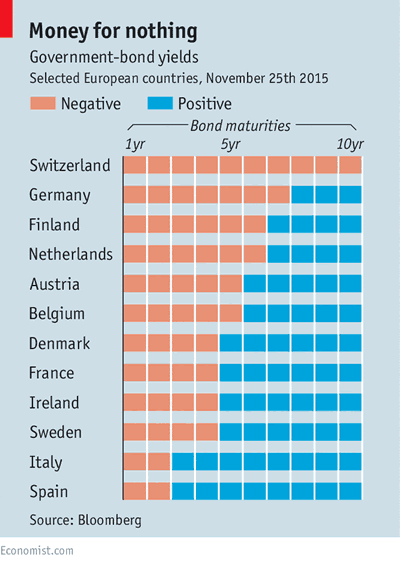
The above image shows you just how quickly a host of nations in Europe have embraced negative rates, and it is destined to spread to North America and finally Asia.
The key to the markets are the masses, and the masses believe that the Fed and the government can solve their problems. Until they think otherwise, nothing is going to change, and the outlook will continue to worsen.
Game plan
If you are going to speculate, at least, understand how the financial markets operate and what drives them. The main driving force behind the markets are emotions (otherwise known as Mass Psychology); understand this and you will have a better understanding of how the markets operate and won’t have to place your faith in shills on Wall Street who openly market themselves as experts. Compile a list of blue chip stocks or stocks that are showing strong rates of growth. Two good metrics to look for would be strong quarterly earnings growth rates and or strong quarterly revenue growth rates. Some companies to consider are HRL, PPC, OCLR, CIEN, AMZN, RTN, OA, etc.,
How will Gold fare in a negative interest environment?
Conventional wisdom states that precious metals trend upward when rates are rising. We are living in strange times, and central bankers are breaking rules left, right and centre so this old paradigm might not hold true. If the masses are forced to speculate, they could decide that Gold is a better storage of wealth. However, for that to come to pass, the average Joe would have to understand the true meaning of the word inflation and that Gold is a currency and not some ancient relic that has no place in the 21st century. This is not going to be an easy feat so, while we expect Gold to trend higher in the years to come, the next bull run is not going to begin with a bang. Another possibility to consider is that if the cost of holding money in a bank becomes prohibitive, it could trigger a run on the banks. We will examine this issue in more detail in a follow-up article.
“How does one become a butterfly?” she asked pensively. “You must want to fly so much that you are willing to give up being a caterpillar.” ~ Trina Paulus



-
I know Mike is a very solid investor and respect his opinions very much. So if he says pay attention to this or that - I will.
~ Dale G.
-
I've started managing my own investments so view Michael's site as a one-stop shop from which to get information and perspectives.
~ Dave E.
-
Michael offers easy reading, honest, common sense information that anyone can use in a practical manner.
~ der_al.
-
A sane voice in a scrambled investment world.
~ Ed R.
Inside Edge Pro Contributors

Greg Weldon

Josef Schachter

Tyler Bollhorn

Ryan Irvine

Paul Beattie

Martin Straith

Patrick Ceresna

Mark Leibovit

James Thorne

Victor Adair