
Timing & trends
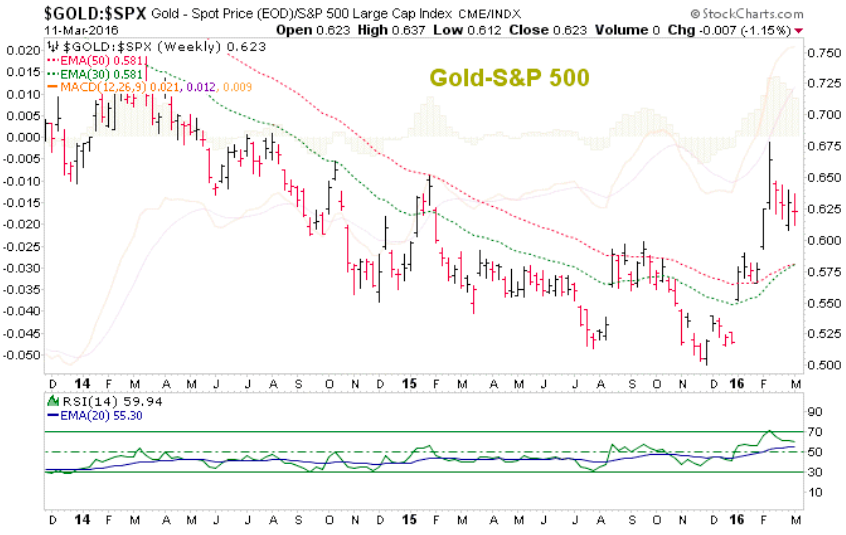
In this week’s report the key points are that the stock market, as represented by the S&P 500, has climbed further into the 2000-2030 target zone. It is time for the analytical rubber to meet Reality Road. This week should tell us a lot about whether the trend – which should be obeyed until it not longer exists – is going to remain intact. That trend is down.
Over in the precious metals and commodity patches, things have been exhilarating but are over done. I do believe I spotted a few raging commodity bulls last week. Not to sound like a broken record but that trend also remains down. We can expect that the Fed is fully aware of the bounce in crude oil, base metals, agriculture and especially the big move that led it all; that would be the one in gold, which has changed its trend to up.
…..read the entire comphrehensive report HERE

 The theme of divergence has been playing out in the global economy. One example is how the US Federal Reserve has begun their path of gradually raising interest rates whereas central banks like the Bank of Japan or European Central Bank have acted in recent months to lower policy interest rates and provide further economic stimulus through quantitative easing. Another, in the United Kingdom there is talk of a “Brexit” where citizens will vote in a referendum this June whether to remain a part of the European Union. Even in Canada we see divergence in the form of how the BC economy performs compared to the rest of the country.
Over the course of 2015, as commodities prices continued to tumble, the Canadian energy sector has had a net negative effect on the countries labour market. The province of Alberta lost more jobs last year than they did in 1982 when they were in recession. BC on the contrary, has seen employment growth of 3 per cent in the twelve months trailing February 2016. It leads the pack of Canadian provinces and is one of three to actually add jobs over the last year. Parts of this country are very challenged with economic opportunity while other regions are forecasted to show modest growth.
This in itself presents a very difficult challenge for the new Federal Liberal government as we begin to examine and digest the details of their first budget over the next couple of months. There are very clear have and have not regions of this country, and they must insure stimulus spending is (to quote Harvard economist Larry Summer’s) “targeted, timely, and temporary.”
Of the three T`s, all imply their own level of importance, but I`ll expand on the notion of being temporary. Whether the government runs a deficit amounting to half a percent or full percent of GDP is really inconsequential in the short run. That being said, TD`s Economics department updated their projections for the Fed`s budget with the latest data from the Finance Department and found from their estimates they are on track for run deficits totalling 150 billion over the next five years. This would in-fact twice break a Liberal promise of first capping deficits at 10 billion per annum and then second keeping the debt-to-GDP ratio fixed. This risks government spending creating negative connotations for returning to economic growth over the long run and having a debt that runs away like during the late 1980`s and early 1990`s.
Thankfully Canadian politics have exhibited a level of civility that is absent in most other western nations making headlines at the moment, and our new government has been given a mandate to spend as they see fit to reignite the Canadian economy. As BC`s forecasted to be most prosperous province through 2016 though we should hope for two things. The first being that the fiscal stimulus measures of the federal budget can provide an effective temporary lift to the Canadian economy. But, the second is certainly be careful what we wish for as the risks to over spending mean either higher taxes down the road or higher deficits bigger than planned as the government gets itself mired in debt.
 “Though we travel the world over to find the beautiful, we must carry it with us or we find it not.”
 – Ralph Waldo Emerson
The world is changing, and changing fast. Periodically our economy experiences a shift, a change or an inflection point, which marks the end of an era and the new beginning one. For instance, the Great Depression in the 1920’s was an economic event but marked a social shift (start of social security in the US), the 1980’s marked the end of the industrial age and the start of the information age, and today we are marking a shift in how we use and sustain the limited resources of our planet.
Recently I had the chance to see sustainability up front and close, by being part of the Globe 2016 conference in Vancouver. The Percy Group jointly held a booth with the Globe Group, and met with business people from around the world. The Globe Series is the largest and longest running conference in North America on the business of sustainability and innovation for the planet.
Sustainability, cleantech, clean energy and the business of the environment are topics I know well, having been in senior executive roles with two of the leading clean technology companies in BC: Ballard Power Systems and Powertech Labs. In addition, over the years I have been involved in numerous initiatives and boards related to sustainability and have always been a strong advocate for businesses to become better stewards of scarce resources
If you are a board director, CEO, executive or business owner, here is what you need to know about sustainability:
Sustainability is here to stay. There is a finite and diminishing amount of natural resources on our planet, while demand is insatiable. Therefore, the pressures to become more responsible stewards of our limited resources will only grow. In addition, demographic changes, driven largely by millennials, will apply significant market pressures for new and better ways to share products, services and resources. Globalization and rising global living standards will also put a strain on finite resources. Finally, sustainability technology and innovation will disrupt existing businesses, and the resultant rising economic pressure will force change upon the entrenched and status quo players
.
Sustainability is good for business. Like the early days of the internet, which spread uncertainty through the economy for many businesses, there is confusion and uncertainty among some business leaders, as the trend of sustainability unfolds. I look at it quite simply. Any good business leader should be focused on creatively creating maximum value for customers with minimal resources. The greater the responsiveness to customer demand, the better resources conversion, and ultimately the greater the contribution to sustaining those resources.
Sustainability is important to your customers. Customers have a funny way of being right and expressing it with their wallets. According to a recent survey by Cone Communications, “A record-high 71 percent of Americans consider the environment when they shop, up from 66 percent in 2008”. A recent (2015) Nielsen survey found almost 75% of Millennials (age 18 – 35) are willing to pay extra for sustainable offerings, up from approximately 50% in 2014. If you customers want it, make it a high priority in your strategy and business.
What Can Business Leaders Do?
Sustainability is an opportunity for business, not an obstacle. Forward-thinking business leaders can take many steps to become more competitive, as sustainability becomes increasingly important. Becoming aware of issues relating to sustainability, and then developing and implementing good strategy is a start. Focusing on the effective use of resources in both product design and business operations is very important. Listening clearly to the voice of the customer and incorporating the feedback into new products and services will ensure your business evolves to meet the changing needs of the market.
However, I believe the most important factor for business leaders is to embrace a willingness to change, to adapt, to let go of the tyranny of the status quo, while openly and honestly looking for ways to contribute and add value, so we leave the world not a little better, but a lot better than the way we found it.
By Eamonn Percy

I can’t help thinking about the Japanese real life deflationary experiment over the last 2 1⁄2 decades. It didn’t matter much when the Japanese move to ZIRP—zero interest rate policy. Borrowers didn’t take the money as they had few prospects on the business side of the fence and consumers were both over-levered and concerned about the future. So Japan has moved to NIRP—negative interest rate policy following in the footsteps of Europe. The ECB went deeper with the move yesterday. Now extending the bank’s largesse to buying corporate debt.


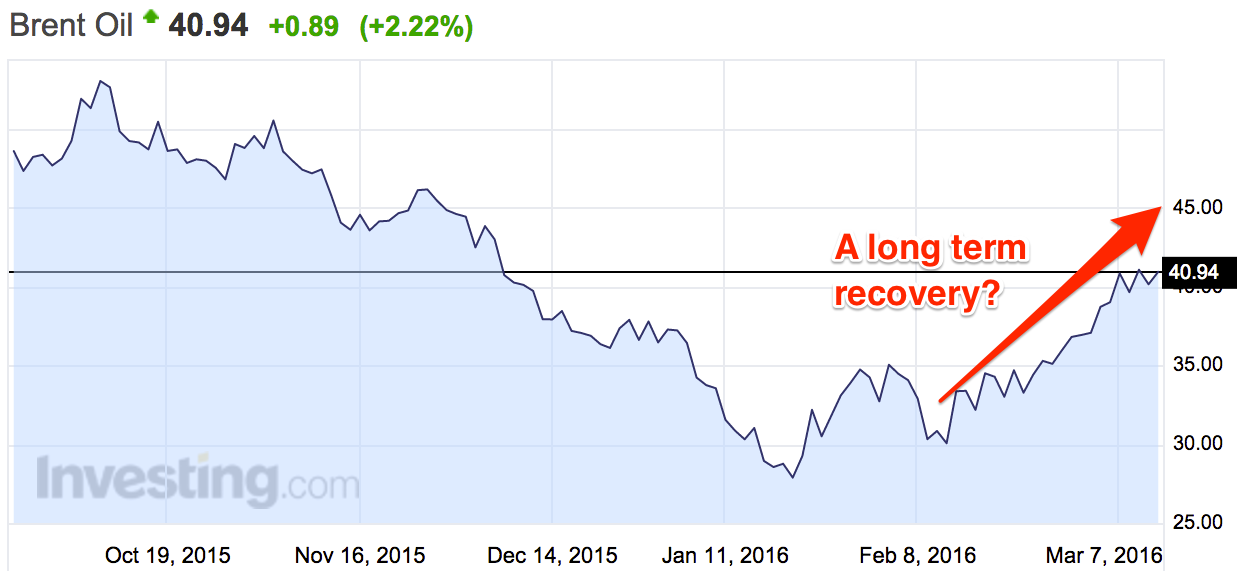
The price of oil may finally have bottomed, and there is “light at the end of what has been a long dark tunnel,” in the markets, according to the latest Oil Market Report from the International Energy Agency, released on Friday morning.
Oil prices have crashed from highs of more than $100 a barrel in mid-2014 to as low as $27 in January, wiping out more than 70% of the commodity’s value.
But prices have started to recover over the past month, this week passing above $40 a barrel for the first time in 2016.
The IEA says this slight recovery points to oil “bottoming out” and finally ending its run of long-term losses. “It is clear that the current direction of travel is the correct one, although with a long way to go,” the Oil Market Report said.


-
I know Mike is a very solid investor and respect his opinions very much. So if he says pay attention to this or that - I will.
~ Dale G.
-
I've started managing my own investments so view Michael's site as a one-stop shop from which to get information and perspectives.
~ Dave E.
-
Michael offers easy reading, honest, common sense information that anyone can use in a practical manner.
~ der_al.
-
A sane voice in a scrambled investment world.
~ Ed R.
Inside Edge Pro Contributors

Greg Weldon

Josef Schachter

Tyler Bollhorn

Ryan Irvine

Paul Beattie

Martin Straith

Patrick Ceresna

Mark Leibovit

James Thorne

Victor Adair