
Stocks & Equities
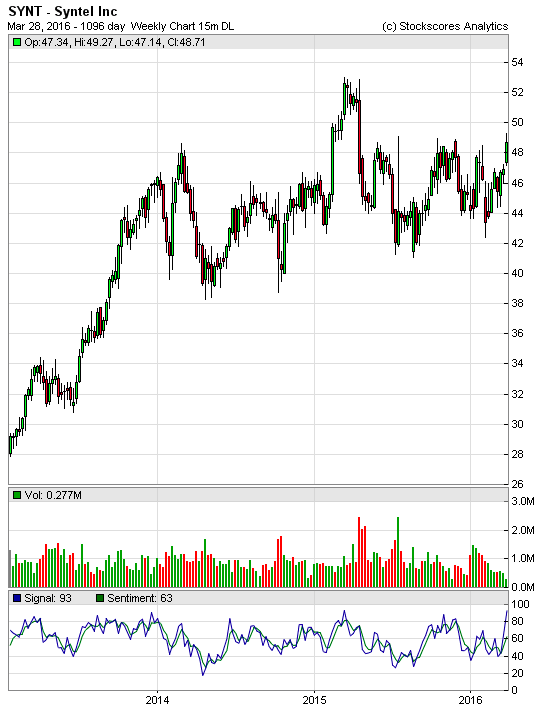 The ability to analyze a stock chart is essential to trading stocks whether you take a technical or fundamental approach. The chart shows us what all market participants know about a stock.
Most market beating stocks start their strong trends with abnormal price behavior. However, not all abnormal price behavior leads to a market beating trend. The key qualifier of abnormal price action is the stock chart. We can do well if we focus on the stocks trading abnormally out of predictive chart patterns.
That makes it important to understand the Stockscores Principles of Abnormal Chart Evaluation (SPACE) . To read any chart, you need to be able to see and understand the following:

Another indecisive week in the markets…
China did not blow up. Energy company debt did not melt down. And investors did not panic in the face of a slowing world economy, falling corporate earnings, and central bank absurdities.
This morning, all is well.
But nothing fails like success. Throw a lot of money at any market, and you are asking for trouble.
 Today, readers are urged to check their real estate holdings.
Tide of Money
Last year, more than one-third of the houses sold in Vancouver went to Chinese buyers.
All over Canada, the story was similar… though not as extreme. Houses are being sold to people who may or may not intend to live in them.
That was great, if you were selling a house. A tide of money rushed in… House prices rose.
But tides go both ways. They come in… and go out. And if you are counting on your house to hold its value… watch out.
Housing is normally more stable than the stock market because tides in the housing market are slow and relatively weak.
As Nobel Prize winner Robert Shiller explained in his book Irrational Exuberance, contrary to popular belief, there is no continuous long-term uptrend in house prices.
As Shiller puts it, most of the evidence “points to disappointingly low average rates of real [inflation-adjusted] appreciation of most homes.”
This makes sense. People do not readily “flip” or speculate with their homes.
You can sell a stock with the push of a few buttons. But moving a household is a pain in the neck. It involves packing up, organizing a mover, settling up on utilities, saying goodbye to neighbors, and so forth.
But when the guy next door is not really next door, his house is not really a home. It’s a floating, speculative hedge. And if you never move in… moving out is a breeze. All it takes is a change in taxes, regulation, or the markets… and you’re outta there.
Super Luxury
Real estate hotspots have seen a lot of phantom buying over the last 10 years.
In London and New York, for example, you find entire apartment buildings where no one is home. You can tell. Just look at them in the evening. Often, only the elevator shafts and hallways are lit. The apartments are all dark.
Both cities are now seeing softness in upper-end property prices; perhaps the tide has turned.
Top Manhattan apartments sell for more than $4,000 a square foot. At this level, a 1,200-sq-ft two-bedroom apartment sports a $4.8 million price tag.
“Super-luxury” space… one small step down from the top… sells for nearly $3,000 a square foot.
The law of supply and demand works in real estate as in other markets. But it is slower to express itself in bricks and mortar.
As prices rise, developers (who were burned badly in the last building spree) keep their eyes warily on the market.
First, they don’t believe the higher prices will last. Then, prices go higher… and memories fade. Eventually, builders become confident again.
It takes years between the time a decision is made on a major new apartment building and the time the doors open – time in which prices can rise even further.
But when the new product is put on the market, the tide goes out like a crowd leaving a football game. The exits jam up with eager sellers.
That appears to be happening now in New York and London. Sales are slow. Markets are crowded with empty units, advertised at fulsome prices.
Bargain or Bomb?
Meanwhile, over on the other side of the country, in Silicon Valley, the poor wizards of the Internet are having a hard time making ends meet.
Palo Alto is proposing giving housing subsidies to people who, almost anywhere else, would be considered rich. Here’s the report from London’s Daily Mail:
People earning $250,000 a year should qualify for subsidized housing in Palo Alto, according to a new proposal.
City officials have outlined an eight-year affordable housing plan – with 587 units for reserved for the area’s uniquely wealthy middle class as real estate prices balloon…
With house price averages an eye-watering $3 million, even those earning $250,000 a year are spending two-thirds of their monthly salary (about $14,000) paying off their mortgage.
If the newspaper was trying to impress its readers with a lurid picture of urban excess – a photo the “tear down” house sold recently for $2.7 million – it probably missed its mark.
Londoners are used to excess in their property market. In 2014, one apartment overlooking Hyde Park was reportedly sold to an unnamed Russian for $237 million.
At 16,000 square feet, that is perhaps the most expensive ever: Each square foot cost nearly $15,000.
A bargain? Or a bomb?
We don’t know. But we offer the same advice we gave readers 10 years ago: If you were planning to sell an appreciated property “sometime in the future,” this might be the future you were waiting for.
Sell it. Buy something cheaper. Put the difference in gold.
Regards,
 |
Bill Bonner

 Rogers asserted he is more optimistic about agriculture than other sectors of the world economy, especially after oil plummeted in the second half of 2014. While he affirms that the basic fundamental problem in agriculture still exists, he doesn’t see “supply yet that can cause a permanent change in the supply/demand.””it is agriculture which Mr Rogers says he prefers “to any other sector where you can easily invest” thanks to its supply and demand dynamics.” ...continue reading HERE
also:
Ag price weakness will prove only temporary
Don’t give up on ags. They are a “wonderful place” for investors.
At least, so says Jim Rogers, one of the biggest names in commodities, who in the first decade of the century played a big role in bringing the asset class to the fore, and popularised the idea of the “supercycle”.
The pullback in shares may be justified, said Mr Rogers
“I am pessimistic about stocks for the next couple of years,” he tells Agrimoney.com.
“The Dow Jones industrial average [share index] is not that far from its all-time high,” making share investment appear, given the abounding uncertainty and economic disappointments, poor value.
But for Mr Rogers, agriculture is “wonderful place to be”.….continue reading HERE
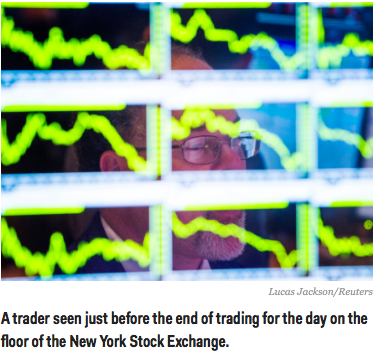 CREDIT SUISSE: Everyone else on Wall Street is dead wrong about these 23 stocks
It’s usually easier to move with the crowd, even on Wall Street.
But counterintuitive behavior is often what rakes in the big returns.
The equity research team at Credit Suisse recently published its latest list of contrarian stocks, or companies it thinks Wall Street is reading wrong.

 Increasingly, central bankers, economists and market watchers are discussing the pros and cons of what’s called helicopter money, a 47-year old idea that posits a way to kickstart an economy through dropping money on its citizens. Peter Praet of the European Central Bank, for example, said in an interview published last week that “all central banks can do it” if needed; his ECB colleague Jens Weidmann warned that such a move “would rip huge holes in central bank balance sheets.” Helicopter money feels very much like an idea whose time may be coming.

-
I know Mike is a very solid investor and respect his opinions very much. So if he says pay attention to this or that - I will.
~ Dale G.
-
I've started managing my own investments so view Michael's site as a one-stop shop from which to get information and perspectives.
~ Dave E.
-
Michael offers easy reading, honest, common sense information that anyone can use in a practical manner.
~ der_al.
-
A sane voice in a scrambled investment world.
~ Ed R.
Inside Edge Pro Contributors

Greg Weldon

Josef Schachter

Tyler Bollhorn

Ryan Irvine

Paul Beattie

Martin Straith

Patrick Ceresna

Mark Leibovit

James Thorne

Victor Adair