
Uncategorized
Like William F. Gavin, I hugely enjoyed Clint Eastwood’s turn last night, but I’m not sure I agree that it was “unintentionally hilarious” and that “he forgot his lines, lost his way.” Clint is a brilliant actor, and a superb director of other actors (and I don’t just mean a quarter-century ago: In the last five years, he’s directed eight films). He’s also, as Mr. Gavin observed, a terrific jazz improviser at the piano — and, in film and music documentaries, an extremely articulate interviewee. So I wouldn’t assume that the general tenor of his performance wasn’t exactly as he intended. The hair was a clue: No Hollywood icon goes out on stage like that unless he means to.
John Hayward writes:
The intended recipient was not Mitt Romney, the convention delegates, or even Republican voters, but rather wavering independents. Clint was there to tell them it’s OK to find Obama, his ugly campaign operation, and his increasingly shrill band of die-hard defenders ridiculous. It’s OK to laugh at them.
I’m not sure he could have pulled that off if he’d delivered a slick telepromptered pitch. As Mr. Hayward suggests, the hard lines packed more of a punch for being delivered in the midst of a Bob Newhart empty-chair shtick from the Dean Martin show circa 1968. Indeed, they were some of the hardest lines of the convention and may well prove the take-home (“We own this country . . . Politicians are employees of ours . . . And when somebody does not do the job, we’ve got to let them go”), but they seemed more effective for appearing to emerge extemporaneously from the general shambles.
The curse of political operatives is that they make everything the same. A guy smoothly reading platitudinous codswallop while rotating his head from the left-hand teleprompter to the right-hand teleprompter like clockwork as if he’s at Centre Court watching the world’s slowest Wimbledon rally is a very reductive idea of “professionalism.” Even politicians you’re well disposed to come across as slick bores in that format. Which is by way of saying Clint is too sharp and too crafty not to have known what he was doing.
Oh, and next time ’round, he should sing.
Incidentally, I’m not generally in favor of what Rob Long would call “working blue,” but, if you’re going to do it, doing anatomically impossible sex-act cross-talk with an invisible presidential straight-man in front of the Republican Convention is definitely the way to go.
Ed Note: Watch it for the first time or watch it again.
At time of writing, polls show the race for the presidency to be tight. General consensus seems to be that whoever wins, the 2012 election will be won by a bat squeak.
Yet to many, especially those of us on the right, it seems peculiar that Obama is still remotely in the race. With high unemployment, minimal GDP growth, a 100% increase in food stamp costs, and out-of-control spending, many conservatives are asking how just under half of the American population can possibly want more of the same.
While it is not possible now to get into the many reasons certain people will vote Democrat in November, I propose that all polls, not just left-leaning polls, may be being strongly misled by their data, and Romney/Ryan may actually have a huge lead not seen in polls.
It is my contention that this is due to a mix of the infamous Bradley effect and what is known in Britain as “the Shy Tory Factor,” with both coming together to exaggerate just how popular Obama is in America.
The Bradley effect is a much-debated polling distortion that is easy to demonstrate but difficult to prove. The idea that when a black or minority candidate is on the ticket against a white candidate, certain voters may lie under pressure from a pollster, worried about being seen as a racist for choosing the white candidate over the minority, sounds highly plausible. The consequence, should the Bradley effect be in play, would be a skewed poll indicating that the minority candidate is in better political shape than his or her opponent.
Some argued that while it may have been a factor in the past, it was not a factor in the 2008 election, when Barack Obama was elected convincingly, just as polls predicted.
Yet this dismissal may be premature. A closer look at the statistics shows that predictions for how much of the white vote Obama would win were strongly exaggerated by polling companies. For instance, a CBS poll near election day predicted that McCain would win the white vote by a mere 3%, and on election day the Republican actually brought in 12% more of the vote than the Democrat. Had it not been for an unusually high turnout among blacks and minorities, Obama’s landslide would have been a lot closer.
Therefore, there is no reason why we cannot expect at least a similar Bradley effect this year. In fact, it could possibly be even stronger — after all, the liberal smear that those who oppose Obama are racist is one that really took off since Obama took office, specifically with the rise of the Tea Party. This could serve only to magnify the Bradley effect, as some white voters may feel ashamed of being seen as sympathetic to a “racist” organization.
Yet there is another factor that, mixed with Bradley, could radically distort the numbers — and it is a concept not known in America, but known very well in the United Kingdom. Called “The Shy Tory Effect,” it could be the little-known variable that could be hiding a landslide for Mitt Romney.
The concept was coined after the British general election of 1992, the result of which stunned the pollsters, the politicians, and the media. After 13 years in office, the ruling Conservative Party was Thatcher-less and divided. Led by their extreme Welsh socialist leader Neil Kinnock (the same Neil Kinnock whose speeches Joe Biden had already rippedoff), the left-wing Labour Party were firmly ahead in the polls. Britain was drifting toward a socialist authoritarianism that they hadn’t experienced since the 1970s.
As election day approached, Labour held a chunky lead, causing Kinnock to yell giddily into the microphone in his final speech to the Party before election day, “We’re all right, we’re all right” repeatedly, to rapturous applause.
It seemed Labour had it in the bag. The only exception was the cool and collected Tory prime minister, John Major, whose internal polling suggested that things were not as they seemed.
As the results came in on election night, Labour started off celebrating. However, by 10 o’clock, the BBC’s exit poll predicted that Labour might not win, but there would be a hung parliament, which would still probably cause Kinnock to be prime minister of a coalition.
Yet the final result was a total shock — a comfortable win for the Tories, losing a few seats, but picking up the highest total number of votes for any political party since 1951. Left-wing pundits couldn’t explain what had happened.
The explanation for the gap between polls and reality was eventually named “The Shy Tory Factor.” Since the ascension of Thatcher to Downing Street in 1979, the Tories had been presented as a nasty, evil party that wanted to destroy communities in their war against the miners, gut health care, and take money from the poor to give to the rich via the poll tax [i]. Does this sound familiar to any Americans at all?
While the policies of the Conservative Party were popular, the media and the screeching left had helped turn the Tory brand into a toxic one that many people didn’t want to be associated with in spite of their secret support. Therefore, when polled, the shy Tories answered Labour, but voted Conservative.
Although this happened twenty years ago and in a different country, I propose that the important characteristics that make up the Shy Tory Factor are present in America in 2012. According to the mainstream media, the Republicans want to deny people health care, throw Granny off a cliff, and generally reduce the country to a Dickensian nightmare when the rich get richer, and do so by pulling bread out of the mouths of the hungry. Mixed with the aforementioned labeling of Republicans and Tea Partiers as racist, this is quite a suppressive combination.
While this blend of the Bradley effect and Shy Tory Factor may not affect voters in red states, in purple states it is not difficult to see why those intending to vote Republican may not wish to publicly identify as so, even to a pollster promising anonymity, in fear of being judged as the new Jim Crow.
The other note worth mentioning is that, in the Shy Tory Factor, the only person who knew of its existence before the election was the leader, whose internal polling is usually more accurate. Could this be why Obama’s team seems to have gone into panic in recent weeks? Do they know something the polling companies don’t?
The Bradley effect has been influential, if at all, only by a few overall percentage points. But if it is wrapped up with an American version of the much more powerful “Shy Tory Factor,” we conservatives may be in for a treat in the form of a massive landslide come the first Tuesday in November.
adamchristophershaw@hotmail.com“>Adam Shaw is a British conservative writer based in New York. His blog is The Anglo-American Debate. Follow him on Twitter: @ACShaw
Read more: http://www.americanthinker.com/2012/08/how_the_shy_republican_could_be_masking_a_landslide.html#ixzz254V13k9s
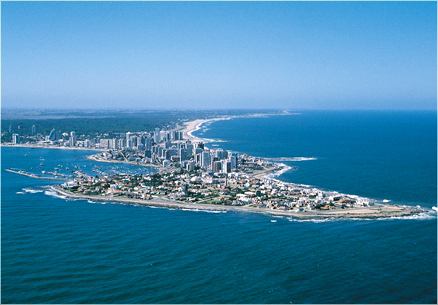
Knowing what I know now, it’s possible that Uruguay may be the best retirement destination you could treat yourself to. Not the cheapest…but the best. (And still at about half the cost of living in North America these days.)
Uruguay offers the very best of Latin America and Europe all rolled up into one surprisingly appealing package.
Unlike much of Latin America (and even parts of Europe these days), it comes with a stable government, a strong economy, and a well-known reputation for personal safety. Its people are warm and welcoming…as is its government.
The process to obtain residency in Uruguay is easy — perhaps that’s because no one in Uruguay is a “local” — everyone can trace their roots back a generation or two to Italy, Spain, Portugal, France, Ireland, Germany…
And all of those immigrants learned what I recently learned: That Uruguay has it all, from a rich coast and a bountiful sea full of delectable seafood…to fertile farmland where you can easily grow everything from greens to grapevines (Uruguayan wine rivals those produced in Chile and Argentina). Uruguay also produces record wheat crops and is well-known for its tender, grass-fed beef.
The European heritage in Uruguay remains strong in many ways… from food to music…to the Old World architecture of the cities… as well as in the physical appearance of the people themselves. It’s one of the few places in Latin America where a pale, 6’ 5” guy like me doesn’t stick out like a sore thumb.
There are little villages in the Uruguayan interior that have been settled by Italians (excellent pasta), Swiss (flavorful cheese), and Germans (delicious bratwurst and potato salad.) I’m told there is even one village, up near the border with Argentina and Brazil, settled by the Irish where almost everyone has red hair.
And a fun fact: Supposedly, as a percentage of the population, there are more left-handed people in Uruguay than most anyplace else. A grade school teacher in Uruguay told us she doesn’t know if that’s because, as some scientists think, lefties are more creative than right-handers. (And Uruguayans are definitely resourceful and creative.) Or if it’s because Uruguayans are so open-minded.
“Instead of trying to change our children into using their right hand,” she says, “we just let them be.”
And that’s one more area where Uruguay stands out: tolerance.
“Uruguayans are very tolerant and inclusive,” one expat says. “I’ve always been uncomfortable in parts of Latin America where there is a distinction between, for instance, the wealthy foreigners and the poor servers. There really isn’t a class division here…and that adds to my quality of life.”
Regards,
Dan Prescher
for The Daily Reckoning
Dan Prescher is a native of Omaha, Neb., and a graduate of the University of Nebraska at Omaha and the University of Iowa. Since joining International Living in 2001, he and his wife, Suzan Haskins, have lived and worked in Ecuador, Panama, Nicaragua, and three locations in Mexico. Dan currently lives in Mérida, the capital of Mexico’s state of Yucatan. When not writing, traveling, or hosting International Living events, Dan blogs as Cranky Yank and performs with his band, The Yucatones.
Special Report: Wait until you see what could happen in America next… An unbelievable phenomenon is set to sweep the nation… The railroad, steel, and technology age – this phenomenon triggered them all. And now it’s taking shape again! Watch this special, time-sensitive presentation now for full details on how it could affect your job… your lifestyle… and your wallet. Here’s How…
I flew in to Montreal from an overseas trip the other day and was met by a lady from my office, who had kindly agreed to drive me back home to New Hampshire. At the airport she seemed a little rattled, and it emerged that on her journey from the Granite State she had encountered a “security check” on the Vermont–Quebec border. U.S. officials had decided to impose temporary exit controls on I-91 and had backed up northbound traffic so that agents could ascertain from each driver whether he or she was carrying “monetary instruments” in excess of $10,000. My assistant was quizzed by an agent dressed in the full Robocop and carrying an automatic weapon, while another with a sniffer dog examined the vehicle. Which seems an unlikely method of finding travelers’ checks for $12,000.
Being a legal immigrant, I am inured to the indignities imposed by the U.S. government. (You can’t ask an illegal immigrant for ID, even at the voting booth or after commission of a crime, but a legal immigrant has to have his green card on him even when he’s strolling in the woods behind his house.) And indeed, for anyone familiar with the curious priorities of officialdom, there is a certain logic in an agency that has failed to prevent millions of illegal aliens from entering the country evolving smoothly into an agency that obstructs law-abiding persons from exiting the country.
But my assistant felt differently. A couple of days later, I was zipping through a DVD of The Great Escape, trying to locate a moment from that terrific wartime caper that I wished to refer to in a movie essay.
….read more HERE
Mike’s Goofy: {mp3}mtaug292012{/mp3}
Ed Note: The article below describes the mood in a middle-class suburban US city. A clip from:
“I expect the crowd in power to destroy everything…”
There is an absolute collapse of faith in our systems and in the guy they helped put into office. These folks who were so quick to believe the press in ’08 and to believe in “hope and change” are now willfully believing the absolute worst. While I was getting my grey washed away I heard about local goings-on that I won’t write about here until I check it out for myself, because I don’t know what is real and what is paranoid fantasy or conspiracy theory. But the thing is, the anxiety is real, the doubt is real, as is the willingness to believe the absolute worst of all of our institutions — the press, the churches, the government. These folks are utterly convinced that the only thing that is going to be installed come next January is chaos and oppression. They’ll vote for Romney (“assuming there is an election and we’re allowed to vote and the vote is actually counted…”) simply because he’s not Obama, but they’re convinced that America’s best days are over.
….read it all HERE
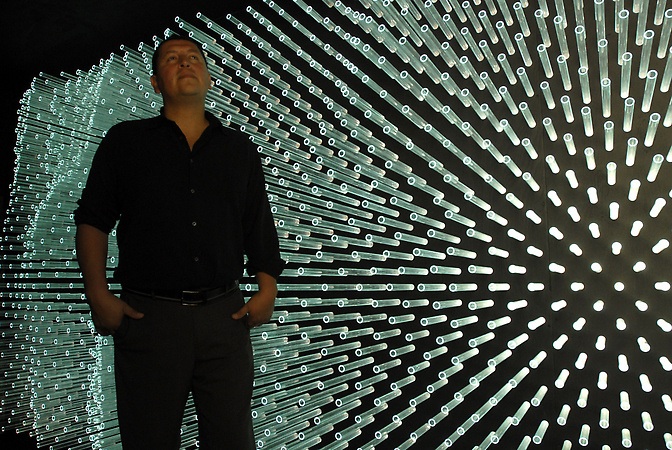
After swallowing a $535 Million Taxpayer Loan Guarantee Solyndra went bankrupt. 1,000’s of employees were let go, vendors were left high and dry, hundreds of millions of dollars were lost — and millions of glass tubes were abandoned in a San Jose warehouse. But wait, fortunately Oakland architects Ronald Rael and Virginia San Fratello used 1,368 of the glass tubes to create “SOL Grotto,” an architectural sculpture on display in the lush grounds of the University of California Botanical Garden in Berkeley.
But “SOL Grotto” has generated the most publicity as the source of a fresh wave of criticism by conservative commentators and House Republicans, who have long held up Solyndra, which was awarded the $535 million from the U.S. Department of Energy, as a prime example of wasteful spending by the Obama administration. Some of those critics are now blasting “SOL Grotto” as the world’s most expensive piece of taxpayer-funded artwork, even though a bankruptcy court determined that the glass tubes no longer had value.
….the entire story HERE
-
I know Mike is a very solid investor and respect his opinions very much. So if he says pay attention to this or that - I will.
~ Dale G.
-
I've started managing my own investments so view Michael's site as a one-stop shop from which to get information and perspectives.
~ Dave E.
-
Michael offers easy reading, honest, common sense information that anyone can use in a practical manner.
~ der_al.
-
A sane voice in a scrambled investment world.
~ Ed R.
Inside Edge Pro Contributors

Greg Weldon

Josef Schachter

Tyler Bollhorn

Ryan Irvine

Paul Beattie

Martin Straith

Patrick Ceresna

Mark Leibovit

James Thorne

Victor Adair