
Uncategorized
Everything is Amazing and no one is happy.
The Virtual President outlines the three essential qualities needed for the Pursuit of Happiness in Modern America, and sets a challenge to free entire generations of Americans.
…..more HERE
 David Chilton, author of the Wealthy Barber and the Wealthy Barber Returns. Member of the CBC Dragon’s Den
CLICK HERE to listen to his conversation with Michael Campbell
 Don Coxe, author of the Basic Points newsletter and Chairman of Cox Advisors LLP
CLICK HERE to listen to his conversation with Michael Campbell
Half Of The Students In Harvard’s Massive Cheating Scandal Have Been Forced To Withdraw
We’re finally hearing about the fallout from a massive cheating scandal that shook Harvard University’s campus last summer, in which 125 students were investigated for plagiarism and other academic misconduct surrounding their final exams.
More than half the students who were investigated by the school’s administrative board have been required to withdraw from the college for a period of time, Boston.com reported.
Of the remaining cases, around half received disciplinary probation, and the rest were dismissed, according to the news website.
Harvard’s Dean of Faculty of Arts and Sciences informed members of the school community about the results of the board’s investigations in a campus-wide email.
School officials said in August that they had discovered suspicious similarities while reading through students’ year-end take-home exams over the summer. The cases were heard by the school’s administrative board and decided throughout the fall and winter, Boston.com reported.
All of the students involved in the incident were in the same 279-person undergraduate course, Government 1310: “Introduction to Congress.”
SEE ALSO: The Biggest College Cheating Scandals
Read more: http://www.businessinsider.com/harvard-students-in-cheating-scandal-to-withdraw-2013-2#ixzz2JxIT9wMd
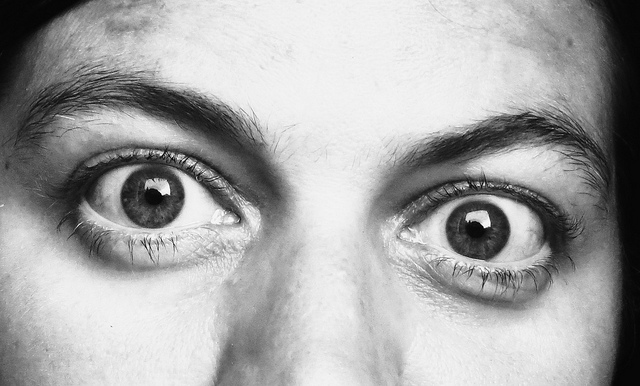 CAN’T SLEEP?
Nothing is more frustrating than not being able to sleep. Tossing and turning. Your mind is racing, going over everything that happened today. Night noises keep you awake. What can you do? There ARE things you can do! Read on and learn some new tricks to sleep well. These tips are also known as “Sleep Hygiene.”
- Sleep only when sleepy
This reduces the time you are awake in bed.
- If you can’t fall asleep within 20 minutes, get up and do something boring until you feel sleepy
Sit quietly in the dark or read the warranty on your refrigerator. Don’t expose yourself to bright light while you are up. The light gives cues to your brain that it is time to wake up.
- Don’t take naps
This will ensure you are tired at bedtime. If you just can’t make it through the day without a nap, sleep less than one hour, before 3 pm.
- Get up and go to bed the same time every day
Even on weekends! When your sleep cycle has a regular rhythm, you will feel better.
- Refrain from exercise at least 4 hours before bedtime
Regular exercise is recommended to help you sleep well, but the timing of the workout is important. Exercising in the morning or early afternoon will not interfere with sleep.
- Develop sleep rituals
It is important to give your body cues that it is time to slow down and sleep. Listen to relaxing music, read something soothing for 15 minutes, have a cup of caffeine free tea, do relaxation exercises.
- Only use your bed for sleeping
Refrain from using your bed to watch TV, pay bills, do work or reading. So when you go to bed your body knows it is time to sleep. Sex is the only exception.
- Stay away from caffeine, nicotine and alcohol at least 4-6 hours before bed
Caffeine and nicotine are stimulants that interfere with your ability to fall asleep. Coffee, tea, cola, cocoa, chocolate and some prescription and non-prescription drugs contain caffeine. Cigarettes and some drugs contain nicotine. Alcohol may seem to help you sleep in the beginning as it slows brain activity, but you will end end up having fragmented sleep.
- Have a light snack before bed
If your stomach is too empty, that can interfere with sleep. However, if you eat a heavy meal before bedtime, that can interfere as well. Dairy products and turkey contain tryptophan, which acts as a natural sleep inducer. Tryptophan is probably why a warm glass of milk is sometimes recommended.
- Take a hot bath 90 minutes before bedtime
A hot bath will raise your body temperature, but it is the drop in body temperature that may leave you feeling sleepy. Read about the study done on body temperature below.
Trouble Sleeping? Chill Out! – A press release from the journal Sleep about the significance in body temperature before sleep.
- Make sure your bed and bedroom are quiet and comfortable
A hot room can be uncomfortable. A cooler room along with enough blankets to stay warm is recommended. If light in the early morning bothers you, get a blackout shade or wear a slumber mask. If noise bothers you, wear earplugs or get a “white noise” machine.
- Use sunlight to set your biological clock
As soon as you get up in the morning, go outside and turn your face to the sun for 15 minutes.
In the past 30-plus years I’ve interviewed dozens of candidates for jobs in journalism. Among the questions I always posed is this one: Why are newspapers published?
To date, no journalism school graduate has known the answer, which is, of course, to make money for the publisher.
Last year I participated in a get-together with journalism students from the local college. I asked my question and received the same b.s. answers as always (“To… uh… provide the community with a voice?”)
When I told the students the answer, the instructor disagreed and repeated the same nonsense his students had already provided.
Mine was a common sense observation, gently delivered. As a friend of mine recently wrote, “If you want to see heads explode, try explaining to people that they are not the customer and the newspaper is not the product… advertisers are the customer and reader attention is the product.”
If you were to run that past your typical journalism school faculty, the resulting cranial detonations would register on the geology department’s seismometer.
And yet it is entirely, one hundred percent true.
We in the newsroom should have no illusions. Our entire purpose is to fill the “news hole,” which is the space left over after the advertisements have been placed on the page.
That’s the fact that underlies Seinfeld’s comical observation: “It’s amazing that the amount of news that happens in the world every day always just exactly fits the newspaper.”
It’s all driven by advertising.
If newspapers serve the public, that is a happy side effect of the first goal of making money. And indeed, serving the public is wholly contingent on making money.
How these simple facts escape the notice of journalism students and journalism professors is obvious. They live in never-never land, where the facts of life are secondary to ideological engagement.
The professors are busily preparing their young charges to take verbal arms against the world’s injustices, as defined by the world’s professors. The result is what Boston Globe columnist Jeff Jacoby recently described as a “lack of ideological diversity” found within most American newsrooms. Jacoby listed the common attributes, including “the reflexive support for Democrats, the distaste for religion and the military, the cheerleading for liberal enthusiasms from gun control to gay marriage ….”
Why it requires four years to prepare young journalists to go out and save the world — that is, to remake it in their philosophical image — is beyond me.
I have never taken a course in journalism, which I regard as a boon to my career and particularly to my reporting. I’m occasionally told by a superior, “That’s not the way it’s done.” When I ask why, the answer invariably is, “because I was taught you shouldn’t do it that way.”
Business owners may recoil at the comment. I hope they do. After all, no more dangerous words are ever spoken in business than, “that’s not the way we do it here.”
The result, in part, is a stylistic model that refuses to fully engage with the reader.
Do you know why this sentence would be struck through by a copy editor?
Because I used the word “you.” The editor would much prefer, “Readers might be surprised to learn this sentence would be struck through by a copy editor.”
In the current media age, where rank exhibitionism is celebrated, we in the newspaper biz remain too dainty to utilize the enormous engaging power of the second person.
Of course, everyone overvalues the academic training they’ve received. It makes the debt, hassle, and spent time seem worthwhile, or at least less futile.
And imagine the thrill of using “lede,” which is the new spelling of lead, as in the opening sentence of a story. Its use provides the pleasing sensation of possessing specialized knowledge, knowledge well beyond the ken of the average Joe.
That is particularly pleasant to those who know so very little about everything else.
For example, I always ask job candidates a second question: “What is the difference between regulation and legislation?”
Only one j-school graduate has ever known the answer. That was because, he sheepishly provided, he had worked as a legislative assistant the summer prior.
Tell me, please. How do you prepare a student for a career as a “government watchdog” and fail to provide the most fundamental instruction in how government works?
As befits their lofty status and lofty purpose, journalists work under a lofty ethical construct. Unfortunately, it is as flawed and juvenile as their journalistic purpose.
On occasion the ethical imperatives are simply incompatible, for example: 1) saving the world and 2) journalistic objectivity.
This illustrates perfectly an important fact: journalistic ethics weren’t arrived at philosophically or accidentally.
As is the case with many codes of ethics, the ethics of those in the journalism industry have as one of their primary purposes the maintenance of the status quo, particularly the economic status quo.
Though it’s largely falling by the wayside, older readers will recall that American attorneys formerly avoided advertising. It worked beautifully as a means of diminishing competition, both in pricing and in attracting new clients.
For a journalism equivalent, consider that most American newsrooms operate separately from the “commercial” aspects of the enterprise. The putative purpose is to ensure the reporters aren’t influenced by the grubby exchange of cash going on elsewhere in the building. They are to operate as if the local banks aren’t in fact buying full page advertisements, thus freeing them to pursue questions regarding bankerly incompetence or corruption as assiduously as among those who don’t advertise.
It doesn’t work so well in practice.
However, it does play to the notion widely held by newsroom denizens that most businesses are corrupt, or at least questionable. All business owners are regarded as “greedy.”
Reporters find the entire notion of maximizing profits a bit dicey.
Recall now that reporters aren’t working for similar rewards as those in business. They are out to save the world.
Newspaper owners have for centuries utilized this leaning to pay reporters peanuts. In fact reporters are the lowest paid among occupations that require a college degree. In most places they earn 40-50 percent less than the local librarian.
The newspaper owners benefit greatly from the naiveté of those in their newsroom. They’re not going to say a word.
And then there is the notion of “objectivity,” another utterly ludicrous ethical concept, and one that is similarly highly useful in generating profits.
There is no such thing as journalistic objectivity. (For a detailed explanation, see “Why the News Makes You Angry.”)
Prior to the late 1800s every small town in America had one or more newspapers, with each serving a particular religious, social or political constituency.
Then “objectivity” was introduced. The result wasn’t objective news, but rather news that was found unobjectionable by all.
Insipid news and comment proved to be a great business model because it was sold to the public as purely factual, utterly untainted by bias.
Consumers trusted it. They lapped it up.
Objective news was and remains a joke, but Americans continue to believe it exists.
People who watch CNBC will tell you it’s objective. Fox viewers believe they’re hearing the unvarnished truth.
How are these same people expected to penetrate the more sophisticated bias of the New York Times?
Most news consumers believe the news they’re receiving is “objective” simply because they’re told it is. It’s a well-known psychological phenomenon, commonly referred to as a “big lie.”
The Society of Professional Journalists provides a nice wrap-up of the whole ball of journalistic ethical wax on its website www.spj.org/ethicscode.asp.
You will note that “professional journalists” — whatever that means — are required to, “Tell the story of the diversity and magnitude of the human experience boldly, even when it is unpopular to do so.”
Whatever that means.
And finally, journalists are required to “Expose unethical practices of journalists and the news media.”
Right.
If ever there were an argument for the value of online pajama journalists, this should put an end to it.
For decades the mainstream media worked in a bubble, utterly free from scrutiny by others. We have all seen the results.
Our daily lives are diminished by them.
And it all resulted from a gentleman’s agreement: We won’t look at you if you don’t look at us. And we must never, ever take a critical look at our own operations.
Now, thankfully, that model has been torn asunder, not by professional journalists but rather by amateurs.
Dilettantes, my colleagues would condescendingly call them — if their vocabulary was sufficient.
Me, I love these folks. They are finally forcing accountability on a uniquely powerful industry that for far too long practiced its sometimes dark arts out of the public eye.
Theodore Dawes was a reporter, editor, and publisher for more than 30 years. These days he’s a consultant and speaker on media relations. For more of his columns, see Theodore Dawes. To contact Ted, drop a line to teddawesmobile@gmail.com.
-
I know Mike is a very solid investor and respect his opinions very much. So if he says pay attention to this or that - I will.
~ Dale G.
-
I've started managing my own investments so view Michael's site as a one-stop shop from which to get information and perspectives.
~ Dave E.
-
Michael offers easy reading, honest, common sense information that anyone can use in a practical manner.
~ der_al.
-
A sane voice in a scrambled investment world.
~ Ed R.
Inside Edge Pro Contributors

Greg Weldon

Josef Schachter

Tyler Bollhorn

Ryan Irvine

Paul Beattie

Martin Straith

Patrick Ceresna

Mark Leibovit

James Thorne

Victor Adair