
Bonds & Interest Rates
In this series, I am attempting to describe the fundamental relationship between yields and inflation.
In the previous articles in this series, I said I would attempt to show that the real price of primary commodities (e.g., grains, metals, oil), but especially industrial commodities, were highly correlated with equity yields, and that this was likely the source of Gibson’s Paradox.
Reliable equity data for the U.S. goes back to at least the 1870s, and is easily accessible from Robert Shiller’s website. And although one always wants more data, there is a fair amount of historical commodity data from such sites as the St Louis Fed, the World Bank, the Global Price and Income History Group (GPIH), the International Institute of Social History (IISH), MeasuringWorth, the BLS, Long-Term Returns and other sites.

……read much more HERE

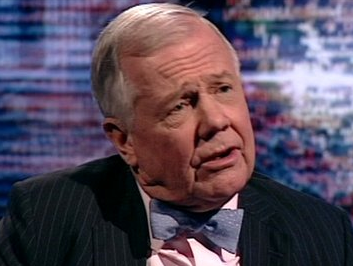 Noted investor and author Jim Rogers says index-based commodity ETFs will be an easy-to-use strategy for investors to profit from supply shortages in natural resources combined with easy monetary policies from central banks around the world.
Speaking Wednesday at the 2013 ETF Virtual Summit, Rogers pointed out that world governments have gotten to the habit of printing money in the wake of the financial crisis. [Jim Rogers: Use Commodity ETFs to Profit from Supply Shortages]
Rogers noted that the new Japanese Prime Minister, Shinzo Abe, won his election on promises to increase quantitative easing to jumpstart the stagnating economy. Consequently, the Japanese yen has been depreciating and Japanese equities have been rallying on the optimistic outlook. [Currency ETFs: Everyone Hates the Japanese Yen]
- CurrencyShares Japanese Yen Trust (NYSEArca: FXY)
- iShares MSCI Japan Index Fund (NYSEArca: EWJ)
- WisdomTree Japan Hedged Equity Fund (NYSEArca: DXJ)
- db-X MSCI Currency Hedge Equity Fund (NYSEArca: DBJP)
It all may sound good and feel good to investors, “but by the end of 2013, all this will be wearing off,” Rogers warned. “We will see serious problems and ramifications down the road.” [PIMCO Total Return ETF’s Bill Gross: Stimulus ‘Increasingly Ineffective’]
Rogers believes that investors will be able to find opportunities in natural resources as there are “supply problems in all commodities going forward.”
“We will make money in commodities because of supply shortages … and governments will print money,” Rogers added.
- PowerShares DB Commodity Index Tracking Fund (NYSEArca: DBC)
- iPath DJ-UBS Commodity Index ETN (NYSEArca: DJP)
In the metals space, Rogers is looking at base metals over precious metals.
“I suspect base metals benefit as they are down so much that they would be in a better place than precious metals,” Rogers said. “I would not be selling my base metals.”
- PowerShares DB Base Metals Fund (NYSEArca: DBB)
Additionally, Rogers is leaning toward agriculture and natural gas, which he says have been oversold. Looking at the agriculture market, the world is consuming more than is produced by farmers. Some areas of the world are witnessing a food shortage.
- PowerShares DB Agriculture Fund (NYSEArca: DBA)
- ELEMENTS Rogers International Commodity Agriculture ETN (NYSEArca:RJA)
- United States Natural Gas Fund (NYSEArca: UNG)
“We are running out of farmers,” Rogers said. “No one is going into farming. The old are getting out and the young aren’t coming in.”
He said indexed ETFs are “the best way for everyone to invest in everything.” ETFs make getting exposure to commodities as simple as buying individual stocks, Rogers added.
For more information on commodities, visit our commodity ETFs category.
The opinions and forecasts expressed herein are solely those of Tom Lydon, and may not actually come to pass. Mr. Lydon serves as an independent trustee of certain mutual funds and ETFs that are managed by Guggenheim Investments; however, any opinions or forecasts expressed herein are solely those of Mr. Lydon and not those of Guggenheim Funds, Guggenheim Investments, Guggenheim Specialized Products, LLC or any of their affiliates. Information on this site should not be used or construed as an offer to sell, a solicitation of an offer to buy, or a recommendation for any product.


 With Toronto Homesales down 50% and Vancouver down sharply Michael Campbell address all of the issues. With sales volumes in Vancouver down 25% from a 10 year average and a 31% drop in December 2012, if you are a homeowner this 5 minute audio is well worth listening to for some insights from Michael you’d most likely not hear from the Main Stream Media.
{mp3}midwup23campbell{/mp3}

 Despite recent hiccups in gold prices, if you’re investing in commodities, it is still the best, safest bet, according to Morgan Stanley’s commodities team led by Hussein Allidina.
Silver offers a little more risk and reward than gold; Allidina expects it to outperform gold in 2013.
The report also favors soybeans and corn as demand for them is accelerating faster than supply.
However, the report warns commodities investors away from aluminum and sugar, two commodities that are acutely oversupplied at the moment.
We pulled the price targets and paraphrased the investment theses for 14 major commodities from Morgan Stanley’s latest Commodity Manual.
…..read more HERE

-
I know Mike is a very solid investor and respect his opinions very much. So if he says pay attention to this or that - I will.
~ Dale G.
-
I've started managing my own investments so view Michael's site as a one-stop shop from which to get information and perspectives.
~ Dave E.
-
Michael offers easy reading, honest, common sense information that anyone can use in a practical manner.
~ der_al.
-
A sane voice in a scrambled investment world.
~ Ed R.
Inside Edge Pro Contributors

Greg Weldon

Josef Schachter

Tyler Bollhorn

Ryan Irvine

Paul Beattie

Martin Straith

Patrick Ceresna

Mark Leibovit

James Thorne

Victor Adair