
Timing & trends
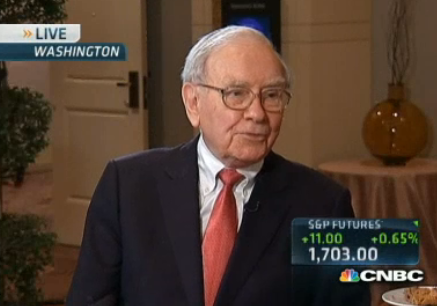 During the early morning of Oct. 16, 2013, Chairman of Berkshire Hathaway, Warren Buffett appeared on CNBC for a few hours with Becky Quick. There are a series of video clips posted below as well as a full transcript HERE
Buffett sounded fairly optimistic on CNBC noting he had made a billion-dollar acquisition this morning in the UK and also noting that it is not a mistake to buy stocks now, reaffirming stocks are not selling at “bubble” valuations. Buffett also weighed in on Carl Icahn’s proposed Apple (AAPL) buyback as well as FED policy, the debt ceiling, the future of J.C. Penney (JCP) and a few other things of interest.
It’s a perfectly okay debt to buy securities. We bought a $1 billion business about five hours ago. i think over at the uk. and we did not buy it with a condition in it that we could call off the deal if there was a no vote on the deficit change. limit change. so if you can own a good business, a good farm, a good apartment house, you know the united states is going to be around five or ten years from now and you know it will be more prosperous. it’s not necessarily a mistake to buy stocks because you don’t know the outcome of something that’s happening in congress. that’s a great long-term view. and your view has always been no matter what happens, we will get through it. we got through the great depression. we got through world war ii. but what about the immediate? people are really concerned about what’s happening in washington right now. it’s a mess. and if you think about it, i used to tell my children when they were young, it takes 20 years to build a reputation and 20 minutes to ruin it. we’ve been building a reputation for 237 years. the united states has become the reserve currency in the world in the process and people all over the world hold our paper. so to do anything to damage the 237 years of good behavior is idiotsy. i don’t think it will happen. but if it does happen, it’s a pure act of idiotsy.
i am fought worried in the sense of those treasury bills being paid. i’m worried about damage to an asset that we carefully cultivated for years. those short-term treasury bills, though, the rates have spiked on them, especially in the last couple of days. bill gross said he’s a buyer over at pimco. are you? they’ve spiked, but you’re talking about going from zero yield to 35 basis points. but 35 basis points for three or four days does not amount to a bunch of — in other words, you’re not scraping for cash? i’ve got better things to have had although that date looked pretty good. have you changed anything you’ve done at berkshire as a result of what’s been happening in washington? no. we have been at a derth when it comes to getting any signs of the economy, any reading on what is happening because you don’t have any economic numbers coming out. you have a lot of numbers coming out every day. in your opinion, has the u.s. economy been hurt by what’s been happening in washington and does it show up in your receipts? it has not shown up. but what will show up is in the world, united states citizens lose some faith in the full faith and credit promise of the united states. that would be a momentous event. even if we said, well, we’re slowing it for a week or we’re putting out script or whatever, that would be huge. we have been spent 237 years building up our reputation for billing our bills on time.
But a 1% real gdp growth per capita over a long period of time, one does wonder. are you telling us that we need to get used to this or is this a temporary rare thing and we’re going to get back to what we used to expect? i don’t know. i think it’s very possible we get back to higher rates of growth, but i will tell you that this is not a disaster. i mean, if you — just think about each generation living 20% better than the generation before them. that is not terrible. it’s not terrible and it’s not a disaster. but if you’re looking for 3% versus 3.5% growth versus what whooefb getting, you’re fought going to have the problems we’ve been dealing with today in washington. that takes care of itself. it takes care of itself unless we start making new promises. we tend to make big promises. we’re like a very, very, very rich family and then we don’t stop getting rich at quite the same rate. but our promises, we just went
The country should have a “sustainable path,” says Warren Buffett, Berkshire Hathaway chairman & CEO, but Congress should “fight it out” without putting the nation’s credit at risk.
Issues. what’s going on at benjamin moore now? we heard an employee was you fired. benjamin moore has been around over a hundred years. i made a promise to the dealers that we were going to stick with that and would not go with the big boxes. meaning the home depots and so on. that was enormously important. i did a video so there wouldn’t be any question. i found we were about to sign with one of the big boxes. i had to make a change. we have a commitment toll to the dealers. we take care of them; they take care of us. i encouraged who was put in. recently we had to make a change for a reason i can’t get into.
Basically i’m buying businesses and bank stocks for that matter in terms of what’s going to happen in the future not for what’s happened in the past. i can go back with bank of america. i read a book 55 years ago. i can go back to the san francisco earthquake. they thought it was a down day and turned out to be a good day for bank of america. what really counts is the future. in the future, banks will have to carry, particularly larger banks are heavier capital. banks are in the best shape i can remember. they’ve built up capital enormously. portfolios are in good shape. big problem they have now is getting out more money. they have more money around than they would like. they are not reluctant to loan.
Speaking of investors, let’s see a what carl has been saying to apple. what do you think about his requests or demands to buy back the incredibly large church of stock? the apple management did a nice job running the company. i wish i bought the stock years ago. i did advise the stock years ago. they’ve got a lot of money that’s not trapped over seas. they’d have to pay a big tax to bring it back. they hope for free trade at some point so they won’t have to pay the tax. carl is suggesting they borrow money to buy back the big chunk of stocks. companies have done that including coca-cola. they’re buying in stock. i’ve got — i think the apple management and directors have done a good job running the company. i vote with them. versus what carl is saying? i do not think that companies should be run primarily to please wall street and largely shareholders going to sale. i prefer shareholders going to
Do you agree with that opinion. i have no idea. the economy has been getting better. how they make a decision on whether to pull back — it doesn’t enter into my thinking. i’ll put it that way. ben bernanke did make comments after the last fed meeting and said the trouble in washington was the reason they were standing pass for now. obviously he was right. look at what happened since then. at this point you try to figure out what pd in washington will have a serious impact on the economy. you haven’t seen it in ub ins, but what’s your guest in terms of if we were to get a resolution by the end of the week, how big the impact would be on the economy? if they get a resolution today, i think opinion of congress still will have diminished significantly. i don’t think that will change the world or certainly won’t change the people’s feeling about the reserved currency. what would do the job, both parties say this is a weapon of mass destruction. we’re not going to use it. we’ll fight in trenches but not going to blow up the world to get our way. that doesn’t sound like conventionalism in washington.
When we set up the energy leadership council, this group of retired four star admirals, generals and ceo of oil using companies we were importing about 60% of our oil everyday. what happened to the light? today it’s less than 40%. much progress. i know it’s your job and a lot of guys that protect our nation, that’s your job to worry. we are in a better position now to some day take that weapon away from opec and people that don’t like us? it must be gratifying. joe, that’s well said. it is before. trend lines are encouraging. as fred mentioned we’re still importing 40% of the requirement today. we believe that as a nation, we’ve got to work on it. eventually we’ll achieve the energy security. i want to point out joe, when opec instituted the oil embargo 40 years ago to punish the united states in particular for support of israel during the war, we were only importing 35% of our oil. withholding oil supplies through the united states economy and complete chaos.
sflieth. supplier in many respects. fruit of a loom. and also supply jewelry to them. there’s a lot of questions about the health of the company. you as a former retailer yourself in the department store and now somebody that has a lot of retail business, you’ve been watching this. what do you think about what’s been happening? it’s very tough. the trouble with retailing is the competitor is always moving. getting your act together which they’re doing is important. at the same time all others keep moving. it’s just very tough. i have this huge rooting interest. i worked there when i was 16 selling shirts $1.98. i sold men’s clothing, childrens and i loved it. i have always loved the company. it’s tough to run it. of course when you have to do something like selling out whether 38% or a large number of shares it makes it very tough. coming from behind in retail is very tough.
The stock market compared to most asset classes in my view is the most attractive place to have your money over the next 20 years. over 20 days or 20 weeks i don’t know. we have our money in businesses. we all all of some businesses, parts of some. we call those stock. we think that’s where value lies. we had mark as a guest on the show yesterday. he laid out the argument about just by looking at formulas, playing the averages, that we are due for another correction at some point. you never know when or how that’s going to happen. it was an argument for not getting caught up in the euphoria of the market and making sure you were diversified. do you think we’ve reached the stage in this market people have to worry about bubble levels? no. we could at some point. no. stocks are not selling at bubble levels. i think it’s a terrible investment compared to equities. so you’re going to have your assets in something. good businesses held for a long period of time are certain to deliver good results from this
What advice would you give to the republicans this morning? i would give this advice to republican because they’ve dug the hole. i’m not saying the democrats haven’t done it in the past but this particular hole belongs to the republicans. i think if they were wise, they do not want to be remembered as the party that destroyed a reputation that americans built up more than two centuries. i think i would tell them to follow herman hickman’s advice. when he was a coach at yale, i believe it was herman who said if you’re getting run out of town, turn around and make it look like you’re leading a parade. i would suggest the republicans do that. how do you do that? i know we’re almost out of time. it’s the hardest line in the world but they made a mistake. they can fight out the budget, they can fight out obama care, everything they want, on other grounds but they can’t do it by holding a nuclear weapon, which in the end they can’t use.
About the author:
I am working towards the CPA & CFA designations, and would love to manage an investment partnership in the future. I am a self taught investor through Warren Buffett, Charlie Munger, Ben Graham, Peter Lynch, Joel Greenblatt, David Einhorn, Seth Klarman, Howard Marks, Phillip Fisher and Thornton O’Glove. My focus is a bottoms up Value-GARP strategy with a mix of top down contrarianism.
“When you find yourself on the side of the majority, it is time to pause and reflect.” – Mark Twain

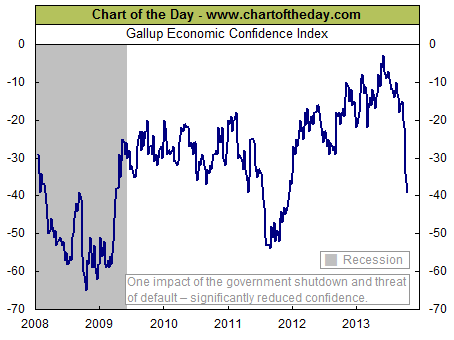
For some perspective on the current government shutdown and threat of default, today’s chart plots the weekly Gallup Economic Confidence Index. As today’s chart illustrates, economic confidence was trending higher and making post-financial crisis highs as late as June 2013. Then the government stepped in. Since that peak, confidence dropped significantly only to accelerate beginning in late September as the government shutdown appeared imminent and a potential default approached. So even what amounts to a ‘partial’ government shutdown and a ‘mere’ threat of default has already had an impact on US economic confidence (other issues such as reduced GDP growth, furloughed workers, potential credit rating cuts, reduced global standing, etc. notwithstanding). Reduced economic confidence can encourage consumers to spend less which can in turn slow an already sluggish job market.
Notes:
Where’s the Dow headed? The answer may surprise you. Find out right now with the exclusive & Barron’s recommended charts of Chart of the Day Plus.
Quote of the Day
“Everything is changing. People are taking their comedians seriously and the politicians as a joke.” – Will Rodgers
Events of the Day
October 24, 2013 – United Nations Day
Stocks of the Day
— Find out which stocks investors are focused on with the most active stocks today.
— Which stocks are making big money? Find out with the biggest stock gainers today.
— What are the largest companies? Find out with the largest companies by market cap.
— Which stocks are the biggest dividend payers? Find out with the highest dividend paying stocks.
— You can also quickly review the performance, dividend yield and market capitalization for each of the Dow Jones Industrial Average Companies as well as for each of the S&P 500 Companies.
Mailing List Info
Chart of the Day is FREE to anyone who subscribes.
To ensure email delivery of Chart of the Day, add mailinglist@chartoftheday.com to your whitelist.
Subscribe to Free Chart of the Day


“Of all the pieces I’ve written, the most popular have been the ones having to do with the Great Depression and my time in the Army Air Corp. Sometimes I wonder whether it’s an advantage or a disadvantage to be my age. I was born on July 22, 1924, in Lenox Hill Hospital in NYC. That was long before air conditioning, and my poor mother said that day was the hottest day of the summer. As for my birth, she said it was one of the most torturous days of her life.
By the time I was a teenager the Great Depression was in high (or should I call it low) gear. My teenage years were filled with the sights of long lines of unemployed men waiting in the street outside employment agencies, and of “Hoovervilles” in Central Park, huts made of cardboard boxes and tin cans that sheltered whole families. Men on the corners of Central Park West were selling apples, and men and women were sleeping under cardboard in the streets of New York.
Yet, I loved New York in those days. Everything was a nickel, from a pack of gum to a ride on the subway to Coney Island to a ride to the Worlds Fair (1939) out in Queens. You could buy a hamburger for a nickel at the White Tower or see a double feature movie at the Alden at 66th Street and Broadway for three nickels. The only trouble was that nickels were hard to come by in the ‘30s, they really were.
I enlisted in the Army in 1942 from Rutgers, where I was a freshman. The War was on, we were losing, and I wanted to get into it. The Army told us that we could pick our service. I picked the Signal Corp. A few months later I was called up, and the Army apologized — they said that I was going into the infantry instead of the Signal Corp. Why? More men were needed in the infantry. That was their “excuse,” not that they needed one.
After 13 weeks of grueling basic training in Georgia we were told that the Air Force was losing a load of flyers, and that more flyers were urgently needed in the Army Air Corp. If we could pass the test we could transfer to the Air Force. I volunteered, much to the anguish of my parents, because in the early days of the war the Army Air Corp was taking a huge number of casualties. I decided to try for the Air Force anyway, and two of us in the company made it out of the Infantry and into the Army Air Corp.
The rest is a long story, which I talk about from time to time, but the point was that as I look back, I realize that I lost my youth. Instead of spending happy days in college, I ended up overseas, fighting in the skies over Europe — which was a long way from drinking beer at fraternity parties.
When I returned to the States after the European war was over, I was to be “redeployed” to the Pacific on a new plane, the A-26 Havoc. It was a much better bomber than my old B-25, faster, and carrying just a pilot and a bombardier (me). I was given a 30-day leave, and then it was on to fight the coming great battle against Japan. I whooped it up on my 30-day leave, on the theory that I had made it through Europe, but my chances of making it through the Pacific as well were, well, they weren’t that great. So why not raise a bit of hell?
On the 27th day of my 30-day leave, the atomic bombs were dropped on Japan, and Japan surrendered. Being on leave, I was one of the first to be let out of the armed services. A day after being discharged, I signed up at NYU on the GI bill. I was back in college, and eager to make up for lost time. In two-and-a-half years I got my degree. I was an ex-officer and a college graduate. A month later I got my first post-War job at thirty-five dollars a week, working five days a week and a half day on Saturday.
I look back at those days with mixed feelings. I really never had what kids today call a “fun youth.” I know what a great time in college is because son Ryan loved Berkeley and daughter Lauren loved University of Arizona. I’ve visited both places, and I can see what I missed out on (NYU on those days was a down-to-earth “subway college”), and all I wanted to do was get through it and get my degree. So I never really had that fabled “college experience.”
I look back at the ‘30s and the ‘40s, and I think, “Well, it was a hell of an experience, I lived through it, but I hope it didn’t color my attitude toward life and the world.” Of my early years, frankly, they seem more like “survival” than anything else.
But on the other hand, I know that everything in life is a trade-off. Those early years allowed me to see that good things can happen and bad things can happen. Nations can rise and nations can fall. If anybody in 1943, for instance, had told me that in the year 2003 we would be friends with Germany and Japan, I would have told them that they were out of their minds. Things change. Nations change. Economies change. Life changes.
Below I show a weekly chart of the US dollar. This has been a worry of mine for quite some time. If the dollar breaks down it will be of great concern to all creditors of the US. After looking like the dollar might breach the blue trendline, it has turned up. Let’s hope this continues.

To subscribe to Richard Russell’s Dow Theory Letters CLICK HERE.
About Richard Russell
Russell began publishing Dow Theory Letters in 1958, and he has been writing the Letters ever since (never once having skipped a Letter). Dow Theory Letters is the oldest service continuously written by one person in the business.
Russell gained wide recognition via a series of over 30 Dow Theory and technical articles that he wrote for Barron’s during the late-’50s through the ’90s. Through Barron’s and via word of mouth, he gained a wide following. Russell was the first (in 1960) to recommend gold stocks. He called the top of the 1949-’66 bull market. And almost to the day he called the bottom of the great 1972-’74 bear market, and the beginning of the great bull market which started in December 1974.
Letters are published and mailed every three weeks. We offer a TRIAL (two consecutive up-to-date issues) for $1.00 (same price that was originally charged in 1958). Trials, please one time only. Mail your $1.00 check to: Dow Theory Letters, PO Box 1759, La Jolla, CA 92038 (annual cost of a subscription is $300, tax deductible if ordered through your business).
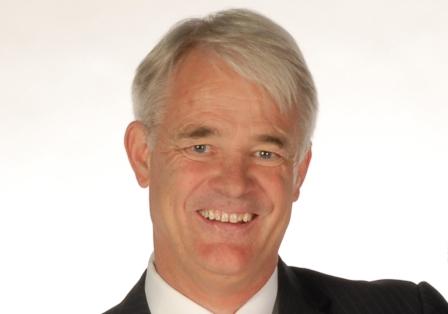 Michael Campbell: Make a commitment to your finances very much in the way Lance Roberts does who’s the host of Street Talks Live but he’s also the chief editor of The X report that looks at economic and political market topics and I’m so pleased to welcome him back to the show. Lance thanks for taking the time on the weekend.
Now I have said that as an investor you have got to be more cautious here. The fundamentals of the market here, Trailing Valuations, Cash Flow, Enterprise value versus EBITA, if we take a look at many many of these valuation metrics of the market there is a very small universe of investable stocks that still meet those positive fundamental criteria. It is getting more difficult to find these opportunities that are quote unquote cheap. That tells you that we’re getting very extended in this market and that eventually we are going to have a reversion of the fantasy so to speak of this liquidity driven rally more to the realistic fundamentals, and those reversions tend to be fairly nasty.


-
I know Mike is a very solid investor and respect his opinions very much. So if he says pay attention to this or that - I will.
~ Dale G.
-
I've started managing my own investments so view Michael's site as a one-stop shop from which to get information and perspectives.
~ Dave E.
-
Michael offers easy reading, honest, common sense information that anyone can use in a practical manner.
~ der_al.
-
A sane voice in a scrambled investment world.
~ Ed R.
Inside Edge Pro Contributors

Greg Weldon

Josef Schachter

Tyler Bollhorn

Ryan Irvine

Paul Beattie

Martin Straith

Patrick Ceresna

Mark Leibovit

James Thorne

Victor Adair