
Timing & trends
 There’s a saying in Hollywood that “nobody knows anything.” That was famed screenwriter William Goldman ’s way of admitting that neither he nor anyone else knew what makes a movie successful.
You should keep that saying in mind when you read 2014 predictions from Wall Street gurus. Nobody on Wall Street knows anything either. But they make money trying to convince you that they do.
I’ve got some thoughts of my own for this coming year — and a couple of them (OK, maybe just one) may even turn out to be correct. So, let me get to them.
….continue reading HERE

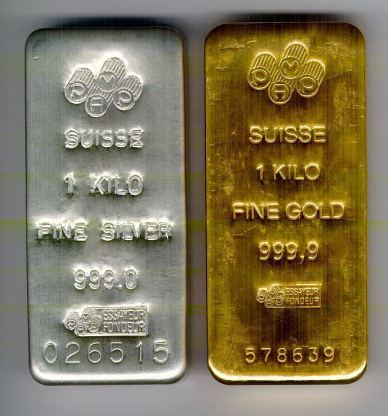
The analysis is now turning excessively bearish in the metals. They still have to press lower and as one reader commented “puke their guts” ok. Only then will see a reversal of fortune. It is just not time for the metals. They had their run, now they must regroup and get ready for the next run.
Ed Note: Article link above worth reading, and also scan Martin’s Blog HERE

The Canadian economy showed unexpected strength in October, growing for the fourth month in a row and boosting market hopes that the country might finally be shaking off the worst of the great recession.
Statistics Canada said on Monday the economy had grown by 0.3 percent from September. Analysts had forecast a 0.2 percent advance after September’s 0.3 percent increase.
Although Canada regained most of the jobs it lost since 2008 and 2009, growth has been largely sluggish, prompting the Bank of Canada to make clear it will not raise its key interest rate until it sees signs of a firm recovery.
The economy has posted growth every month this year apart from June.
The output of goods-producing industries grew by 0.4 percent in October on higher manufacturing while service industries output climbed by 0.3 percent as almost all major industrial sectors registered growth.
“Canada’s economy is showing sustained strength for the first time since the early days of the recovery,” said BMO Capital Markets economist Sal Guatieri.
The Bank of Canada has said annualized GDP growth in the fourth quarter will be 2.3 percent, down from 2.7 percent in the third. Guatieri, though, said October’s data suggested fourth quarter growth could be around 2.6 percent.
“Importantly, this would mark the first quarter since early 2011 that GDP has posted successive increases above two percent – that is, above potential,” he said in a note to clients. ….read page 2 HERE

Home prices in 20 U.S. cities rose in October from a year ago by the most in more than seven years, signaling the real-estate rebound will keep bolstering household wealth in 2014.
The S&P/Case-Shillerindex of property prices in 20 cities climbed 13.6 percent from October 2012, the biggest 12-month gain since February 2006, after a 13.3 percent increase in the year ended in September, a report from the group showed today inNew York. The median projection of 22 economists surveyed by Bloomberg called for a 13.5 percent advance.
A dwindling inventory of foreclosed properties has helped restrict the supply of homes for sale, pushing up prices even as higher mortgage rate cool demand. The real-estate market will probably get its next boost from gains in employment that are lifting consumer confidence in the economic expansion.
….read more HERE

-
I know Mike is a very solid investor and respect his opinions very much. So if he says pay attention to this or that - I will.
~ Dale G.
-
I've started managing my own investments so view Michael's site as a one-stop shop from which to get information and perspectives.
~ Dave E.
-
Michael offers easy reading, honest, common sense information that anyone can use in a practical manner.
~ der_al.
-
A sane voice in a scrambled investment world.
~ Ed R.
Inside Edge Pro Contributors

Greg Weldon

Josef Schachter

Tyler Bollhorn

Ryan Irvine

Paul Beattie

Martin Straith

Patrick Ceresna

Mark Leibovit

James Thorne

Victor Adair