
To clarify a point about the size of the U.S. economy and its importance in the world, China imported 12% of global metals consumed in 2000. Now it imports up to 47% a year. China’s growth has a major impact on emerging economies. The U.S. has no impact because it is a service economy. China has gone from sending less than a million travelers overseas in the mid-1980s to 100 million now. You hardly see American tourists in Asia any more.
– Via Barrons Round Table 2014
Gold & Precious Metals

 In this week’s issue:
WEEKLY COMMENTARY
Stockscores Market Minutes Video
To beat the market, you have to focus on Alpha. This week, Tyler explains the difference between Alpha and Beta and how to find them when trading. Plus, the regular market analysis. View the video by clicking here.
The Correction
Investors fear corrections.
Memories of the tech bubble bursting in 2000, the liquidity crisis in 2008 or the collapse of the mining market in 2011 have left many investors with a sort of post-traumatic stress disorder that causes them to be nervous any time the market falls like it did at the end of last week.
Rightfully so, the losses sustained by buy and hold investors during these major corrections were life changing. I have met many investors who tell me how their portfolios dropped by more than 80% through a correction, something that seriously hindered their retirement plans.
So, how should stock market investors deal with the potential for a market correction?
The traditional approach to risk management is to diversify holdings across sectors so that poor performance in one sector is offset by strong performance in another. This is referred to as Modern Portfolio Theory although I submit that it is hardly modern, having been devised over 50 years ago.
The great problem with this approach to risk management is major corrections, which seems to happen every few years, tend to drag down all sectors together. It did not matter if you had an automotive stock, a bank, an energy company, a technology company and a utility in your portfolio in 2007. By the start of 2009, they were all dramatically lower.
After the drop in the market last week, I think there are two things that all stock market investors need to take to heart so they can sleep better in the weeks ahead.
First, know the signs of a market correction. Second, apply a better method for managing risk.
The typical cycle for a correction is as follows. A steep upward trend is broken by some abnormal selling pressure. You can see this on a chart by drawing a line across the bottoms on a three year weekly chart (I do this in this week’s Market Minutes video). If that line is broken, step one in a correction has occurred.
Inevitably, buyers will come back to stocks with the thought that the selling pressure has created bargains. Most of the time, these buyers are correct and the long term upward trend continues.
Eventually, however, they are wrong and the brief bounce back rally fails to make a new high. This sets up a falling top, step two in a corrective phase.
The third and most telling in the corrective process is the break of the long term upward trend line from a falling top. All of the major corrections that I have witnessed have gone through this cycle. Take a look at the 5 year weekly chart of GLD and you can see it on Gold. Look at the chart of the Nasdaq (QQQ) in 2000 and you will see it there. Check the chart of the Dow (DIA) in 2008 and you will see it there too.
We do not have this 3 step chart pattern set up in the market today. The market is working on step 1 right now but even that is not complete because the trend line has not been broken. For now, this is only a pullback in an upward trend. That could change in the weeks ahead so don’t take your eyes off of the market but don’t panic either.
The second way to deal with the potential for a correction is to simply plan to exit any stock you own if it falls down through support. To find support, draw a horizontal line at the last low point on the chart. That is the last place where the buyers said “we don’t think the stock deserves to go below this price, we don’t think the fundamentals are worth less than this price”. If the price of your stock falls through this floor of support, it implies that the sellers have found a reason to accept a lower price. At that point, sell.
By doing this, you avoid taking big losses. Yes, you may take multiple losses at once when the market is correcting but they should be relatively minor. You will not endure the portfolio crushing losses that many have felt through the market’s corrective phases.
Corrections happen but you don’t have to suffer from them. Learn how to read the market index charts and know the steps in a market correction. Practice good risk management by limiting how far you will let your stock holdings fall before you hit the eject button. If you apply these practices you should only take small losses and be in a strong cash position for when the overall market makes its rebound.
STRATEGY OF THE WEEK
Each day I look at the stocks and ETFs which have made abnormal price gains using the Abnormal Day Up filter in the Stockscores Market Scan. I add in some other filters to keep my list of charts to inspect manageable, usually setting a certain minimum number of trades to ensure that illiquid stocks do not come up in my results.
I like to see where money is chasing stocks and ETFs higher. Abnormal price gains are a sign that investors are focused on Alpha in that market, that there is something significant going on. We know that the great majority of market beating upward trends start with abnormal behavior.
Friday was a big sell off day for the market overall so it is quite telling to see what stocks and ETFs were making abnormal price gains. If a stock can go up on a day when the overall market was getting punished lower, there must be something significant happening. They key is to read the charts to ensure that the risk of the trade does not outweigh the potential reward.
Here are my comments on some of the standouts from this week’s Abnormal Gainer scan:
STOCKS THAT MEET THAT FEATURED DEMAND
1. TBBK
TBBK managed a 7% gain and broke out of a pennant pattern on the daily chart. The stock has been trending higher since the middle of 2012 and looks likely to continue that upward trend after its recent three month rest period.

2. ARIA
ARIA was the most actively traded stock on Friday and managed a 20% gain for the day. The market is speculating that the company will be bought by a large Pharmaceutical company so consider this a very speculative trade and only suitable for an experienced trader. The market action on Friday is very convincing that there is some truth to the rumor.

3. SDS
There are now many ETFs that go up when the market goes down. SDS is perhaps the most liquid but the VXX and its derivatives, inverse ETFs specific to a sector and other market index ETFs all made big gains on Friday. If you believe the market has further to fall then these instruments are a way to profit. I caution however, as they are all rallying from new lows, just as the overall market is falling after making a high. Markets rarely correct from a high, there is typically a cycle of a break of trend, a bounce back rally that fails to make a new high and then a second break of trend. At this point, we are only at the first step making a bigger market correction a less probable outcome. Look for these inverse ETFs to pull back next week as the overall market bounces off of its upward trend line. If the bounce back for the market fails to make a new high before showing more weakness, consider the inverse ETFs and VXX for a buy.

References
- Get the Stockscore on any of over 20,000 North American stocks.
- Background on the theories used by Stockscores.
- Strategies that can help you find new opportunities.
- Scan the market using extensive filter criteria.
- Build a portfolio of stocks and view a slide show of their charts.
- See which sectors are leading the market, and their components.
Disclaimer
This is not an investment advisory, and should not be used to make investment decisions. Information in Stockscores Perspectives is often opinionated and should be considered for information purposes only. No stock exchange anywhere has approved or disapproved of the information contained herein. There is no express or implied solicitation to buy or sell securities. The writers and editors of Perspectives may have positions in the stocks discussed above and may trade in the stocks mentioned. Don’t consider buying or selling any stock without conducting your own due diligence.

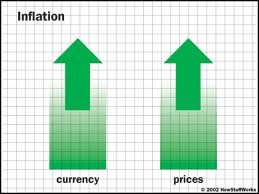 Especially when dealing with leftist dictators and hyperinflation setups.
Venezuela Enacts “Law of Fair Prices” Banning Profits Over 30%, with 10-Year Imprisonment for Hoarding
Via translation from El Economista:
The Fair Prices Act, an instrument with which the Government of Nicolas Maduro intends to control prices and eliminate shortages, includes a ban on profit margins over 30%, with penalties of up to 10 years imprisonment for hoarders.
The law passed in November, and the Supreme Court ratified the law yesterday.
The law, published in Official Gazette, states that the profit margin will be established annually “addressing scientific criteria” by the National Superintendency for the Protection of Socio-Economic Rights (SUNDDE).
The law provides for the application of preventive measures and sanctions such as confiscation, temporary occupation of premises or property, the temporary closure of an establishment or suspension of licenses and the “immediate adjustment” price.
In the section of the law regarding hoarding, those who “restrict supply, circulation or distribution of regulated goods or cause distortions in prices, shall be punished with imprisonment judicially 8 to 10 years.”
The law also provides for fines ranging from 107,000 bolivars ($17,000) to 5.3 million bolivars ($850,000).
SUNDDE will “fix maximum prices for the production or importation, distribution and consumption according to their importance and strategic nature for the benefit of the population as well as the technical criteria for assessing the levels of exchange equitable and fair of goods and services.”
Under this preposterous measure, no companies will be able to import and sell goods at anything but a loss. Expect all goods and services to vanish soon.
Mike “Mish” Shedlock
http://globaleconomicanalysis.blogspot.com

The market hasn’t had a correction of more than 11% since October 2011. It is possible that a well-run bond fund will do better this year than the stock market.
Enthusiasm about the U.S. market reminds me of the talk I heard nine months ago in Indonesia and Thailand. Subsequently, those markets fell 35%. While it is too late to buy the U.S., it is too early to buy the emerging markets. They aren’t incredibly cheap, except for Vietnam and Iraq, and capital could still flow out.
You might also like:
 Marc Faber bought 10 year Treasuries
Ten-year and 30-year yields eventually will be much higher. But I bought some 10-year Treasuries when the yield rose to 3%, because in the near term, yields could retreat to 2.5% or 2.2% or even 2%.
The economic recovery is in its fifth year. On March 6, the bull market in stocks will be five years old. That’s long, by historical standards. Sometime this year, the stock market could see a big tumble, as in 1987. Then the long bond will rally and reward Bill Gross.
Marc Faber is an international investor known for his uncanny predictions of the stock market and futures markets around the world.Dr. Doom also trades currencies and commodity futures like Gold and Oil.

 Have you been paying attention to what has been happening in Argentina, Venezuela, Brazil, Ukraine, Turkey and China? If you are like most Americans, you have not been. Most Americans don’t seem to really care too much about what is happening in the rest of the world, but they should. In major cities all over the globe right now, there is looting, violence, shortages of basic supplies, and runs on the banks. We are not at a “global crisis” stage yet, but things are getting worse with each passing day. For a while, I have felt that 2014 would turn out to be a major “turning point” for the global economy, and so far that is exactly what it is turning out to be. The following are 20 early warning signs that we are rapidly approaching a global economic meltdown…
#1 The looting, violence and economic chaos that is happening in Argentina right now is a perfect example of what can happen when you print too much money…
For Dominga Kanaza, it wasn’t just the soaring inflation or the weeklong blackouts or even the looting that frayed her nerves.
It was all of them combined.
At one point last month, the 37-year-old shop owner refused to open the metal shutters protecting her corner grocery in downtown Buenos Aires more than a few inches — just enough to sell soda to passersby on a sweltering summer day.
#2 The value of the Argentine Peso is absolutely collapsing.
…read 3-10 HERE

-
I know Mike is a very solid investor and respect his opinions very much. So if he says pay attention to this or that - I will.
~ Dale G.
-
I've started managing my own investments so view Michael's site as a one-stop shop from which to get information and perspectives.
~ Dave E.
-
Michael offers easy reading, honest, common sense information that anyone can use in a practical manner.
~ der_al.
-
A sane voice in a scrambled investment world.
~ Ed R.
Inside Edge Pro Contributors

Greg Weldon

Josef Schachter

Tyler Bollhorn

Ryan Irvine

Paul Beattie

Martin Straith

Patrick Ceresna

Mark Leibovit

James Thorne

Victor Adair