
Currency

A little over a year ago when the world was discussing the realms of currency wars and central banks purposely imposing policy in order to devalue their exchange rates with trading partners, it was the policy makers that argued that their approach was directed domestically, and a weaker currency was simply an indirect consequence. As long as the policy intent was not, for example to weaken their currency, or to better the country’s respective terms of trade by cheapening their exports, it was deemed acceptable.
Today, however, we are seeing the other side of that coin as western central bankers once again look out for their respective countries best interest, and in an uncoordinated approach adjust their monetary policy and stimulus. And it’s the worlds emerging economies, who were the engine of growth for the global economy as it climbed back from the worst recession since the Great Depression, that are feeling the pain.
It was only by coincidence, not by design, that central bankers around the world coordinated policy in order to spur economic growth. It prompted fears of currency wars or a “race to the bottom” in terms of devaluing their exchange rate. I think it’s clear now that did not yet happen. But if the tremors we are witnessing in currency markets over the last few days have illustrated anything, it’s that nothing destabilizes risk assets like the boisterous equity markets of 2013, more than uncertainty and instability in foreign exchange markets. And that’s exactly what’s to come as the world’s central banks once again operate in this unilateral non-structured fashion.
Over the course of the last week we saw action from central banks all over the world in attempts to stabilize their financial sectors. As the markets perceive the United States and the US Federal Reserve to be tightening their policy by altering their stimulus and decreasing their bond purchases by a successive $10 billion per month, the emerging market economies have no choice but to follow suit. It’s simply a stronger dollar attracting capital and foreign investment back towards the US, and other advanced.
economies. In the last week, countries like Turkey have had to raise their key policy interest rate from 7.75 percent to 12 percent in an emergency meeting. Although not as drastic, South Africa and India raised their rates also. And this doesn’t discredit that the home grown problems some of these countries already face may be the root cause of their suffering; moreover, a strengthening US dollar only acts to exacerbate their problems.
It’s almost paradoxical though how emerging economies through the efforts of the G20 were relied upon to fuel a recovery for the industrialized nations of the world. Many countries saw their exchange rates significantly strengthen against the US dollar, with Brazil being the textbook example as the Real appreciated by as much as 48 percent. No questions this strangled their export sector, especially given they represent resource based open economies which thrive on strong international markets. But now, a rift if being created as no consideration is yet to be given from the western world. A dollar tug of war is creating a global imbalance. And what’s surprising is that with a strengthening dollar, we are seeing the rebirth of the safe haven characteristics of gold.
Only in periods of extreme turmoil do we see gold and the US dollar trade higher in tandem. And that’s not to suggest that we have entered a period of extreme turmoil, but it certainly shows the potential for gold. To some extent it’s argued the industrialised nations can immune themselves from an emerging market crisis; nonetheless, periods of economic uncertainty have always been favourable for gold. That’s when insurance is needed more than ever. Alternatively, a weak US dollar also bodes well for the yellow metal. I don’t want to attempt to forecast a crisis, but this tug of war, juggling act, or whatever we want to call it is what will see gold bottom in 2014.
Robert Levy

The Canadian dollar weakened past C$1.12 to its U.S. peer for the first time in more than four years as data showing economic growth failed to curb speculation the Bank of Canada may cut interest rates to spur growth. … full article

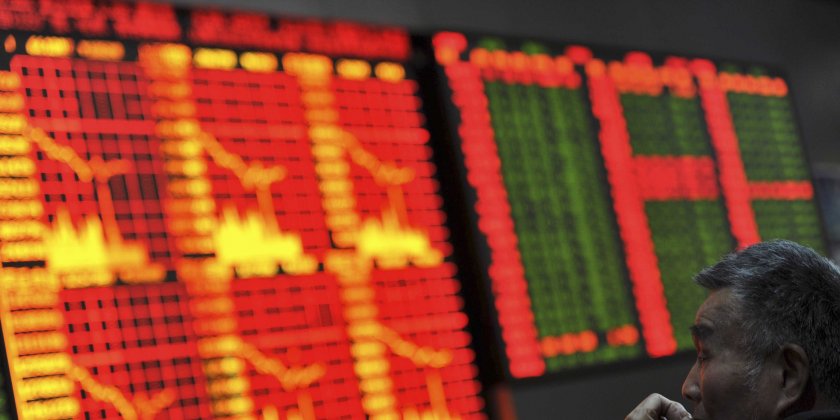 RISK OFF: Global Markets Tumbling Again
To cap a rough week, markets have fallen into “risk-off” mode once again this morning.
The S&P 500 is down 0.9%, completely erasing yesterday’s big rally. Asian exchanges were mostly closed Friday and European indices are getting hammered across the board.
…continue reading HERE
CALGARY, Alberta (Reuters) – TransCanada Corp reduced the limits for vapor pressures on its main U.S. oil export pipeline this month, regulatory documents show, one of the clearest signs yet of growing concern over gas-infused crude.
The formal move to tighten technical specifications and mandate improved testing on its 590,000 barrel per day Keystone pipeline had been planned for some time, industry sources said. The change is focused on maintaining quality standards and is not specifically related to any safety issues.
However it comes at a time of intensifying public debate over the potential dangers of transporting certain types of oil following a series of train derailments and explosions involving tank cars carrying light crude oil, including the Lac-Megantic, Quebec, crash that killed 47 people.
While rail companies worry about safety, pipeline companies like TransCanada want to prevent overly gassy crudes from entering their system to avoid shipping the ultra-light components to refiners who have little use for the gas.
The North American oil industry is starting to address the issue of testing for and policing the presence in crude of organic compounds of low molecular weight such as methane, ethane or propane, known in the industry as “light ends.”
Those concerns could become more prevalent as gas-rich shale production expands and diluent-blended Canadian crude output grows.
TransCanada declined to comment on the change, which was detailed in documents filed with the U.S. Federal Energy Regulatory Committee and Canada’s National Energy Board.
Canadian pipeline peer Enbridge Inc is currently analyzing whether to change its vapor pressure testing method, a spokesman said. Kinder Morgan Energy Partners LP declined to comment on possible changes in its tariff.
….read page 2 & 3 HERE

OTTAWA (Reuters) – Statistics Canada revised down on Friday its estimates of December’s job losses to 44,000 from a previously reported 45,900, with full-time job losses cut to 56,000 from 60,000.
The changes were due to an annual revision for the previous three years to account for new weightings for seasonal factors.
The December unemployment rate remained at 7.2 percent, as first reported on January 10. Part-time job gains were revised down to 12,100 from 14,200.
(Reporting by Randall Palmer; Editing by Alex Paterson)


-
I know Mike is a very solid investor and respect his opinions very much. So if he says pay attention to this or that - I will.
~ Dale G.
-
I've started managing my own investments so view Michael's site as a one-stop shop from which to get information and perspectives.
~ Dave E.
-
Michael offers easy reading, honest, common sense information that anyone can use in a practical manner.
~ der_al.
-
A sane voice in a scrambled investment world.
~ Ed R.
Inside Edge Pro Contributors

Greg Weldon

Josef Schachter

Tyler Bollhorn

Ryan Irvine

Paul Beattie

Martin Straith

Patrick Ceresna

Mark Leibovit

James Thorne

Victor Adair